The Incredible Ocean Voyager: 15 Fascinating Facts About Salmon
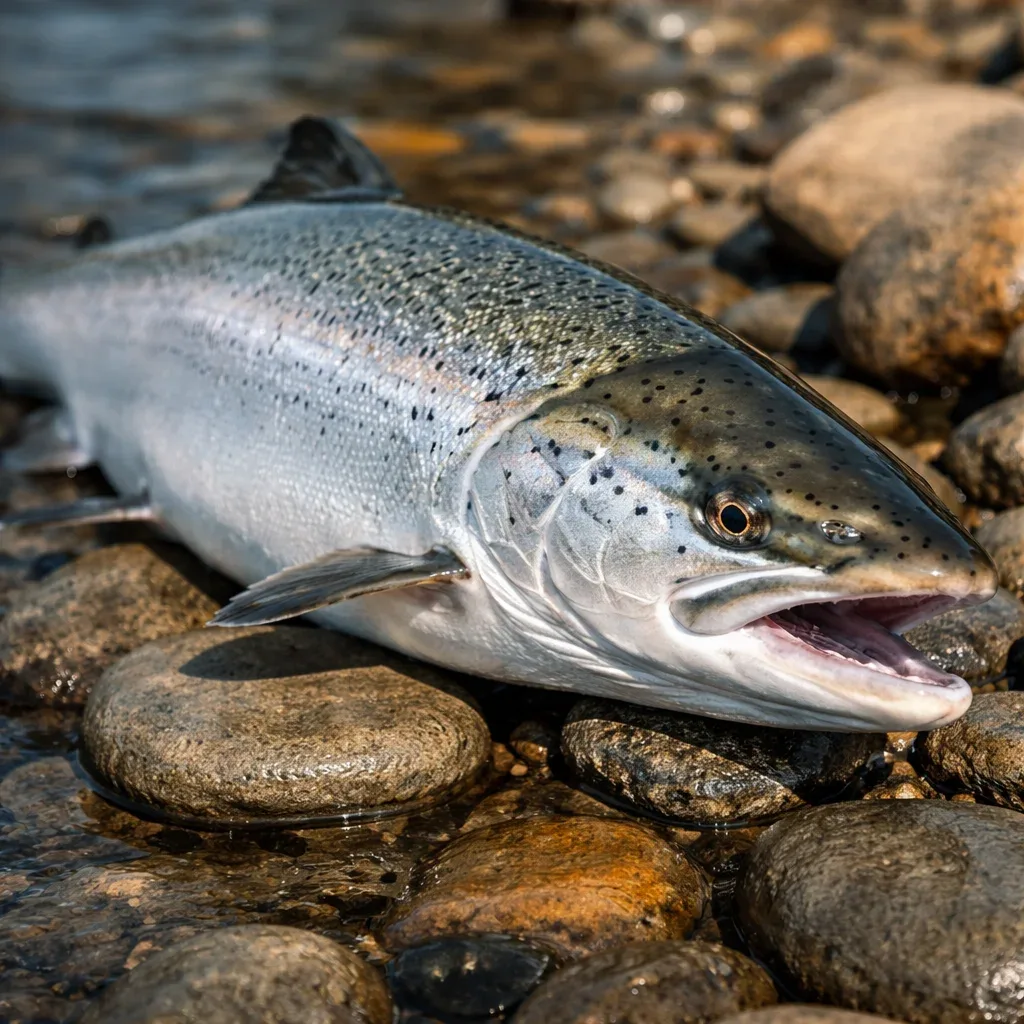
From navigating vast ocean expanses using Earth's magnetic field to leaping over seven-foot waterfalls, salmon are among the planet's most astonishing migratory creatures. These legendary fish undergo radical physical transformations, nourish entire rainforest ecosystems, and possess an olfactory sense thousands of times sharper than a dog's. Discover the incredible science, history, and surprising quirks behind one of nature's greatest marine travelers.
1. Their Sense of Smell Dwarfs That of a Dog
Salmon possess an extraordinarily keen olfactory sense that is thousands of times more sensitive than that of a domestic dog. Biologists have discovered that these remarkable fish can detect a single drop of a specific scent diluted across an area equivalent to ten Olympic-sized swimming pools. As young salmon migrate out to the ocean, they imprint on the unique chemical mixture of their natal stream, memorizing its distinct aroma. Years later, when returning from thousands of miles away in the open ocean, they use this chemical map to navigate back to the exact tributary where they hatched. This incredible olfactory memory ensures that adults return to optimal spawning habitats with astonishing precision.
2. They Navigate Oceans Using Built-In Magnetic Compasses
Long before entering their native rivers, salmon must travel thousands of miles across featureless oceanic expanses without visual landmarks. To accomplish this navigational feat, they rely on microscopic crystals of magnetite in their tissues that act as an internal biological compass. By sensing subtle variations in the intensity and inclination of Earth's magnetic field, salmon determine their precise latitude and longitude. This innate geomagnetic positioning system allows them to map out massive feeding routes across the ocean basin. Once they reach the coastal waters near their birth river, they transition from geomagnetic mapping to their hyper-sensitive olfactory navigation.
3. Their Very Name Means "To Leap"
The word "salmon" traces its origin back to the ancient Latin verb salire, which translates directly to "to leap." This name is remarkably fitting given the fish's astounding aerial acrobatics when attempting to migrate upstream against rushing currents. To bypass towering waterfalls, natural rock barriers, and man-made dams, salmon can launch themselves nearly seven feet straight into the air. They achieve this massive vertical jump by accelerating rapidly from deep water and thrusting their powerful caudal fins against the current. These majestic leaps represent an incredible expenditure of energy, showcasing the species' unrelenting determination to reproduce.
4. Pacific Salmon Completely Stop Eating During Spawning
Once Pacific salmon transition from saltwater into freshwater rivers to spawn, their digestive tracts completely shut down and atrophy. From this point forward, the fish rely entirely on energy reserves of fat and protein stored during their ocean feeding years. They do not consume a single morsel of food throughout a grueling trek that can cover over a thousand miles upstream. During this journey, their metabolic priorities shift entirely toward surviving the upstream swim and developing reproductive organs. By the time they reach their spawning grounds, they have burned through almost all of their accumulated bodily resources.
5. Temperate Rainforests Are Built on Salmon Nutrients
The temperate rainforests of the Pacific Northwest rely heavily on returning salmon to fertilize their soil and sustain plant life. Predators such as bears, eagles, and wolves pull millions of spawning salmon from rivers, dragging carcasses deep into the woods. As these nutrient-rich remains decay, they release vital ocean-derived nitrogen and phosphorus directly into the forest floor. Scientists analyzing tree rings in ancient coastal cedars and Sitka spruces have found high concentrations of marine nitrogen tracing back centuries. In essence, the towering trees of the Pacific coast are partially constructed from the bodies of ancient ocean-dwelling fish.
6. Males Undergo Dramatic Physical Transformations Called Kypes
As male salmon approach their native spawning beds, hormonal shifts trigger a radical structural metamorphosis in their anatomy. Their upper and lower jaws lengthen and curve into a prominent, hooked beak called a kype, filled with large, sharp teeth. At the same time, their bodies compress laterally and often develop a pronounced hump behind the head. These dramatic weapons and altered physiques are not designed for eating, as the fish are no longer feeding, but for dominance battles. Males use their fearsome kypes to bite, ram, and intimidate rivals while competing for access to females.
7. Ancient Giant Salmon Grew Up to Ten Feet Long
Deep within North America's fossil record lies evidence of a prehistoric colossal salmon known scientifically as Oncorhynchus rastrosus. Living roughly five to eleven million years ago during the Miocene and Pliocene epochs, this giant grew up to ten feet in length and weighed as much as 500 pounds. Unlike modern salmon, this creature possessed massive, sideways-pointing tusk-like teeth that stuck out from its snout like a warthog's tusks. Researchers believe these massive fish filter-fed on plankton in ocean waters before swimming upstream to defend spawning territories using their formidable tusks.
8. Pacific Salmon Deteriorate Alive Into "Zombie" Fish
Pacific salmon species are semelparous, meaning they breed only once in their lifetime before perishing. After swimming upstream, undergoing severe physical changes, and completing the spawning process, their biological systems suffer total physiological collapse. Immune function shuts down, skin peels away, tissues rot, and organs decay while the fish are still actively swimming and guarding their nests. This eerie phase has led researchers to refer to them as "zombie salmon" during their final days alive. Though morbid, this programmed death serves an evolutionary purpose by providing nutrients to juvenile salmon hatching months later.
9. Atlantic Salmon Can Survive and Spawn Multiple Times
Unlike their Pacific cousins who suffer guaranteed death after breeding, Atlantic salmon are iteroparous, meaning they can survive after spawning. After depositing their eggs, these exhausted survivors—known as "kelts"—drift back downriver toward the sea to recover. Once back in nutrient-rich ocean waters, they feed heavily, rebuild their lost muscle mass, and regain their silver ocean coloration. A resilient Atlantic salmon can repeat this exhausting migration up to three or four times over its lifespan. However, the energy cost is so extreme that only a small percentage of Atlantic salmon survive to spawn more than once.
10. Killer Whales Once Started a Bizarre Trend of Wearing Salmon as Hats
In 1987, marine biologists observing a population of Southern Resident killer whales off the coast of Washington state documented a strange cultural fad. A female orca from Puget Sound's K-Pod began swimming around with a dead salmon draped over her snout like a hat. Within a few weeks, this quirky behavior spread rapidly throughout three distinct pods, with numerous whales wearing dead salmon. The strange trend persisted for roughly six weeks before disappearing just as abruptly as it began, leaving scientists puzzled. This famous event remains one of the most intriguing examples of animal social trends and non-utilitarian cultural behaviors recorded in wild marine mammals.
11. Their Ear Bones Reveal Their Age and Migration History
Inside a salmon's head lie microscopic calcium carbonate structures called otoliths, or ear bones, which aid in balance and hearing. As a salmon grows, these bones continuously deposit layers of mineral matter, creating concentric rings similar to those found in tree trunks. By examining a thin section of an otolith under a microscope, fisheries biologists can determine the exact age of the fish in years and months. Furthermore, chemical analyses of the isotopic ratios trapped within these growth rings can reveal whether the fish was living in fresh or salt water during specific life stages.
12. Sockeye Salmon Shift From Sleek Silver to Vibrant Crimson
During their time in the open ocean, Sockeye salmon sport a camouflaged silver body with a dark blue-green back designed to blend into ocean depths. However, as they enter freshwater rivers to embark on their final spawning run, carotenoid pigments stored in their flesh are transferred into their skin. This physiological shift transforms their bodies into a brilliant, neon-red shade while their heads turn a striking emerald green. This dramatic color shift serves as a powerful visual signal to potential mates, advertising sexual maturity and physical vitality.
13. Only a Tiny Fraction of Salmon Eggs Reach Adulthood
During spawning, a single female salmon lays between 2,000 and 5,000 eggs into shallow gravel nests known as redds. Despite this impressive output, the journey from egg to mature adult is filled with overwhelming hazards. Water currents, siltation, fungal infections, and hungry predators consume the vast majority of eggs and newborn fry. Statistical estimates suggest that out of thousands of eggs laid in a nest, only two individual salmon typically survive to return as spawning adults. This low survival rate explains why females must produce such enormous quantities of eggs to maintain population stability.
14. Indigenous Peoples Honor the Salmon With Sacred Ceremonies
For thousands of years, Indigenous cultures across the Pacific Northwest have revered salmon as a vital food source and spiritual relative. Many tribes, including the Coast Salish, Haida, and Tlingit, observe the ancient "First Salmon Ceremony" when the seasonal migration begins. The first salmon caught of the season is welcomed with formal honor, cooked, and shared among the community in a ceremonial feast. Crucially, the remaining skeleton of this fish is carefully returned to the river facing upstream. This ritual act of respect ensures that the spirit of the salmon returns to tell its kin that humans are worthy, guaranteeing future runs.
15. Farmed Salmon Would Be Gray Without Special Dietary Additives
Wild salmon derive their vibrant pink or orange flesh from eating carotenoid-rich organisms, primarily small crustaceans like krill and shrimp. In contrast, commercially farmed salmon raised in ocean pens on a standard fishmeal diet naturally possess gray or white flesh. Because consumers associate rich pink coloration with healthy salmon, fish farmers include astaxanthin—a natural pigment and antioxidant—in their feed. Without this dietary pigment, farmed salmon fillets on supermarket shelves would look pale and unappealing. This feed supplement is strictly regulated and provides the exact same antioxidant compounds found in wild ocean food chains.
Sources & References
This AI-assisted post was rigorously curated and fact-checked for accuracy by:
 Martin Roháček
How fun was this article? 🤔
Tap a star to rate it
🧠 Quiz: How closely were you paying attention?
10 questions — all answers are in the article above!
Enjoyed these facts? There's more! 💌
Fresh fun facts in your inbox. No spam, ever.