
The Colossal State: 15 Fascinating Facts About Texas
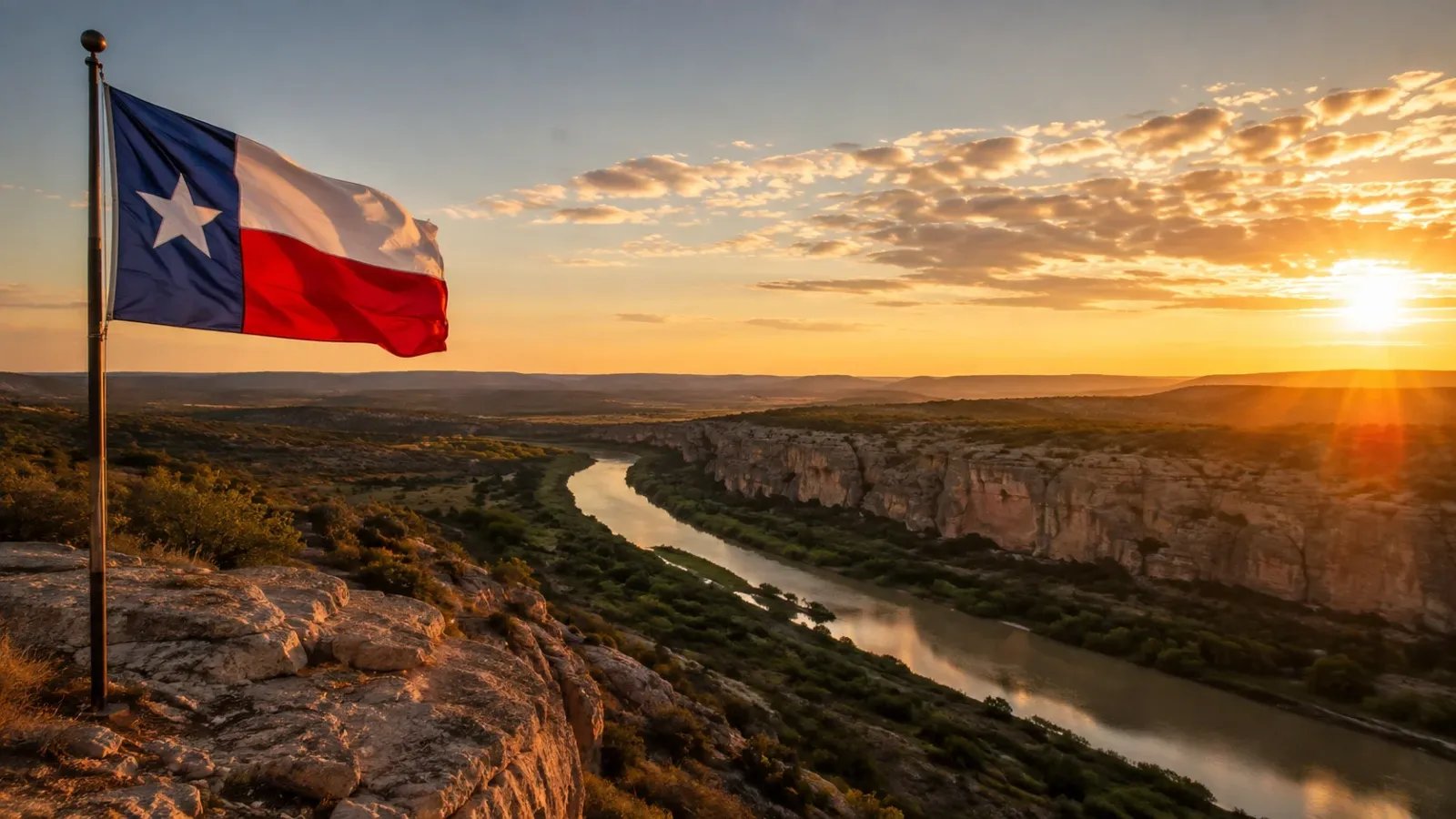
Forget the stereotypes of endless deserts and cowboys riding into the sunset. Texas is a complex behemoth of biodiversity, science, and history. From ancient mountain reefs to forgotten republics, the Lone Star State is far more than a simple caricature. Discover the surprising, obscure, and historically rich truths hiding right beneath the surface of America's most mythologized region.
1. The famous six flags that flew over Texas ignore three other independent republics that briefly existed within its current borders.
While history books focus on Spain, France, Mexico, the Republic of Texas, the Confederacy, and the United States, the region was a hotbed of localized rebellions. The Republic of the Rio Grande, the Republic of Fredonia, and the Republic of East Florida all claimed sovereignty over various parts of Texas during the nineteenth century. These micro-nations were born from fierce political disagreements and border disputes, though most were crushed by larger armies or dissolved within a few months.
2. Beneath the urban sprawl of Austin lies a chain of extinct underwater volcanoes that erupted during the Cretaceous period.
Central Texas was once covered by a shallow, warm sea that experienced violent seismic activity. Around eighty million years ago, a series of submarine volcanoes erupted, depositing massive amounts of ash and magma that eventually cooled into hard rock. Today, the most visible remnant is Pilot Knob, a small hill near the Austin airport that is actually the eroded core of a once-massive volcanic structure. The ancient ash from these eruptions weathered into the nutrient-rich clay soils that now support the local agricultural ecosystem.
3. The largest known concentration of mammals in the world is a maternity colony of fifteen million Mexican free-tailed bats living in a cave near San Antonio.
Every summer, Bracken Cave becomes a swirling vortex of biological activity as millions of female bats migrate from Mexico to give birth. The sheer density of the colony raises the cave's temperature and creates a toxic atmosphere of ammonia from their guano that would kill a human within minutes. When the bats emerge at dusk to hunt, their collective mass is so enormous that it registers on local Doppler radar systems as a massive storm cell moving across the Hill Country.
4. The towering limestone cliffs of the Guadalupe Mountains were originally formed as a massive underwater sponge and algae reef.
Millions of years before the dinosaurs, West Texas was submerged under the vast Permian Sea. Unlike modern coral reefs, the Capitan Reef was built over millions of years by calcareous sponges, algae, and microscopic marine life secreting calcium carbonate. When the sea eventually evaporated, the reef was buried under salts and mud, only to be thrust upward by tectonic forces millions of years later. Today, it stands as one of the most pristine and expansive fossil reefs in the entire world, towering over the Chihuahuan Desert.
5. A unique, rapidly fading dialect of German developed in the Hill Country that contains words and grammatical structures found nowhere in modern Europe.
When thousands of German immigrants settled in Central Texas in the 1840s, they were geographically isolated from their homeland. Over generations, their language evolved independently, absorbing English loanwords for things that did not exist in Germany, like skunks and airplanes, while preserving archaic nineteenth-century grammar. Texas German is now a fascinating linguistic time capsule studied by sociolinguists, as it is projected to go entirely extinct within the next few decades as its last native speakers pass away.
6. Despite boasting over seven thousand lakes across its immense landmass, only one of them was formed by natural geological processes.
Virtually every body of water you see in Texas is a man-made reservoir engineered for flood control, hydroelectric power, or municipal water storage. The sole exception is Caddo Lake, located on the border of Texas and Louisiana. This sprawling maze of bayous and cypress trees was formed by a massive, centuries-old log jam on the Red River known as the Great Raft. The jam backed up the water flow, flooding the low-lying basin and creating a naturally occurring, ecologically diverse wetland that persists to this day.
7. A geological anomaly near Amarillo contains one of the Earth's richest deposits of helium, prompting the creation of a massive strategic reserve.
While most people associate helium with party balloons, it is a critical, non-renewable element required for rocketry, MRI machines, and advanced welding. In 1925, recognizing its military importance for dirigibles, the federal government established the National Helium Reserve in the Texas Panhandle. The unique geological structure of the Bush Dome trapped immense quantities of helium produced by the radioactive decay of uranium and thorium deep within the Earth's crust, effectively stockpiling it for human discovery.
8. The Paluxy Riverbed contains one of the world's most perfectly preserved dinosaur trackways mapping a prehistoric chase.
In the town of Glen Rose, visitors can walk alongside massive, fossilized footprints embedded directly into the limestone riverbed. The geology preserved a dramatic moment from the Early Cretaceous period where a massive sauropod was closely trailed by a carnivorous theropod, likely an Acrocanthosaurus. The mud of the ancient tidal flat was the perfect consistency to capture the deep impressions, which quickly baked in the sun and were gently buried by sediment, preserving the hunt in stone for over one hundred million years.
9. Following the deadliest natural disaster in United States history, engineers physically raised the entire city of Galveston by jacking up buildings and pumping in ocean sand.
After the Great Galveston Hurricane of 1900 killed thousands and flattened the island, survivors executed an unprecedented feat of civil engineering. They constructed a massive concrete seawall, but realized the land behind it was too low. Using hundreds of hand-cranked jacks, they lifted the city's surviving homes, churches, and commercial buildings into the air. Dredge boats then pumped millions of cubic yards of sand from the Gulf of Mexico underneath the structures, raising the island's elevation by as much as seventeen feet.
10. The iconic Texas cattle drives were largely born out of a biological quarantine against a deadly parasite known as Texas cattle fever.
Longhorn cattle possessed a natural immunity to a tick-borne pathogen that decimated other breeds of livestock. When Texans tried to drive their herds east, Midwestern farmers met them with armed resistance to protect their vulnerable local cows from the disease. This forced Texas ranchers to pioneer new, desolate trails far from established agricultural centers to reach the western railheads. The romanticized image of the lone cowboy driving cattle across empty plains was actually a strict epidemiological quarantine measure.
11. Texas operates its own independent electrical grid to intentionally avoid federal regulatory oversight under the Interstate Commerce Clause.
The United States is divided into three major power grids: the Eastern Interconnection, the Western Interconnection, and the Texas Interconnection. By ensuring that their electrical grid does not cross state lines, Texas utility companies successfully argued that they do not engage in interstate commerce. This legal maneuver exempted the state from the jurisdiction of the Federal Energy Regulatory Commission. While this provides regulatory freedom, it also means the state cannot easily draw emergency power from its neighbors during extreme weather events.
12. Deep within an underground aquifer lives a bizarre, eyeless amphibian that exists totally isolated from the surface world and absorbs oxygen directly through its skin.
The Texas blind salamander is a masterclass in evolutionary adaptation, residing exclusively in the water-filled caverns of the Edwards Aquifer near San Marcos. Because it lives in absolute darkness, the species lost its eyes over thousands of generations to conserve energy. It lacks lungs, relying instead on external red gills and highly permeable skin to extract oxygen from the subterranean water. The creature stands at the top of a completely lightless food chain, hunting tiny blind shrimp by sensing microscopic water vibrations.
13. Beneath a small Texas town lies fourteen miles of abandoned subterranean tunnels originally dug to house a particle accelerator three times more powerful than the Large Hadron Collider.
In the 1980s, the United States began constructing the Superconducting Super Collider beneath Waxahachie to discover the Higgs boson and unlock the secrets of the universe. The project was slated to be the largest scientific instrument ever built, boasting a ring fifty-four miles in circumference. However, skyrocketing costs and shifting political priorities led Congress to abruptly cancel the project in 1993. Today, the partially completed, multi-billion-dollar tunnels sit entirely abandoned and flooded with groundwater, a ghost town of theoretical physics.
14. Before the Civil War, the United States military imported dozens of Middle Eastern camels to Texas to serve as a specialized desert cavalry unit.
Recognizing that horses and mules struggled to survive the arid conditions of the American Southwest, Secretary of War Jefferson Davis spearheaded the Texas Camel Corps. The military imported camels to Camp Verde, Texas, where they proved highly successful at carrying heavy loads across waterless stretches of the Chihuahuan Desert. Despite their operational success, the outbreak of the Civil War halted the experiment. The camels were eventually abandoned, sold at auction, or released into the wild, where feral sightings persisted for decades.
15. A massive, exposed dome of pink granite in Central Texas groans and creaks at night due to rapid thermal contraction.
Enchanted Rock is a massive batholith, an underground magma chamber that cooled into solid granite a billion years ago and was exposed by wind and water erosion. Local Native American tribes considered the rock sacred and haunted, largely because of the unsettling, ghostly noises it emits after sunset. Science explains this phenomenon as thermal dynamics. The bare rock absorbs intense Texas heat during the day, expanding slightly. As the temperature drops sharply at night, the granite rapidly contracts, causing the surface layers to fracture and groan.
Sources & References
This AI-assisted post was rigorously curated and fact-checked for accuracy by:
 Martin Roháček
How fun was this article? 🤔
Tap a star to rate it
🧠 Quiz: How closely were you paying attention?
10 questions — all answers are in the article above!
Enjoyed these facts? There's more! 💌
Fresh fun facts in your inbox. No spam, ever.