The Land of Castles and Autobahns: 15 Fascinating Facts About Germany
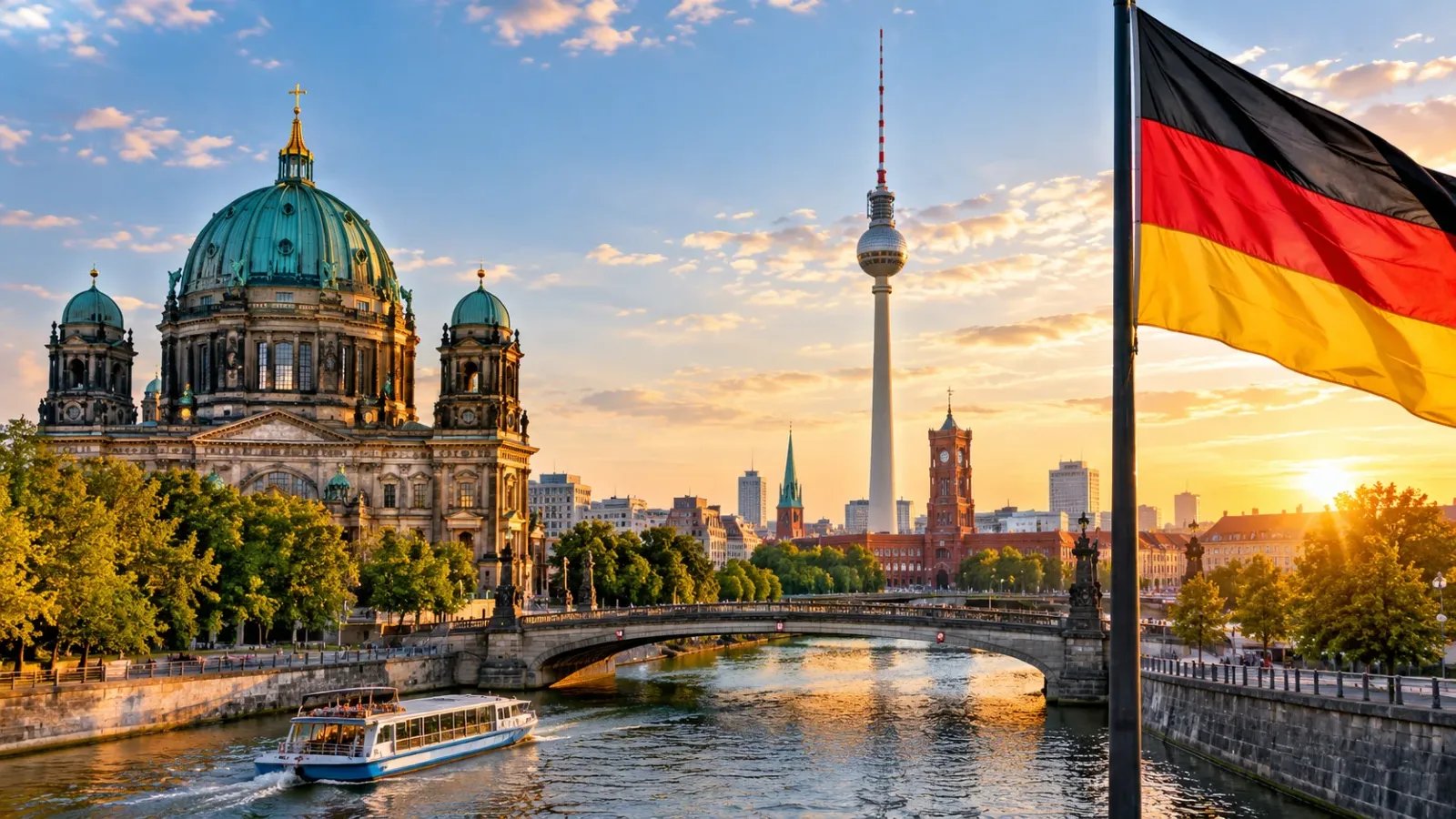
Germany combines fairy-tale castles, Christmas markets, and Alpine peaks with big cities that tell the story of modern European history. It borders nine countries and welcomes tens of millions of visitors a year. Discover 15 fascinating facts about the heart of Europe.
1. Germany has more neighbors than almost any other European country.
Germany borders nine countries: Denmark, Poland, Czechia, Austria, Switzerland, France, Luxembourg, Belgium, and the Netherlands. Its central position has made it a crossroads of European trade, travel, and ideas, and it is one of the continent's most visited destinations, with tens of millions of international visitors each year.
2. The Autobahn has stretches with no general speed limit.
Germany's motorway network is around 13,000 kilometers long, and large parts of it have no general speed limit, although a speed of 130 kilometers per hour is recommended. Other sections have limits for safety, traffic, or noise. The first sections of the Autobahn were opened in the 1930s.
3. The "Beer Purity Law" dates to 1516.
The Reinheitsgebot, issued in Bavaria in 1516, specified that beer should be brewed using only water, barley, and hops. Yeast was not mentioned because its role was not yet understood. The law influenced German brewing, and Germany is still known for its beer culture, with thousands of brands and many local breweries.
4. Oktoberfest began as a royal wedding celebration.
The first Oktoberfest was held in Munich in October 1810 to celebrate the marriage of Crown Prince Ludwig of Bavaria and Princess Therese. The horse race that ended the festivities was so popular that it was repeated the following year. Today the festival, which begins in September, attracts around 6 to 7 million visitors.
5. Dresden's Christmas market dates back to 1434.
The Striezelmarkt in Dresden was first held in 1434, making it one of the oldest Christmas markets in Germany. The country has many hundreds of Christmas markets with gingerbread, mulled wine, ornaments, and handmade gifts, and they are a major attraction in the weeks before Christmas.
6. The Berlin Wall divided a city for 28 years.
The Berlin Wall was built in August 1961 and fell on 9 November 1989. Its barriers around West Berlin ran for about 155 kilometers. Today only a few sections remain, the longest of which, the East Side Gallery, is about 1.3 kilometers long and is covered in murals.
7. Berlin's Museum Island is a World Heritage Site.
Museum Island, in the middle of the Spree River, has five major museums built between 1830 and 1930, including the Pergamon Museum and the Neues Museum, which houses the bust of Nefertiti. It was added to the UNESCO World Heritage List in 1999.
8. The Rhine Valley has dozens of castles.
The Upper Middle Rhine Valley, a stretch of about 65 kilometers between Bingen and Koblenz, is lined with around 40 castles and fortresses, as well as vineyards and small towns. It became a UNESCO World Heritage Site in 2002. The steep Lorelei rock is the source of a famous legend about a siren.
9. The Black Forest gave the world the cuckoo clock.
The Black Forest in southwestern Germany is known for dense fir forests, spa towns, and traditions of clockmaking that date to the 18th century. The region is also the namesake of the Black Forest gateau, a cake made with chocolate, cream, cherries, and cherry brandy.
10. The Zugspitze is Germany's highest peak.
The Zugspitze, on the border with Austria, rises to 2,962 meters. Visitors can reach the summit by cogwheel train and cable car, and there is a glacier ski area just below the top.
11. Germany has a famous bread culture.
German bread culture is on Germany's national list of intangible cultural heritage. The German Bread Institute has recorded more than 3,000 different bread specialties, from dark rye loaves to pretzels and rolls. Bakeries are a part of daily life in towns and cities.
12. Gutenberg developed European printing in Mainz.
Around 1450, the goldsmith Johannes Gutenberg developed a system of movable metal type for printing in Mainz. The Gutenberg Bible, printed in the mid-1450s, is among the first major books printed in Europe in this way. The Gutenberg Museum in Mainz displays his printing methods and early books.
13. Neuschwanstein was never finished.
King Ludwig II of Bavaria began building the hilltop castle of Neuschwanstein in 1869 as a romantic retreat, but he died in 1886 with the building unfinished. It was opened to the public only weeks after his death. It is often said to have inspired the castle of Disney's Sleeping Beauty, and it is one of the most visited castles in Europe.
14. The Brothers Grimm collected German fairy tales.
Jacob and Wilhelm Grimm published the first volume of their Children's and Household Tales in 1812, collecting stories such as Hansel and Gretel, Cinderella, and Snow White. The brothers were also scholars of language and compiled a German dictionary. The German Fairy Tale Route links towns linked to their lives and stories.
15. Hamburg's warehouse district is a UNESCO site.
The Speicherstadt in Hamburg is a district of brick warehouses built mainly from the 1880s on wooden piles in the water. It was the world's largest warehouse complex of its type and stored goods such as coffee, tea, and carpets. Together with the Kontorhaus district, it was added to the UNESCO World Heritage List in 2015.
Sources & References
This AI-assisted post was rigorously curated and fact-checked for accuracy by:
 Martin Roháček
How fun was this article? 🤔
Tap a star to rate it
🧠 Quiz: How closely were you paying attention?
10 questions — all answers are in the article above!
Enjoyed these facts? There's more! 💌
Fresh fun facts in your inbox. No spam, ever.