The Historic Peninsula: 15 Fascinating Facts About Italy
Italy is far more than a scenic Mediterranean destination famous for world-class cuisine and iconic Renaissance art. Beneath its sun-drenched surface lie self-healing ancient engineering marvels, sub-zero Alpine sun mirrors, submerged wooden forests, and supercars deployed to deliver vital organs. From sovereign enclaves trapped within its borders to continuous academic institutions operating since the Middle Ages, these 15 extraordinary facts showcase the deep history and surprising engineering of Italy.
1. The Soft Soil That Tilted the Tower of Pisa Also Saves It From Earthquakes
The Leaning Tower of Pisa is famous for its perilous tilt, but its survival through at least four major earthquakes since 1280 baffled engineers for centuries. In 2018, structural engineers from the University of Bristol discovered that the tower's survival is due to a phenomenon called Dynamic Soil-Structure Interaction. The combination of the tower's remarkable height and stiffness, paired with the softness of the foundation soil, prevents the structure from resonating during seismic shocks. In essence, the exact same soft ground that caused the tower to lean acts as a giant acoustic dampener during seismic activity.
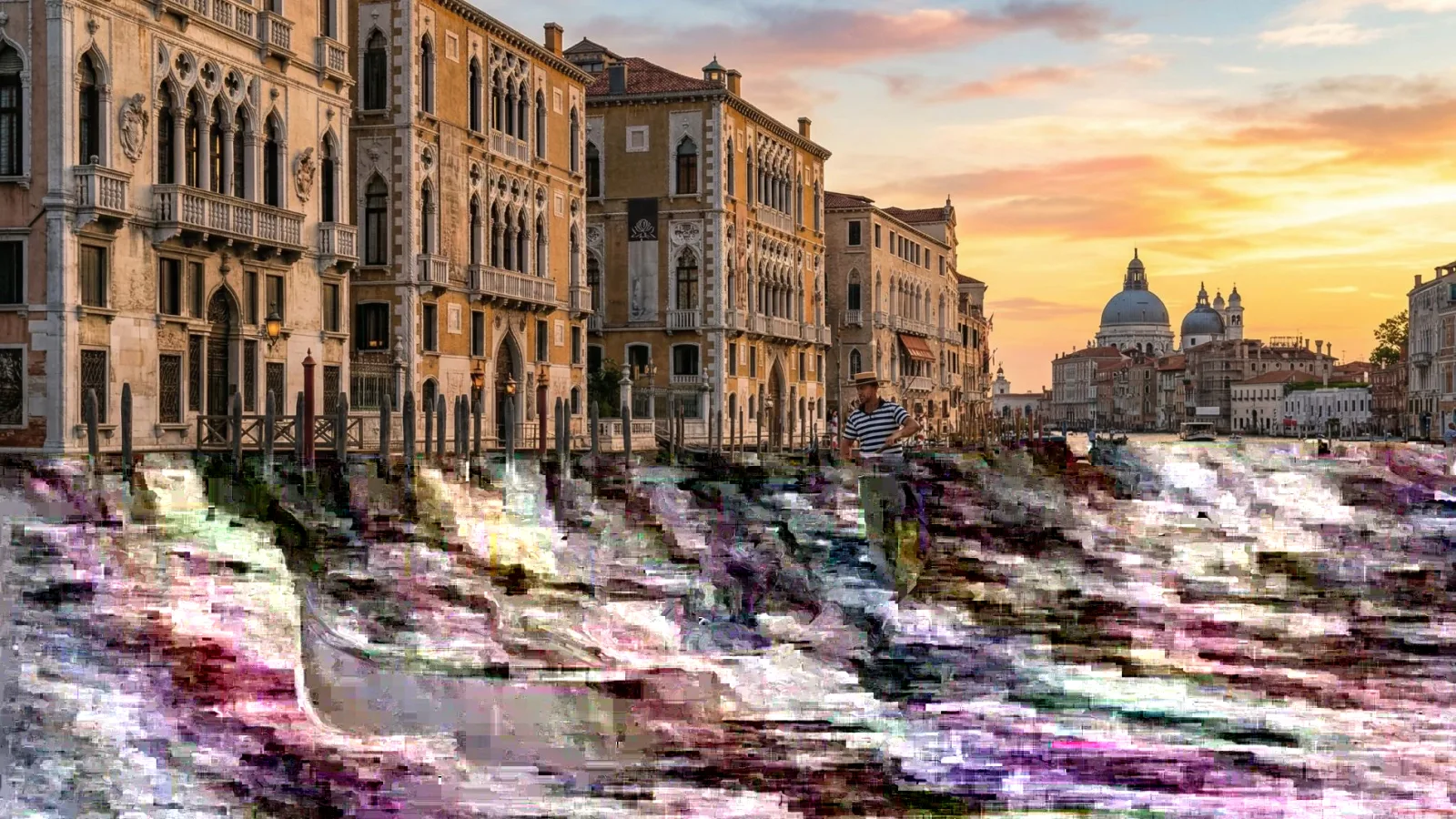
2. Venice Rests on a Submerged Forest of Petrified Wooden Logs
The floating city of Venice is supported by millions of wooden trunks driven deep into the mud of the Venetian Lagoon. When early inhabitants built the foundation over a millennium ago, they drove dense timber stakes made of larch and oak into oxygen-depleted subsoil. Because the mud lacked oxygen, decay-causing micro-organisms could not survive to rot the timber. Over centuries, mineral-rich subterranean water permeated the submerged wood, effectively turning the piles into petrified stone structures capable of supporting massive stone palaces.
3. Ancient Roman Concrete Heals Its Own Cracks Using Quicklime
For decades, scientists struggled to understand why ancient Roman harbour walls and aqueducts outlasted modern concrete structures. Researchers at MIT discovered that Roman builders used a technique called hot mixing with quicklime, creating distinct millimetre-sized white inclusion pockets known as lime clasts. When cracks inevitably form in the concrete, rainwater seeping into the fissure dissolves these calcium-rich clasts. The solution then recrystallises as calcium carbonate, effectively glueing the crack shut automatically before structural failure occurs.
4. A Town in Abruzzo Features a Completely Free 24-Hour Wine Fountain
In the small town of Caldari di Ortona in the Abruzzo region, thirsty travellers can sample red wine directly from a public fountain free of charge. Installed in 2016 by the Dora Sarchese winery, the fontana del vino sits along the Cammino di San Tommaso, a famous historical pilgrimage route between Rome and Ortona. The fountain dispenses locally produced Montepulciano d'Abruzzo around the clock. It was designed primarily to offer refreshment to weary pilgrims walking the trail, though curious tourists are equally welcome.
5. A Massive Underground Catacomb Network Lies Hidden Beneath Rome
Beneath the modern streets of Rome lies a subterranean network containing hundreds of miles of multi-tiered tunnels and chambers. Ancient Roman law, notably embedded within the Twelve Tables, strictly prohibited the burial or cremation of human remains inside the formal boundary of the city wall, known as the pomerium. To honor their dead, early Christians and Jewish communities excavated vast networks into the soft volcanic tufa rock outside the city walls. These underground cemeteries eventually housed millions of burials across centuries of Roman history.
6. Italian Police Drive a Custom Supercar to Transport Donor Organs
The Italian State Police force operates a specially outfitted Lamborghini Huracán capable of reaching speeds over 185 miles per hour. Rather than chasing typical traffic violators, this high-performance vehicle is primary tasked with urgent medical delivery missions. The supercar features a specialized refrigerated trunk compartment designed for the safe, ultra-rapid transport of donor organs to distant hospitals across the country. In several urgent cases, drivers have delivered donor kidneys across hundreds of miles in under two hours, saving lives when helicopter transport was unavailable.
7. The Trevi Fountain Generates Over a Million Euros a Year for Charity
Every day, thousands of visitors toss coins over their left shoulders into Rome's 18th-century Trevi Fountain to ensure a future return to the Eternal City. City workers use suction hoses and broom rakes to collect these coins daily from the fountain's basin. The collected currency totals roughly 1.5 million euros annually. Rather than entering general municipal funds, the entire sum is handed over to Caritas, a Catholic non-profit organization that uses the funds to operate free food pantries, shelters, and social supermarkets for Rome's vulnerable residents.
8. Italy Contains All Three of Mainland Europe’s Active Volcanoes
Italy sits right along the complex tectonic boundary where the African and Eurasian plates collide, making it home to mainland Europe's only three active volcanoes. Mount Vesuvius near Naples remains famous for destroying Pompeii in 79 CE and is still considered exceptionally dangerous due to the surrounding population density. Mount Etna on the island of Sicily is Europe's tallest and most active volcano, frequently displaying spectacular lava flows. Stromboli, located in the Tyrrhenian Sea, has been continuously erupting for thousands of years, earning it the nickname Lighthouse of the Mediterranean.
9. An Alpine Village Built a Giant Computer-Controlled Mirror to Capture Sunshine
The tiny village of Viganella sits at the bottom of a deep valley in the Italian Alps surrounded by steep mountains. Because of its geography, the village receives no direct sunlight for 83 consecutive days each winter, from November 11 to February 2. To combat the seasonal darkness, local engineers installed a massive 8-by-5-metre steel mirror on a peak 1,100 metres above the town in 2006. Controlled by software, the mirror shifts its angle throughout the day to track the sun and reflect warm sunlight directly down into the main public square.
10. The Concept of Medical Quarantine Was Pioneered in 14th-Century Venice
During the devastating Bubonic Plague outbreaks of the 14th century, the Republic of Venice instituted strict public health maritime controls. Incoming ships were required to anchor off the coast at designated isolation islands in the lagoon before crew or cargo could land. Initially set at 30 days (a trentina), Venetian authorities extended the mandatory isolation period to 40 days, known in Italian as quaranta giorni. This practice provided the root for the modern word quarantine and established a foundational precedent for global epidemiological control.
11. Italy Holds the Global Record for the Most UNESCO World Heritage Sites
With its vast artistic legacy and deep historical footprints, Italy leads the world in preserved historical and cultural treasures. As of recent tallies, the nation boasts 60 officially designated UNESCO World Heritage sites, tied with or edging out China for the highest count on earth. These sites include intact ancient Roman cities, entire Renaissance urban centres like Florence and Venice, dramatic natural landscapes like the Dolomites, and historic vineyard estates scattered across Piedmont and Tuscany.
12. The World’s Oldest Continuously Operating University Is in Bologna
Founded in 1088, the University of Bologna holds the distinction of being the oldest university in continuous operation in the world. It was the institution that coined the Latin term universitas to describe its self-governing guild of students and scholars. Over the centuries, the university shaped European law and science, educating prominent historic figures such as Nicolaus Copernicus, Petrarch, and Laura Bassi, who became the world's first woman to be offered an official academic teaching post at a university in 1732.
13. Sardinia Hosts One of the World's Highest Concentrations of Centenarians
The mountainous island of Sardinia contains the Ogliastra region, which was recognized as the world's very first official Blue Zone—a geographic area where people live measurably longer lives. Sardinia has an unusually high concentration of centenarians, with a male-to-female centenarian ratio nearly equal compared to the rest of the world where women outlive men significantly. Researchers attribute this extreme longevity to a mix of unique genetic factors, a daily diet rich in local plant foods and sheep's milk cheese, consistent low-intensity physical activity from steep mountain terrain, and strong social ties.
14. Italy Completely Encompasses Two Independent Sovereign Microstates
Italy is one of only two nations in the world that completely encloses other independent sovereign states within its external borders. Nestled inside the city of Rome is Vatican City, the world's smallest sovereign state by both area and population, which serves as the global spiritual seat of the Roman Catholic Church. In northern Italy lies San Marino, a landlocked microstate spanning just 24 square miles that claims to be the world's oldest surviving constitutional republic, having been established in the year 301 CE.
15. A Venetian Physician Invented the First Scaled Medical Thermometer
While Galileo Galilei pioneered an early temperature-measuring device known as the thermoscope, it lacked a standardized numerical scale. In 1612, Venetian physician Santorio Santorio modified Galileo's design by adding a numeric scale to measure changes in human body temperature. Santorio introduced the device to clinical medicine, asking patients to hold a glass bulb in their mouths or hands to track fever cycles, laying the groundwork for modern clinical diagnostics.
Sources & References
This AI-assisted post was rigorously curated and fact-checked for accuracy by:
 Martin Roháček
How fun was this article? 🤔
Tap a star to rate it
🧠 Quiz: How closely were you paying attention?
10 questions — all answers are in the article above!
Enjoyed these facts? There's more! 💌
Fresh fun facts in your inbox. No spam, ever.