The Bridge Between Continents: 15 Fascinating Facts About Türkiye
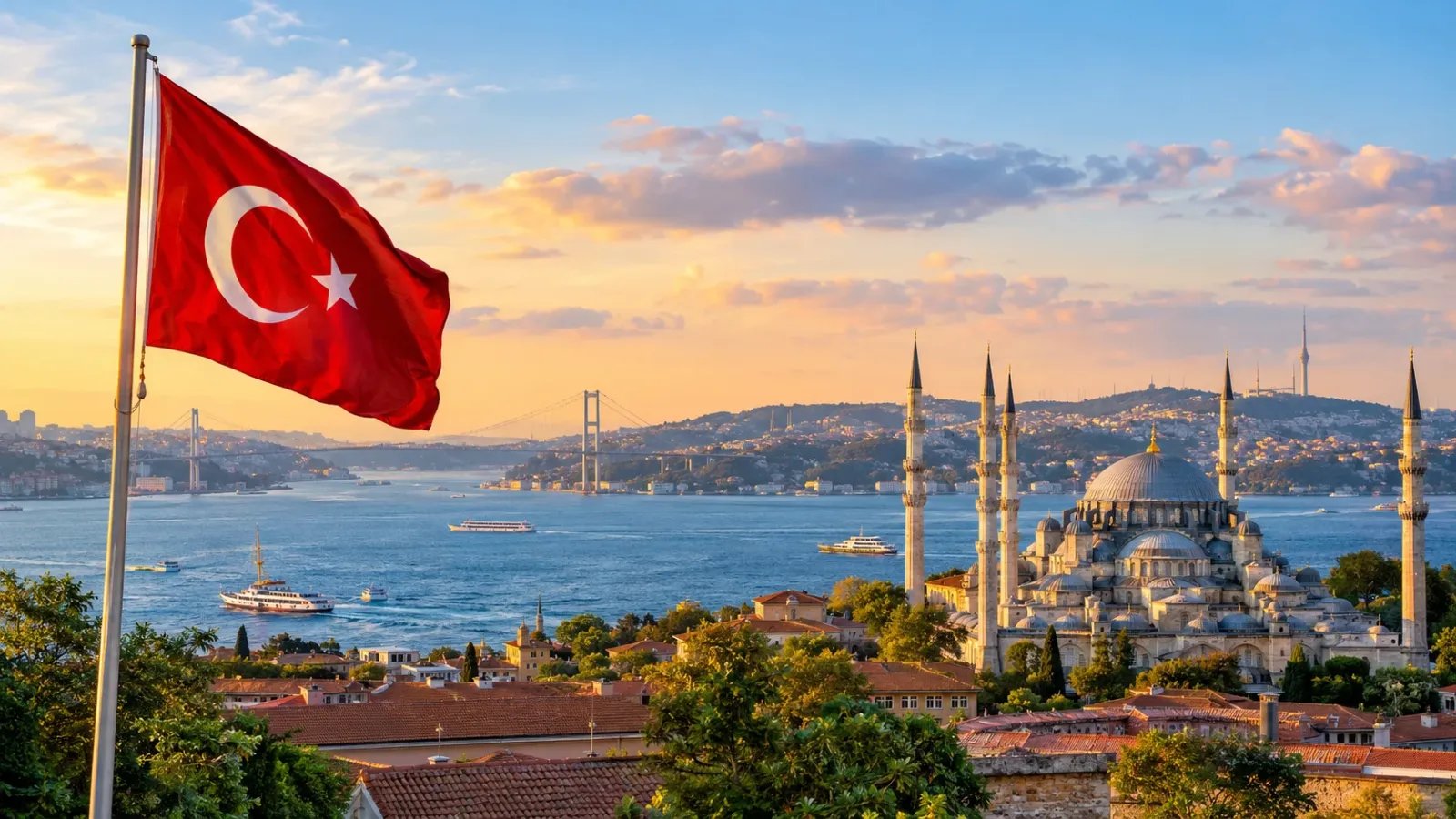
Türkiye sits where Europe meets Asia, and its landscapes hold some of the oldest monuments in the world, from Göbekli Tepe to Ephesus and Hagia Sophia. With more than 50 million foreign visitors a year, it is one of the most popular destinations on Earth. Discover 15 fascinating facts about the country that links two continents.
1. The country officially changed its English name to Türkiye in 2022.
In 2022, Turkey asked the United Nations and other organizations to use the name Türkiye, closer to how the name is written in Turkish. The UN registered the change in June 2022. Both "Turkey" and "Türkiye" are still widely used in English, and the country is the same one that has been welcoming travelers for centuries.
2. It lies on two continents.
Most of the country, about 97 percent, lies in Anatolia, in Asia, while a small part in the northwest, East Thrace, is in Europe. The two are separated by the Bosphorus, the Sea of Marmara, and the Dardanelles. Istanbul is built on both sides of the Bosphorus, so it is one of the few major cities in the world that spans two continents.
3. More than 50 million foreign visitors come each year.
Türkiye reported more than 50 million foreign visitors in 2024, putting it among the most visited countries in the world. Visitors come for beaches on the Aegean and Mediterranean coasts, ancient ruins, the bazaars of Istanbul, and the landscapes of Cappadocia.
4. Hagia Sophia has been a church, a mosque, a museum, and a mosque again.
The Byzantine emperor Justinian had Hagia Sophia built between 532 and 537. It was the world's largest cathedral for almost a thousand years. After the Ottoman conquest in 1453 it became a mosque, in 1934 it was turned into a museum, and in 2020 it was reconverted into a mosque. Its huge dome remains one of the great achievements of architecture.
5. Göbekli Tepe is far older than Stonehenge.
Göbekli Tepe, in southeastern Türkiye, has circles of huge carved stone pillars built by hunter-gatherers more than 11,000 years ago, about 6,000 years before Stonehenge. The discovery overturned the idea that monumental building began only after farming. It became a UNESCO World Heritage Site in 2018.
6. Cappadocia has fairy chimneys and underground cities.
In central Anatolia, volcanic ash hardened into soft rock that wind and water eroded into cone-shaped "fairy chimneys." People carved homes, churches, and even whole underground cities such as Derinkuyu, which has many levels reaching dozens of meters deep and could shelter large numbers of people. Today visitors float over the valleys in hot-air balloons at dawn.
7. Ephesus was one of the great cities of the ancient world.
The ruins of Ephesus on the Aegean coast include the Library of Celsus, built in the 2nd century CE, and a huge theater. Nearby stood the Temple of Artemis, one of the Seven Wonders of the Ancient World, of which only a single column survives. Ephesus was added to the UNESCO World Heritage List in 2015.
8. The Grand Bazaar is one of the oldest and largest covered markets.
Construction of Istanbul's Grand Bazaar began in 1455, soon after the Ottoman conquest of the city. Today it has around 60 covered streets and more than 4,000 shops, selling carpets, ceramics, jewelry, spices, and leather goods. It attracts millions of visitors each year.
9. Tulips came to Europe from the Ottoman world.
Tulips grew wild in Central Asia and were cultivated and prized by the Ottomans. In the 16th century, the Habsburg ambassador Ogier Ghiselin de Busbecq is credited with sending tulip bulbs to Vienna, from where they spread to the Netherlands. Istanbul still celebrates the flower with a tulip festival every April.
10. Turkish coffee is on the UNESCO list.
Turkish coffee is prepared by simmering very finely ground coffee with water, and often sugar, in a small pot called a cezve, and it is served with the grounds. UNESCO listed "Turkish coffee culture and tradition" as intangible cultural heritage in 2013. After finishing the cup, some people read the patterns left in it as a form of fortune telling.
11. Pamukkale looks like a cotton castle.
The name Pamukkale means "cotton castle." Thermal water rich in calcium flows down a hillside and deposits white travertine terraces and pools. At the top lie the ruins of the ancient city of Hierapolis. Hierapolis-Pamukkale has been a UNESCO World Heritage Site since 1988.
12. Turks are among the world's biggest tea drinkers.
Tea, served in small tulip-shaped glasses, is offered everywhere, from carpet shops to homes. Türkiye is often reported to have one of the highest tea consumption rates per person in the world. Much of the tea is grown along the Black Sea coast, around Rize.
13. Mount Ararat is the country's highest mountain.
Mount Ararat, a volcano near the border with Armenia and Iran, rises to about 5,137 meters. The Bible says Noah's ark came to rest on "the mountains of Ararat," and some traditions link the story to this peak, though the text does not name this specific mountain.
14. The whirling dervishes come from Konya.
The Mevlevi Sema ceremony, in which dervishes in white robes whirl in a meditative dance, comes from the tradition of the 13th-century poet and mystic Rumi, who lived and died in Konya. UNESCO recognized the ceremony as intangible cultural heritage in 2008.
15. The Lycian Way is a famous long-distance trail.
The Lycian Way runs for about 540 kilometers along the Mediterranean coast of southwestern Türkiye, from near Fethiye to near Antalya. It passes through pine forests, villages, and ruins of the ancient Lycian civilization, with views of the turquoise sea.
Sources & References
This AI-assisted post was rigorously curated and fact-checked for accuracy by:
 Martin Roháček
How fun was this article? 🤔
Tap a star to rate it
🧠 Quiz: How closely were you paying attention?
10 questions — all answers are in the article above!
Enjoyed these facts? There's more! 💌
Fresh fun facts in your inbox. No spam, ever.