Discovering the Dutch: 15 Fascinating Facts About the Netherlands
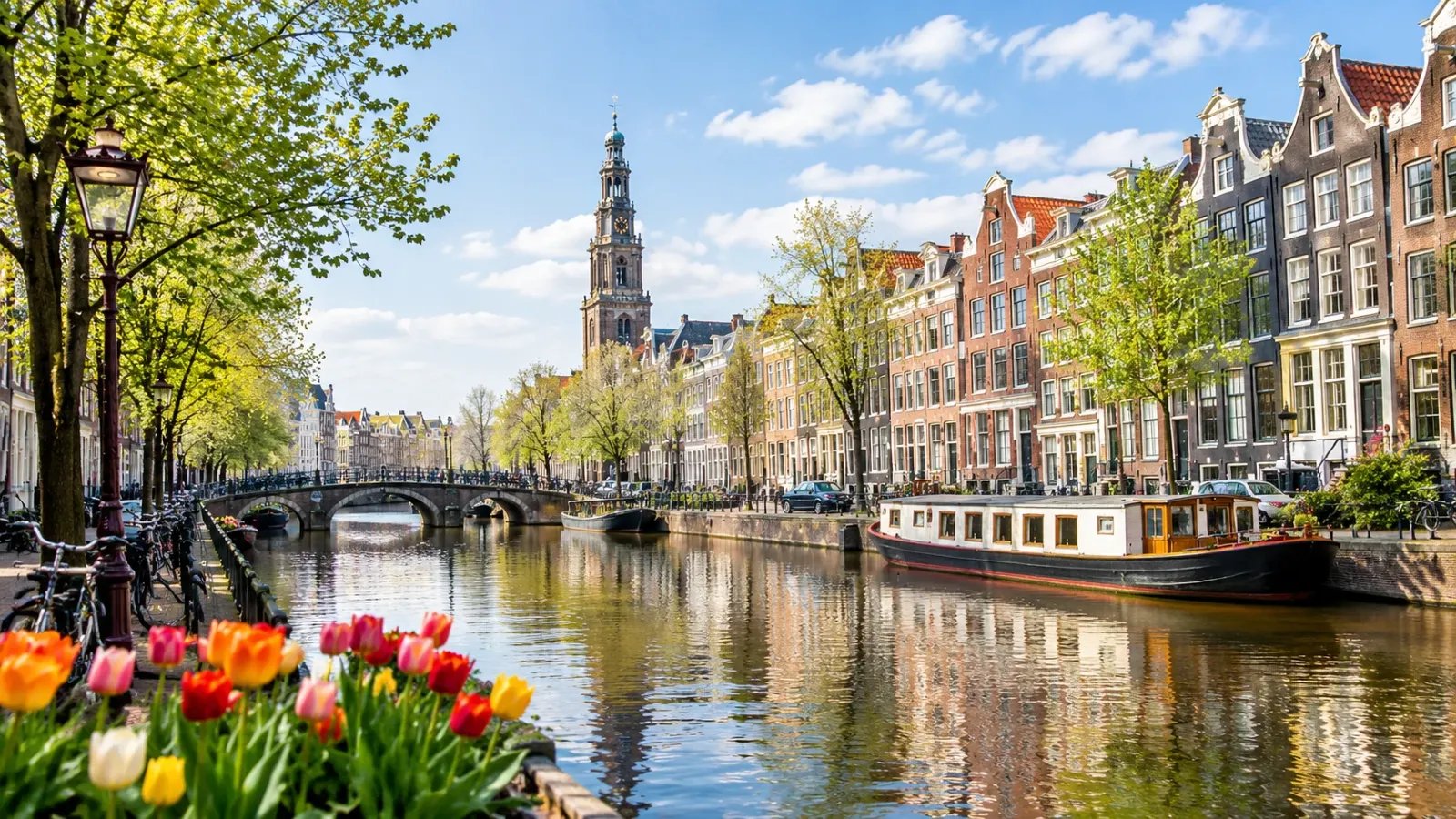
The Netherlands has built much of its land from the sea, and it shows in its canals, dikes, windmills, and bicycle culture. Visitors come for tulips, Rembrandt, Van Gogh, and cheese markets in one of Europe's most densely populated countries. Discover 15 fascinating facts about the land below the waves.
1. About a quarter of the Netherlands is below sea level.
Roughly 26 percent of the country lies below sea level, and a much larger area is at risk of flooding without protection. For centuries the Dutch have drained land, built dikes, and pumped water out of polders, areas of reclaimed land. Windmills were once used to power the pumps.
2. A deadly flood in 1953 led to the Delta Works.
On the night of 31 January to 1 February 1953, a North Sea storm surge broke through dikes in the southwest of the country and killed 1,836 people. In response, the Dutch built the Delta Works, a huge system of dams, sluices, and storm surge barriers that was completed in 1997. It is considered one of the great engineering achievements of the 20th century.
3. Holland is not the same as the Netherlands.
Holland is only two of the country's twelve provinces, North Holland and South Holland, although the name is often used for the whole country. Amsterdam is the constitutional capital, but the government, parliament, and royal working palace are in The Hague.
4. There are more bicycles than people.
The Netherlands has an estimated 23 million bicycles for about 18 million people. Dedicated cycle lanes, traffic lights for cyclists, and huge bicycle parking garages are part of daily life, and cycling is the way many Dutch people commute, shop, and go to school.
5. Amsterdam's Canal Ring is a World Heritage Site.
The 17th-century canal ring of Amsterdam, built during the Dutch Golden Age, was added to the UNESCO World Heritage List in 2010. The city has around 100 kilometers of canals and about 1,500 bridges. Tall, narrow merchant houses line the water, many with hooks on their gables for hoisting furniture.
6. Tulip mania was real, but exaggerated.
In the 1630s, prices for tulip bulbs in the Dutch Republic rose sharply before collapsing in February 1637. The episode is often described as the first speculative bubble. Modern historians believe that its scale and its economic impact have been exaggerated in popular retellings.
7. Keukenhof plants millions of bulbs.
Keukenhof, near Lisse, is one of the world's largest flower gardens. Each year about seven million bulbs are planted, and the park opens for around eight weeks in spring, usually from late March to mid-May. Tulips, daffodils, and hyacinths bloom in carefully designed displays.
8. The Rijksmuseum holds Rembrandt's "Night Watch."
The Rijksmuseum in Amsterdam holds the most important collection of Dutch art, including Rembrandt's huge group portrait The Night Watch, completed in 1642. The Van Gogh Museum, nearby, has the world's largest collection of the artist's work.
9. Anne Frank hid in Amsterdam.
From July 1942 to August 1944, Anne Frank, her family, and four other people hid from the Nazis in a concealed annex behind her father's business on the Prinsengracht in Amsterdam. During this time she wrote the diary that was published after the war. The Anne Frank House is now a museum visited by well over a million people a year.
10. Kinderdijk has 19 windmills.
The Kinderdijk area, near Rotterdam, has 19 windmills built around 1740 to drain the surrounding polder. They are the best-known windmill site in the country and were added to the UNESCO World Heritage List in 1997. In summer, some of the mills are open to visitors.
11. Alkmaar has a traditional cheese market.
The cheese market in Alkmaar has been held since 1593 and takes place on Friday mornings in spring and summer. Porters in white clothes and colored hats carry round Gouda and Edam cheeses on wooden sledges, while traders haggle by clapping hands.
12. Schiphol Airport is below sea level.
Amsterdam Airport Schiphol lies about 3.4 meters below sea level, on the bed of a former lake that was drained in the 19th century. The name Schiphol is often said to mean "ship hole." It is one of the busiest airports in Europe.
13. The Dutch are among the tallest people in the world.
The average Dutch man is about 183 centimeters tall and the average woman about 170 centimeters, among the highest in the world. Researchers have linked this to a mix of genetics, good nutrition, and health care.
14. King's Day turns the country orange.
Each year on 27 April, the birthday of King Willem-Alexander, the Netherlands celebrates King's Day. People wear orange, the color of the royal House of Orange-Nassau, and flea markets and street parties fill towns. In Amsterdam, canals are crowded with boats.
15. The stroopwafel comes from Gouda.
The stroopwafel, a thin waffle sandwich filled with caramel syrup, is said to have been invented in Gouda in the late 18th century, perhaps around 1784, by a baker called Gerard Kamphuisen. Travelers often place one over a hot cup of coffee to soften the syrup.
Sources & References
This AI-assisted post was rigorously curated and fact-checked for accuracy by:
 Martin Roháček
How fun was this article? 🤔
Tap a star to rate it
🧠 Quiz: How closely were you paying attention?
10 questions — all answers are in the article above!
Enjoyed these facts? There's more! 💌
Fresh fun facts in your inbox. No spam, ever.