The Dark Knight Unmasked: 15 Fascinating Facts About Batman on Screen
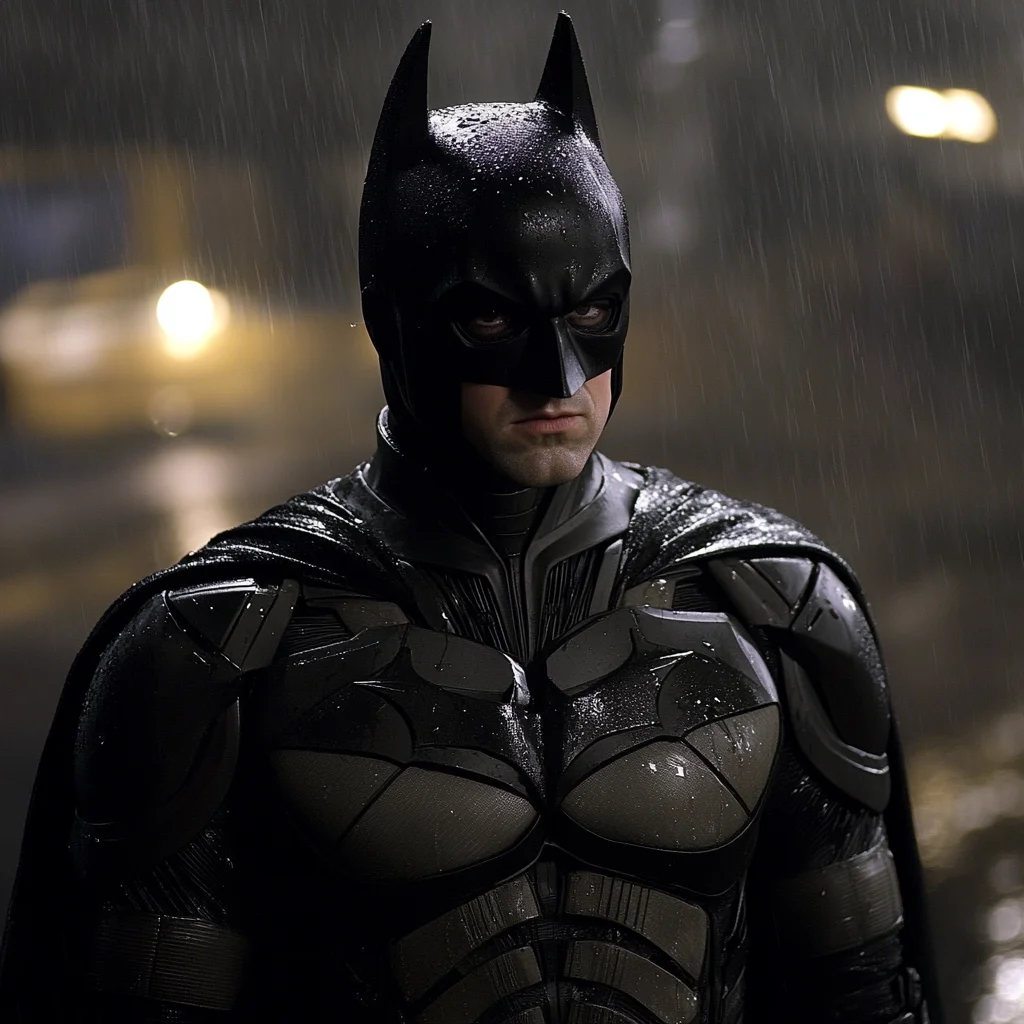
From gothic blockbusters to gritty modern reboots, Batman's cinematic legacy spans decades of innovative filmmaking, dangerous stunts, and surprising behind-the-scenes drama. Discover how Ivan Reitman almost made a comedic Batman film starring Bill Murray, why Michael Keaton couldn't turn his head in the iconic 1989 suit, and how Christopher Nolan personally directed every single shot of Batman Begins without a second unit. These 15 fascinating facts unveil the secrecy, incredible engineering, and creative genius that brought Gotham City to life.
1. Ivan Reitman Almost Directed a Comedic 1980s Batman Starring Bill Murray
Before Tim Burton transformed Batman into a gothic blockbuster in 1989, director Ivan Reitman was attached to helm a campier adaptation. Reitman envisioned Bill Murray as Bruce Wayne and Eddie Murphy as Robin, aiming for a tone closer to the 1960s television show. Warner Bros. eventually scrapped the comedic approach in favor of a darker cinematic vision, paving the way for Burton's landmark production. Fans were initially outraged when Michael Keaton, primarily known for comedic roles like Beetlejuice, was cast, sending over 50,000 angry letters to the studio. Keaton's intense performance ultimately silenced skeptics and redefined superhero cinema forever.
2. Christopher Nolan Famously Skipped Using a Second Unit Director on Batman Begins
Most major Hollywood blockbusters rely on a second unit crew to capture action sequences, stunt footage, and background shots while the main unit works with lead actors. Director Christopher Nolan broke this industry norm by personally directing every single shot in 2005's Batman Begins. Nolan felt that handing off action sequences to another director would fracture the film's visual style and thematic cohesion. This hands-on approach meant Nolan personally supervised all physical stunts, miniatures, and location photography. His dedication established a signature realistic aesthetic that set the standard for the entire Dark Knight trilogy.
3. Jack Nicholson Negotiated a Historic Deal That Earned Him Up to $90 Million
When Jack Nicholson agreed to play the Joker in Tim Burton's 1989 film, he took a lower upfront salary in exchange for a percentage of the film's gross box-office receipts and total merchandise earnings. This unprecedented deal paid off handsomely, eventually yielding Nicholson an estimated $60 million to $90 million. Beyond financial savvy, Nicholson infused his performance with personal flairs, including paying homage to Cesar Romero's 1966 TV Joker by putting on glasses in specific scenes. His legendary performance established the standard for villainous movie deals and blockbuster character portrayals.
4. The Dark Knight Dedicated Its Credits to Stunt Technician Conway Wickliffe
The end credits of Christopher Nolan's 2008 masterpiece The Dark Knight contain a poignant tribute reading: "In memory of our friends Heath Ledger and Conway Wickliffe." While Ledger's tragic death before the film's release is widely known, Wickliffe was a key special effects technician who died during pre-production stunt testing. In September 2007, while filming a test run for a car chase involving the Batmobile in Surrey, England, the vehicle carrying Wickliffe crashed into a tree. The filmmakers ensured his vital contributions and sacrifice were honored prominently alongside Ledger's iconic turn as the Joker.
5. Paul Dano Performed Over 200 Takes for a Single Scene in The Batman
Director Matt Reeves maintained extreme perfectionism while filming 2022's The Batman, which was particularly intense for actor Paul Dano as Edward Nashton, the Riddler. For the scene where the villain video-calls Batman and the police while holding a victim hostage, Dano recorded the segment over 200 times. Reeves gave Dano total freedom to improvise subtle variations in tone, cadence, and menace, capturing slight shifts in emotional stability. Dano even wore plastic wrap under his costume to prevent shed DNA, causing him intense physical discomfort across dozens of long takes. The resulting footage provided the raw, unhinged intensity that defined the character's chilling modern iteration.
6. The Batman Transformed Liverpool into a Moody, Gothic Gotham City
To create a unique urban environment distinct from New York City or Chicago, director Matt Reeves filmed extensive parts of 2022's The Batman in Liverpool, England. Iconic landmark buildings like St. George's Hall, the Royal Liver Building, and Anfield Cemetery were used to construct Gotham's ancient, decay-laden architectural palette. The UK city provided intricate Victorian and neo-classical architecture that gave Gotham a weathered, centuries-old history. Visual effects artists subtly layered digital skyscrapers into the background of Liverpool streets to blend gothic architecture with modern metropolis elements.
7. Michael Caine's Alfred Was Grounded in Real British Special Forces History
In Christopher Nolan's trilogy, butler Alfred Pennyworth's past is explicitly tied to an elite British military background, matching his modern comic book origins. Michael Caine worked with Nolan to build an authentic backstory for Alfred as a former member of the Special Air Service (SAS) and secret intelligence services. This tactical experience explains how Alfred can manage Bruce Wayne's injuries, repair military gear, and offer genuine tactical guidance in high-stakes situations. Caine played the character not as a mere household servant, but as a battle-hardened father figure capable of handling dangerous operations.
8. The Cape in Batman Begins Relied on Electrostatically Charged Fabric
Designing a Batman cape that could believably fold into a flowing cloak yet instantly stiffen into a rigid hang-glider required genuine material innovation. The film's visual effects team collaborated with British military contractors to create a custom fabric based on nylon parachute material. The fabric was treated through a process called electrostatic flocking, where tiny nylon fibers were attached via electrical charge to create a velvet-like texture. When an electric current passed through the cape's special frame, the material locked into shape to mimic actual bat wing mechanics.
9. Chris O'Donnell Accidentally Crashed the Batmobile During Batman Forever
During production of Joel Schumacher's 1995 blockbuster Batman Forever, Robin actor Chris O'Donnell took the custom-built Batmobile out for an unauthorized drive. While maneuvering the high-powered prop vehicle around the studio backlot, O'Donnell accidentally clipped a concrete curb, smashing the front fender and causing significant damage. The film crew had to pause shooting to perform emergency bodywork repairs on the sole functioning stunt Batmobile. Despite the costly accident, the cast and crew frequently teased O'Donnell about the mishap throughout the remainder of the production.
10. The Nightmare Demon Suit in Batman Begins Was a Physical Costume
When Scarecrow's fear toxin infects Jonathan Crane in Batman Begins, he hallucinates Batman as a terrifying, tar-dripping demon with glowing eyes. Rather than generating this nightmarish vision entirely through digital animation, the production team created a physical creature suit. Actor Christian Bale wore an intricate rubber and foam suit designed with liquid-like textures and extended, terrifying facial features. Visual effects artists then augmented the physical suit with subtle digital smoke and oozing effects, creating a grounded yet unsettling monstrous visual.
11. Heat and Noise Kept Christian Bale from High-Speed Tumbler Driving
The Tumbler, introduced as the Batmobile in Batman Begins, was a custom-built 2.5-ton monster powered by a 5.7-liter Chevy V8 engine capable of reaching 100 miles per hour. Because the vehicle lacked conventional shock absorbers and internal insulation, the interior cockpit became dangerously hot and noisy during stunt runs. While Christian Bale did drive the Tumbler for select slow close-up shots, insurance regulations and safety protocols prohibited him from driving during high-speed jumps and heavy stunt sequences. Professional stunt driver George Cottle handled the extreme driving to protect both the lead actor and the multimillion-dollar vehicle.
12. Anton Furst's 1989 Batmobile Was Built Around Two Chevy Impala Chassis
The iconic 1989 Batmobile designed by Anton Furst for Tim Burton's film remains one of the most famous vehicles in cinema history. To construct the sleek, jet-turbine vehicle, the fabrication crew welded together two Chevrolet Impala chassis to provide the necessary length and wheelbase. The car featured a custom fiberglass body molded over a hand-sculpted clay frame and was powered by a 350-cubic-inch V8 engine. Five distinct versions of the car were built for production, including special lightweight models designed specifically for high-speed turns and roll sequences.
13. Two-Face's Coin Flip in Batman Forever Was Choreographed by a Magician
In Batman Forever (1995), Tommy Lee Jones played Harvey Dent / Two-Face, who relies on his scarred silver coin to make life-and-death decisions. To make the frequent coin flips look fluid and effortlessly theatrical, the production hired a professional sleight-of-hand magician to train Jones. Jones practiced intricate coin rolls, double flips, and blind catches for weeks until he could execute the moves without looking at his hands. Batman also uses tactical decoy coins to confuse Two-Face during their final confrontation, showing off Bruce Wayne's analytical detective skills.
14. Michael Keaton Could Not Turn His Head Inside the Original 1989 Batman Suit
The famous rubber cowl created for Michael Keaton in 1989 was molded from solid neoprene, fused directly into the neck and shoulder piece. Because the material was thick and rigid, Keaton could not physically turn his head left or right while wearing the suit. To look at anything beside him, Keaton had to turn his entire torso, creating a distinctive, rigid head-turn movement that became an iconic character trait. This physical limitation persisted through Batman Returns (1992) until costume designers finally separated the cowl from the shoulders in later cinematic iterations.
15. The Batcave Set in Batman Begins Was Built Inside a Giant Airship Hangar
Rather than relying on blue screens, Christopher Nolan insisted on constructing the Batcave as a massive physical set inside Cardington Airship Hangar 1 in Bedfordshire, England. The set featured real running water, cascading waterfalls created by pumping over 12,000 gallons of water per minute, and actual artificial rock formations built around steel trusses. The surveillance computer consoles and equipment platforms were physically installed within the cavernous space to give actors authentic environmental interactions. The natural acoustics of the giant hangar added real reverberation to the dialogue, heightening the scene's subterranean realism.
Sources & References
This AI-assisted post was rigorously curated and fact-checked for accuracy by:
 Martin Roháček
How fun was this article? 🤔
Tap a star to rate it
🧠 Quiz: How closely were you paying attention?
10 questions — all answers are in the article above!
Enjoyed these facts? There's more! 💌
Fresh fun facts in your inbox. No spam, ever.