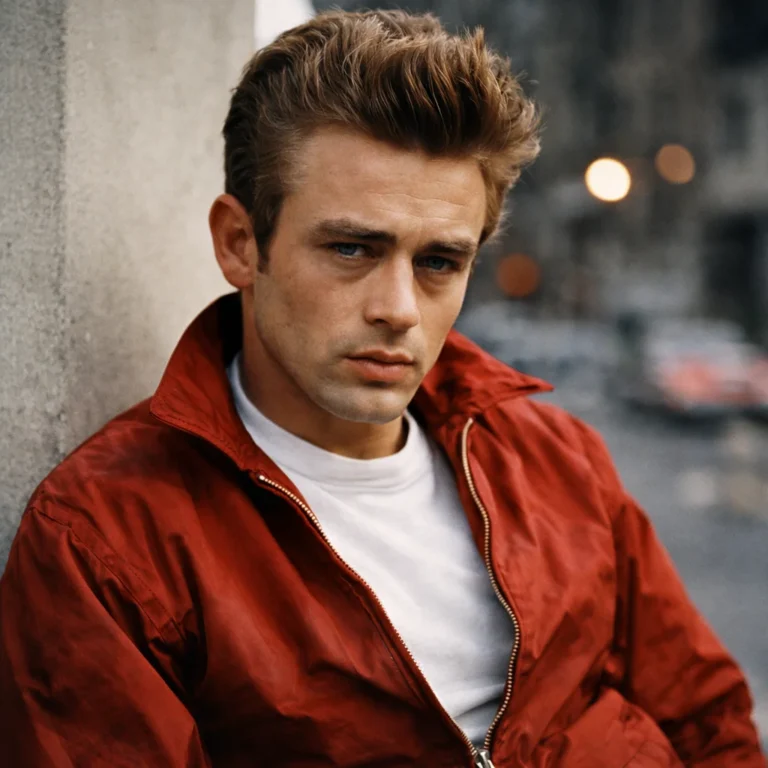
James Dean defined the rebellious spirit of the 1950s with just three major films. He captivated audiences with his raw emotion and cool style. Furthermore, he lived his life at full speed both on and off the screen. Consequently, he remains a Hollywood icon seventy years after his tragic death. Explore these fascinating details about the Rebel Without a Cause.
James Dean
James Dean started his career in a Pepsi commercial. Specifically, he danced around a jukebox in the 1950 ad for his very first professional acting job.
He lost his two front teeth in a barn accident as a child. Although he told people he lost them in a motorcycle crash, he actually knocked them out while swinging on a trapeze.
The actor served as a stunt tester for a game show. He worked for the show Beat the Clock to test safety, but producers fired him because he completed the tasks too quickly.
Alec Guinness warned him about his car seven days before he died. Eerily, the British actor told Dean that if he drove the Porsche, he would be dead within a week.
He received a speeding ticket just two hours before his fatal crash. Police pulled him over on his way to the race and cited him for driving 65 in a 55 zone.
James Dean is the only actor with two posthumous Oscar nominations. remarkably, the Academy nominated him for Best Actor for both East of Eden and Giant after he had already passed away.
He dated the actress who played Jerry Seinfeld’s mother. Liz Sheridan, known as Helen Seinfeld, wrote a book about her romantic relationship with Dean in New York.
The studio banned him from racing during the filming of Giant. He had to pause his racing career to protect the production, but he bought a new car immediately after shooting ended.
He performed magic tricks to entertain his friends. For one famous trick, he would put an unlit cigarette and a match in his mouth and pull out a burning cigarette.
Elizabeth Taylor gave him a Siamese cat named Marcus. She gifted him the pet while they filmed Giant, and he named it after his favorite uncle.
He suffered from terrible eyesight and wore thick glasses. Without his spectacles, he could barely see, which contrasts sharply with his cool on-screen image.
Ronald Reagan acted alongside him in a live TV drama. Furthermore, the future President reportedly felt confused by Dean’s improvisational style and unpredictable acting choices.
He relieved his nerves by urinating in front of the crew. Allegedly, he unzipped his pants on the set of Giant because he felt too anxious to perform the scene otherwise.
Parts of his wrecked car reportedly cursed other owners. After his death, the engine and transmission went into other race cars that subsequently crashed and killed their drivers.
Finally, he only saw one of his movies release while he was alive. East of Eden was the only film to hit theaters before his death, so he never witnessed the success of Rebel Without a Cause.
How useful was this post?
Click on a star to rate it!
This AI-assisted post was rigorously curated and fact-checked for accuracy by:
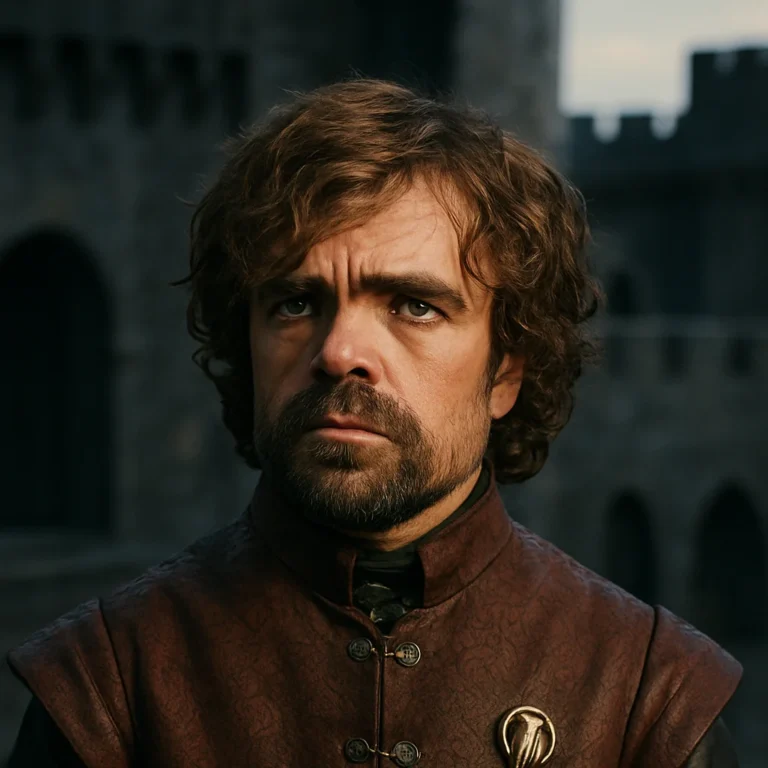
Peter Dinklage has become one of the most celebrated actors of his generation through his nuanced performances and groundbreaking portrayals. Best known for "Game of Thrones," his career spans film, theater, and voice work, marked by award-winning roles and advocacy.
Peter Dinklage
Peter Dinklage was born on June 11, 1969, in Morristown, New Jersey.
He has a form of dwarfism called achondroplasia and stands 4 ft 5 in (1.35 m) tall.
Dinklage broke into the film industry with the 1995 indie black comedy “Living in Oblivion.”
His breakout role came in 2003 with the critically acclaimed film “The Station Agent,” earning him widespread praise.
He is best known globally for playing Tyrion Lannister on the HBO fantasy series “Game of Thrones” (2011–2019).
For his role as Tyrion, Dinklage won four Primetime Emmy Awards for Outstanding Supporting Actor in a Drama Series.
He also took home a Golden Globe Award and a Screen Actors Guild Award for the same role.
Peter Dinklage is the only “Game of Thrones” cast member to receive an Emmy nomination for every season of the show.
Outside Game of Thrones, he has appeared in films such as “Elf,” “X-Men: Days of Future Past,” and “Three Billboards Outside Ebbing, Missouri.”
He voiced characters in video games, including “Destiny” and “Transformers: Rise of the Beasts.”
Peter Dinklage has a strong theater background, starring in plays like Shakespeare’s “Richard III” and Chekhov’s “Uncle Vanya.”
Known for his wit and intelligence, Dinklage often chooses roles that challenge stereotypes about people with dwarfism.
He is married to Erica Schmidt, a theater director, and they have two children.
Peter Dinklage is an outspoken advocate for diversity and inclusion in Hollywood, especially regarding roles for actors with disabilities.
Despite his fame, he maintains a private personal life and is respected for his humility and grounded personality.
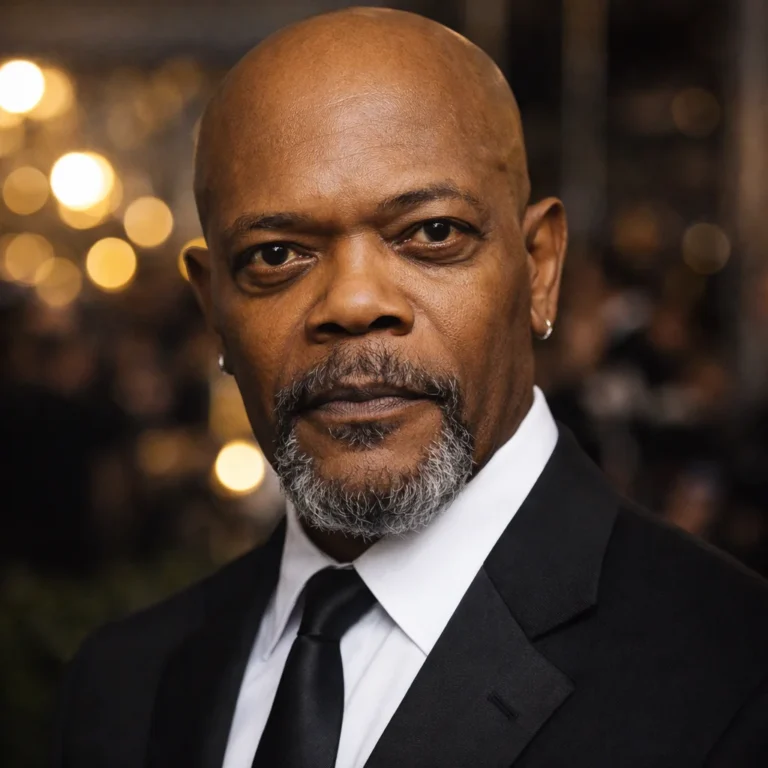
Samuel L. Jackson stands as a towering figure in cinema history with a presence that defines every scene he enters. While millions recognize his iconic voice and intense gaze, this legendary actor possesses many unique habits and surprising professional rules. Indeed, you can find a history of specialized contract clauses and unexpected hobby expertise behind his famous film roles. Furthermore, his journey from a young activist to the highest-grossing actor of all time remains a truly incredible story.
Samuel L. Jackson
Samuel L. Jackson is officially the highest-grossing actor of all time thanks to his many blockbuster film franchises. His movies have earned over 27 billion dollars globally, which places him ahead of every other star in Hollywood history.
He famously includes a special “golf clause” in every single film contract he signs for a new movie. This legal agreement allows him to leave the set twice a week to play golf at a local course nearby.
The actor struggled with a severe stutter during his childhood and used acting as a way to overcome it. Specifically, he discovered that using a certain famous curse word helped him find his rhythm and stop his speech blocks.
He personally requested a purple lightsaber for his role as Mace Windu in the Star Wars prequel trilogy. He wanted to be able to find himself easily during the massive battle scenes that featured many different Jedi characters.
George Lucas agreed to the unique color even though Jedi lightsabers usually only appeared in blue or green hues. Consequently, Jackson became the only character in the film universe to wield a weapon with that specific purple glow.
Samuel L. Jackson was a dedicated civil rights activist during his time as a student at Morehouse College. In 1969, he even participated in a protest that involved locking the school’s board of trustees inside a building.
He served as a pallbearer at the funeral of Martin Luther King Jr. shortly after the leader’s tragic death. This experience deeply impacted his worldview and his commitment to social justice throughout his long and successful professional career.
Surprisingly, he did not find mainstream fame until he was forty-five years old with his role in Pulp Fiction. This proves that success can arrive later in life if a person remains dedicated to their craft and passion.
He is a massive fan of comic books and actually gave Marvel permission to use his likeness for Nick Fury. The comic writers redesigned the character to look exactly like him years before he ever played the role on screen.
The actor once worked as a security guard for the popular television musical variety show called Soul Train. He watched many legendary musical acts perform while he stood off-camera to ensure the safety of the famous guests.
Samuel L. Jackson has appeared in over 150 movies throughout his career, which is a staggering number for any actor. He often works on several projects at the same time and rarely takes a long break from the camera.
He possesses a black belt in the martial art of judo, which he earned during his younger years. This physical training helps him maintain his incredible stamina and perform his own stunts in various high-octane action movie scenes.
The actor is a vegan and credits his plant-based diet for helping him maintain his health and energy levels. He made the switch several years ago and often advocates for the benefits of a lifestyle without animal products.
He famously recorded an audiobook version of the humorous children’s book Go the F**k to Sleep. The recording became an instant viral hit because his signature intense delivery perfectly matched the frustration of a tired parent.
Finally, Samuel L. Jackson never watches his own movies once they are finished and released to the public. He prefers to move on to the next creative challenge rather than dwelling on his past performances on the screen.