1. The Youngest Registered Soldier Was Only 12 Years Old
Driven by intense patriotism and the lure of adventure, thousands of underage boys actively lied about their birthdates to enlist in the military. The youngest authenticated soldier was a British boy named Sidney Lewis, who successfully joined the East Surrey Regiment at the astonishingly tender age of 12. His frantic mother eventually discovered his whereabouts and sent his birth certificate to the War Office, demanding his immediate return home from the brutal front lines of the Somme.
2. Enemies Shared a Legendary Christmas Truce in 1914
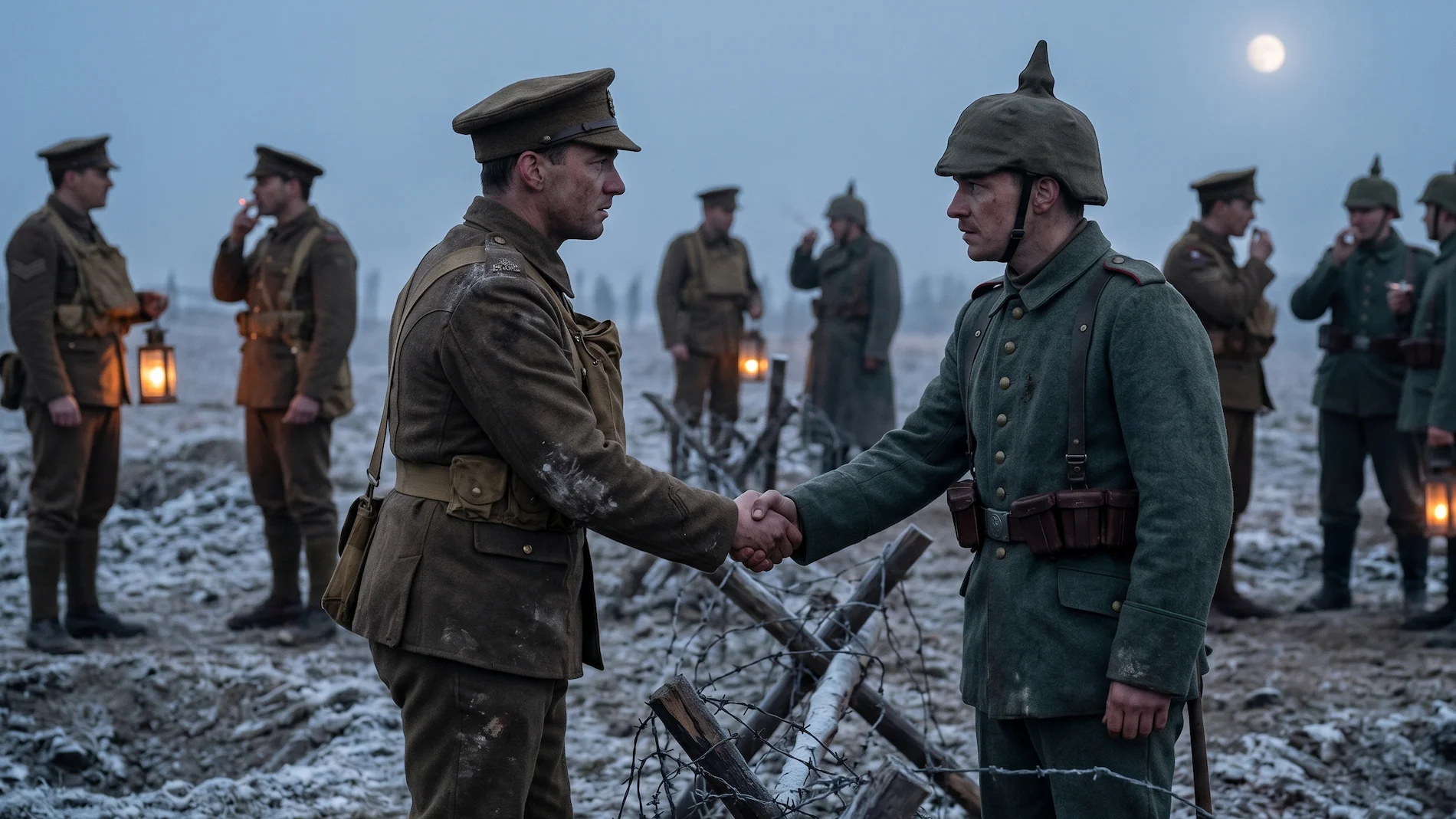
In one of the most poignant and surreal moments in military history, enemy soldiers temporarily ceased fighting on Christmas Day in 1914. British and German troops cautiously emerged from their muddy trenches to exchange small gifts, sing holiday carols, and even play spontaneous games of football in the desolate expanse of No Man’s Land. This unauthorized, temporary peace terrified military high commands on both sides, who subsequently issued strict orders to ensure such fraternization never happened again.
3. Carrier Pigeons and Messenger Dogs Were Crucial to Survival
Because heavy artillery barrages frequently destroyed fragile telegraph wires, military commanders relied heavily on highly trained animals to deliver critical frontline intelligence. Thousands of loyal messenger dogs sprinted through hail storms of bullets to carry vital notes, while homing pigeons successfully delivered messages with an astonishing 95 percent success rate. The bravery of these creatures proved just as essential to the war effort as human soldiers, saving countless lives when all modern communication systems completely failed.
4. The Conflict Birthed the Field of Modern Plastic Surgery
The unprecedented devastation caused by flying shrapnel and heavy machine-gun fire resulted in horrifying facial injuries that traditional medicine had never before encountered. In response, a brilliant surgeon named Harold Gillies pioneered revolutionary skin graft techniques at a specialized hospital in London to rebuild soldiers’ shattered faces. His groundbreaking, experimental operations not only restored function and dignity to thousands of disfigured veterans but also formally established the modern medical discipline of plastic surgery.
5. Horrifying Chemical Weapons Forced the Invention of Horse Gas Masks
World War I unleashed the terrifying specter of modern chemical warfare, introducing deadly chlorine and mustard gases to the stagnant trenches. Just as maritime tragedies like the sinking of the Lusitania and the Titanic forced critical overhauls in safety, this toxic battlefield leap required immediate defensive innovations for both men horses and beasts. Military engineers desperately designed specialized canvas gas masks for cavalry and logistical, attempting to protect the millions of essential draft animals suffering alongside troops in the suffocating toxic clouds.
6. The Armistice Was Famously Signed Inside a Railway Carriage
While it is a common misconception that the Treaty of Versailles was signed in a train, that grand peace treaty was actually signed inside the Palace of Versailles. However, the actual fighting was brought to an end by the historic Armistice of November 11, 1918, which was officially signed by German and Allied commanders inside a private railway carriage hidden deep within the Forest of Compiègne. Decades later, Adolf Hitler vindictively forced the French to sign their World War II surrender inside that exact same train car to enact his ultimate historical revenge.
7. “Trench Foot” Was as Deadly as Enemy Artillery Fire
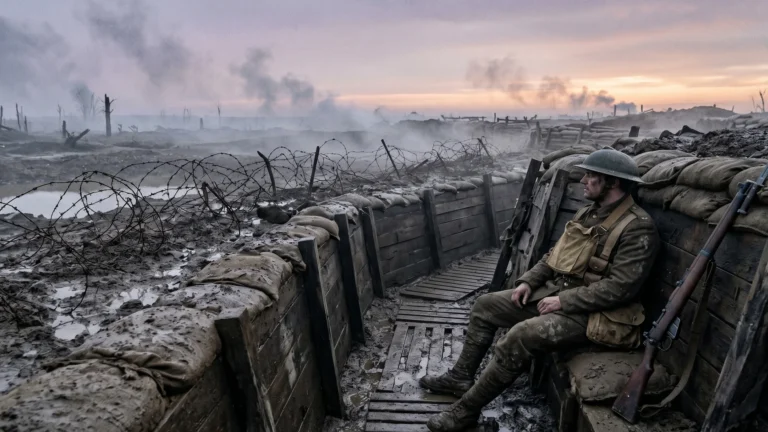
Soldiers stationed on the Western Front spent months standing in deep, freezing mud and highly unsanitary water without any opportunity to dry their boots. This constant exposure led to a gruesome fungal infection known as “Trench Foot,” which caused the flesh to literally rot away and necessitated thousands of emergency amputations. It was a terrifyingly silent killer that plagued the front lines, proving that the horrific environmental conditions of the trenches were just as lethal as enemy snipers.
8. The War Aggressively Facilitated the Spanish Flu Pandemic
As the global conflict began to wind down in 1918, a new and invisible enemy swept through the exhausted military ranks. The massive, overcrowded troop ships and severely cramped, unhygienic trench networks provided the absolute perfect breeding ground for the lethal influenza virus. As infected soldiers rapidly deployed across continents and eventually returned home, they unwittingly accelerated a catastrophic pandemic that ultimately killed over 50 million people worldwide, claiming far more lives than the war itself.
9. The Very First Tanks Were Assigned Biological Genders
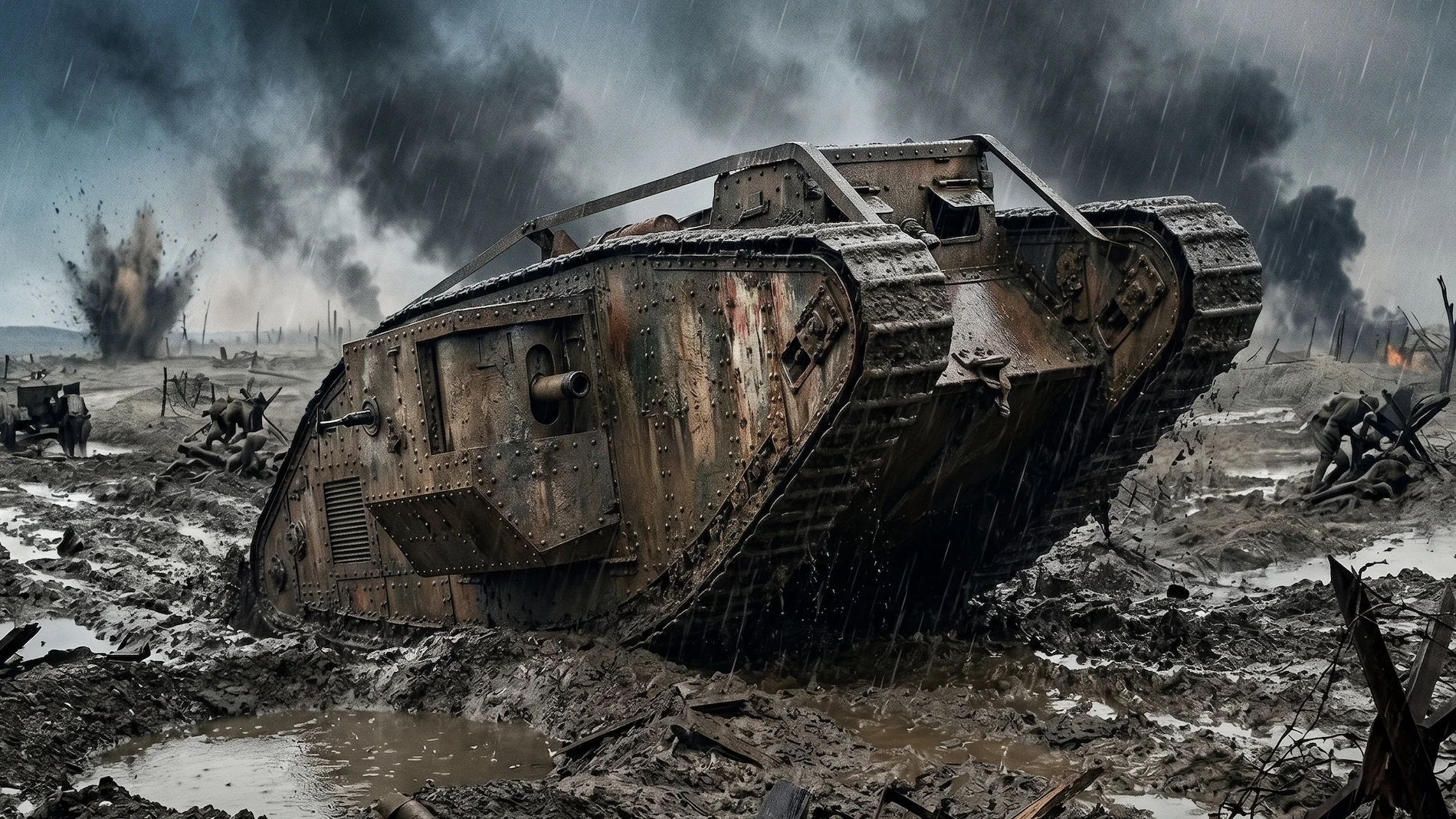
When the British military first introduced the heavily armored tank to the battlefield to break the brutal trench stalemate, they categorized the massive machines by gender. The “male” tanks were heavily armed with large, destructive cannons designed to obliterate fortified enemy pillboxes. Conversely, the “female” tanks were equipped exclusively with heavy machine guns, strategically designed to provide sweeping anti-infantry cover for advancing troops as they crossed the treacherous expanse of No Man’s Land.
10. The Explosions in France Were Heard All the Way in London
Before launching the massive infantry assault at the Battle of Messines in 1917, British miners spent months secretly tunneling deep beneath the German trenches to plant 600 tons of high explosives. When the 19 massive underground mines were simultaneously detonated, it created one of the largest artificial explosions in human history prior to the atomic bomb. The earth-shattering blast was so incredibly deafening that it was clearly heard by civilians sitting in London, over 130 miles away.
11. The Carnage Led to the Creation of the First Blood Banks
Before the Great War, blood transfusions were incredibly risky, direct person-to-person procedures that were rarely successful on the frantic battlefield. However, an American army doctor named Oswald Robertson realized the desperate need for a steady supply of blood to treat mass casualties and successfully pioneered the use of sodium citrate to prevent blood from coagulating. His brilliant innovation allowed the military to safely store, refrigerate, and transport life-saving blood to the front lines, officially establishing the world’s very first blood banks.
12. American Troops Drew Inspiration From Revolutionary Heroes
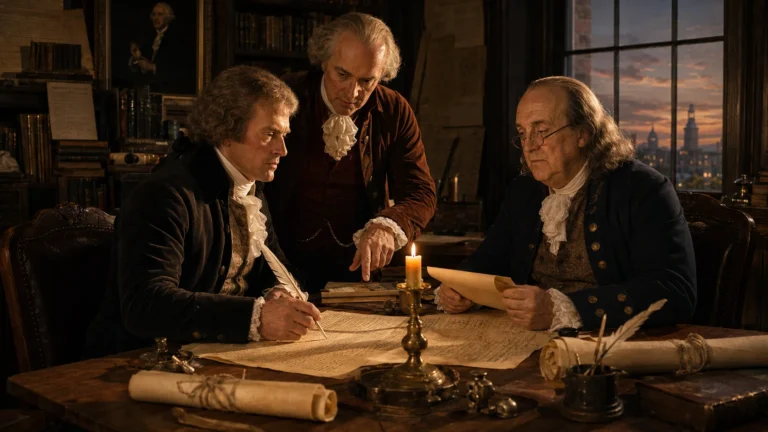
When the United States officially entered the grueling conflict in 1917, military commanders looked back to their foundational history to inspire their newly drafted troops. Propaganda posters and military speeches frequently invoked the legendary leadership of historical figures like George Washington to motivate soldiers preparing to cross the treacherous Atlantic. This heavy reliance on patriotic, historical imagery helped successfully transition a largely isolationist American public into a fully mobilized global fighting force willing to bleed on European soil.
13. The French Built a Fake Paris to Confuse German Bombers
In a desperate attempt to protect their beautiful capital from destructive nighttime Zeppelin bombing raids, the French military executed a brilliant act of large-scale deception. They constructed a massive, intricate replica of Paris on the city’s outskirts, complete with electrically illuminated faux train stations, major landmarks, and factory buildings. The ingenious goal was to successfully trick German pilots navigating by the stars and river reflections into dropping their devastating payloads harmlessly into the empty countryside.
14. Warships Were Painted in Bizarre Zebra Stripes to Evade Submarines
To combat the terrifying and highly lethal threat of German U-boats prowling the Atlantic Ocean, British and American naval fleets adopted a shockingly vibrant camouflage strategy. Known as “Dazzle” camouflage, thousands of massive warships were painted with highly contrasting, geometric patterns of intersecting black and white zebra stripes. Instead of hiding the ship, this optical illusion successfully confused enemy submarine periscope operators, making it incredibly difficult to accurately calculate the target’s speed, distance, and heading.
15. Native American Code Talkers Successfully Baffled Enemy Spies
While Navajo code talkers are incredibly famous for their heroic actions in World War II, the brilliant concept was actually pioneered during the Great War. The United States Army utilized soldiers from the Choctaw Nation to transmit highly classified tactical messages over radio and telephone lines during the massive Meuse-Argonne Offensive. Because the complex Choctaw language was completely unknown to German intelligence officers tapping the communication lines, the unique native code proved completely unbreakable and saved countless Allied lives.
Sources and References