The government secretly built an entire fake replica of the city during the First World War. To protect the actual capital from devastating German Zeppelin raids, French engineers constructed a massive decoy city just outside of Paris, complete with translucent canvas buildings, wooden trains, and an elaborate electrical lighting system specifically designed to mimic the glow of the real metropolis from the sky.
A very real psychiatric condition known as Paris Syndrome specifically targets Japanese tourists. Every year, several tourists experience acute delusions, severe hallucinations, and extreme dizziness when the slightly gritty, fast-paced reality of the real city completely shatters the hyper-romanticized, pristine expectations they built up from watching movies and reading travel magazines.
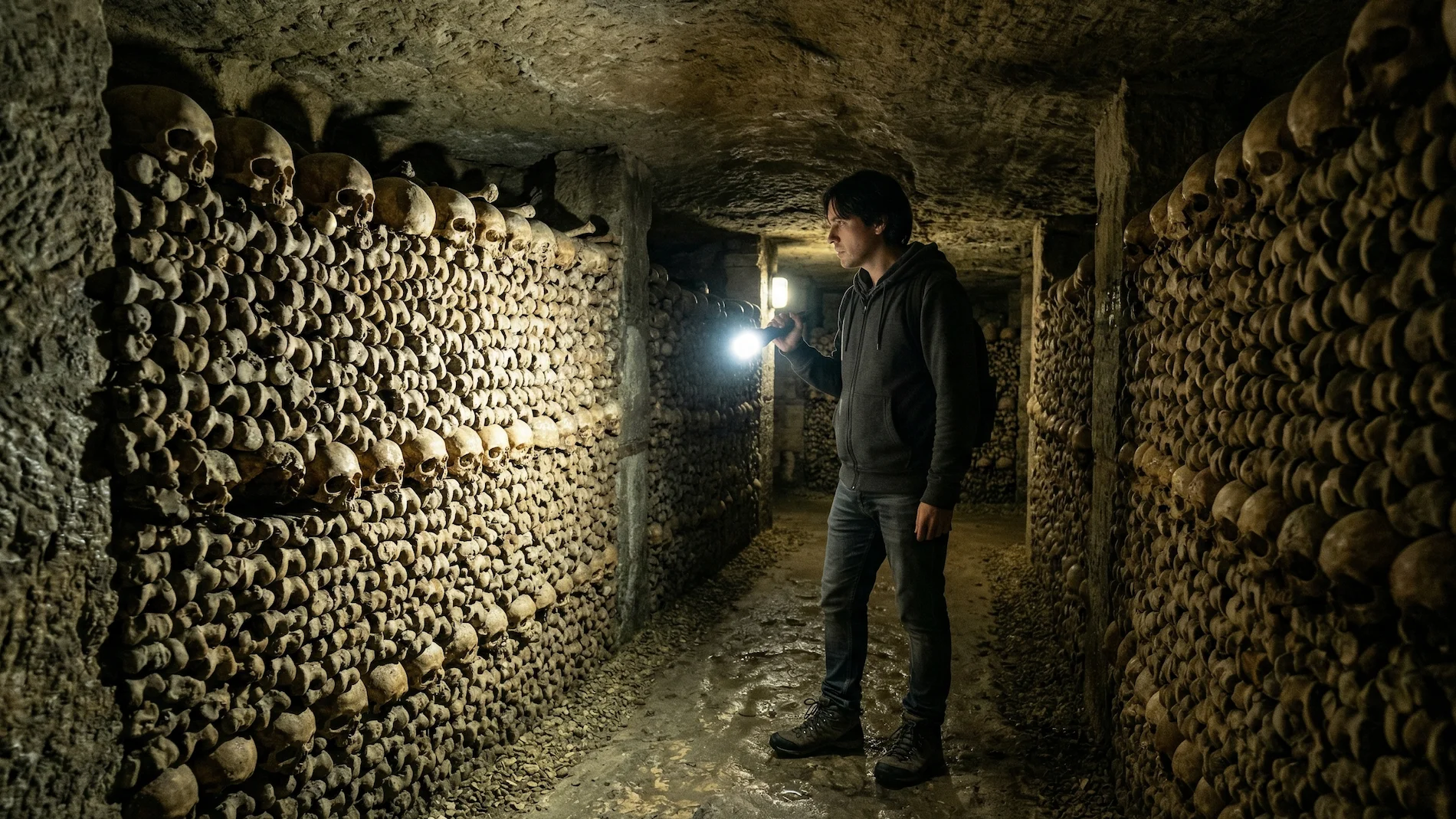
The legendary Catacombs were born out of a completely morbid civic crisis. By the late eighteenth century, city cemeteries like the Holy Innocents were so overpopulated with corpses that heavy spring rains caused the retaining walls to physically collapse, literally spilling rotting human remains directly into the basements of nearby Parisian houses, forcing the government to immediately relocate millions of skeletons into the ancient limestone quarries beneath the streets.
Navigating the city streets requires adjusting to an incredibly unique set of traffic laws. After decades of slowly phasing them out, the entire city of Paris officially removed its very last STOP sign in 2016. Today, the massive flow of traffic relies almost entirely on the right of way system, meaning drivers must simply yield to any vehicle entering the intersection from the right side.
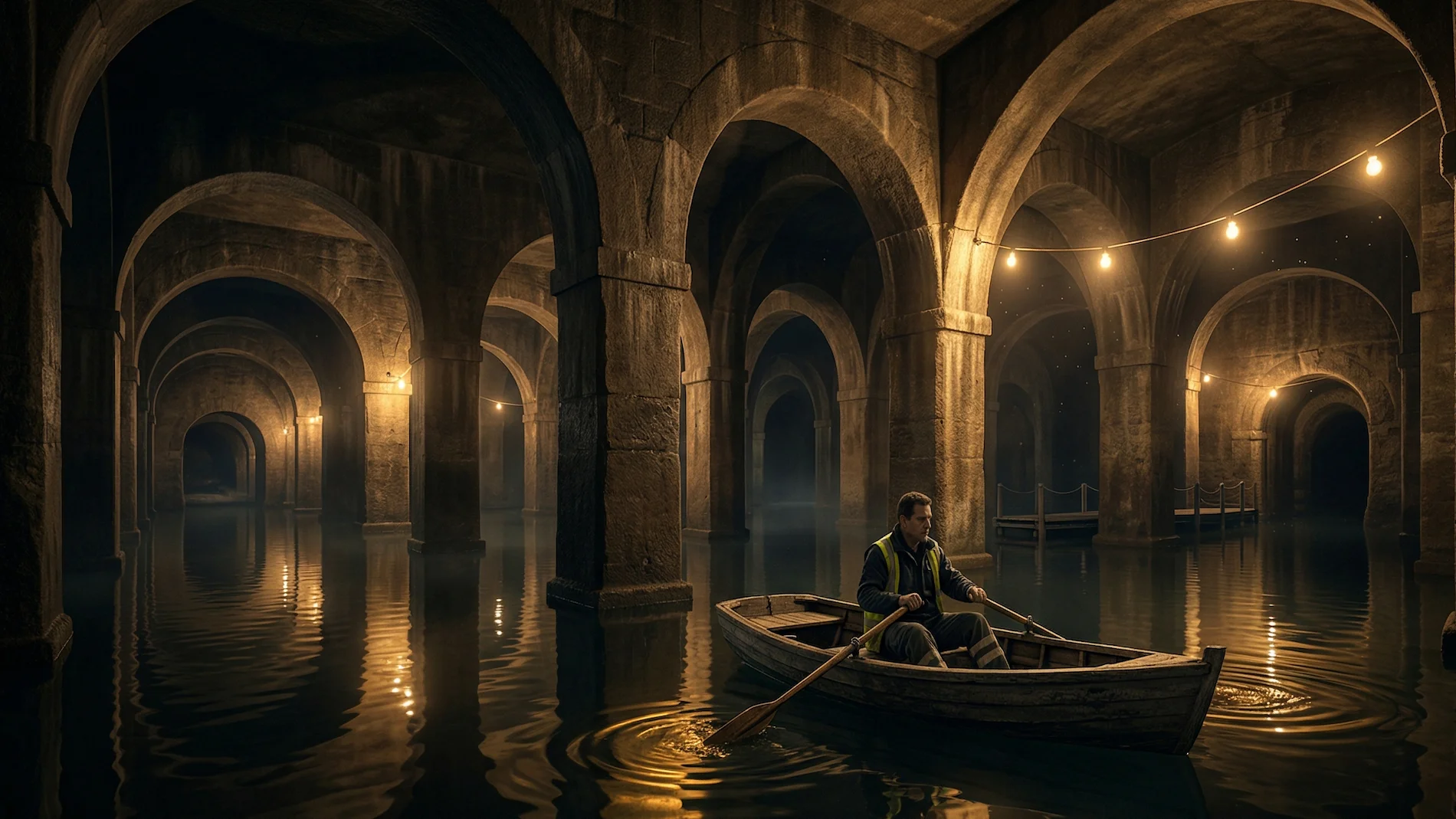
A hidden, artificial lake sits completely out of sight beneath the famous Palais Garnier opera house. When constructing the massive building, the architect Charles Garnier hit a high water table and was forced to build a massive, double-walled subterranean water reservoir to stabilize the foundation and relieve water pressure, a creepy, flooded substructure that directly inspired Gaston Leroux to write his famous novel, The Phantom of the Opera.
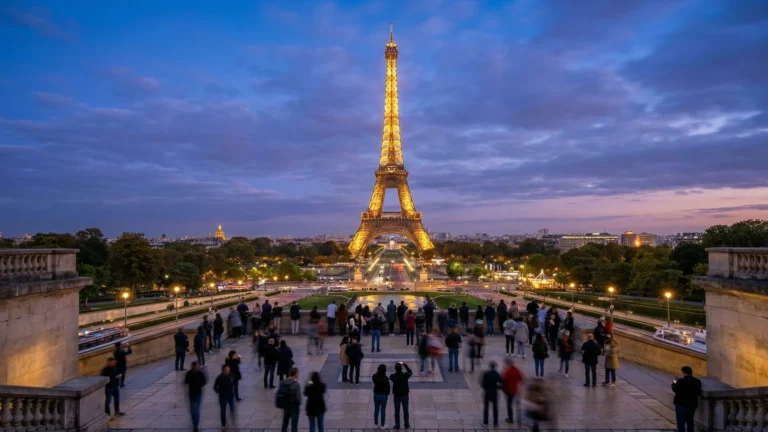
The iconic Eiffel Tower physically shrinks and grows depending on the seasonal weather. Because the massive monument is constructed from thousands of pieces of puddled iron, the structure experiences significant thermal expansion, causing the tower to grow up to fifteen centimeters taller and lean slightly away from the sun during the intense heat of summer, before shrinking back down during the freezing winter.
The oldest standing bridge in the entire city possesses an incredibly ironic name. Despite being completed all the way back in 1607 under the reign of King Henry IV, the famous stone crossing is universally known as the Pont Neuf, which translates directly to the New Bridge, a name originally given to distinguish it from older medieval bridges that were traditionally lined with houses.
The city contains multiple authorized, exact replicas of the Statue of Liberty. While the massive copper statue in New York Harbor was a gift from the French people, Americans living in Paris returned the favor by gifting a smaller bronze replica, which now sits proudly on a small artificial island in the Seine River, positioned so she is looking directly across the Atlantic Ocean toward her larger sister.
The Louvre is so incomprehensibly massive that it defies typical tourist schedules. As the largest art museum in the world, the galleries hold over thirty-five thousand individual works of art, meaning that if a visitor spent exactly thirty seconds looking at each piece without ever stopping to rest or sleep, it would take them well over a hundred consecutive days to see the entire collection.
A perfectly preserved ancient Roman amphitheater is hiding in plain sight in the Latin Quarter. Long before it was the capital of France, Paris was a thriving Roman settlement known as Lutetia, and today, tourists can casually walk into the Arenes de Lutece, a massive stone arena that once seated over fifteen thousand spectators for brutal gladiatorial combat and theatrical performances.
The last execution by guillotine in the country occurred surprisingly close to the modern era. While many associate the infamous execution device exclusively with the bloody days of the French Revolution, the last person to be legally beheaded by the guillotine in France was a convicted murderer named Hamida Djandoubi, and the execution took place in 1977, the exact same year the original Star Wars film premiered in theaters.
A network of abandoned ghost stations quietly exists right underneath the daily commuter routes. The Paris Metro system features over a dozen stations fantomes that were either closed during the Second World War or completely built but never opened to the public, with stations like Porte des Lilas now generating revenue by serving exclusively as highly controlled underground filming locations for Hollywood movies.
A massive network of pneumatic tubes once fired thousands of letters underneath the city every single day. Operating alongside the sewer system, the French postal service maintained an incredibly complex, four-hundred-kilometer network of pressurized brass tubes that shot sealed canisters of urgent mail across the city at high speeds, a system that remained in continuous, daily operation all the way until 1984.
The official motto of the city pays direct tribute to its ancient nautical roots. Despite being located hours away from the ocean, Paris was built around the massive economic power of the Seine river merchants, leading to the official Latin motto Fluctuat nec mergitur, which translates beautifully to She is tossed by the waves but does not sink.
The iconic green public drinking fountains were originally installed to fight a massive alcoholism crisis. Following the devastating Siege of Paris in the nineteenth century, clean drinking water was incredibly scarce and completely unaffordable for the lower classes, who turned to drinking cheap, dangerous wine instead, prompting a British philanthropist named Richard Wallace to donate dozens of free, cast-iron water fountains to save the local population from dehydration and disease.
Sources and References:
Atlas Obscura: https://www.atlasobscura.com/places/the-water-tank-beneath-palais-garnier-paris-france
BBC News Archive: https://news.bbc.co.uk/2/hi/6197921.stm