1. His Real Name Was Not Saladin
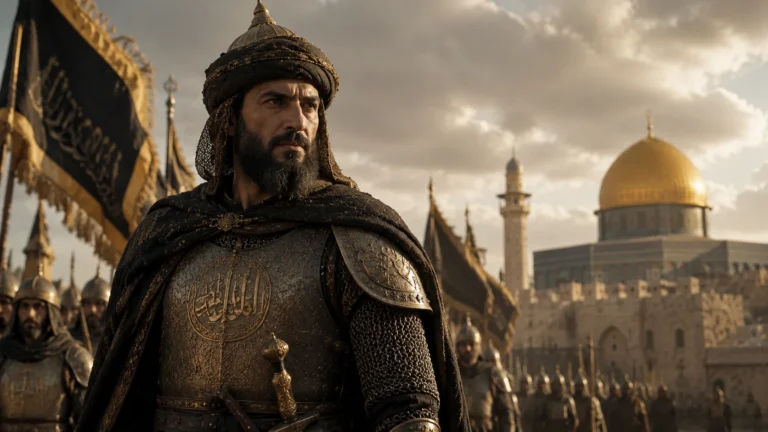
While history remembers him as Saladin, this was actually an honorific title rather than his birth name. He was born as Yusuf ibn Ayyub (Joseph, son of Job) in 1137 or 1138. As he gained military and political prominence, he earned the title Salah ad-Din, which translates from Arabic as “Righteousness of the Faith.” European crusaders later Latinized this title into the name “Saladin.”
2. He Was of Kurdish Descent
Saladin was born into a prominent Kurdish military family in the town of Tikrit, located in modern-day Iraq. His father, Najm ad-Din Ayyub, served as a warden of the local fortress. Saladin grew up speaking Arabic and receiving a thorough education in Islamic theology, mathematics, and military strategy, heavily influenced by his family’s deep ties to the ruling Turkic dynasties of the region.
3. He Rose to Power in Egypt
Saladin’s military career began when he accompanied his uncle, a high-ranking general named Shirkuh, on military campaigns into Egypt. The region was ruled by the declining Fatimid Caliphate. When his uncle died unexpectedly in 1169, the 31-year-old Saladin was appointed as the vizier of Egypt. Two years later, he officially abolished the Shia Fatimid Caliphate and realigned Egypt with the Sunni Abbasid Caliphate in Baghdad.
4. He Founded the Ayyubid Dynasty
After securing control of Egypt, Saladin established his own ruling family line, known as the Ayyubid dynasty. Under his leadership, the Ayyubids expanded their territory rapidly. Through a combination of warfare and skilled diplomacy, Saladin brought Egypt, Syria, Mesopotamia, and parts of the Arabian Peninsula under a single, unified banner.
5. The Crushing Victory at Hattin
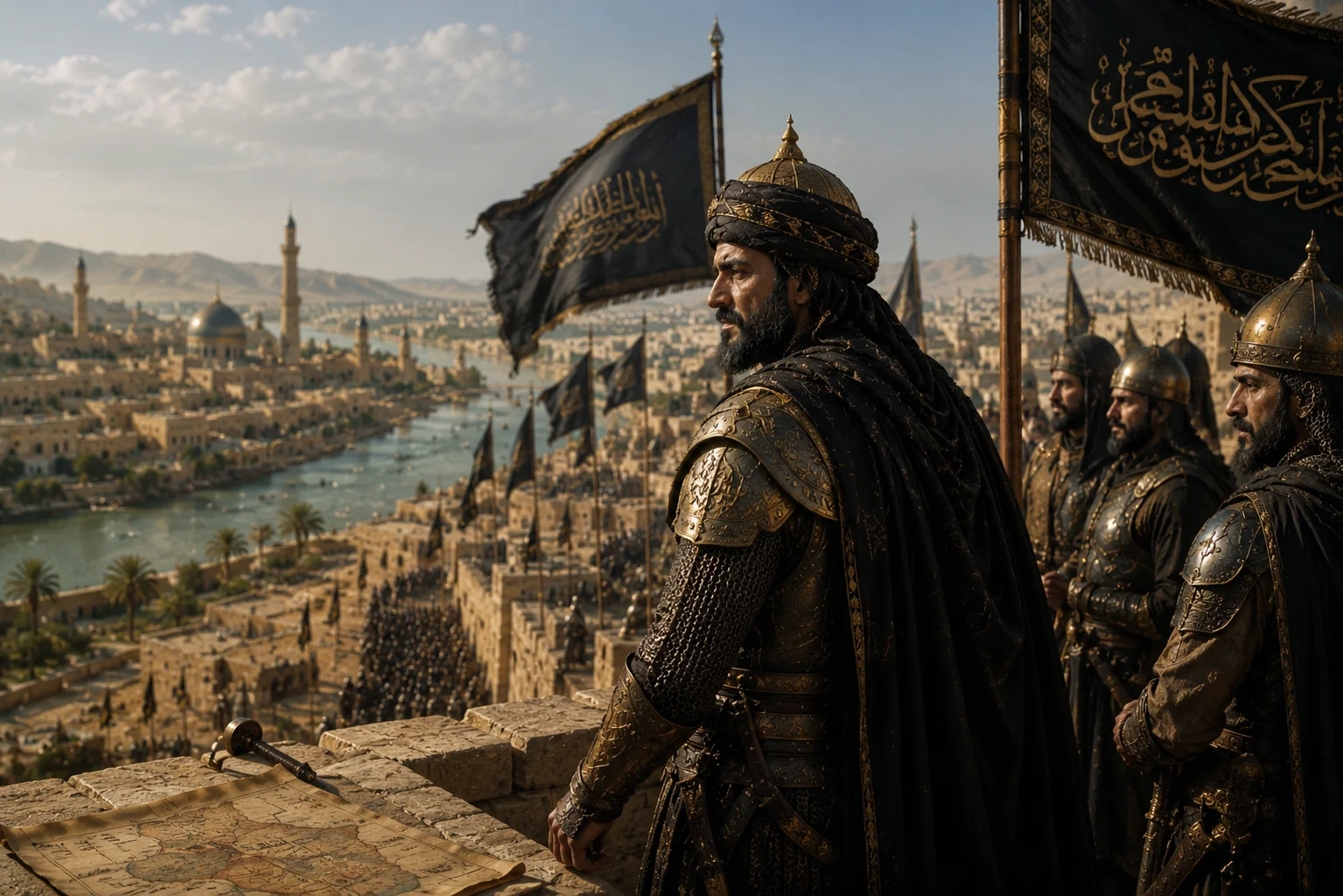
Saladin’s most decisive military triumph occurred in July 1187 at the Battle of Hattin. He successfully lured the Crusader army of the Kingdom of Jerusalem away from their water sources and into the scorching, arid landscape near the Horns of Hattin. Exhausted and dehydrated, the Crusader forces were surrounded and almost completely destroyed, crippling European military power in the region.
6. He Recaptured Jerusalem Peacefully
Following his victory at Hattin, Saladin marched on Jerusalem. When the First Crusade captured the city in 1099, the European armies had massacred thousands of Muslim and Jewish residents. When Saladin retook the city in 1187, he strictly forbade acts of vengeance. Instead, he allowed the Christian inhabitants to buy their freedom or leave safely, earning him a lasting reputation for mercy and honor.
7. He Allowed Jewish People to Return
During the nearly 90 years that the Crusaders ruled Jerusalem, Jewish people were strictly banned from living within the city walls. Upon recapturing Jerusalem, one of Saladin’s first decrees was to officially invite the Jewish community to return and resettle in the city, restoring a diverse religious demographic to the holy site.
8. Mutual Respect with Richard the Lionheart
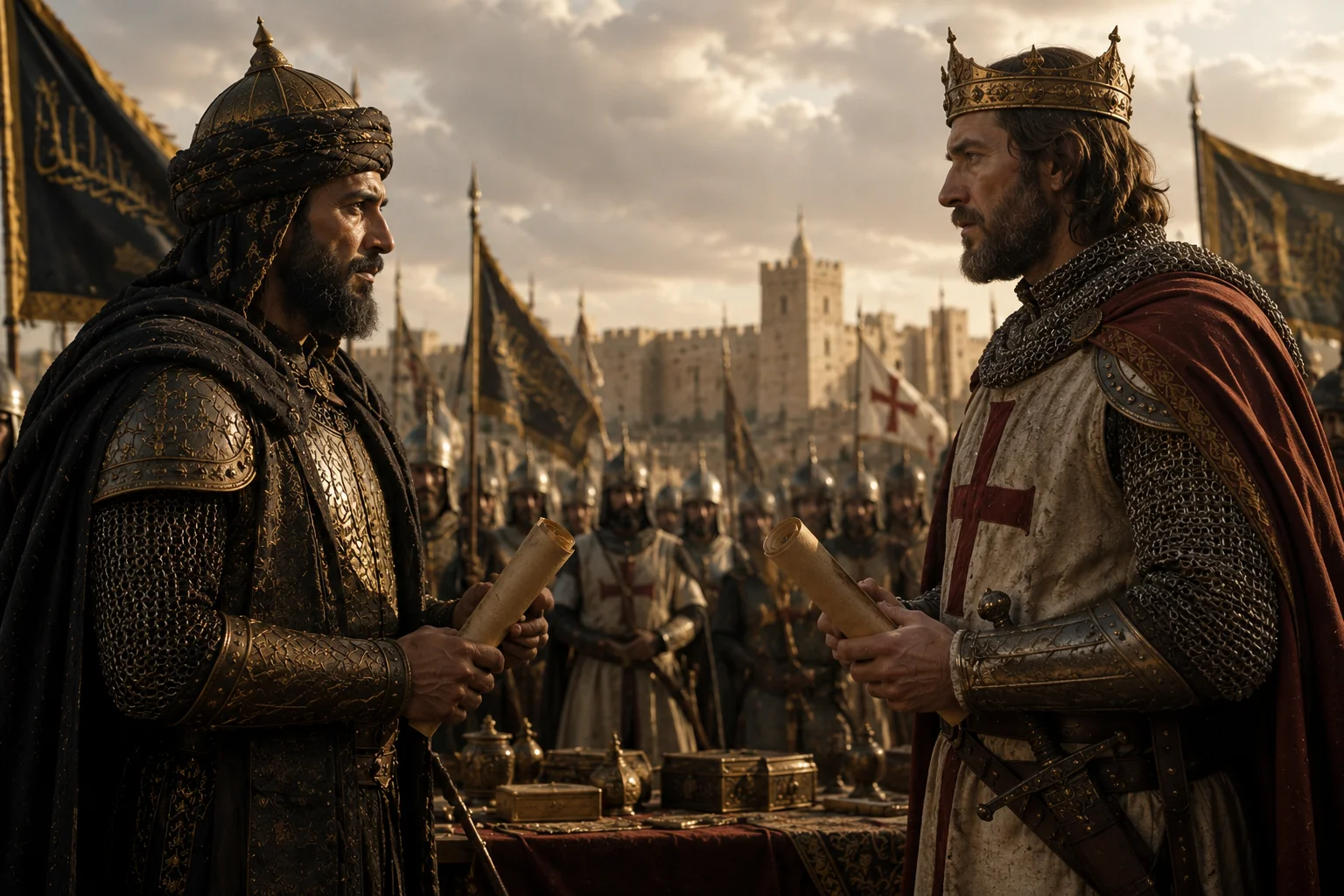
Saladin’s capture of Jerusalem sparked the Third Crusade, leading to a famous rivalry with King Richard I of England (Richard the Lionheart). Despite being fierce enemies, the two leaders developed a deep mutual respect. They never actually met face-to-face, but they frequently exchanged letters, diplomatic envoys, and even gifts during their years of conflict.
9. He Sent Ice and Horses to His Enemy
Saladin’s reputation for chivalry was solidified by his actions during the Third Crusade. When Richard the Lionheart fell ill with a severe fever, Saladin sent his personal physicians, along with fresh fruit and snow carried down from the mountains to cool the English king’s drinks. Later, when Richard lost his horse in battle, Saladin immediately sent him two replacement chargers, believing a king should not have to fight on foot.
10. He Made One Notable Exception to Mercy
While Saladin was famous for forgiving his enemies—including King Guy of Jerusalem, whom he captured and later released—there was one man he refused to spare. Raynald of Châtillon was a rogue Crusader knight who routinely broke truces, attacked unarmed merchant caravans, and threatened to march on the holy cities of Mecca and Medina. After capturing Raynald at Hattin, Saladin personally executed him for his repeated atrocities.
11. His Physician Was a Famous Philosopher
As the ruler of a vast empire, Saladin attracted some of the greatest minds of the medieval world to his court. His personal physician was Moses Maimonides, a brilliant Jewish scholar, astronomer, and philosopher. Maimonides served the Ayyubid royal family in Cairo for years and wrote several of his most famous medical and philosophical treatises while working under Saladin’s patronage.
12. He Rebuilt the Defenses of Cairo
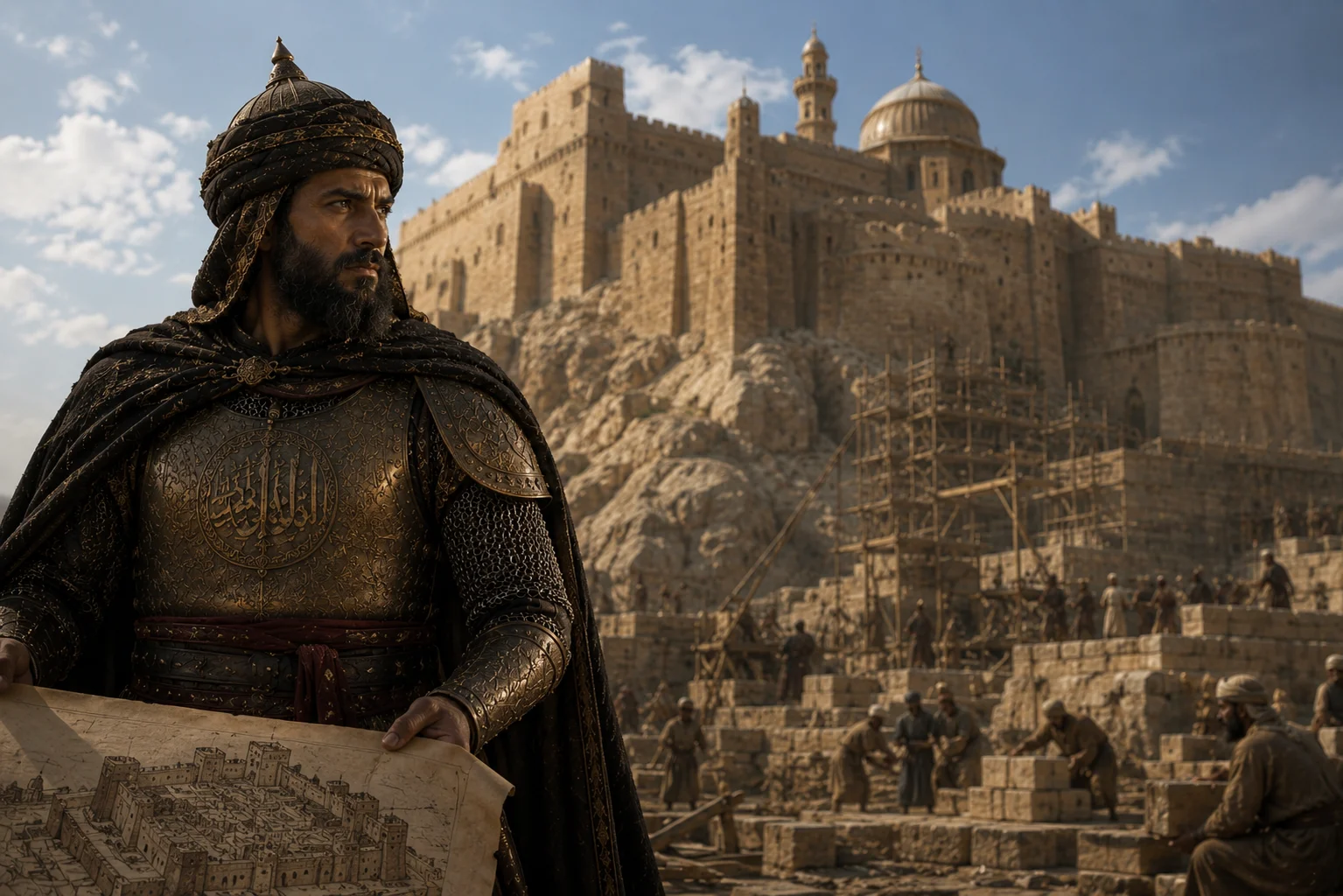
To protect his seat of power in Egypt from Crusader invasions, Saladin commissioned massive public works projects. He ordered the construction of the Cairo Citadel, an immense stone fortress built on the Mokattam hills overlooking the city. He also rebuilt and expanded the city’s defensive walls. The Citadel remained the seat of the Egyptian government for nearly 700 years after his death.
13. He Preferred a Simple Life
Despite commanding the wealth of Egypt and Syria, Saladin had no interest in opulent living. He disliked staying in grand palaces, vastly preferring to live in simple military tents alongside his soldiers. He wore simple, unadorned clothing and spent the majority of his adult life actively traveling and managing his empire on horseback rather than lounging in a royal court.
14. He Died Almost Completely Penniless
When Saladin died of a fever in Damascus in 1193, his royal treasurers made a shocking discovery. The most powerful sultan in the Middle East had given almost all of his vast personal wealth away to his subjects, his soldiers, and the poor. He did not leave behind enough money to even pay for his own funeral, and his burial expenses had to be covered by his family.
15. A German Emperor Paid for His Sarcophagus
Saladin is buried in a mausoleum adjacent to the Umayyad Mosque in Damascus, Syria. In 1898, Emperor Wilhelm II of Germany visited the tomb and was appalled to find it in a state of disrepair. To honor Saladin, the Emperor gifted the city a magnificent white marble sarcophagus. However, out of respect for Islamic tradition, Saladin’s body was not moved. Today, the tomb holds two sarcophagi: the empty marble one from the German Emperor, and the original wooden one where Saladin still rests.