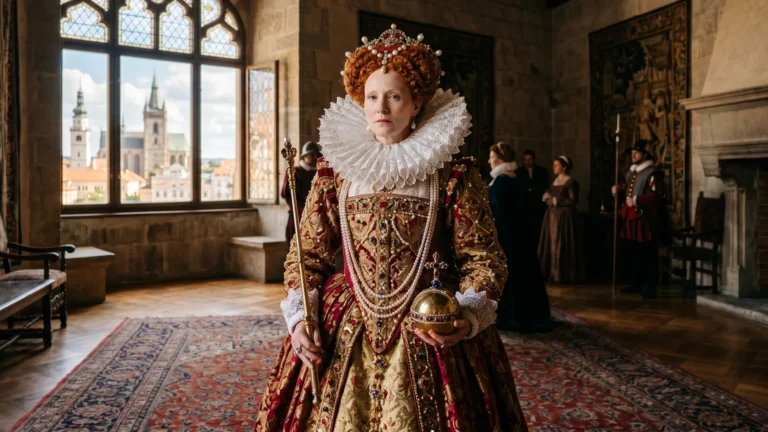
1. She Was Imprisoned in the Tower of London
Long before she became one of England’s longest-reigning monarchs, Elizabeth lived in constant, terrifying danger of execution. Following the death of her brother King Edward VI, her staunchly Catholic half-sister Mary I ascended the throne. Paranoid that Protestants were plotting to overthrow her, Mary accused the twenty-year-old Elizabeth of treason and threw her into the infamous Tower of London. Elizabeth spent two terrifying months locked away in the fortress, fully expecting to meet the exact same fate as her mother, before eventually being placed under strict house arrest.
2. Her Mother Was Executed by Her Father
Elizabeth’s childhood was defined by immense royal trauma and political instability. She was the daughter of King Henry VIII and his second wife, Anne Boleyn. When Elizabeth was only two and a half years old, her father grew deeply frustrated by Anne’s failure to produce a male heir. Henry famously accused Anne of treason, incest, and witchcraft, ultimately ordering her to be beheaded at the Tower of London. Henry then declared young Elizabeth illegitimate, stripping her of her royal title and inheritance.
3. Her Iconic Makeup Was Highly Toxic
The most recognizable feature of Elizabeth I was her strikingly pale, mask-like white face, which she used to project an image of ageless, divine purity. To achieve this look, she heavily coated her skin in a popular Renaissance cosmetic known as Venetian ceruse, which was a mixture of white lead and vinegar. Over decades of daily application, this highly toxic makeup actively corroded her skin, caused her hair to fall out, and slowly poisoned her body, likely contributing to her declining health and erratic behavior in her final years.
4. She Had a Terrible Obsession with Sweets
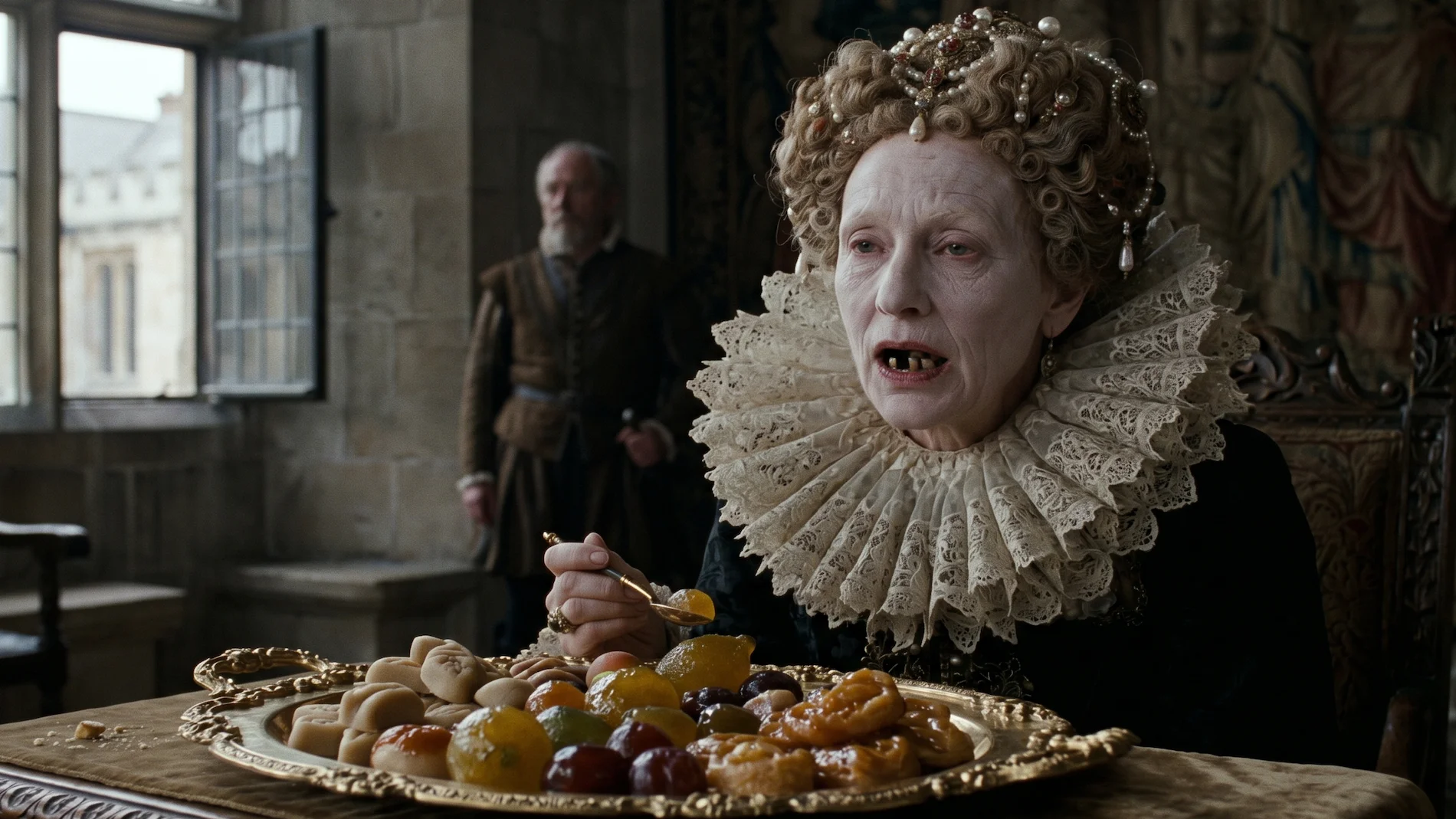
During the Elizabethan era, sugar was an incredibly expensive, highly luxurious import that only the wealthiest members of society could afford. Elizabeth was deeply obsessed with sweets, particularly marzipan, candied fruits, and honey-drenched pastries. Because modern dental hygiene did not exist, her massive sugar consumption had a devastating impact on her oral health. By the time she reached her sixties, foreign ambassadors frequently noted that most of her teeth had completely rotted away, turning entirely black.
5. She Was an Accomplished Polyglot
Despite the extreme chaos and neglect of her early childhood, Elizabeth was blessed with brilliant tutors during her teenage years and possessed an incredibly sharp intellect. She was a dedicated student who became an accomplished polyglot, learning to speak, read, and write fluently in English, French, Italian, Spanish, Latin, and ancient Greek. She frequently shocked foreign diplomats by speaking to them directly in their own native languages without needing any court translators.
6. The Hidden Portrait Ring
Elizabeth wore a highly distinct, deeply personal gold locket ring for the final decades of her life, completely refusing to ever take it off. When she finally passed away in 1603, the ring was removed from her finger and opened by her courtiers. They discovered a secret, hidden compartment that revealed two tiny, beautifully painted miniature portraits. One portrait was of Elizabeth herself, while the other was a secret tribute to her long-dead mother, Anne Boleyn, proving she quietly honored her mother’s memory throughout her entire reign.
7. She Stubbornly Refused to Marry
Throughout her reign, Elizabeth faced immense, relentless pressure from her parliament and advisors to marry a foreign prince and secure a royal heir. She skillfully utilized her single status as a massive diplomatic weapon, dangling the prospect of marriage to various European princes to secure alliances and prevent foreign invasions. She ultimately rejected every single suitor, declaring herself married to the nation of England and earning her legendary nickname, the Virgin Queen.
8. Her Wardrobe Contained Thousands of Dresses
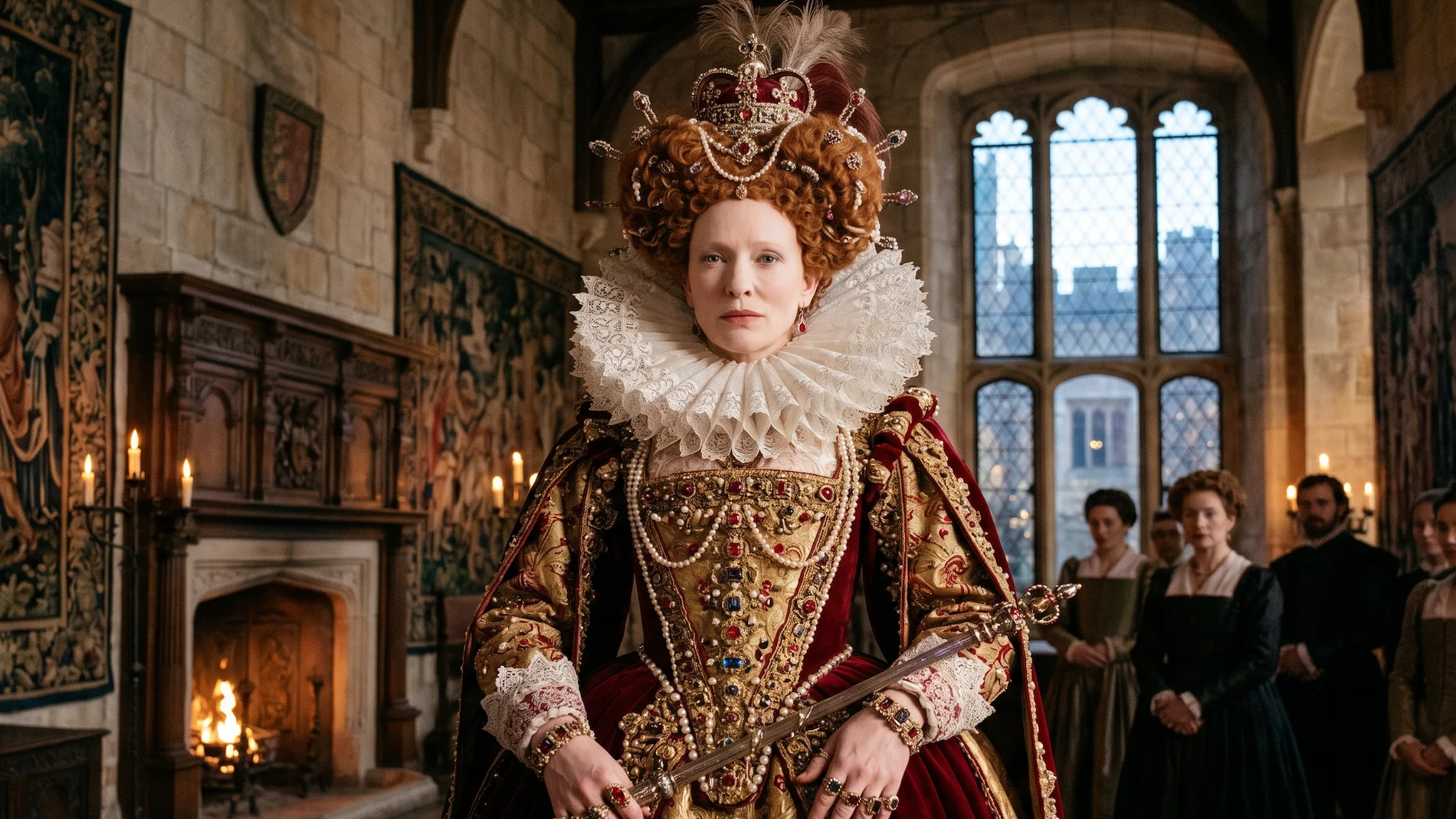
Elizabeth fully understood that her physical appearance was a crucial tool for projecting absolute royal power and majesty. She refused to ever appear in public looking ordinary or frail. Over her four decades on the throne, she amassed an absolutely massive, unprecedented wardrobe. At the time of her death, royal inventories confirmed that her personal collection contained over two thousand incredibly elaborate, heavily jeweled gowns, complete with massive ruffs and powdered wigs.
9. She Cured the King’s Evil
During the medieval and Renaissance eras, a widespread religious superstition claimed that legitimate monarchs possessed divine, supernatural healing powers. It was believed that a simple royal touch could completely cure a painful skin disease known as scrofula, traditionally dubbed the King’s Evil. Elizabeth fully embraced this tradition to reinforce her political legitimacy, regularly performing elaborate public ceremonies where she washed and touched the infected skin of thousands of poor citizens.
10. Sir Walter Raleigh Named Virginia After Her
Elizabeth heavily supported and funded England’s early maritime exploration, actively encouraging explorers like Sir Francis Drake and Sir Walter Raleigh to claim new lands across the Atlantic Ocean. When Raleigh successfully established the very first English colonial territory in North America in 1584, he chose a name to directly honor his monarch. He named the region Virginia, a direct derivation of her highly publicized title as the Virgin Queen.
11. She Survived Numerous Assassination Plots
As a Protestant queen ruling a deeply divided nation, Elizabeth was a continuous target for radical Catholic conspiracies. She survived multiple, highly organized assassination attempts throughout her life, most notably the Ridolfi Plot, the Throckmorton Plot, and the Babington Plot. These dangerous conspiracies were designed to assassinate Elizabeth and replace her with her Catholic cousin, Mary, Queen of Scots, which ultimately forced Elizabeth to sign her cousin’s death warrant.
12. She Never Named a Successor Until Her Deathbed
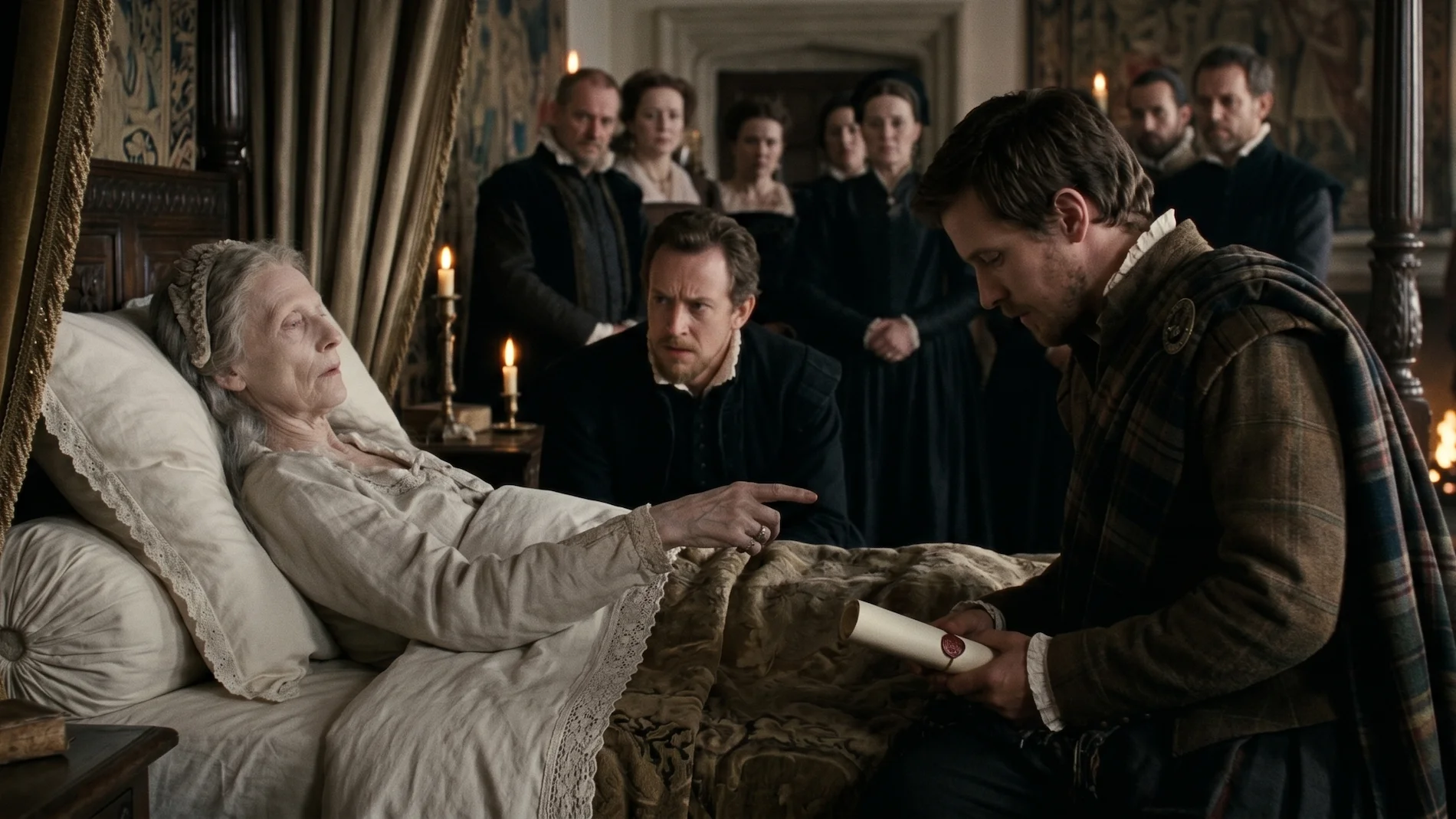
Because she completely refused to marry or produce a child, the question of who would inherit the English throne was a source of massive anxiety for her subjects. Elizabeth stubbornly refused to officially name a successor for decades, fearing that doing so would make her a political target and cause her court to abandon her. It was only on her final deathbed, when she was completely unable to speak, that she reportedly gave a faint hand gesture to approve King James VI of Scotland as her successor.
13. The Invention of the Modern Watch
Elizabeth is directly responsible for introducing one of the most common everyday accessories to the modern world. In 1571, her close friend and rumored lover, Robert Dudley, presented her with a highly unique, experimental gift. It was a tiny, intricately ticking clock face securely set into an ornate bracelet that she could wear on her arm. This legendary gift is officially recognized by historians as the very first wristwatch ever documented in human history.
14. She Executed Her Favorite Courtier
While Elizabeth never married, she harbored deep, turbulent romantic affections for several men in her court, most notably Robert Devereux, the Earl of Essex. Elizabeth granted him massive wealth and political favors, but the young earl grew incredibly arrogant. After completely failing a military campaign in Ireland, Devereux attempted to launch a sudden, armed rebellion in London to overthrow the queen’s advisors. Despite her deep personal affection for him, Elizabeth did not hesitate to sign his death warrant, and he was promptly beheaded.
15. The True End of the Tudor Dynasty
When Elizabeth finally passed away at Richmond Palace on March 24, 1603, her death marked a massive, highly profound turning point in British history. Having ruled for nearly half a century, she was the final surviving child of Henry VIII. Because she died without a direct heir, her passing officially brought a permanent, dramatic end to the legendary Tudor Dynasty, which had ruled England for over a century, paving the way for the House of Stuart to take control.