The Surreal Cotton Castle: 15 Fascinating Facts About Pamukkale
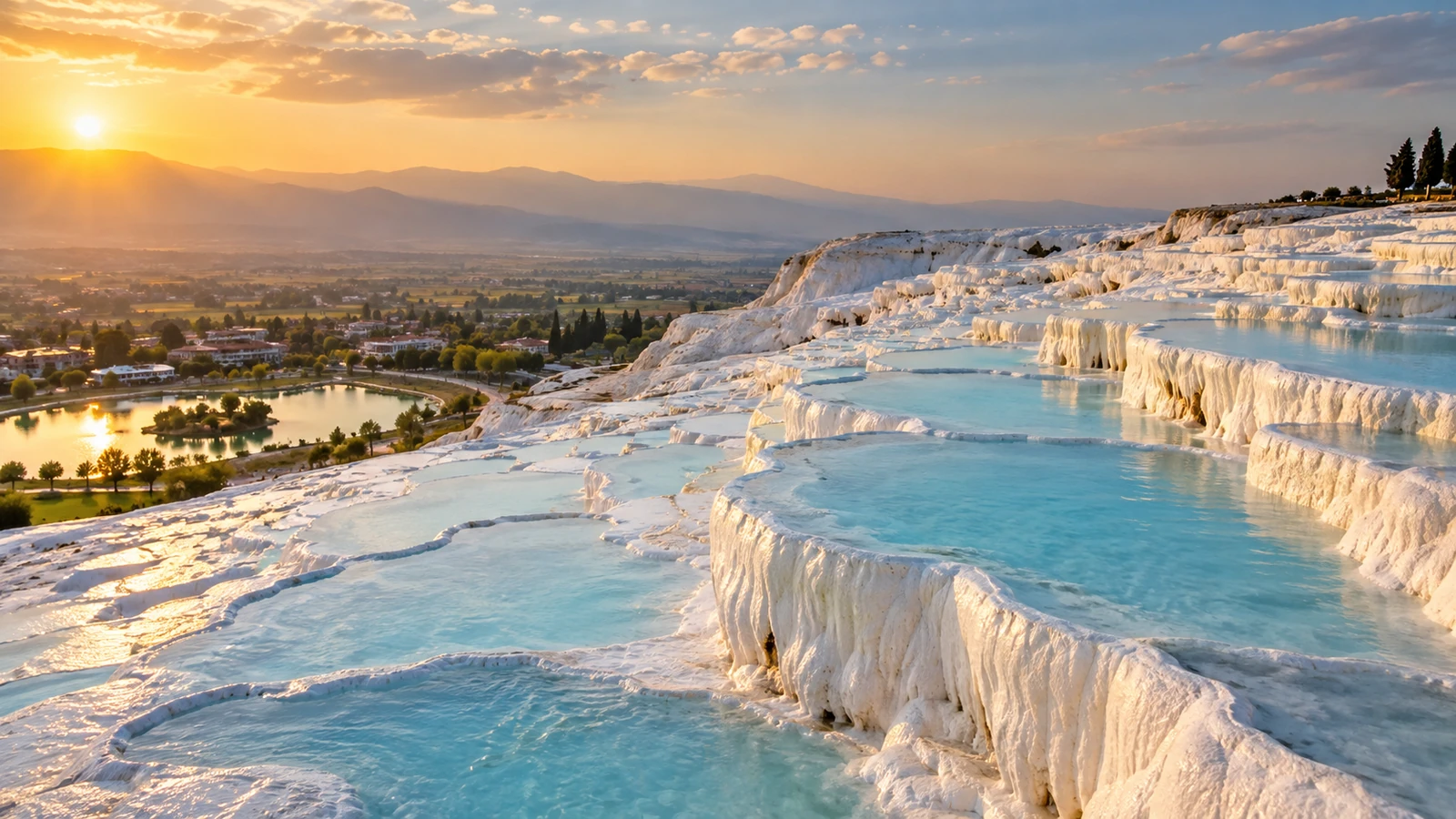
Located in southwestern Turkey, Pamukkale is a breathtaking natural wonder where glowing white travertine terraces cascade down a hillside like frozen waterfalls. Built atop these mineral springs is Hierapolis, an ancient Greco-Roman spa city filled with grand temples, healing baths, and historic ruins. From lethal subterranean gases known as the Gate to Hell to submerged Roman columns in warm thermal pools, this unique UNESCO site blends natural wonder with classical history. Discover fifteen fascinating facts about Turkey's legendary Cotton Castle.
1. The Name Means "Cotton Castle" for a Reason
Pamukkale literally translates to "Cotton Castle" in Turkish, a name inspired by its snow-white cascading terraces that resemble giant mounds of freshly harvested cotton. From a distance of over twenty kilometers, the stark brilliant white mountain stands out dramatically against the surrounding green landscape of the Maeander River valley. Local inhabitants gave the geological marvel its poetic moniker centuries ago before modern geology explained the phenomenon. The dazzling illusion is so powerful that from afar, travelers often mistake the sun-drenched hill for a glacier or snow-covered peak. Today, this striking visual remains one of Turkey's most iconic natural landmarks.
2. The Terraces Are Built from Mineral Springs, Not Snow or Ice
Despite looking like frozen snowdrifts, the brilliant white basins of Pamukkale are composed entirely of travertine, a form of limestone deposited by mineral springs. Over thousands of years, hot thermal water rich in dissolved calcium bicarbonate flows out of underground springs and down the steep cliffside. As the water cools and releases carbon dioxide into the atmosphere, calcium carbonate precipitates out of solution and solidifies into soft mineral gel. Over time, this gel hardens into solid calcium carbonate rock, sculpting petrified waterfalls and natural rimstone pools. This continuous biochemical reaction keeps the terraces constantly expanding and reshaping themselves.
3. Visitors Swim Among Fallen Roman Columns
One of Pamukkale's most iconic attractions is the Antique Pool, often referred to as Cleopatra's Pool, where guests can swim directly among ancient Roman ruins. During the seventh century AD, a catastrophic earthquake struck the region, collapsing the massive marble colonnades of the nearby Temple of Apollo directly into the spring-fed pool. Rather than clearing the debris, local authorities left the fluted columns, carved pediments, and capitals resting at the bottom of the clear thermal waters. Swimming in the basin offers a rare opportunity to wade across submerged history in warm mineral water. Legend even claims that Cleopatra herself once swam in these therapeutic waters.
4. The Deadly "Gate to Hell" Was Driven by Carbon Dioxide
Ancient Greco-Roman writers spoke of a terrifying sanctuary in Hierapolis called the Plutonium, dedicated to Pluto, god of the underworld. Priests demonstrated their divine protection by leading bulls and birds into the cave, where the animals would instantly drop dead while the priests emerged unscathed. Modern archaeologists confirmed the location in 2013 and measured extremely high concentrations of deadly carbon dioxide gas emerging from a deep volcanic fissure within the chamber. The ancient priests survived the ordeal by standing on raised stones where oxygen accumulated, or by holding their breath while animals standing lower down inhaled lethal gas concentrations exceeding ninety percent.
5. Hierapolis and Pamukkale Form a Rare Dual UNESCO World Heritage Site
Sitting directly on top of the sparkling white travertine cliffs is the ancient Greco-Roman spa city of Hierapolis, founded in the second century BC by the Attalid kings of Pergamon. Because the natural mineral springs and the built ancient environment are inextricably linked, UNESCO designated the location a combined natural and cultural World Heritage Site in 1988. Visitors buying a single admission ticket gain access to both the natural wonder and thousands of years of preserved classical history. The ruins include sprawling necropolises, ancient baths, street colonnades, and impressive grand gates. This seamless integration of nature and archaeology makes the destination uniquely complex.
6. Walking Barefoot Is Strictly Enforced to Save the Stone
To protect the delicate travertine formations from erosion, abrasion, and discoloration, authorities strictly require all visitors to remove their shoes before walking on the designated terrace path. Decades of heavy footwear and unregulated tourist activity threatened to wear down the soft mineral deposits and crush developing calcium crystals. Today, visitors carry their shoes in bags and walk barefoot along a specially designated channel filled with flowing warm thermal water. This conservation measure allows millions of tourists to experience the petrified pools while minimizing foot traffic damage. The simple rule ensures that future generations can enjoy the pristine white terraces.
7. Resort Demolitions Saved the Site from Turning Gray
During the mid-twentieth century, uncontrolled tourism development nearly destroyed Pamukkale's pristine white landscape. Modern hotels were built directly on top of the ancient ruins of Hierapolis, draining the natural thermal springs to fill private swimming pools and discharging wastewater into the delicate mineral pools. The heavy pollution, foot traffic, and lack of flowing calcium-rich water caused the brilliant travertine to dry up and turn an unsightly muddy gray. Realizing the impending ecological disaster, the Turkish government intervened in the 1990s, demolishing the resorts, banning vehicle access, and restoring natural water flow. This drastic intervention saved the site and restored its snowy luster.
8. The Nearby City Honors a Famous Long-Crowing Rooster
Visitors traveling to Pamukkale through the neighboring provincial capital of Denizli will notice large colorful statues of roosters standing at major roundabouts and public squares. The region is famous for the Denizli rooster, an ancient local breed renowned worldwide for its absurdly prolonged crowing ability. A purebred Denizli rooster can sustain a single loud crow for twenty to thirty seconds without taking a breath, sometimes crowing until it faints from exhaustion. The bird is so deeply woven into local culture and pride that it serves as the official symbol of the entire Denizli province, greeting millions of travelers heading toward the white terraces.
9. The Magnificent Roman Theater Seated 12,000 Spectators
High above the travertine pools stands the remarkably preserved Roman Theater of Hierapolis, constructed during the reign of Emperor Hadrian in the second century AD. Built directly into the natural incline of the hillside, the theater featured an elaborate three-story stage facade decorated with intricate reliefs depicting mythological scenes and gods. Modern restoration work led by Italian archaeological teams successfully reconstructed much of the grand orchestra and seating tiers, which once held up to twelve thousand spectators. Sitting high in the stone bleachers offers panoramic views overlooking both the ruins of Hierapolis and the sparkling white terraces below.
10. It Was an Ancient Center for Medical Healing
Long before modern spa retreats existed, Hierapolis was renowned across the Mediterranean world as a major healing center and sanctuary. Ancient physicians, including followers of the famous Greek physician Galen, prescribed thermal bathing and drinking the mineral-rich waters to treat ailments ranging from high blood pressure to rheumatism and skin conditions. Wealthy patrons, sick travelers, and elderly Romans traveled from across the empire to bathe in the warm waters, turning the city into a bustling wellness destination. Many retired to Hierapolis permanently, which explains why the city contains one of the largest and best-preserved ancient necropolises in Anatolia.
11. The Tomb of St. Philip the Apostle Was Discovered Here
Hierapolis holds significant religious importance in early Christian history as the location where St. Philip, one of the original twelve apostles of Jesus, was martyred around 80 AD. According to historical tradition, Philip was crucified upside down during the reign of Roman Emperor Domitian for converting citizens to Christianity. For centuries, pilgrims visited an octagonal building called the Martyrium built in his honor on the hill above the city. In 2011, Italian archaeologists made a groundbreaking discovery when they uncovered the actual first-century tomb of St. Philip just yards away from the Martyrium complex, confirming ancient historical texts.
12. The Thermal Water Stays at a Constant 36 Degrees Celsius
The subterranean thermal springs feeding Pamukkale maintain a remarkably consistent water temperature of around 36 degrees Celsius (97 degrees Fahrenheit) year-round. Powered by deep underground geothermal heat sources, seventeen separate thermal springs bubbling up at the surface deliver warm, mineral-rich bathwater regardless of the outside weather. Even in the chill of winter when surrounding mountains are capped with real snow, visitors can enjoy comfortable warm bathing in designated areas. The stable temperature creates a microclimate around the pools that has attracted human settlement continuously for over two millennia.
13. Hollywood Used the Ancient Ruins in Ghost Rider 2
Pamukkale's otherworldly blend of ancient Greco-Roman architecture and bizarre geological formations caught the attention of Hollywood filmmakers in 2011. The production team behind the superhero film Ghost Rider: Spirit of Vengeance, starring Nicolas Cage, selected the ancient theater and surrounding ruins of Hierapolis as a primary filming location. The movie featured dramatic scenes with Cage's character riding his flaming motorcycle through the classical amphitheater and ancient stone streets. Filming required strict environmental protocols to ensure the heavy production equipment did not damage the delicate archaeological structures or travertine rock.
14. Paragliders Fly Daily Over the Petrified Waterfalls
For adventure travelers seeking a unique perspective, Pamukkale is one of Turkey's premier paragliding destinations. Launching from nearby Mount Honaz or Dynamite Hill, tandem paragliders glide peacefully on warm rising air currents high above the archaeological site. From several thousand feet in the air, passengers enjoy an unobstructed bird's-eye view of the stark contrast between the bright white travertine terraces, the emerald green agricultural valley, and the ancient stone city. Flights operate nearly every clear day, creating a colorful canopy of parachutes floating gracefully over the ancient landscape.
15. The Landscape Continously Reshapes Itself Every Day
Unlike static architectural monuments built by human hands, Pamukkale is a living, continuously evolving geological formation. Every single day, thousands of liters of mineral water cascade over the cliffs, depositing fresh layers of calcium carbonate that harden into new rock structures. Park authorities actively manage the flow of water through artificial channels to direct fresh minerals to dry areas, allowing depleted sections to regenerate their brilliant white coating. Because the mineral deposits are constantly building up and changing the paths of water flow, no two visitors ever see the exact same layout of pools and channels.
Sources & References
This AI-assisted post was rigorously curated and fact-checked for accuracy by:
 Martin Roháček
How fun was this article? 🤔
Tap a star to rate it
🧠 Quiz: How closely were you paying attention?
10 questions — all answers are in the article above!
Enjoyed these facts? There's more! 💌
Fresh fun facts in your inbox. No spam, ever.