Edison and a Diplomatic Cat: 15 Facts About Rutherford B. Hayes
Rutherford B. Hayes defended a freedom seeker, refused to leave the battlefield to campaign and entered the White House after a fiercely disputed election. His story also connects a late-night phonograph demonstration, a diplomatic cat, a Paraguayan city and W. E. B. Du Bois's studies in Germany—with consequential limits to his vision of equal rights.
1. He helped a young woman win freedom in court
In 1855 Hayes helped defend Rosetta Armstead, an enslaved young woman whose owner's agent had taken her through Ohio. After she was freed, she was arrested again as a supposed fugitive. Hayes argued that she had not escaped into the state: she had been brought there. The federal commissioner ultimately agreed, and Armstead secured her freedom.
2. A Civil War wound brought his own family into his medical care
At South Mountain in 1862, a musket ball fractured Hayes's left arm above the elbow. His regimental surgeon, Joseph Webb, was also his brother-in-law, and Lucy Hayes later nursed him and other wounded soldiers. Hayes served in the 23rd Ohio alongside another future president, William McKinley. He survived several wounds before leaving the Army in 1865.
3. He won a seat in Congress without leaving the battlefield to campaign
When friends nominated Hayes for Congress in 1864, they suggested he take leave from the Army to campaign. He refused, arguing that a fit officer should not abandon his post at that time. Voters elected him anyway. He learned the result while serving in the Shenandoah Valley, and remained in military service until summer 1865.
4. He took the presidential oath twice before the public saw him govern
The disputed 1876 election ended with an electoral count of 185 for Hayes to 184 for Samuel Tilden. March 4, the usual inauguration date, fell on Sunday. Hayes privately took the oath in the White House Red Room on Saturday, March 3, then repeated it at the Capitol on Monday. The result had only been settled days before these ceremonies.
5. His withdrawal of troops carried consequences beyond a campaign bargain
Hayes removed the troops protecting the remaining Republican state governments in Louisiana and South Carolina in 1877. That did not mean every federal soldier left the South. He hoped local leaders' promises would protect civil and voting rights, but white supremacist violence and political exclusion continued. The policy is central to his legacy and cannot be reduced to an ingenious election compromise.
6. He fired a man who would later become president
Hayes's civil-service campaign brought him into conflict with Chester A. Arthur, collector of customs at New York. The office was an important source of federal revenue and political patronage. After an initial replacement attempt failed, Hayes suspended Arthur in July 1878. Three years later, Arthur entered the White House himself and eventually signed the Pendleton civil-service reform law.
 You might also like
Expelled by His Own Party: 15 Facts About John Tyler
7. The White House alcohol ban had political calculations behind it
The Hayes White House did not begin dry: wine was served at an early dinner for Russia's Grand Duke Alexis. Rutherford and Lucy subsequently stopped serving alcohol. Lucy's personal abstinence mattered, but the president also saw an opportunity to strengthen support among temperance advocates. Assigning the whole policy to a joyless 'Lemonade Lucy' misses both its joint character and its political setting.
8. He welcomed children displaced from their Easter playground
Congress barred egg rolling on the Capitol grounds after complaints about damage to the grass. In 1878 Hayes permitted the activity on the White House grounds, helping establish the public Easter Egg Roll tradition. Earlier presidential families had rolled eggs informally, so the distinction matters: his contribution was welcoming the broader gathering, rather than inventing the children's game.
9. A diplomatic cat received presidential-level medical attention
An American consul in Bangkok sent Lucy Hayes a Siamese cat, which arrived in 1879 and became daughter Fanny's pet. Named Siam, the cat fell ill after several months. The president's physician tried to help, but she died. Her remains were sent for preservation; the surviving record does not establish where they ultimately ended up.
 US Presidents
Discover the eccentricities, secret talents, and surprising hidden lives of America's most influential presidents, from frontier wrestlers to covert strategists.
See All Facts
10. His White House entered the telephone age
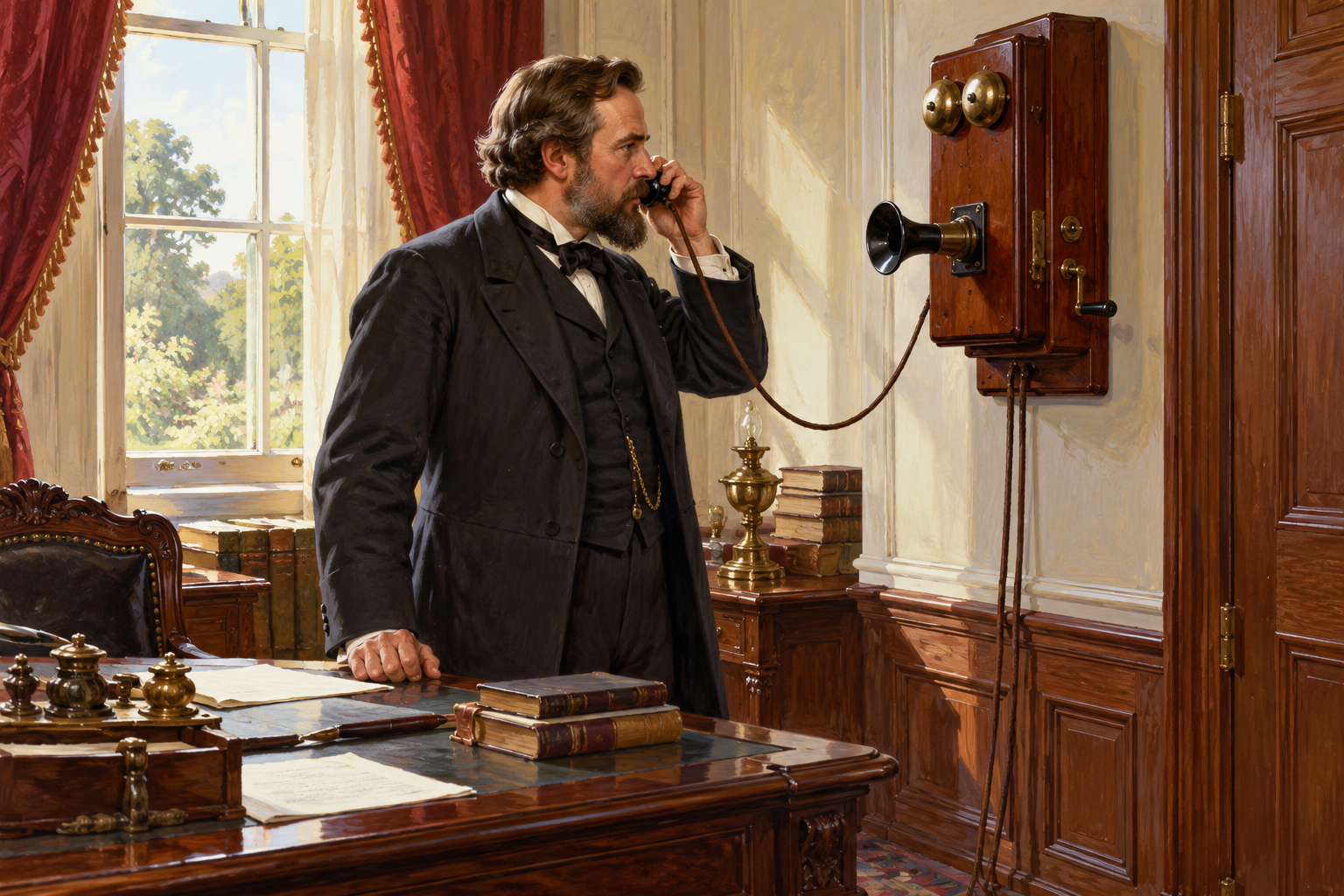
A telephone was installed in the White House during Hayes's presidency in 1877, when the technology was still new. Its memorable early number was simply '1.' It belonged to the mansion's communications facilities rather than the familiar modern arrangement of a phone on the president's desk. Hayes's administration thus witnessed an early step toward the increasingly connected presidency.
11. Edison kept the presidential household listening into the night
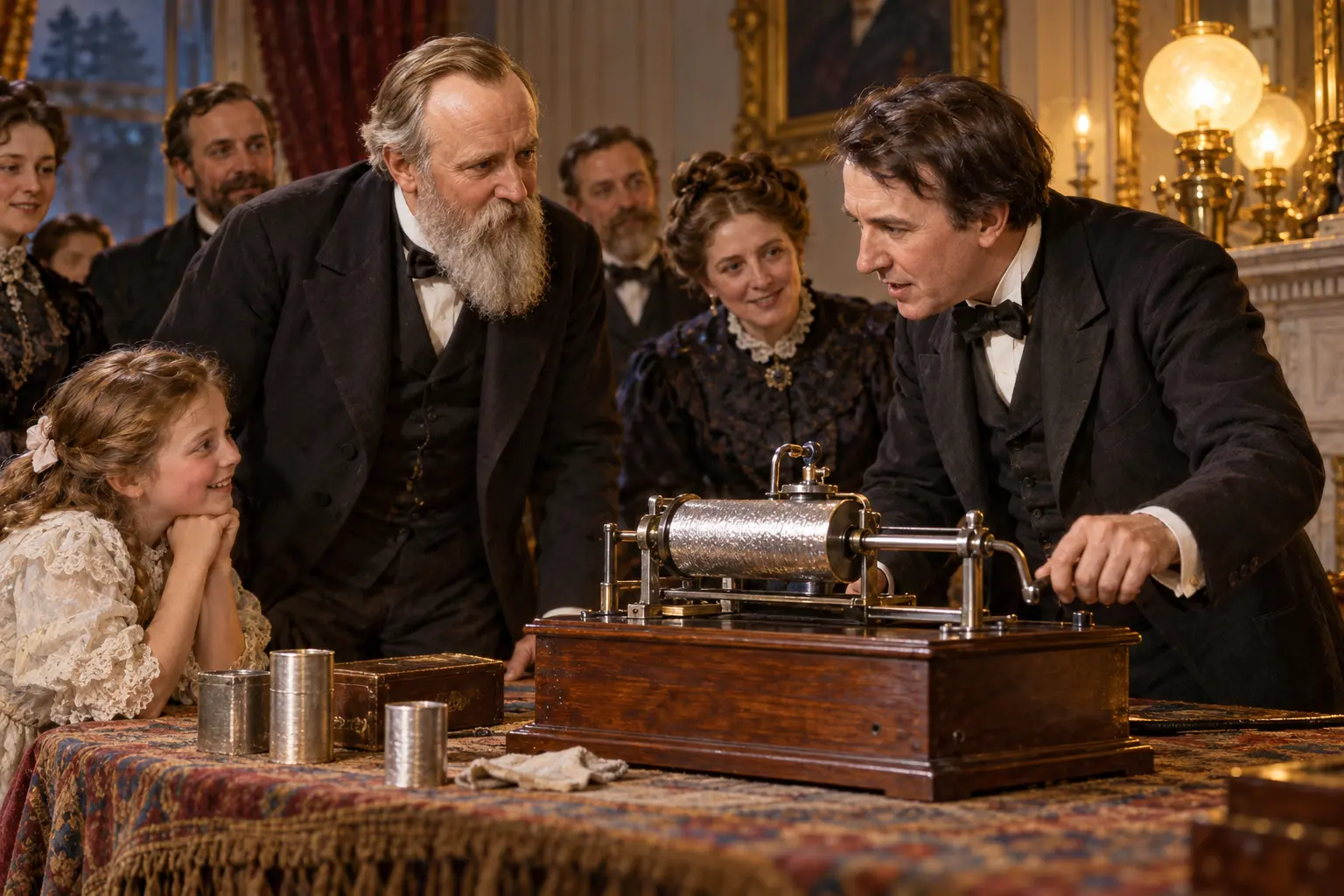
Thomas Edison brought his phonograph to Washington in April 1878, demonstrating it to scientists, members of Congress and the president. At the White House, the new talking machine held Hayes, Lucy and their guests until 3:30 in the morning, according to the Miller Center's account. Recorded sound was sufficiently extraordinary to turn an inventor's visit into an overnight entertainment.
12. A Paraguayan city bears his name because of a border ruling
Argentina and Paraguay chose the American president to arbitrate a territorial dispute after the devastating War of the Triple Alliance. In November 1878 Hayes awarded Paraguay the disputed land between the Verde and the main branch of the Pilcomayo, including Villa Occidental. Paraguay subsequently renamed the town Villa Hayes. His name therefore marks a lasting diplomatic memory far from Ohio.
13. He signed the law that opened the Supreme Court bar to women
Belva Lockwood was refused admission to practice before the Supreme Court in 1876 because she was a woman. She pursued a legislative remedy rather than accepting the exclusion. Hayes signed the resulting law, and the Court admitted her on March 3, 1879. The following year she became the first woman to argue a case before the justices.
14. A sharp rebuke from W. E. B. Du Bois preceded support for his studies
The young Du Bois challenged Hayes after reading remarks suggesting that suitable Black candidates for advanced study were hard to find. Their correspondence grew pointed when funding failed to appear. In 1892 Hayes recommended assistance through the Slater Fund, which approved $750 for a year in Germany, half as a grant and half as a loan. Du Bois later recalled his excitement at the opportunity.
15. His family created a presidential library before the federal system existed
The Hayes Memorial opened at Spiegel Grove on May 30, 1916. His son Webb had arranged to give the estate to Ohio and the papers and possessions to the Ohio Historical Society, on condition that a fireproof building protect them. The collection included Hayes's twelve thousand books. This first presidential library preceded the later federal presidential-library system.
How did these facts land?
Know someone who'd love these facts? Share them 👇