Expelled by His Own Party: 15 Facts About John Tyler
John Tyler became president through an event the country had never faced, then lost the support of his own party. His administration also produced a cabinet nomination rejected three times in one day and a congressional vote conducted beside a stopped clock. His family history stretches even further: a grandson of this president born in 1790 lived until 2025.
1. His first presidential oath took place in a hotel
When William Henry Harrison died in April 1841, nobody had previously inherited the presidency after a president's death. Tyler insisted that he became the president, with the office's full authority. On April 6, Judge William Cranch administered his oath at Brown's Hotel in Washington. The succession precedent outlasted the political battles that immediately engulfed him.
2. His own party threw him out while he was president
The Whigs had won the White House with Harrison and Tyler, but Tyler refused to deliver their long-awaited national bank. After he vetoed two banking bills, most of his cabinet resigned; Secretary of State Daniel Webster stayed to complete negotiations with Britain. Whig leaders then expelled the sitting president from their party, leaving him without its congressional backing.
3. The Senate rejected his choice of treasury secretary three times in one day
Tyler nominated Caleb Cushing to run the Treasury in March 1843. The Senate rejected him, so Tyler submitted the name again—and then once more. All three rejections occurred on March 3. The votes grew steadily more humiliating: 19–27, then 10–27, and finally 2–29. Persistence did not persuade the senators.
4. Congress overrode his veto while its clock had stopped
The first successful congressional override of a presidential veto came at the end of Tyler's term in March 1845, over a bill restricting the construction of revenue-service ships. During the House vote, a representative protested that the clock had been stopped at midnight and Congress's legal term had expired. The Speaker proceeded; the override passed 126–31.
5. An Alabama petition asked Congress to remove him
In July 1842, Representative John Minor Botts presented a petition from Wetumpka, Alabama, demanding Tyler's resignation or impeachment. Its complaints included his supposed ignorance of the government's interests and lack of qualifications. The House immediately tabled it. House historians identify this as its first formal step toward impeaching a president; Tyler himself was never impeached.
6. A warship demonstration killed two of his cabinet secretaries
Tyler attended a cruise aboard USS Princeton on February 28, 1844, when its enormous gun exploded. Six people died, including Secretary of State Abel Upshur, Navy Secretary Thomas Gilmer, Julia Gardiner's father and a man enslaved by Tyler who served as his valet. The president survived. Contemporary reports disagree about the valet's name, identifying him as Henry or Armistead.
 You might also like
15 Fascinating Facts About Theodore Roosevelt
7. He married in office, but the wedding was in New York
Tyler's first wife, Letitia, died in the White House in September 1842. In June 1844 he married Julia Gardiner, becoming the first president to marry while in office. The ceremony took place in New York, followed by a White House reception. Julia was twenty-four; Tyler was fifty-four. She served as first lady for only the administration's final eight months.
8. A grandson of the president born in 1790 lived until 2025
Harrison Ruffin Tyler, John Tyler's last surviving grandson, died in May 2025 at ninety-six. The president had fathered Harrison's father, Lyon, at sixty-three; Lyon was seventy-five when Harrison was born in 1928. Two unusually late fatherhoods connected a president born in 1790 to a grandson living 235 years later.
9. Julia helped turn a popular tune into a presidential entrance cue
The Marine Band credits Julia Tyler, alongside Sarah Polk, with helping establish the custom of announcing a president's arrival with Hail to the Chief. Accounts describe Julia asking the band to play it at White House events. The tune already existed and had been played for earlier presidents, so calling Tyler its inventor would overstate the evidence.
 US Presidents
Discover the eccentricities, secret talents, and surprising hidden lives of America's most influential presidents, from frontier wrestlers to covert strategists.
See All Facts
10. His Robin Hood retreat stretched to 300 feet
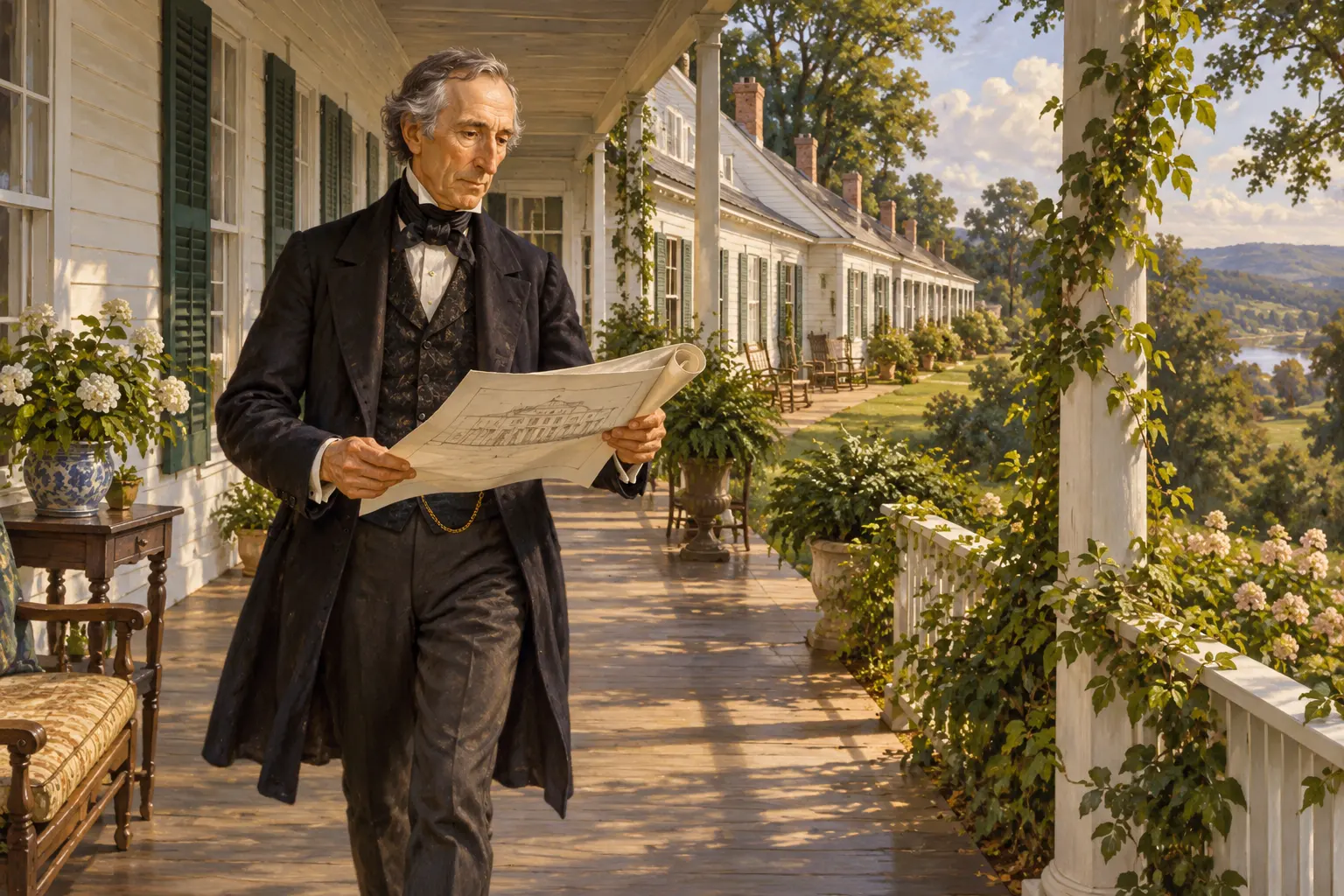
Tyler named his Virginia plantation Sherwood Forest because he regarded himself as a political outlaw, like Robin Hood. His additions connected the original house with wings and outbuildings, including a ballroom and an office. The resulting facade measured 300 feet. Its romantic name and grand entertaining spaces belonged to a plantation sustained by enslaved labor.
11. He changed tactics after the Senate rejected Texas annexation
Tyler's 1844 treaty to annex Texas failed in the Senate. He then pursued a joint resolution through both houses of Congress and secured it with President-elect James K. Polk's support. Tyler signed the measure on March 1, 1845, just before leaving office. Texas actually entered the Union that December, during Polk's presidency.
12. His rejected treasury nominee negotiated America's first treaty with China
Caleb Cushing found another assignment after the Senate refused him the Treasury: Tyler sent him to China. The resulting 1844 Treaty of Wangxia opened five treaty ports to American trade and gave most Americans protection from Chinese courts. It also allowed them to hire Chinese-language tutors, previously forbidden. These privileges formed part of the era's unequal treaty system.
13. A Black butler ran a household that also included enslaved workers
An 1841 report in The Colored American described James Wilkins managing expenses and staff at Tyler's White House, where his son and daughter also worked. Historians believe Wilkins was a free, paid employee. His role coexisted with slavery in the same household—a reminder that a job for one Black worker did not mean freedom for everyone there.
14. Papers stored for safekeeping were destroyed by fire
Tyler carefully saved records of his career, but much of his archive disappeared during the Civil War. Soldiers ransacked Sherwood Forest, while documents Julia had placed in a Richmond bank for protection burned in April 1865. Their son Lyon later rebuilt part of the record by requesting letters from recipients. The surviving collection is only a fragment.
15. A former U.S. president went into Confederate politics
In 1861, Tyler participated in the Washington Peace Conference, then backed Virginia's departure from the Union. He served in the Confederacy's provisional congress and won election to its House of Representatives. He died in January 1862 before that elected House convened. His final political allegiance was thus to a government fighting the United States he had once led.
How did these facts land?
Know someone who'd love these facts? Share them 👇