The Paradoxical President: 15 Fascinating Facts About Andrew Jackson
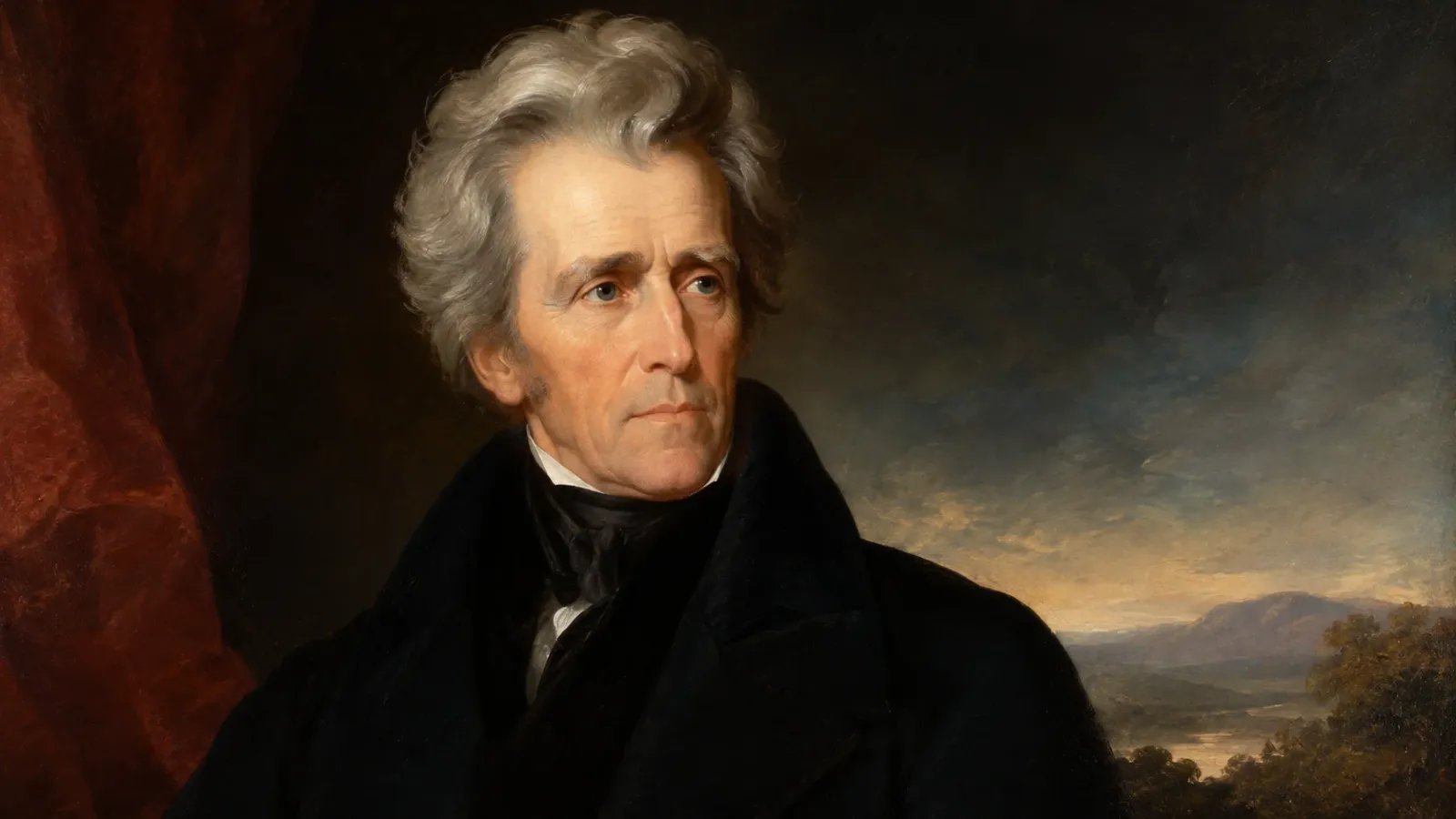
Often seen as just the man on the twenty-dollar bill, Andrew Jackson was far more complex. He was not merely an uneducated frontiersman, but a shrewd political architect who forever expanded executive power. Beyond the frontier folklore of duels and battles lies a misunderstood legacy overflowing with intense contradictions, fierce personal loyalties, and startling historical paradoxes.
1. Andrew Jackson was the first American president to experience an assassination attempt, which he survived because the shooter's guns miraculously misfired twice.
In January 1835, an unemployed house painter named Richard Lawrence approached Jackson outside the United States Capitol. Lawrence drew a pistol and fired, but the weapon misfired due to the humid damp weather. As the enraged president charged at his attacker with his walking cane, Lawrence pulled out a second pistol, which astonishingly also misfired. Ballistics experts later tested the pistols and concluded that the odds of both functioning weapons misfiring back-to-back were roughly one in 125,000. Jackson's allies immediately suspected a political conspiracy, though Lawrence was later deemed insane and institutionalized.
2. He carried multiple bullets in his body for decades as a result of engaging in violent personal duels and brawls long before his presidency.
Jackson was notoriously quick-tempered and fiercely defensive of his honor, leading him to participate in dozens of duels over his lifetime. In 1806, he famously dueled Charles Dickinson, allowing Dickinson to shoot him in the chest so Jackson could take careful aim and kill him. The bullet was lodged so close to Jackson's heart that surgeons decided it was too dangerous to remove, remaining there for the rest of his life. Another bullet from a fierce 1813 tavern brawl with the Benton brothers remained lodged in his arm for nearly twenty years. It was finally extracted in 1832 while he was serving as president, completely without the aid of modern anesthesia.
3. Jackson's supporters gifted him a massive 1,400-pound wheel of cheese, which sat in the White House for two years before he finally invited the public to eat it.
A wealthy dairy farmer named Thomas Meacham sent the colossal wheel of cheddar to the White House in 1835 to honor the president. Jackson left the enormous cheese sitting in the executive mansion's entrance hall to age, but its pungent odor eventually permeated the entire building. Desperate to get rid of it before leaving office, Jackson hosted a massive public reception on Washington's Birthday in 1837. Thousands of hungry citizens descended upon the White House, completely devouring the massive dairy monument in just two hours. The greasy spectacle left a lingering stench embedded in the carpets and upholstery that his successor, Martin Van Buren, struggled for months to eradicate.
4. Andrew Jackson remains the only president in United States history to successfully pay off the entire national debt.
Driven by a deep-seated suspicion of banks and paper money, Jackson believed that the national debt was a moral failing rather than a useful economic tool. By vetoing spending bills, selling off vast tracts of western federal lands, and blocking infrastructure projects, he aggressively balanced the federal budget. In January 1835, the government officially reached a zero balance, completely eliminating the national debt for the first and only time. However, this historic financial milestone was incredibly short-lived. His economic policies, specifically his destruction of the Second Bank of the United States, contributed heavily to the devastating Panic of 1837, which plunged the nation back into severe debt.
5. The president owned an African Grey parrot named Poll that had to be removed from his funeral because it would not stop screaming profanities.
Jackson purchased the remarkably intelligent parrot as a gift for his wife, Rachel, but he took over its care after her sudden death. Over the years, the grieving and notoriously foul-mouthed statesman spent a great deal of time around the bird, inadvertently teaching it his colorful vocabulary. When Jackson passed away in 1845, mourners gathered at his Hermitage estate in Tennessee to pay their final respects. During the solemn service, Poll suddenly began shrieking strings of vicious curse words, horrifying the attending dignitaries and clergy. The irreverent bird was ultimately escorted away from the funeral, leaving an ironically fitting final tribute to the fiery politician.
6. Despite being responsible for the tragic Indian Removal Act, Jackson legally adopted and raised an orphaned Native American infant.
Following the brutal Battle of Tallushatchee during the Creek War in 1813, Jackson found a ten-month-old Creek infant found near his deceased parents. Rather than abandoning the child, Jackson sent the boy, whom he named Lyncoya, back to his Tennessee plantation to be raised alongside his own family. Jackson reportedly felt a deep kinship with the orphan, reflecting on his own difficult childhood after losing his immediate family at a young age. He educated Lyncoya and originally intended to send him to West Point, but political complications and the boy's declining health prevented it. Tragically, Lyncoya died of tuberculosis at the age of sixteen, devastating Jackson, who mourned him deeply despite orchestrating the violent displacement of Native peoples.
 US Presidents
Discover the eccentricities, secret talents, and surprising hidden lives of America's most influential presidents, from frontier wrestlers to covert strategists.
See All Facts
US Presidents
Discover the eccentricities, secret talents, and surprising hidden lives of America's most influential presidents, from frontier wrestlers to covert strategists.
See All Facts
7. He harbored a lifelong hatred of the British after a Revolutionary War officer slashed him with a sword for refusing to clean his boots.
During the American Revolution, a thirteen-year-old Jackson served as a courier for the local militia before being captured by British troops. While being held as a prisoner of war, an arrogant British officer ordered the defiant teenager to shine his muddy military boots. When Jackson boldly refused, demanding to be treated with the dignity of a prisoner of war, the enraged officer struck him forcefully with his sword. Jackson threw up his hand to block the blow, leaving him with deep, permanent scars on his left hand and his forehead. This brutal encounter, combined with the subsequent wartime deaths of his mother and brothers, cemented an intense, enduring animosity toward Great Britain that fueled his later military career.
8. His famous nickname, Old Hickory, was earned not in the White House, but on a punishing 500-mile military march where he gave up his horse for the sick.
During the War of 1812, Jackson was ordered to march his Tennessee militia to Natchez, Mississippi, only to be abruptly dismissed by the War Department without pay or supplies. Rather than disbanding his troops and abandoning them in the wilderness, Jackson personally led the grueling 500-mile trek back to Tennessee. To accommodate the wounded and sick soldiers, he surrendered his own horses and marched the entire distance on foot alongside his men. The soldiers were so impressed by his physical resilience and willingness to share their suffering that they declared he was tough as hickory wood. The moniker stuck with him for the rest of his life, becoming a powerful symbol of his rugged populist brand.
9. Jackson's first inauguration party was so chaotic and crowded that he was forced to flee the White House through a window to avoid being crushed.
When Jackson was inaugurated in 1829, he broke tradition by throwing open the doors of the White House to the general public to celebrate his victory. Thousands of commoners, frontiersmen, and political supporters flooded the executive mansion, tracking mud over expensive carpets and breaking thousands of dollars worth of fine china. The crush of the ecstatic mob became so overwhelming that the newly sworn-in president was pinned against a wall by overly enthusiastic well-wishers. To escape the suffocating throng, aides had to form a protective barrier and literally push Jackson out of a ground-floor window. The riotous crowd was only dispersed when clever staff members moved large tubs of spiked punch out onto the front lawn to draw the people outside.
10. He famously threatened to personally hang his own vice president after South Carolina attempted to nullify federal tariff laws.
During the Nullification Crisis of 1832, South Carolina declared that they had the sovereign right to ignore federal tariffs they deemed unconstitutional. The movement was secretly championed by Jackson's own Vice President, John C. Calhoun, which Jackson viewed as outright treason against the Union. Infuriated by this challenge to federal supremacy, Jackson pushed the Force Bill through Congress, granting him the power to use the military to enforce the tariffs. He reportedly declared that if South Carolina engaged in armed rebellion, he would march an army down and hang Calhoun from the first tree he could find. The standoff was eventually resolved through a compromise tariff, but it permanently destroyed the political relationship between the two leaders.
11. Jackson popularized the spoils system, arguing that constantly rotating government employees prevented aristocratic corruption.
Before Jackson's presidency, federal government jobs were often held by the same individuals for life, creating an entrenched and elitist bureaucracy. Upon taking office, Jackson swiftly fired hundreds of experienced government officials and replaced them with his own fiercely loyal political supporters. He argued that public duties should be simple enough for any intelligent citizen to perform, making civil service rotation a purely democratic ideal. Critics vehemently attacked this practice, labeling it the spoils system based on the phrase to the victor belong the spoils of the enemy. While intended to democratize the government, the system ultimately bred rampant incompetence and political corruption that plagued the civil service for decades.
12. He was the first president to be formally censured by the United States Senate due to his controversial crusade against the national bank.
Jackson's absolute refusal to recharter the Second Bank of the United States sparked one of the most intense political battles of the nineteenth century. To destroy the institution, he bypassed Congress and unilaterally ordered his Treasury Secretary to remove all federal deposits from the bank. Infuriated by what they viewed as an unconstitutional abuse of executive power, the Whig-controlled Senate voted to formally censure Jackson in 1834. Jackson fiercely fought back, sending a lengthy protest message to the Senate arguing that the president, as the direct representative of the people, held independent authority. Just weeks before he left office in 1837, his Democratic allies finally regained control of the Senate and successfully expunged the censure from the official record.
13. Jackson effectively ignored his official cabinet, relying instead on a secret group of advisors famously dubbed the Kitchen Cabinet.
Early in his first term, Jackson's official cabinet was paralyzed by intense social infighting, most notably the Petticoat Affair surrounding the wife of his Secretary of War. Frustrated by the constant drama and the questionable loyalty of his formal appointees, Jackson largely stopped holding official cabinet meetings. Instead, he surrounded himself with a tight-knit circle of trusted friends, newspaper editors, and political allies who entered the White House through the back doors. His political enemies derisively nicknamed this unofficial advisory board the Kitchen Cabinet, accusing them of wielding unconstitutional influence over national policy. This unprecedented reliance on unofficial counselors permanently altered how modern presidents seek private advice outside of Senate-confirmed channels.
14. His profound hatred for his political rivals stemmed from ruthless campaign smears regarding his wife's unintentional bigamy.
When Andrew Jackson married Rachel Donelson Robards in 1791, both genuinely believed that her abusive first husband had finalized their divorce. Years later, they discovered the divorce had not been legally completed, making Rachel technically a bigamist, a scandal that forced them to remarry in 1794. During the intensely bitter presidential election of 1828, Jackson's political opponents weaponized this innocent mistake, viciously labeling his beloved wife as an adulteress in the national press. Rachel suffered a fatal heart attack just weeks before his inauguration, which Jackson blamed entirely on the cruel stress inflicted by his political enemies. He never forgave John Quincy Adams or Henry Clay, and this profound personal grievance dictated much of his combative, unforgiving political posture.
15. Despite holding the highest legal and executive offices in the land, Jackson had almost no formal education and taught himself law.
Unlike the refined, highly educated Founding Fathers who preceded him in the presidency, Jackson grew up in extreme poverty on the Carolina frontier. His formal schooling was incredibly erratic, cut short entirely by the outbreak of the American Revolution and the tragic loss of his entire family. In his late teens, he moved to North Carolina and simply began reading law books in a local attorney's office until he could pass the bar exam. He built a lucrative legal practice, served as a judge, and ultimately won the presidency through sheer charisma and fierce determination rather than academic pedigree. This lack of formal refinement horrified the political elite of his era, but it perfectly aligned him with the rugged, self-made image revered by the American working class.
Sources & References
This AI-assisted post was rigorously curated and fact-checked for accuracy by:
 Martin Roháček
How fun was this article? 🤔
Tap a star to rate it
🧠 Quiz: How closely were you paying attention?
9 questions — all answers are in the article above!
Enjoyed these facts? There's more! 💌
Fresh fun facts in your inbox. No spam, ever.