15 Fascinating Facts About Ulysses S. Grant
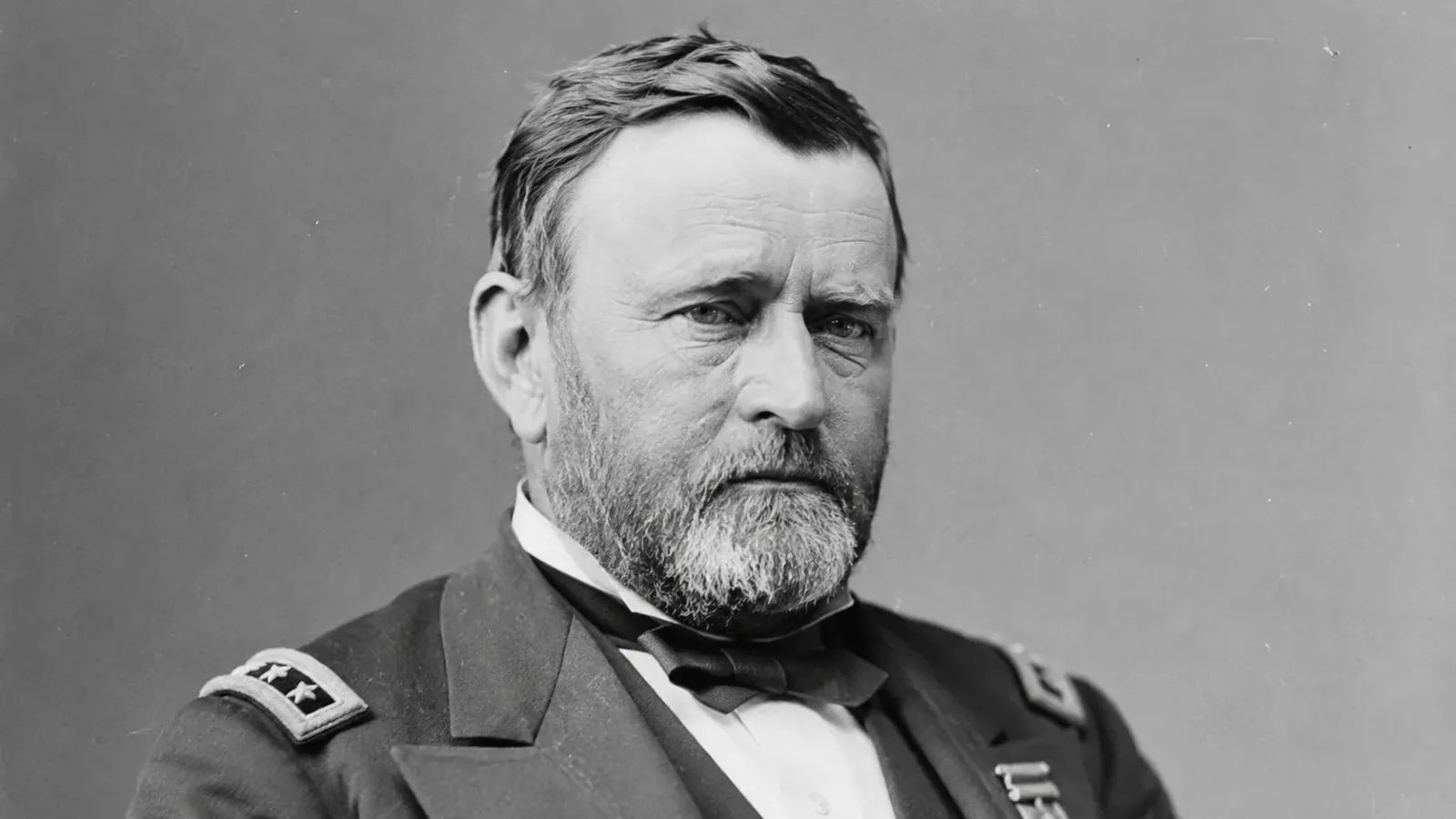
Often dismissed as a corrupt drunkard who merely battered his way to victory, Ulysses S. Grant was actually a brilliant strategist and civil rights pioneer. Beyond the cigars and carnage lies a complex leader who crushed the Ku Klux Klan and championed equality. Discover the surprising truths behind America's most underestimated president.
1. Ulysses S. Grant was not his actual birth name, and the middle initial does not stand for anything.
Hiram Ulysses Grant was his birth name. When he was nominated to attend West Point, the congressman who submitted his application mistakenly wrote "Ulysses S. Grant," assuming his middle name was his mother's maiden name, Simpson. Not wanting to risk his admission by correcting a federal error, Grant accepted the new name, which his fellow cadets abbreviated to "Sam" due to the initials U.S.
2. Despite commanding massive armies during the bloodiest conflict in American history, Grant had an intense aversion to the sight of blood.
The general was so squeamish that he refused to eat any meat unless it was charred to a crisp, avoiding anything that resembled blood. This aversion extended to the battlefield; he rarely visited field hospitals because the sight of the gruesome injuries and amputations caused him physical distress, preferring to study maps and logistics over viewing the human cost of his strategic decisions.
3. As president, Grant orchestrated the destruction of the first Ku Klux Klan by using federal troops to suspend habeas corpus.
In 1871, seeing the horrific violence inflicted upon Black Americans in the South, Grant pushed Congress to pass the Enforcement Acts, also known as the Ku Klux Klan Acts. He deployed the military into South Carolina and other southern states to arrest thousands of Klansmen, effectively dismantling the domestic terrorist organization's first iteration and safeguarding voting rights for freedmen.
4. Grant is the only United States president to ever be arrested while in office, receiving a citation for speeding in his horse-drawn carriage.
In 1872, a Washington D.C. police officer named William West, who was a formerly enslaved man, pulled over the sitting president for recklessly racing his carriage through the streets. Grant not only paid the twenty-dollar fine but commended the officer for doing his duty, setting a remarkable precedent that no one, not even the chief executive, is above the law.
5. Grant wrote his famous memoirs while dying of throat cancer to save his family from financial ruin, finishing them just days before his death.
After being swindled out of his life savings by a corrupt investment partner, a terminally ill Grant struck a publishing deal with his close friend, the renowned author Mark Twain. Battling excruciating pain and writing by hand, he completed the manuscript a mere five days before passing away in 1885. The memoirs became a massive critical and commercial success, securing his widow's financial future and earning a place as one of the greatest military autobiographies ever written.
6. He never wanted to be a soldier and initially planned to leave the military immediately after completing his required service.
Grant attended West Point primarily to receive a free college education and appease his overbearing father, intending to become a mathematics professor after graduation. It was only the outbreak of the Mexican-American War that kept him in uniform, where he surprisingly excelled in quartermaster duties and battlefield logistics despite his intense distaste for the military profession.
 US Presidents
Discover the eccentricities, secret talents, and surprising hidden lives of America's most influential presidents, from frontier wrestlers to covert strategists.
See All Facts
US Presidents
Discover the eccentricities, secret talents, and surprising hidden lives of America's most influential presidents, from frontier wrestlers to covert strategists.
See All Facts
7. He possessed a profound empathy for animals and would severely punish any soldier he caught mistreating a horse.
During the brutal Overland Campaign, Grant once saw a teamster violently beating a workhorse in the face. Enraged, the usually stoic general ordered the man tied to a tree for six hours as punishment. He was widely recognized as one of the finest equestrians in the army, taming horses that other soldiers found unmanageable through gentle persistence rather than brutal force.
8. Grant attempted to reform federal relations with Native Americans by appointing an indigenous man as Commissioner of Indian Affairs.
In a radical departure from previous administrations, Grant implemented his Peace Policy and appointed Ely S. Parker, a Seneca leader and his former wartime adjutant, to head the Bureau of Indian Affairs. While the policy ultimately failed due to westward expansion and entrenched frontier hostility, Grant's initial effort to replace corrupt federal agents with religious leaders and Native representatives was an unprecedented attempt at humane assimilation rather than extermination.
9. He was famously tone-deaf and claimed he could only recognize two songs in the entire musical canon.
Grant often joked about his complete inability to comprehend music, famously quipping to a reporter that he knew only two tunes: one of them was Yankee Doodle, and the other wasn't. He actively disliked military band performances, finding the noise irritating, and usually requested that the musicians stop playing when he was in camp.
10. Grant signed the legislation that created Yellowstone National Park, establishing the world's first national park.
In March 1872, Congress sent Grant the Yellowstone National Park Protection Act, which he eagerly signed into law. This monumental legislation set aside over two million acres of pristine wilderness in the Wyoming and Montana territories for public enjoyment, igniting the global conservation movement and cementing the idea that nature's wonders should be preserved rather than exploited.
11. During the Civil War, Grant issued an infamous anti-Semitic order expelling all Jewish people from his military district, an action he regretted for the rest of his life.
Frustrated by illegal cotton smuggling in 1862, Grant hastily issued General Order No. 11, which blamed the illicit trade on Jewish merchants and expelled them from areas under his control in Tennessee, Mississippi, and Kentucky. President Lincoln quickly revoked the order, and a deeply remorseful Grant spent his later political career appointing Jewish Americans to federal office and publicly apologizing for the prejudiced decree.
12. Before his sudden rise to Civil War heroism, Grant was a spectacular failure in civilian life, struggling to provide for his family.
In the years between the Mexican-American War and the Civil War, Grant resigned from the army and attempted several professions, including farming, real estate, and bill collecting. He failed at nearly all of them, eventually being forced to pawn his gold watch for Christmas presents and reluctantly asking his father for a menial job at the family leather goods store in Galena, Illinois, just before the Civil War began.
13. He considered the passage of the Fifteenth Amendment, which guaranteed voting rights for Black men, to be the greatest event since the nation's founding.
Grant vigorously championed the ratification of the Fifteenth Amendment during his presidency, sending special messages to Congress to ensure its passage. When it was ratified in 1870, he celebrated it as a monumental achievement of the Civil War, recognizing that the Union victory would mean little if the formerly enslaved were not granted full political participation in the restored republic.
14. After leaving the presidency, Grant embarked on a two-and-a-half-year tour around the world, acting as America's first unofficial cultural ambassador.
Starting in 1877, Grant and his wife Julia traveled across Europe, the Middle East, and Asia, dining with Queen Victoria, meeting Pope Leo XIII, and mediating a territorial dispute between China and Japan. He was greeted by massive, adoring crowds globally, transforming the international perception of the United States from a fractured, recovering nation into a legitimate global superpower.
15. His final resting place, Grant's Tomb in New York City, remains the largest mausoleum in North America.
Designed by architect John Duncan and completed in 1897, the massive granite and marble monument in Manhattan's Riverside Park was funded entirely by public donations. More than a million people attended the dedication parade, underscoring the immense reverence the American public held for the general who saved the Union, entirely defying the modern misconception that he was merely a butchering opportunist.
Sources & References
This AI-assisted post was rigorously curated and fact-checked for accuracy by:
 Martin Roháček
How fun was this article? 🤔
Tap a star to rate it
🧠 Quiz: How closely were you paying attention?
10 questions — all answers are in the article above!
Enjoyed these facts? There's more! 💌
Fresh fun facts in your inbox. No spam, ever.