The Sovereign Empress: 15 Fascinating Facts About Queen Victoria
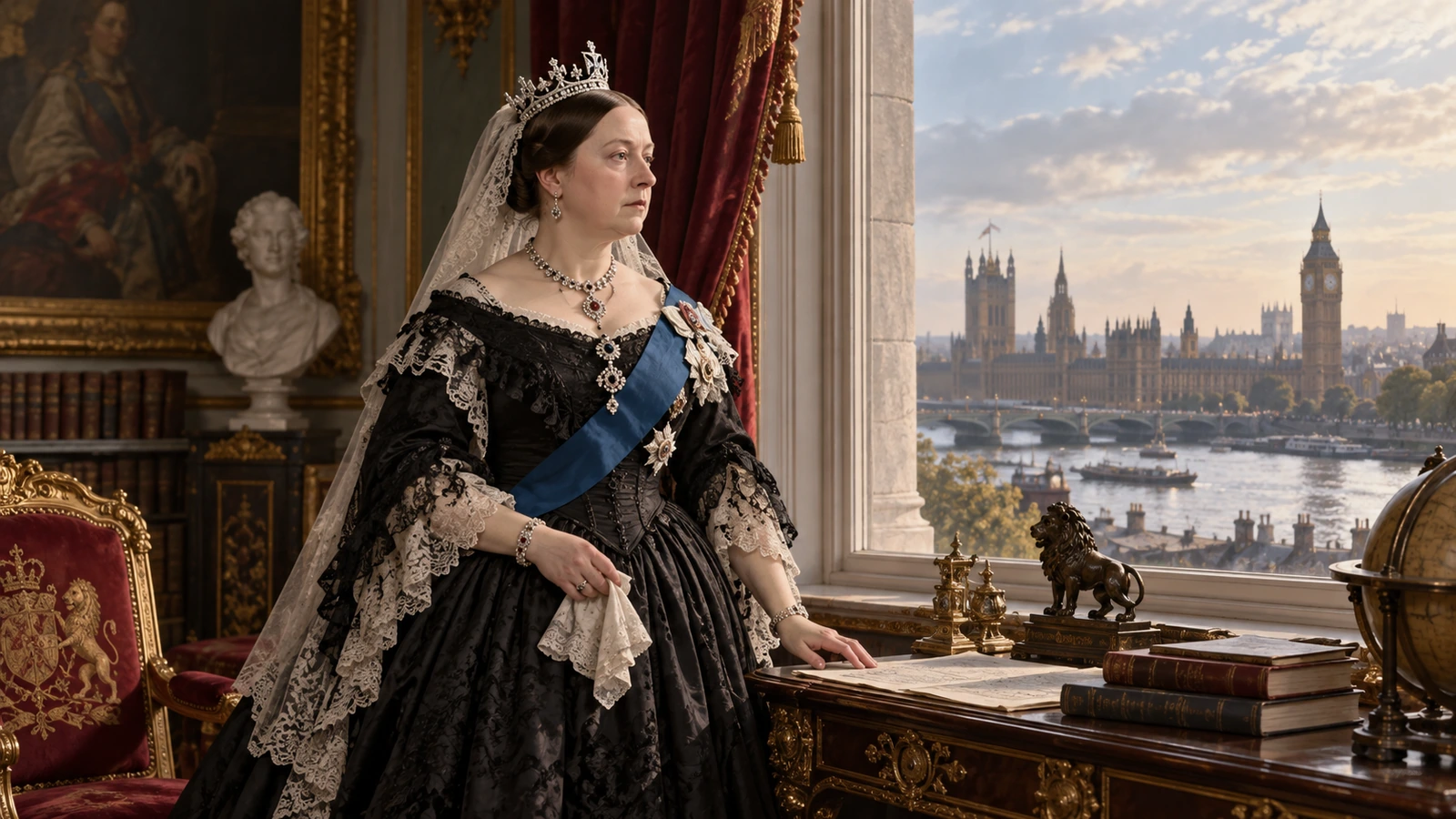
Queen Victoria defined an entire era of global history, reigning over the British Empire during a period of massive industrialization, cultural transformation, and territorial expansion. Behind her stern regal persona lay a complex monarch who broke traditions, survived violent threats, and transformed royalty into a modern institution. From proposing to her own husband to establishing international fashion trends and surviving relentless stalkers, her private life was as dramatic as her public reign. Discover fifteen astonishing facts about the queen whose influence shaped the modern world.
1. She Proposed to Prince Albert Due to Royal Protocol
When Queen Victoria decided to marry her cousin Prince Albert of Saxe-Coburg and Gotha in 1839, traditional gender roles had to be inverted. Royal protocol dictated that because Victoria was the reigning monarch, no subject or foreign prince possessed the status to propose marriage to her. Consequently, on October 15, 1839, nineteen-year-old Victoria summoned Albert to her private closet at Windsor Castle and asked for his hand in marriage. She recorded in her diary that Albert warmly accepted the proposal, leading to their wedding early the following year. Their partnership was deeply personal as well as political, completely reshaping the public image of the British monarchy during the nineteenth century.
2. She Stood Under Five Feet Tall
Despite ruling over an empire that spanned nearly a quarter of the globe, Queen Victoria stood at just four feet and eleven inches tall. In her youth, observers often described her as delicate, but as she aged, her posture and stern demeanor imparted a commanding aura that belied her height. To maintain an imposing presence during state occasions and public ceremonies, her staff frequently employed raised footstools, elevated platform seating, and specially tailored gowns. European diplomats and world leaders regularly noted that her fierce gaze and royal authority made her seem much larger than her physical size suggested. Even in her final years, when she relied on a wheelchair, her formidable personality dominated any room she entered.
3. She Unwittingly Created the White Wedding Dress Tradition
Before Queen Victoria married Prince Albert in 1840, brides from wealthy families typically wore elaborate gowns in rich colors like crimson, blue, or gold, which could be worn again for formal occasions. Victoria broke with royal custom by opting for an ivory silk-satin dress to showcase the exquisite handmade Honiton lace crafted by rural English weavers. Her choice was deliberately patriotic, intended to boost Britain's struggling domestic textile industry during an economic depression. The widespread publication of illustrations depicting her bridal attire sparked a fashion craze across Europe and North America that persists to this day. By choosing white, Victoria accidentally established the global standard for modern Western bridal wear.
4. She Survived at Least Seven Assassination Attempts
Over the course of her long reign, Queen Victoria survived at least seven documented assassination attempts, beginning in 1840 when Edward Oxford fired two shots at her carriage while she was pregnant. Subsequent attackers included John Francis, John William Bean, and Roderick Maclean, who attempted to shoot her at Windsor railway station in 1882. Surprisingly, Victoria refused to let these dangerous incidents intimidate her or curb her public appearances. After an attacker named Robert Pate struck her across the face with a brass-tipped cane in 1850, leaving her bruised, she attended the opera that very same evening to demonstrate her resilience. Her courage in the face of violent threats ultimately bolstered her public popularity throughout Great Britain.
5. She Was a Polyglot Who Learned Hindustani in Her Sixties
Queen Victoria grew up in a heavily German-influenced household, as her mother and governess, Baroness Lehzen, both spoke German as their primary tongue. As a result, Victoria spoke fluent German as her first language during early childhood and only began learning English at age three. Throughout her life, she remained exceptionally proficient in foreign languages, conversing seamlessly in French and Italian as well. In her late sixties, following her Golden Jubilee, she began studying Hindustani under the tutelage of her Indian attendant, Abdul Karim. She maintained daily journals written in Urdu script and learned enough of the language to converse with Indian visitors to court.
6. She Championed the Use of Pain Relief During Childbirth
Giving birth in the nineteenth century was fraught with extreme physical suffering and high mortality rates, often compounded by religious beliefs that pain during labor was divine punishment. Queen Victoria fundamentally altered medical history during the birth of her eighth child, Prince Leopold, in 1853 by insisting on receiving chloroform. Administered by the pioneering physician Dr. John Snow, the anesthetic provided her with tremendous relief, prompting her to describe it as "that blessed chloroform." Her glowing endorsement popularized the use of obstetric anesthesia among upper and middle-class women across the Western world. By openly embracing medical science over traditional dogma, Victoria helped destigmatize pain relief during labor.
 Rulers, Kings and Emperors
Discover the captivating truths behind history's most iconic rulers, kings, and emperors. From eccentric geniuses and tactical masterminds to deeply flawed sovereigns, explore the hidden lives of those who shaped the modern world.
See All Facts
Rulers, Kings and Emperors
Discover the captivating truths behind history's most iconic rulers, kings, and emperors. From eccentric geniuses and tactical masterminds to deeply flawed sovereigns, explore the hidden lives of those who shaped the modern world.
See All Facts
7. She Spent Forty Years Dressed in Mourning Black
When Prince Albert died suddenly of typhoid fever in December 1861 at the age of forty-two, Victoria was plunged into profound grief from which she never truly recovered. For the remaining thirty-nine years of her life, she dressed strictly in black mourning garments and wore a white widow's cap. This intense public grief initially alienated some of her subjects, who felt she was neglecting her official duties by living as a recluse at Osborne House and Balmoral. Over time, however, her perpetual state of mourning became an iconic aspect of her image as the matriarch of the nation. She was ultimately buried in white, wearing her original wedding veil, alongside her beloved Albert.
8. Her Household Maintained Eerie Daily Rituals for Her Deceased Husband
Victoria's grief over her husband's death manifested in several extraordinary and eerie daily rituals maintained by her household staff. At her instruction, Prince Albert's personal rooms at Windsor Castle and Buckingham Palace were preserved exactly as he had left them on the day he died. Every single day for nearly forty years, servants brought hot water for shaving to his dressing room and laid out a fresh change of clothes on his bed. His nightwear was laid out each evening, and his personal washbasins were refilled daily with clean water as if he were still alive. This obsessive preservation served as a constant physical reminder of her enduring devotion to her late husband.
9. Her Real First Name Was Alexandrina
The monarch history remembers as Queen Victoria was actually christened Alexandrina Victoria upon her birth at Kensington Palace in 1819. She was named Alexandrina in honor of her godfather, Tsar Alexander I of Russia, and Victoria after her German mother, the Duchess of Kent. Throughout her early childhood, her family called her by the affectionate nickname "Drina." However, upon ascending the British throne in 1837 at the age of eighteen, she explicitly chose to drop her primary first name. She declared her official regnal title to be Queen Victoria, preferring a name that sounded distinct and dignified to her British subjects.
10. She Was the First British Monarch to Ride a Train
On June 13, 1842, Queen Victoria made history by becoming the very first British monarch to travel by train, taking a journey from Slough to Paddington Station. Accompanied by Prince Albert, she boarded a specially constructed royal carriage operated by the Great Western Railway and engineered by Isambard Kingdom Brunel. While she initially confessed to feeling alarmed by the train's unprecedented speed of twenty miles per hour, she quickly grew to appreciate the technology. Railway travel subsequently became her preferred method of long-distance transport, allowing her to travel easily between London, Windsor, and her beloved Scottish estate at Balmoral. Her endorsement played a pivotal role in overcoming public skepticism toward steam locomotion.
11. She Gifted the Resolute Desk to the U.S. President
One of the most lasting tangible legacies of Queen Victoria's diplomacy sits directly in the Oval Office of the White House today. In 1880, Victoria presented President Rutherford B. Hayes with an ornate, hand-carved wooden desk known as the Resolute desk. The desk was constructed from the timber of HMS Resolute, a British arctic exploration ship that had been abandoned in ice and later rescued and returned to Britain by an American whaling crew. As a token of gratitude and international goodwill, Victoria commissioned the desk from the ship's timbers upon its decommission. Since then, numerous U.S. presidents, including John F. Kennedy, Barack Obama, and Joe Biden, have chosen it as their primary workspace.
12. She Demanded Fresh Indian Curry on the Menu Every Single Day
Victoria's fascination with India grew exponentially after she was proclaimed Empress of India in 1876, even though she never actually set foot in the subcontinent. She recruited native Indian staff to serve at court, who introduced her to authentic South Asian culinary traditions. Impressed by the complex spices and flavors, Victoria ordered that authentic Indian curry be cooked in the royal kitchens every single day. Even if she chose not to eat it on a given afternoon, a fresh curry dish was required to be available on the buffet menu daily. Her imperial palate helped spark a fascination with Indian food across the British Isles, laying the groundwork for curry's eventual status as a staple of British cuisine.
13. She Was a Genetic Carrier of the "Royal Disease"
Queen Victoria was a genetic carrier of hemophilia B, a rare blood-clotting disorder that became known throughout the world as the "Royal Disease." Because she had nine children who married into major royal houses across the continent, she unwittingly transmitted the mutated X-chromosome gene to multiple European dynasties. Her son Leopold suffered severely from the condition and died young, while her daughters Alice and Beatrice passed the gene to royal families in Germany, Spain, and Russia. Most famously, her great-grandson Tsarevich Alexei of Russia inherited the disorder, leading his desperate parents to seek the help of Grigori Rasputin. Consequently, historians often call Victoria the "Grandmother of Europe" for her vast familial influence and genetic legacy.
14. A Teenage Stalker Repeatedly Infiltrated Her Private Living Quarters
Buckingham Palace suffered a remarkable series of security breaches during the early years of Victoria's reign due to a teenage intruder named Edward Jones, nicknamed "The Boy Jones." Between 1838 and 1841, Jones managed to sneak into the palace on at least three separate occasions without being caught by guards. On one break-in, he sat on the royal throne, read books in the library, and ate food from the palace kitchens. On another occasion, security staff discovered him hiding directly under Queen Victoria's sofa in her private sitting room, having stolen several articles of her intimate underwear. His bizarre exploits exposed severe flaws in royal security and led to significant reforms in palace protection.
15. She Reigned over an Unprecedented Technological Revolution
When Victoria ascended the throne in 1837, the world relied on horse-drawn carriages, oil lamps, and handwritten letters delivered by sail. By the time of her death in 1901, she had witnessed an unprecedented technological revolution that birthed the modern world. During her sixty-three-year reign, she saw the introduction of commercial photography, electric lighting, transoceanic telegraph cables, the telephone, recorded sound, and early automobiles. She embraced many of these innovations personally, becoming the first monarch to send a telegram across the Atlantic Ocean and having her voice recorded on an early phonograph cylinder. Her era transformed human connectivity, industrial manufacturing, and global infrastructure forever.
Sources & References
This AI-assisted post was rigorously curated and fact-checked for accuracy by:
 Martin Roháček
How fun was this article? 🤔
Tap a star to rate it
🧠 Quiz: How closely were you paying attention?
10 questions — all answers are in the article above!
Enjoyed these facts? There's more! 💌
Fresh fun facts in your inbox. No spam, ever.