
The Subterranean Metropolis: 15 Fascinating Facts About London
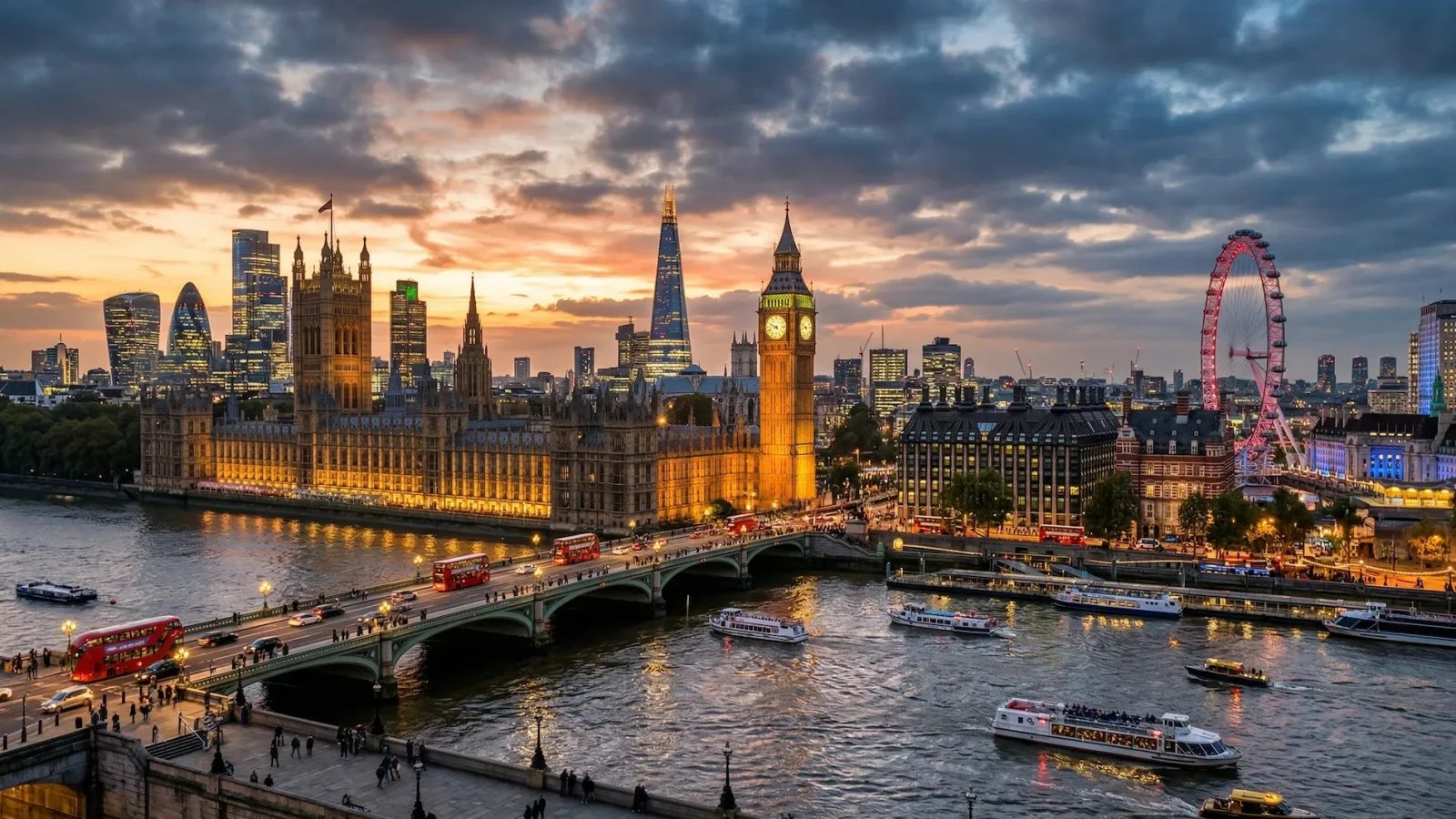
London is a metropolis built upon layers of Roman ruins, forgotten plague pits, and subterranean transit networks. Behind its iconic modern skyline lies a city defined by bizarre historical quirks, architectural misnomers, and biological evolutionary marvels. From secret underground railways to law-defying side streets, the UK capital holds countless secrets beneath its surface. Here are 15 of the most surprising facts about the legendary British capital.
1. The London Underground Has Its Own Genetically Distinct Mosquito
Deep beneath the streets of the capital, a completely unique subspecies of insect lives in total isolation. Known scientifically as Culex molestus, the London Underground mosquito adapted specifically to the warm, dark conditions of subterranean rail tunnels during the 20th century. Unlike its above-ground relative Culex pipiens, this subterranean pest does not hibernate in winter and feeds aggressively on rodents, birds, and humans. Genetic studies show that the subterranean populations in different tube lines have diverged so significantly that they can no longer interbreed with surface mosquitoes. What began as a wartime nuisance during the Blitz has officially evolved into a distinct evolutionary biological marvel.
2. The Great Stink of 1858 Reshaped the City's Entire Infrastructure
During the scorching summer of 1858, London was brought to a virtual standstill by a crisis known as the Great Stink. Centuries of untreated human waste and industrial effluent dumped directly into the River Thames began to ferment under an intense heatwave. The resulting miasma was so overwhelmingly toxic that lawmakers were forced to soak Parliament's curtains in chloride of lime and eventually flee the building. This public emergency prompted Parliament to urgently fund the construction of a massive modern sewer network. Designed by brilliant civil engineer Sir Joseph Bazalgette, this subterranean engineering masterpiece effectively eradicated cholera outbreaks and remains operational today.
3. Memorizing London Streets Physically Alters Cab Drivers' Brains
Earning a license to operate a traditional London black cab requires passing a legendary geographic exam called "The Knowledge." Applicants spend three to four years memorizing more than 25,000 complex streets and thousands of landmarks within a six-mile radius of Charing Cross. University College London neuroscientists conducted landmark brain scans on trainees and discovered that this intense spatial memory conditioning produces measurable physical changes in the brain. Specifically, cab drivers develop a significantly larger posterior hippocampus compared to the general public. This extraordinary structural adaptation demonstrates the brain's incredible neuroplasticity late into adulthood.
4. Cleopatra's Needle Encapsulates a Bizarre Victorian Time Capsule
Standing tall on the Victoria Embankment is Cleopatra's Needle, a genuine ancient Egyptian granite obelisk carved around 1450 BC. When British engineers finally erected the 224-ton monument in 1878 after a perilous ocean journey, they placed a sealed bronze time capsule inside its stone pedestal. The contents of the capsule reflect a uniquely quirky Victorian snapshot of late 19th-century civilization. Alongside standard items like newspapers, coins, and a Bible, officials included a set of hairpins, a box of luxury cigars, and a photographic album featuring 12 women considered the most beautiful in England at the time. This historic archive remains safely preserved underneath the stone structure.
5. Commuters Transit Daily Above Unmarked Medieval Plague Pits
The daily rush-hour commute for thousands of tube passengers passes directly through mass burial sites from the Middle Ages. When civil engineers excavated the site for Aldgate Underground Station in the 1870s, they dug straight into a massive pit created during the Great Plague of 1665. Historical records indicate that this single location contained the remains of over 1,000 victims who died during the devastating epidemic. Similar plague pits have been uncovered during excavations at Liverpool Street and modern Crossrail construction projects across central London. Millions of modern travelers pass within mere feet of these historical mass graves every single day.
6. A Secret Automated Railway Moved Mail Beneath the City for Decades
For more than seven decades, a driverless electric railway operated silently beneath the surface of London without the public's knowledge. Opened in 1927, the Post Office Railway—popularly known as the Mail Rail—spanned 22 miles of narrow tunnels connecting major sorting offices from Paddington to Whitechapel. Operating up to 19 hours a day, the subterranean network successfully bypassed congested surface traffic to move millions of letters across the metropolis. At its peak, the rail system transported four million letters daily until rising operating costs forced its closure in 2003. Today, portions of the hidden railway have been preserved and reopened as a museum attraction.
7. Drivers Are Legally Required to Drive on the Right at Savoy Court
In a nation famous for driving on the left side of the road, Savoy Court stands out as a unique legal anomaly. Vehicles entering this short access road leading to the famous Savoy Hotel are legally mandated to drive on the right side. This quirk dates back to the horse-drawn carriage era when wealthy theatergoers and hotel guests occupied the rear right seat of vehicles. Driving on the right allowed passengers to step directly out of the carriage onto the hotel's covered portico sidewalk without walking through muddy street traffic. Today, modern taxis and limousines continue to follow this historic parliamentary decree.
8. Trafalgar Square Conceals the Smallest Police Station in Britain
Tucked away in the southeast corner of Trafalgar Square sits what was once the smallest police station in the United Kingdom. Built inside an ornamental hollow granite lamppost in 1926, the tiny cylindrical outpost was created by the Metropolitan Police to secretly monitor civil demonstrations. The interior accommodated a single officer who could watch political rallies through narrow observation slits carved into the stonework. The post was directly connected to Scotland Yard via a dedicated phone line, allowing officers to summon immediate backup during civil unrest. Though no longer actively manned, this unique law enforcement artifact remains a beloved architectural curiosity.
9. The Historic "City of London" Is a Unique Independent Enclave
The entity known officially as the City of London is entirely distinct from the sprawling urban region of Greater London. Often called the "Square Mile," this ancient district marks the exact boundaries of the original Roman settlement of Londinium. It functions as a ceremonial county with its own independent police force, unique medieval governance, and a separate civic leader called the Lord Mayor of London. Even the reigning monarch must request formal permission from the Lord Mayor to enter the Square Mile during official ceremonial processions. This financial powerhouse remains one of the oldest continuous municipal jurisdictions on Earth.
10. A Royal Decree Mandates That Six Ravens Must Guard the Tower
The security of the British monarchy theoretically rests on the presence of six captive ravens kept at the Tower of London. According to a royal legend attributed to King Charles II, if the resident ravens ever leave the fortress, both the Tower itself and the entire British Empire will crumble. To prevent such a catastrophic outcome, the resident birds are carefully managed by an official known as the Ravenmaster. A total of seven birds—the required six plus one spare—are kept on the castle grounds with clipped flight feathers to ensure they remain safe within the fortress walls. The public can still observe these protected avian sentinels patrolling the grounds daily.
11. Big Ben Is Actually the Name of a Bell, Not the Clock Tower
The iconic neo-Gothic clock tower standing over the Palace of Westminster is frequently referred to as Big Ben, but that designation is technically incorrect. The physical structure was historically called the Clock Tower before being officially renamed the Elizabeth Tower in 2012 to honor Queen Elizabeth II's Diamond Jubilee. The name Big Ben actually refers exclusively to the massive 13.7-ton bell suspended inside the high belfry. Cast at the Whitechapel Bell Foundry in 1858, this colossal bronze bell produces the famous resonant E-natural chime heard across central London. The origin of the nickname remains debated, though most historians credit public works chief Sir Benjamin Hall.
12. An authentic 19th-Century London Bridge Was Rebuilt in Arizona
A surprising piece of London's architectural history resides in the middle of the North American desert. By the 1960s, the 19th-century granite London Bridge designed by John Rennie was slowly sinking into the River Thames under modern traffic loads. Rather than demolishing the historic bridge, the City of London sold the entire structure to American entrepreneur Robert P. McCulloch for $2.46 million in 1968. Each individual exterior stone block was meticulously numbered, dismantled, and shipped across the Atlantic Ocean to Lake Havasu City, Arizona. Reassembled over a man-made canal, the historic British landmark now attracts millions of tourists to the American Southwest.
13. Feeding Pigeons in Trafalgar Square Is Strictly Prohibited
For generations, feeding the feral pigeons in Trafalgar Square was a quintessential London tourist activity. However, by the early 2000s, the localized pigeon population had exploded to an estimated 35,000 birds. The high concentration of acidic bird droppings caused severe structural erosion to historic stone monuments, including Nelson's Column. In response, local authorities banned the sale and distribution of birdseed in the square and enacted strict fines for feeding wildlife. To enforce the policy, officials hired professional falconers to fly trained Harris's hawks through the square, successfully driving the flock away.
14. The Acoustics of St. Paul's Cathedral Allow Whispers to Travel 100 Feet
High inside the magnificent dome of St. Paul's Cathedral lies the Whispering Gallery, a world-famous acoustic phenomenon. Constructed by legendary architect Sir Christopher Wren after the Great Fire of 1666, the gallery features a perfectly circular masonry design spanning over 100 feet in diameter. When a person whispers quietly while facing the smooth wall on one side of the dome, the sound waves travel cleanly along the curved surface without scattering. As a result, a listener standing on the exact opposite side of the dome can hear every word clearly. This architectural marvel demonstrates the power of acoustic focusing in domed spaces.
15. Roman City Walls Remain Hidden Inside Modern Financial District Buildings
Nearly two millennia after Roman legionaries established the settlement of Londinium around 47 AD, large portions of their defensive wall still survive. Constructed between 190 and 220 AD to enclose the imperial city, the massive stone barrier once stretched two miles around the settlement. Today, significant fragments of this ancient fortification lie incorporated directly into contemporary financial architecture. Visitors can view preserved Roman wall sections inside underground parking garages, office building basements, and quiet hotel courtyards near Tower Hill. These ancient stone ruins offer a striking contrast to the surrounding glass skyscrapers of modern London.
Sources & References
This AI-assisted post was rigorously curated and fact-checked for accuracy by:
 Martin Roháček
How fun was this article? 🤔
Tap a star to rate it
🧠 Quiz: How closely were you paying attention?
10 questions — all answers are in the article above!
Enjoyed these facts? There's more! 💌
Fresh fun facts in your inbox. No spam, ever.