The Magnificent Spectacle: 15 Fascinating Facts About Opera
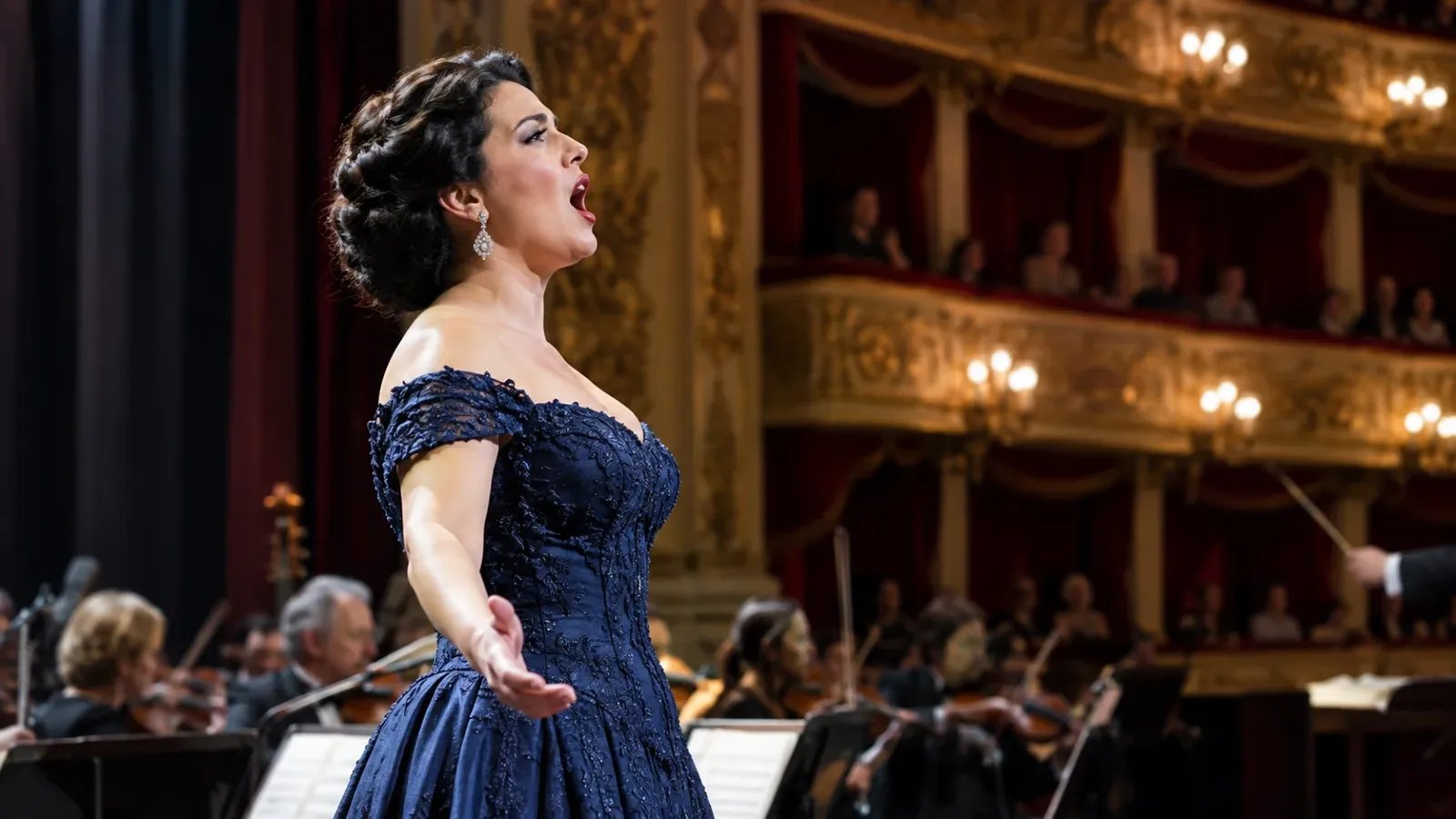
Forget the myth of shrieking sopranos and viking helmets. Opera is a centuries-old spectacle where fierce vocal athletics meet scandalous history. Far from a boring relic, this thrilling art form hides violent riots, castrated superstars, and deadly stagecraft beneath its velvet curtains. Discover the bizarre, secret world of classical music's pinnacle.
1. Opera singers project over an entire orchestra without microphones by amplifying a specific frequency range called the singer's formant.
The human voice naturally struggles to compete with a 100-piece orchestra. However, trained opera singers modify their vocal tracts to create a resonance cluster around 2,500 to 3,000 Hertz. Because orchestral instruments produce very little acoustic energy in this specific frequency band, the singer's voice slices right through the dense wall of sound, allowing them to be heard perfectly in a 3,000-seat auditorium without any electronic amplification.
2. The iconic image of the opera singer in a horned Viking helmet originates from a single costume designer's historical inaccuracy in 1876.
When people picture opera, they often imagine a booming soprano wearing a metal helmet with horns. This entirely fictional trope was born during the premiere of Richard Wagner's Ring Cycle. Costume designer Carl Emil Doepler created horned helmets for the villainous characters, loosely basing them on Bronze Age artifacts rather than actual Viking gear, which never featured horns. The striking visual stuck in the public consciousness and became the universal pop-culture shorthand for the entire genre.
3. During the 17th and 18th centuries, the biggest stars in opera were male singers who had been castrated before puberty to preserve their high voices.
The "castrati" possessed a unique physiological advantage: they retained the prepubescent vocal range of a boy but developed the lung capacity and chest cavity of a grown man. This bizarre combination produced a phenomenally powerful, agile, and otherworldly sound that captivated European audiences. Superstars like Farinelli amassed immense wealth and cult-like followings before the brutal practice was eventually outlawed in the 19th century.
4. A disastrous 19th-century opera premiere literally sparked a revolution that led to the independence of Belgium.
Opera has rarely been a passive experience, but in 1830, it changed the map of Europe. A performance of Daniel Auber's "La Muette de Portici" in Brussels featured a highly nationalistic duet about patriotic rebellion. The impassioned music whipped the already restless audience into a frenzy. They poured out of the theater, sparked a violent riot in the streets, and initiated the Belgian Revolution, successfully breaking away from the United Kingdom of the Netherlands.
5. The Paris Opera house features a real underground lake that inspired the classic novel The Phantom of the Opera.
Gaston Leroux did not entirely invent the subterranean lair of his famous Phantom. Beneath the Palais Garnier in Paris sits a massive, concrete cistern filled with water. During the building's construction in the 1860s, engineers hit a high water table and struggled to pump the site dry. Instead of fighting the geology, architect Charles Garnier designed a massive double-walled vault to contain the water safely, which is still used today by Parisian firefighters for underwater training.
6. Early opera performances were essentially chaotic social clubs where attendees ate, played cards, and talked loudly through the music.
The modern etiquette of sitting in complete, reverent silence during a classical performance is a relatively recent invention. In 18th-century Italy, opera houses kept their house lights on. The wealthy rented private boxes where they hosted elaborate dinners, gambled, and gossiped, only pausing to listen to their absolute favorite arias. It was not until Richard Wagner intentionally darkened the auditorium in the late 19th century that audiences were forced to quietly focus their attention on the stage.
7. The first recognized opera was written in the late 16th century as an attempt to perfectly recreate ancient Greek drama.
Opera was not born as a new musical experiment, but as a Renaissance restoration project. A group of intellectuals, poets, and musicians in Florence known as the Florentine Camerata mistakenly believed that ancient Greek tragedies were originally sung in their entirety rather than spoken. In an effort to resurrect this lost art, they created "Dafne" in 1597, composed by Jacopo Peri. While the music is largely lost to history, it established the foundation of storytelling entirely through continuous song.
8. Opera singers endure extreme physical exertion that burns as many calories per performance as a competitive athletic event.
Singing at an operatic level is a grueling full-body workout. The intense engagement of the diaphragm, intercostal muscles, and lower back required to sustain powerful notes for hours demands massive oxygen consumption and cardiovascular endurance. Combined with wearing heavy, elaborate costumes and navigating multi-level stages under blazing theatrical lights, a lead singer can easily sweat off several pounds of water weight during a single three-hour performance.
9. The word opera is simply the plural form of the Latin word for work.
When you attend an opera, you are literally attending "the works." The term stems from the Latin word "opus," meaning a labor, composition, or work of art. Because this art form combined instrumental music, vocal performance, poetry, acting, set design, and dance, it was viewed as a massive, unified undertaking. The name perfectly encapsulates the sheer volume of artistic labor required to pull off such a multidisciplinary spectacle.
10. The longest standard repertoire opera requires audiences to sit through nearly fifteen hours of music over four consecutive nights.
Richard Wagner's "Der Ring des Nibelungen" is an exercise in epic endurance for both performers and audiences. While it is technically four separate operas, it was conceived as a single, continuous narrative based on Norse mythology. To perform the entire cycle requires a massive orchestra, complex staging, and a cast of singers with exceptional stamina, culminating in a world-building experience that rivals modern cinematic universes in its scope and complexity.
11. A 1720 London opera performance was derailed when two rival prima donnas engaged in a violent fistfight on stage.
The divas of the Baroque era commanded massive salaries and possessed famously volatile egos. During a performance of Giovanni Bononcini's "Astianatte," the bitter rivalry between sopranos Francesca Cuzzoni and Faustina Bordoni boiled over. Spurred on by a deeply divided, screaming audience, the two women abandoned their characters, pulled each other's hair, and traded blows on stage, causing a scandal that temporarily crippled the London opera scene.
12. The highest note commonly sung in the standard operatic repertoire is a high F6, which requires the vocal folds to vibrate an astonishing 1,396 times per second.
While everyday speech occurs at relatively low frequencies, the Queen of the Night's famous aria in Mozart's "The Magic Flute" pushes the human voice to its extreme mechanical limits. The soprano must hit a staccato F6 several times. To achieve this without damaging the throat, the vocal folds must vibrate with terrifying speed and precision. Hitting this stratospheric pitch requires a physiological sweet spot of breath pressure and vocal cord thinning that takes years of dedicated anatomical training to master.
13. In traditional Chinese opera, characters' personalities and fates are color-coded directly onto their faces using intricate makeup.
While Western opera relies heavily on musical motifs to tell you who a character is, Beijing Opera utilizes an advanced visual shorthand called "Lianpu." Rather than wearing masks, performers paint their faces with specific, vibrant colors that instantly broadcast their moral character to the audience. A red face indicates absolute loyalty and heroism, black denotes a fiercely impartial nature, while a face painted entirely white signifies a treacherous, cunning, and suspicious villain.
14. The famed composer Gioachino Rossini retired from writing operas at the age of 37 to dedicate the rest of his life to eating and cooking.
Rossini was the most popular and celebrated composer of his era, churning out 39 smash-hit operas, including "The Barber of Seville." Yet, at the absolute height of his fame and earning power, he simply stopped writing public music. A renowned gourmand, he spent his remaining four decades indulging his passion for haute cuisine in Paris. He befriended top chefs, invented decadent dishes like Tournedos Rossini, and firmly believed that a man's stomach was a better instrument than a piano.
15. A notorious 19th-century system allowed opera singers to legally bribe professionals to start standing ovations and manipulate audiences.
Before modern public relations, European opera houses operated on a literal applause economy. A formalized group known as the "claque" was hired by theater managers or insecure singers to sit in the audience and manipulate the crowd's reaction. They had highly specialized roles: the "pleureurs" who would cry during sad arias, the "rieurs" who laughed at jokes, and the "bisseurs" who aggressively yelled for encores. The system ultimately became an extortion racket, as singers who refused to pay the claque were intentionally booed off the stage.
Sources & References
This AI-assisted post was rigorously curated and fact-checked for accuracy by:
 Martin Roháček
How fun was this article? 🤔
Tap a star to rate it
🧠 Quiz: How closely were you paying attention?
10 questions — all answers are in the article above!
Enjoyed these facts? There's more! 💌
Fresh fun facts in your inbox. No spam, ever.