The Poetic Virtuoso: 15 Fascinating Facts About Frédéric Chopin
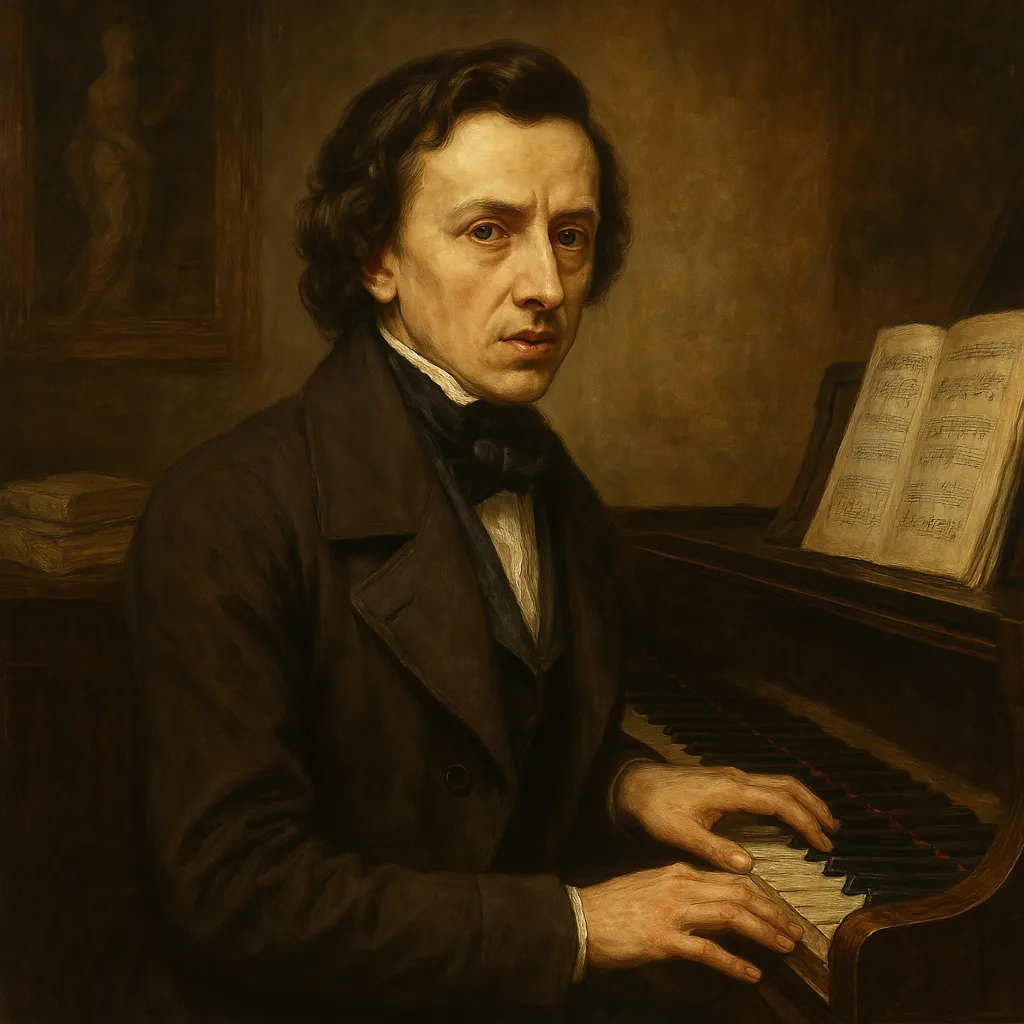
Frédéric Chopin revolutionized Romantic classical music with his poetic melodies, innovative piano techniques, and deeply emotional compositions. Though he lived much of his short adult life in exile in Paris, his heart remained forever tied to his native Poland. From his childhood as a Warsaw prodigy to the covert smuggling of his heart after his death, Chopin lived a life as dramatic and captivating as his music. Discover the incredible true stories behind the master of the piano, his intense perfectionism, and his lasting legacy.
1. The Child Prodigy of Warsaw
Frédéric Chopin demonstrated extraordinary musical talent at a very early age, earning him instant comparisons to Wolfgang Amadeus Mozart. He published his first composition, a Polonaise in G minor, when he was just seven years old and gave his first public charity concert the same year. By the time he turned ten, he was already performing for Polish nobility and writing complex pieces for the keyboard. His early teachers recognized that his intuitive understanding of the piano surpassed traditional instruction. Consequently, his childhood education focused on nurturing his original voice rather than forcing rigid classical orthodoxy.
2. A Lifetime of Exile and a Jar of Polish Soil
In November 1830, a 20-year-old Chopin left Warsaw for Vienna just weeks before the November Uprising against Russian rule broke out in Poland. Unable to return home safely due to the political turmoil, he settled in Paris, remaining an exile in France for the rest of his life. To maintain a physical connection to his homeland, he carried a small silver container filled with Polish soil given to him by friends upon his departure. He kept this beloved keepsake with him throughout his entire adulthood as a symbol of patriotic devotion. His deep longing for his native land heavily influenced his romantic compositions, particularly his mazurkas and polonaises.
3. A Dread of Massive Concert Halls
While many virtuosos of the Romantic era thrived on massive crowds, Chopin actively detested performing in large public concert venues. Over the course of his entire professional career, he gave fewer than thirty public performances. He suffered from severe stage fright and felt that his subtle dynamics and delicate touch were entirely lost in grand auditoriums. Instead, he preferred intimate salon concerts held in the private homes of wealthy Parisian aristocrats. In these cozy settings, listeners could appreciate every nuanced inflection of his playing without him needing to force the instrument's sound.
4. The Turbulent Romance with George Sand
In 1836, Chopin met the trailblazing French novelist Amantine Lucile Aurore Dupin, who wrote under the male pseudonym George Sand. Their passionate and tempestuous romantic relationship lasted nearly nine years and produced some of Chopin's most brilliant music. Sand was an outspoken feminist who wore men's clothing, smoked cigars in public, and provided Chopin with emotional stability and care during his illness. During quiet summers at Sand's estate in Nohant, France, Chopin found the peaceful environment he needed to compose effortlessly. However, their relationship collapsed bitterly in 1847 following intense family squabbles over Sand's children.
5. Agonizing Perfectionism Behind the Piano
Despite the effortless, poetic quality of his published works, Chopin was an agonizingly slow and painstaking composer. Witnesses reported that he would lock himself in his room for days at a time, pacing, weeping, and breaking pens over a single bar of music. He frequently revised a single piece dozens of times before he considered it finished, only to revert to his initial draft weeks later. George Sand recorded that he spent whole days struggling with a single measure, altering it over and over in search of perfection. This intense artistic discipline ensured that nearly every work he released was a polished masterpiece.
6. Revolutionizing Piano Technique and Bel Canto Line
Chopin completely transformed how musicians approached playing the piano, abandoning rigid classical hand positions in favor of natural flexibility. Inspired by Italian bel canto opera, especially the vocal melodies of Vincenzo Bellini, he insisted that the piano must learn to "sing" and breathe like a human voice. He pioneered the expressive use of rubato—a slight speeding up and slowing down of tempo—giving his music a supple, speech-like rhythm. He also elevated technical exercises, creating études that were not merely finger drills but profound concert pieces. Modern piano performance techniques still rely heavily on the pedagogical innovations Chopin introduced.
7. Paying the Bills Through High-Society Teaching
Unlike many contemporary touring virtuosos who earned their livings from concert ticket sales, Chopin funded his lavish Paris lifestyle primarily through teaching. He was one of the most sought-after piano tutors in Europe, charging astronomical fees to wealthy aristocrats and talented young musicians. To avoid uncomfortable financial transactions, he maintained a discreet pot on his mantelpiece where students placed their payments upon arriving. He was an exceptionally patient and encouraging teacher who forbade harsh physical tension and taught students to cultivate a delicate touch. His income from lessons allowed him to maintain a fine carriage, elegant clothes, and expensive apartments.
8. A Devotion to Pleyel Pianos
Chopin was famously particular about his instruments, demonstrating an absolute devotion to pianos crafted by the French maker Camille Pleyel. Unlike the louder, heavier Erard pianos favored by contemporaries like Franz Liszt, Pleyel instruments offered a light touch and a silvery, intimate tone. Chopin famously remarked that when he felt inspired and strong enough to find his own sound, he required a Pleyel piano. The instrument allowed him to produce delicate gradations of color and soft dynamics that larger concert grands could not achieve. Pleyel even supplied a small cottage piano for Chopin to use during his ill-fated winter stay in Majorca.
9. The Disastrous Winter in Majorca
In the winter of 1838, Chopin traveled to the island of Majorca with George Sand and her children, hoping the warm Mediterranean climate would improve his failing health. However, the trip turned into a complete nightmare marked by relentless rain, biting cold, and local hostility. Majorcan locals feared Chopin's coughing was contagious tuberculosis and refused to accommodate the group, forcing them to live in a chilly, abandoned monastery in Valldemossa. Despite deteriorating health and inadequate living conditions, Chopin managed to complete his famous cycle of 24 Preludes, Op. 28, on a crude local piano while waiting for his Pleyel to arrive.
10. Camera-Shy and Elusive to Artists
Chopin was deeply self-conscious about his appearance and actively avoided being photographed or having his portrait painted. Standing about 5 feet 7 inches tall and weighing under 100 pounds, he was remarkably thin, frail, and pale due to chronic illness. Only two authenticated original photographs of Chopin are known to exist today, both taken by French photographer Louis-Auguste Bisson. The most famous image, taken in early 1849 just months before Chopin died, captures his gaunt face and visible exhaustion. Most painted portraits from his lifetime were heavily idealized by artist friends like Eugène Delacroix to emphasize his romantic genius over his frailty.
11. Elevating Polish Folk Traditions to High Art
Throughout his exile, Chopin poured his intense nostalgic longing for Poland into two traditional dance forms: the mazurka and the polonaise. The mazurka was a lively Polish folk dance featuring unusual rhythmic accents on the second or third beat, which Chopin elevated into expressive miniature works. He composed nearly sixty mazurkas throughout his life, using them as an intimate musical diary of his changing moods. His polonaises, such as the famous "Heroic" Polonaise in A-flat major, served as bold, majestic anthems of Polish national pride and resistance. Through these works, he introduced authentic Slavic rhythms and harmonies to European classical music.
12. A Fatal Struggle with Illness
For most of his adult life, Chopin suffered from chronic respiratory illness characterized by coughing fits, severe fever, and extreme weakness. While nineteenth-century doctors diagnosed him with pulmonary tuberculosis, modern medical historians suggest he may have suffered from cystic fibrosis or another genetic disorder. His lungs were so weak that winter cold frequently rendered him bedridden for weeks at a time. Despite his physical fragility, he continued composing and teaching up until his final months. He ultimately passed away in Paris on October 17, 1849, at the young age of 39.
13. A Funeral Marked by Mozart's Requiem
Chopin left explicit instructions regarding his final send-off, requesting that Mozart's famous Requiem be performed at his funeral. The service took place at the Église de la Madeleine in Paris on October 30, 1849, drawing nearly three thousand mourners. Because the church strictly forbade female singers from performing in services, special permission had to be granted by the Archbishop of Paris to allow female soloists behind a black curtain. Chopin's own Funeral March from his Piano Sonata No. 2 was also orchestrated and played during the procession to his grave at Père Lachaise Cemetery.
14. The Smuggled Heart of Warsaw
Deeply afraid of being buried alive, Chopin made his sister Ludwika promise to remove his heart after his death and return it to his beloved Poland. Following his death in Paris, a doctor removed his heart, placed it in a crystal jar filled with cognac, and preserved it. Ludwika successfully smuggled the jar past Russian border inspectors under her coat and brought it to Warsaw in 1850. Today, Chopin's heart is entombed within a stone pillar inside the Church of the Holy Cross in Warsaw. The pillar bears a biblical inscription from Matthew: "For where your treasure is, there will your heart be also."
15. Secret Modern Forensics on His Preserved Heart
In 2014, a team of Polish forensic scientists conducted a secret late-night inspection of Chopin's heart inside the Warsaw church pillar. Without unsealing the original crystal jar, the researchers closely examined the preserved organ using high-resolution photography and non-invasive methods. They observed clear tissue damage consistent with severe pericarditis, a rare and fatal complication arising from chronic tuberculosis. The scientists confirmed that the heart was remarkably well-preserved in alcohol and resealed the pillar, recommending no further examination for another fifty years.
Sources & References
This AI-assisted post was rigorously curated and fact-checked for accuracy by:
 Martin Roháček
How fun was this article? 🤔
Tap a star to rate it
🧠 Quiz: How closely were you paying attention?
10 questions — all answers are in the article above!
Enjoyed these facts? There's more! 💌
Fresh fun facts in your inbox. No spam, ever.