15 Fascinating Facts About Oliver Cromwell
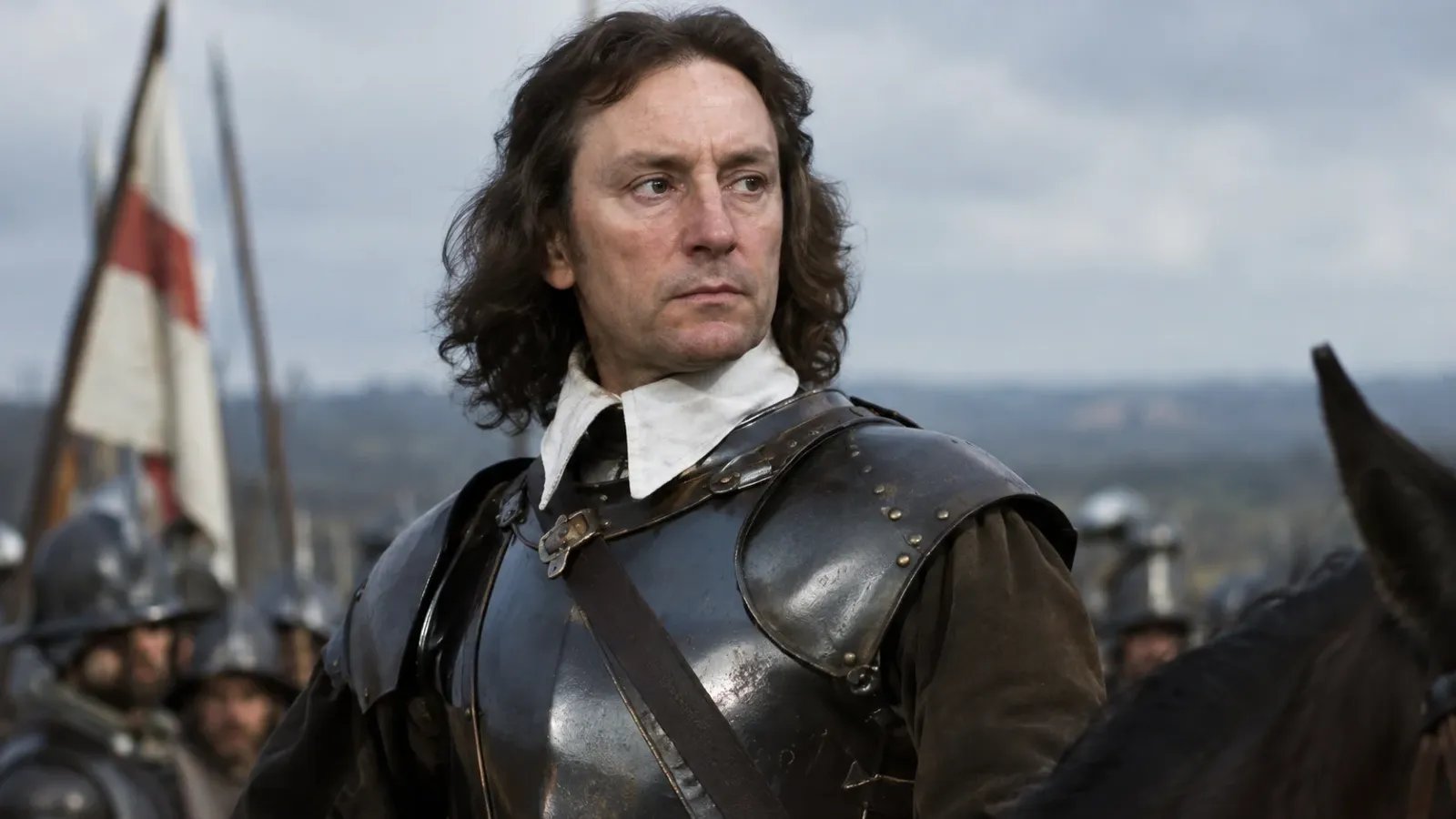
Often dismissed as a joyless puritan who canceled Christmas, Oliver Cromwell was a brilliant cavalry commander and reluctant statesman who reshaped Britain. Far from a simple tyrant, he was a complex figure driven by deep religious conviction and pragmatic politics. Explore these fifteen surprising truths about the farmer-turned-ruler who dared to execute a king.
1. Oliver Cromwell did not personally ban Christmas, as the puritanical laws outlawing the holiday were actually passed by Parliament while he was away fighting.
The popular myth firmly blames Cromwell for the cancellation of minced pies and yuletide cheer. In reality, the Long Parliament enacted legislation banning festivals, including Christmas and Easter, in 1644 and 1647. At the time these sweeping cultural laws were debated and passed in London, Cromwell was deeply entrenched in military campaigns, primarily focused on winning the English Civil War rather than policing winter holidays on the home front.
2. The famous phrase "warts and all" is widely attributed to Cromwell instructing his portrait painter not to flatter him, though historical evidence for the exact quote is surprisingly thin.
Legend dictates that Cromwell ordered the artist Samuel Cooper to paint him authentically, refusing the idealized touch-ups common among royalty. While the resulting miniature portrait does indeed feature his prominent facial imperfections, the specific quotation was not recorded until the author Horace Walpole wrote about it decades later in 1762. Nevertheless, the anecdote perfectly encapsulates Cromwell's brand of uncompromising puritan realism.
3. More than two years after his death from natural causes, Cromwell's body was exhumed, publicly hanged in chains, and decapitated.
When the monarchy was restored under Charles II in 1660, the new king sought brutal vengeance against the regicides who had signed his father's death warrant. Despite having died of illness in 1658 and being buried with full state honors in Westminster Abbey, Cromwell’s corpse was dug up on the twelfth anniversary of Charles I's execution. His severed head was spiked on a pole above Westminster Hall, where it remained for over twenty years as a grisly warning against treason.
4. Cromwell's severed head was passed down through private collectors for nearly three centuries before finally being reburied in 1960.
After eventually blowing down from the roof of Westminster Hall during a storm in the late seventeenth century, the mummified head became a macabre historical curio. It was sold through various private hands, displayed in a museum, and owned by the Wilkinson family for generations. Scientific analysis in the 1930s confirmed the head likely belonged to the Lord Protector, and it was finally given a dignified, secret burial at Sidney Sussex College, Cambridge, 300 years after his death.
5. Despite becoming one of the most successful cavalry commanders in British history, Cromwell had absolutely no formal military training before the age of forty-three.
When the English Civil War erupted in 1642, Cromwell was merely a middle-aged country gentleman and Member of Parliament. He quickly learned the art of war on the battlefield, demonstrating an innate genius for logistics, discipline, and cavalry tactics. He was instrumental in creating the New Model Army, transforming a disorganized parliamentary militia into a professional, highly disciplined fighting force that ultimately dismantled the Royalist cause.
6. Parliament formally offered Cromwell the title of King in 1657, a proposition he agonized over for six weeks before ultimately rejecting it.
Seeking stability after years of unprecedented republican experimentation, civilian leaders in Parliament presented the Humble Petition and Advice, a new constitution that included an offer of the crown. Cromwell, despite acting with monarchical powers as Lord Protector, feared that taking the title would betray the republican principles he and his army had fought for. He compromised by accepting the constitution but retaining his title, ensuring he remained a king in everything but name.
 You might also like
The Absolute Philosopher: 15 Fascinating Facts About Thomas Hobbes
You might also like
The Absolute Philosopher: 15 Fascinating Facts About Thomas Hobbes
7. Before the outbreak of the Civil War, a frustrated Cromwell seriously considered emigrating to the American colonies to live in a Puritan settlement.
During the 1630s, King Charles I ruled without Parliament in a period known as the Personal Rule, heavily enforcing High Anglican religious practices. Feeling spiritually alienated and financially strained, Cromwell nearly joined the Great Migration of Puritans seeking religious freedom in New England. Had he boarded a ship to Connecticut as he purportedly planned, the entire trajectory of British history and the survival of the monarchy would have changed drastically.
8. Cromwell informally readmitted Jewish people to England in 1656, ending a strict banishment that had lasted for over three hundred and fifty years.
King Edward I had expelled all Jews from England in 1290. Cromwell, motivated by a combination of religious eschatology and economic pragmatism, met with the Dutch rabbi Menasseh ben Israel to discuss their return. Although he could not convince his conservative council to pass an official law reversing the ban, Cromwell quietly allowed Jewish merchants to settle, trade, and build a synagogue in London without interference, paving the way for a permanent Jewish community in Britain.
9. Cromwell’s brutal military campaign in Ireland was so devastating that his name is still widely reviled there, though modern historians debate the exact scale of his direct culpability.
Arriving in Ireland in 1649 to crush Royalist and Catholic resistance, Cromwell’s forces committed notorious massacres at Drogheda and Wexford. While popular history often attributes the deaths of hundreds of thousands of Irish civilians directly to his personal orders, modern scholars suggest the catastrophic death toll was largely exacerbated by famine and plague spread by the war. Regardless of the academic nuances, his policies of land confiscation and brutal subjugation left a permanent, traumatic scar on Anglo-Irish relations.
10. Far from an aristocratic elite, Cromwell spent a decade of his early adult life as a struggling yeoman farmer battling severe depression.
Born into the lower rungs of the landed gentry, Cromwell suffered a sharp decline in his financial status during his late twenties. He was forced to sell his property in Huntingdon and move to St Ives to lease a working farm, a severe social demotion. During this dark period, he consulted an early physician in London for what was described as melancholy, an intense depressive episode that ultimately culminated in a profound religious awakening that reshaped his worldview.
11. The man who overthrew the British monarchy was ultimately killed by a mosquito, as he died from complications of malaria.
While campaigning in Ireland, Cromwell contracted a recurring strain of malaria, then commonly known as the ague. The disease periodically flared up throughout the rest of his life, severely weakening his immune system. In the late summer of 1658, heavily grieving the death of his favorite daughter and suffering from both a severe malarial fever and a urinary tract infection, the Lord Protector finally succumbed to illness.
12. Royalist propagandists relentlessly mocked Cromwell by nicknaming him Copper Nose due to the large, red, and swollen appearance of his face.
During and after the Civil War, pamphlets and satirical poems frequently targeted Cromwell's physical appearance, particularly his prominent, ruddy nose. Opponents spread rumors that the redness was a result of severe alcoholism or advanced syphilis. In reality, the swelling was likely caused by rosacea, a harmless chronic inflammatory skin condition, but the nickname stuck as a favorite insult among his political enemies.
🤔 Quick guess
Why did Cromwell or his physicians refuse the most effective known treatment for his malaria?
13. Cromwell may have hastened his own death by refusing to take the most effective known treatment for malaria because it was associated with Catholics.
The bark of the cinchona tree, which contains quinine, had recently been introduced to Europe from South America by Jesuit missionaries and was highly effective at treating malarial fevers. However, because it was widely known as Jesuit's powder, strict Puritans like Cromwell viewed the remedy with deep suspicion. It is heavily documented that he or his physicians refused the Catholic-associated medicine during his final illness, favoring ineffective traditional treatments instead.
14. Despite fighting a civil war to protect the rights of Parliament against a king, Cromwell ended up forcibly dissolving Parliament with military troops.
In 1653, deeply frustrated by the corruption and slow legislative progress of the Rump Parliament, Cromwell marched into the House of Commons backed by armed musketeers. He famously berated the members, shouting that they had sat too long for any good they were doing, and demanded they leave in the name of God. This act effectively established him as a military dictator, highlighting the paradoxical nature of a man who destroyed an absolute monarchy only to wield absolute power himself.
15. Cromwell’s signature is only the third one on King Charles I's death warrant, demonstrating his initial hesitation before becoming the execution's chief architect.
While history remembers Cromwell as the primary force behind the regicide, he was not initially the loudest voice demanding the king's head. Radical figures like Henry Ireton and John Bradshaw pushed the agenda forward while Cromwell still hoped for a negotiated settlement with the crown. However, once he concluded that Charles would never honor a constitutional agreement, Cromwell embraced the execution with fierce providential zeal, ensuring the trial proceeded and personally pressuring hesitant commissioners to sign the warrant.
How did these facts land?
Know someone who'd love these facts? Share them 👇
🧠 Quiz: How closely were you paying attention?
Think you remember the facts? 10 questions, tap an answer.