
The Festive Unwrapped: 15 Fascinating Facts About Christmas
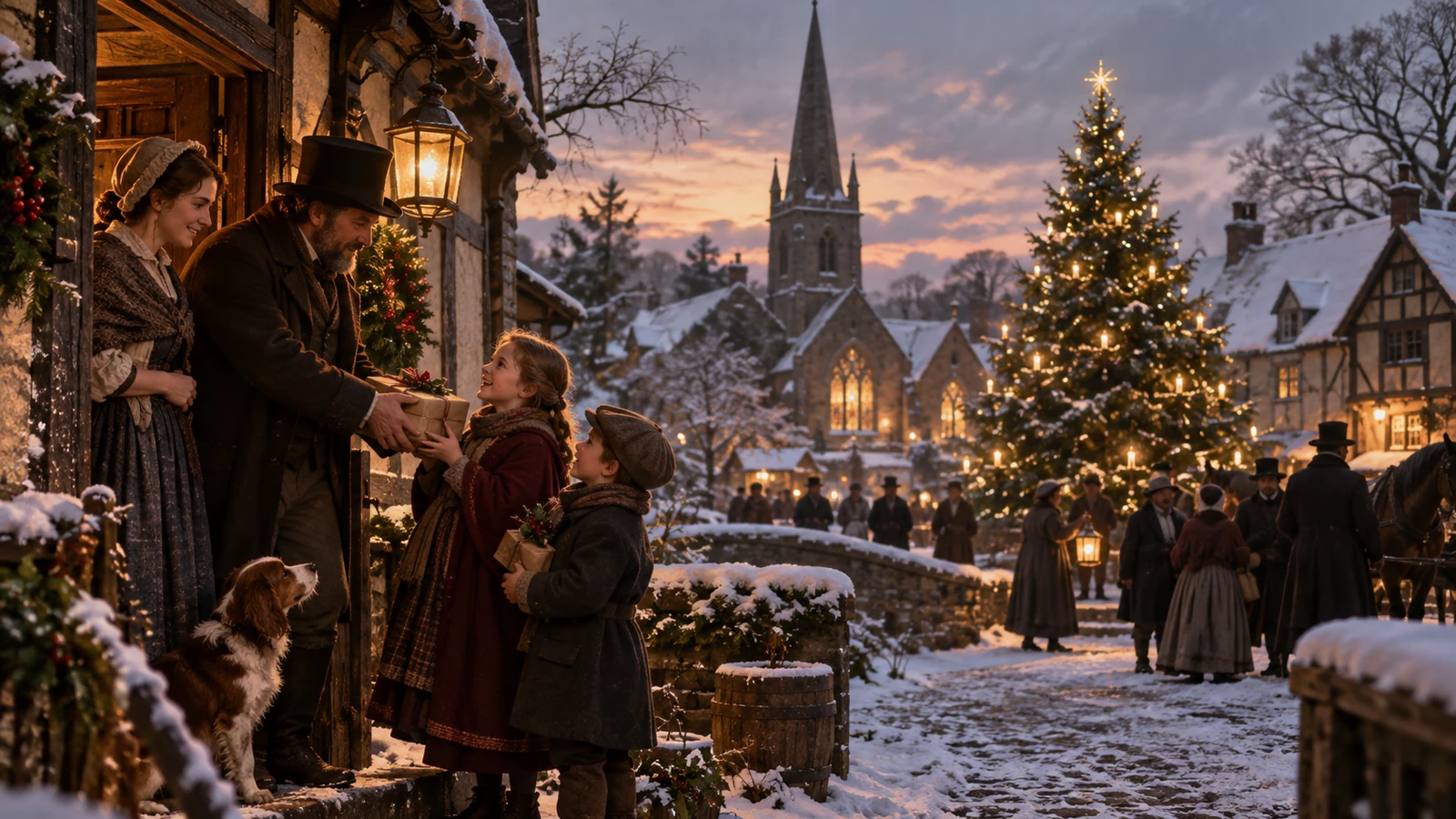
Christmas is celebrated by billions of people around the globe, yet many of its most cherished traditions carry surprising histories and hidden origins. From outlawed festivities in colonial New England to fast-food feasts in modern Japan, holiday customs are far more complex than simple folklore. Scientific quirks, medieval charitable acts, and marketing campaigns have all shaped the way we deck the halls today. Dive into these 15 fascinating facts about Christmas to discover the true stories behind the world's favorite winter holiday.
1. The Term "Xmas" Has Ancient Sacred Roots
Many people assume that abbreviating Christmas to "Xmas" is a modern, secular effort to strip religion from the holiday. However, the abbreviation actually boasts deep religious roots dating back centuries. The letter "X" represents the Greek letter Chi, which is the initial letter in the Greek spelling of Christ (Χριστός). In early Christian art and manuscripts, Chi was commonly used as a sacred monogram for Christ long before English was widely spoken. By the 16th century, European scholars and religious writers frequently used "Xmas" as a respected shorthand in ecclesiastical texts. Far from being a modern commercial gimmick, using "X" to denote Christ is an ancient tradition preserved across centuries of Christian literacy.
2. The First Artificial Christmas Trees Were Made of Feather Dusters
Before artificial trees were made of plastic and PVC, 19th-century Germans crafted the world's first artificial Christmas trees using dyed goose feathers. As industrialization and widespread holiday decorating led to severe deforestation across Germany, lawmakers began imposing strict forestry regulations. To maintain the beloved tree tradition without cutting down living conifers, innovative artisans attached dyed green feathers to wire branches wrapped around wooden dowels. These early feather trees offered families a reusable centerpiece while significantly reducing the ecological strain on local forests. The feather tree became wildly popular throughout Europe and North America, remaining a staple of decor until synthetic materials took over in the mid-20th century.
3. Rudolph Was Invented as a Department Store Marketing Campaign
Rudolph the Red-Nosed Reindeer was not born out of ancient folklore, but rather as an ingenious marketing campaign for a Chicago department store. In 1939, retail giant Montgomery Ward commissioned advertising copywriter Robert L. May to write a festive children's storybook that the store could distribute to shoppers for free during the holiday season. Drawing inspiration from his own childhood feelings of inadequacy and his daughter's love for deer, May created the story of an outcast reindeer with a glowing nose. The store handed out millions of copies during its inaugural holiday campaign, turning Rudolph into an instant cultural icon long before the famous song or animated television special were ever recorded.
4. Santa's Reindeer Team Must Scientifically Be All Females
If Santa Claus delivers presents on Christmas Eve, science dictates that his flying reindeer team must be entirely female or castrated males. Adult male reindeer lose their heavy antlers in late autumn or early winter after the mating season concludes. In contrast, female reindeer retain their antlers throughout the winter months to defend food resources while pregnant, shedding them only after giving birth in the spring. Because Santa’s reindeer are traditionally depicted with impressive racks of antlers during December, biological reality points to an all-female crew pulling the sleigh across the night sky.
5. KFC Is the Premier Christmas Dinner in Japan
In Japan, where less than one percent of the population identifies as Christian, Christmas Eve is celebrated with a bucket of Kentucky Fried Chicken. This unique culinary tradition began in 1974 when KFC launched a brilliant marketing campaign titled "Kentucky for Christmas" (Kurisumasu ni wa Kenteokki). The campaign successfully filled a niche for foreign expats and local families seeking a Western-style holiday meal in a country where whole turkeys were nearly impossible to find. Today, millions of Japanese families order their festive chicken buckets months in advance or endure hours-long lines on Christmas Eve. KFC sales in Japan spike dramatically during the holiday, turning fast-food fried chicken into an essential symbol of Japanese holiday culture.
6. Christmas Was Once Strictly Outlawed in Massachusetts
During the 17th century, celebrating Christmas in Massachusetts was not only frowned upon—it was explicitly illegal. The ruling Puritans viewed the holiday as an unbiblical, pagan festival that encouraged sinful indulgence, public drunkenness, and disorderly revelry. Between 1659 and 1681, the General Court of Massachusetts enacted Puritan laws fining anyone caught feasting, taking time off work, or displaying festive cheer five shillings per offense. Towns routinely kept businesses open on December 25th to ensure residents did not secretly observe the holiday. It took nearly two centuries for Christmas to shed its illicit reputation in New England and become an officially recognized public holiday.
 Holidays and Traditions
Explore the surprising, dark, and deeply fascinating origins of the world's most beloved holidays. From ancient pagan rituals to modern marketing triumphs, discover the true stories behind our annual traditions.
See All Facts
Holidays and Traditions
Explore the surprising, dark, and deeply fascinating origins of the world's most beloved holidays. From ancient pagan rituals to modern marketing triumphs, discover the true stories behind our annual traditions.
See All Facts
7. Stocking Stuffer Tangerines Originated with Medieval French Nuns
The popular tradition of placing tangerines or oranges inside Christmas stockings can be traced back to 12th-century French nuns honoring Saint Nicholas. Legend held that Saint Nicholas once tossed bags of gold down a poor nobleman’s chimney to provide dowries for his three daughters, saving them from destitution. Inspired by his generosity, medieval French nuns began leaving socks stuffed with dried fruits, nuts, and precious citrus fruits at the doors of needy families on Saint Nicholas Eve. Because fresh citrus was an expensive, rare luxury in winter, receiving a bright orange in a stocking was akin to finding a lump of gold. Over time, this compassionate practice spread across Europe and evolved into the familiar stocking stuffers enjoyed today.
8. Winter Solstice Evergreens Pre-Dated Christmas Trees by Centuries
Long before Christmas was established on December 25th, ancient civilizations used evergreen boughs to celebrate the winter solstice. Cultures across northern Europe, Egypt, and Rome believed that evergreen plants retained their vibrant color because they possessed special vitality or favored the sun gods. Bringing pine, fir, and holly branches indoors during the darkest days of winter served as a comforting reminder that spring would eventually return and life would prevail over cold darkness. When Christianity spread across Europe, church authorities gradually absorbed these pagan solstice symbols into holiday customs. This ancient practice eventually evolved into the decorated Christmas tree that remains a central seasonal tradition today.
9. The World's Tallest Cut Christmas Tree Stood Over 220 Feet Tall
The record for the world's tallest cut Christmas tree belongs to a massive Douglas fir displayed in Seattle, Washington, in 1950. Erected at the Northgate Shopping Center, the gigantic tree stood an astounding 221 feet (67.3 meters) high—taller than a standard 20-story skyscraper. Transporting and erecting the colossal tree required specialized heavy machinery, structural engineering, and thousands of individual lights and decorations. Local news outlets covered the towering centerpiece extensively, drawing spectators from all across the Pacific Northwest to admire its unprecedented scale. Decades later, this remarkable engineering feat remains undisputed in the Guinness World Records.
10. A Defecating Peasant Is a Key Part of Catalan Nativity Scenes
In the Catalonia region of Spain and Andorra, traditional nativity scenes feature an unexpected figure known as the Caganer. This small ceramic figurine depicts a traditional Catalan peasant wearing a red cap, caught in the act of defecating on the ground. Far from being seen as sacrilegious or disrespectful, the Caganer has been an essential part of Catalan Christmas displays since at least the late 17th century. The act represents the fertilization of the earth, symbolizing good luck, prosperity, and a bountiful harvest for the coming year. Today, artisans even produce figurines depicting famous political leaders, celebrities, and athletes alongside traditional nativity figures.
11. "Jingle Bells" Was Originally Written for Thanksgiving
The iconic Christmas carol "Jingle Bells" was not originally written to celebrate Christmas at all. Composed by James Lord Pierpont in 1857 under the title "One Horse Open Sleigh," the song was intended to commemorate the popular November sleigh races held in Medford, Massachusetts. The lyrics contain no references to Christmas, Santa Claus, or holiday gifts, focusing instead on winter fun, sleigh rides, and youthful romance. The song was first performed by a Sunday school choir during a local Thanksgiving church service. However, its infectious melody and festive winter imagery resonated so strongly with audiences that it quickly transformed into an immortal Christmas anthem.
12. Tinsel Was Originally Made of Real Hammered Silver
Modern tinsel is made of lightweight plastic or metallic foil, but original tinsel was an expensive luxury item crafted from real silver. Invented in Nuremberg, Germany, during the early 1600s, artisans used specialized equipment to hammer genuine silver into paper-thin, shimmering strands. These delicate silver threads were designed to reflect the soft flickering glow of real candles attached to Christmas tree branches. Because real silver tarnished quickly when exposed to smoke and air, chemical treatments and alternative metals were eventually introduced. Despite its high cost, silver tinsel set the standard for shimmering holiday decorations that persists in home decor today.
13. Norwegians Hide Their Brooms on Christmas Eve to Ward Off Witches
In Norway, an unusual holiday tradition involves hiding every broomstick and mop in the house before going to sleep on Christmas Eve. This custom stems from ancient Scandinavian folklore, which claimed that Christmas Eve coincided with the arrival of mischievous spirits and wicked witches. According to belief, witches would scour towns looking for brooms to steal so they could ride them through the icy winter sky. To protect their homes and keep chaos at bay, families hid their brooms in secret closets or under floorboards and fired warning shots into the air to scare away roving spirits. Even today, many Norwegian households playfully carry on the tradition of hiding their brooms every December 24th.
14. The First Commercial Christmas Card Was Printed in 1843
The world's first commercial Christmas card was produced in London in 1843 by Sir Henry Cole, a prominent civil servant and founder of the Victoria and Albert Museum. Cole found himself overwhelmed by the societal expectation to write individual holiday letters to his extensive network of friends and colleagues. To save time, he commissioned artist John Callcott Horsley to design an ornate card featuring a festive family sharing a holiday toast flanked by scenes of charitable giving. Cole had 1,000 copies printed and sold them for one shilling each, launching a global industry that now sends billions of greeting cards every winter season.
15. Real Christmas Trees Take Nearly a Decade to Grow Before Harvest
Growing a real Christmas tree requires a surprisingly long commitment from tree farmers before a single conifer is ready for harvest. On average, a typical Christmas tree takes between seven and ten years to reach the ideal household height of six to seven feet. Throughout this decade-long growth cycle, farmers must continuously trim, shape, shear, and protect the saplings from drought, pests, and harsh weather. For every tree harvested during the winter season, farmers typically plant one to three new saplings in its place to maintain the multi-year cycle. This painstaking agricultural process ensures that harvested trees develop the dense foliage and sturdy branches required to support heavy holiday lights and ornaments.
Sources & References
This AI-assisted post was rigorously curated and fact-checked for accuracy by:
 Martin Roháček
How fun was this article? 🤔
Tap a star to rate it
🧠 Quiz: How closely were you paying attention?
10 questions — all answers are in the article above!
Enjoyed these facts? There's more! 💌
Fresh fun facts in your inbox. No spam, ever.