The Electric Virtuoso: 15 Fascinating Facts About Eric Clapton
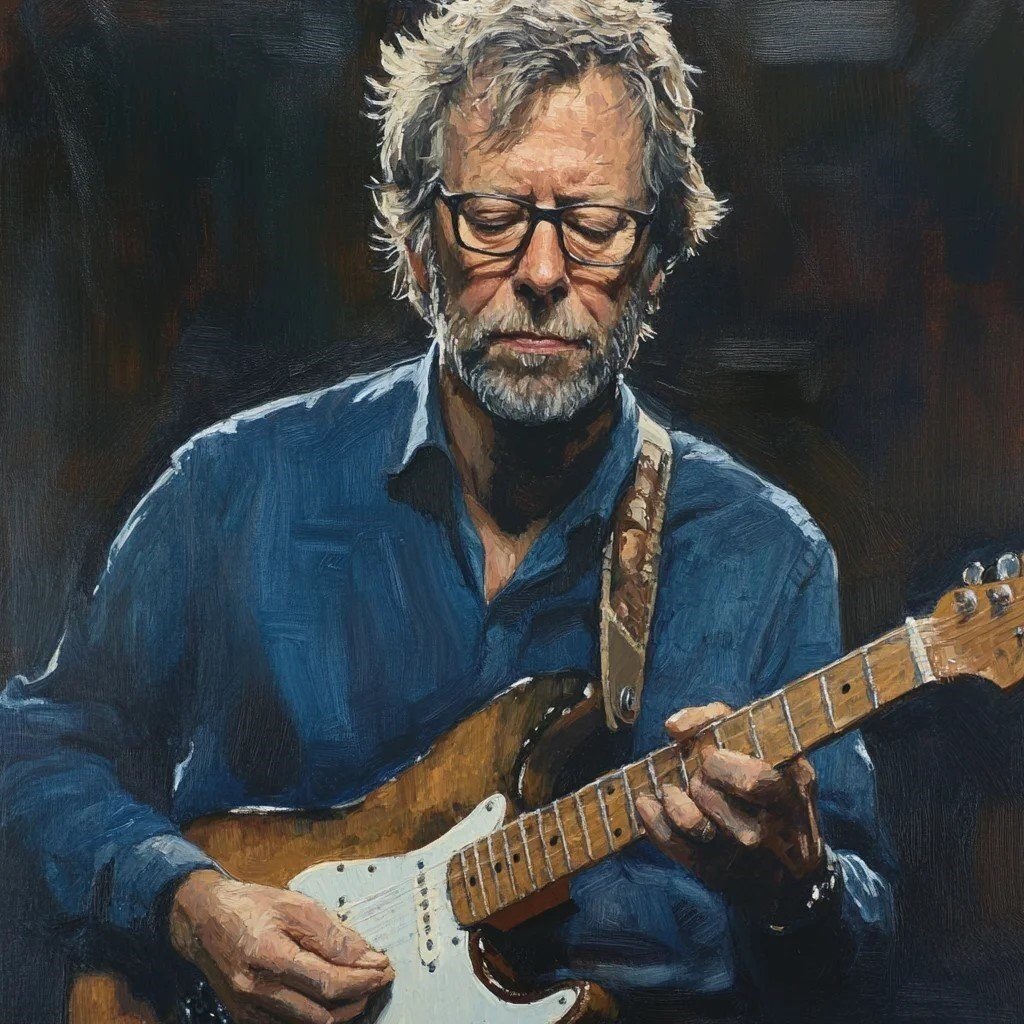
Widely regarded as one of the most influential guitarists of all time, Eric Clapton transformed the sound of modern rock and blues across a career spanning six decades. From his early days with bands like The Yardbirds and Cream to his record-breaking solo career, Clapton's soulful virtuosity earned him unparalleled acclaim. Beneath his legendary riffs lies a complex story of personal triumph, profound tragedy, and undeniable musical genius. Here are 15 fascinating facts about the icon known worldwide as 'Slowhand.'
1. He Is the Only Three-Time Rock and Roll Hall of Fame Inductee
Eric Clapton holds a unique distinction in rock history as the only artist inducted into the Rock and Roll Hall of Fame three separate times. He was first inducted in 1992 as a member of the influential blues-rock group The Yardbirds. Just a year later, in 1993, he earned his second induction alongside bassist Jack Bruce and drummer Ginger Baker as part of the sixties power trio Cream. Finally, in 2000, Clapton received his third honor as a solo artist, cementing his extraordinary longevity across multiple decades. This historic triple achievement highlights his transformative role in shaping British blues and global rock music.
2. The Surprising Origin of His Nickname "Slowhand"
Despite his lightning-fast fingerwork, Eric Clapton earned the iconic nickname "Slowhand" during his early tenure with The Yardbirds. His manager, Giorgio Gomelsky, coined the term in 1964 as a humorous, tongue-in-cheek reference to concert audiences. When Clapton broke a thin guitar string on stage, he would stay under the spotlight and replace it while the audience engaged in a slow, rhythmic handclap. Gomelsky combined the wordplay of slow applause with Clapton's dexterity, and the moniker stuck for the rest of his career. Clapton later adopted the name for his smash-hit 1977 solo album Slowhand.
3. A London Graffiti Movement Declared Him "God"
In the mid-1960s, an anonymous fan painted the famous slogan "Clapton is God" on a wall at the Islington underground station in London. The phrase caught fire in the music press, encapsulating the worshipful fever surrounding Clapton's blistering guitar work with John Mayall & the Bluesbreakers. The moniker reflected how British audiences viewed him as an unmatched titan of the electric blues guitar. While Clapton found the divine title embarrassing and overwhelming, the graffiti became an enduring piece of sixties rock lore. It solidified his reputation as a guitar hero before he even reached his mid-twenties.
4. He Played the Uncredited Solo on The Beatles' "While My Guitar Gently Weeps"
When George Harrison struggled to get his bandmates to take his new song "While My Guitar Gently Weeps" seriously in 1968, he invited Eric Clapton to the studio. Clapton was initially hesitant, pointing out that outsiders rarely played on Beatles recordings, but Harrison insisted on his participation. Clapton played the soaring, emotional guitar solo using Harrison's Gibson Les Paul, which added a dramatic depth that instantly impressed John Lennon and Paul McCartney. Although Clapton was not officially credited on the original album release of The Beatles (The White Album) due to contractual reasons, his contribution remains one of rock's most famous guest solos. Their studio collaboration forged a lifelong, albeit complex, personal and professional bond between the two guitarists.
5. "Layla" Was Inspired by Classical Persian Poetry and Unrequited Love
Eric Clapton wrote his 1970 rock masterpiece "Layla" while hopelessly in love with Pattie Boyd, who was then married to his close friend George Harrison. To express his inner anguish, Clapton drew inspiration from the 12th-century Persian poet Nizami Ganjavi's romance story The Story of Layla and Majnun. The epic tale recounts a young man driven to near-madness by an unattainable love, a theme that mirrored Clapton's intense personal feelings. Recorded with his group Derek and the Dominos, the song featured a signature dual-guitar riff crafted alongside Duane Allman and a famous piano coda added by drummer Jim Gordon. Boyd eventually divorced Harrison and married Clapton in 1979, keeping the song's legendary back-story intertwined with rock history.
6. He Narrowly Avoided the Tragic 1990 Helicopter Crash
On August 27, 1990, following a star-studded concert at the Alpine Valley Music Theatre in Wisconsin, a tragic helicopter crash claimed the lives of guitar legend Stevie Ray Vaughan and three members of Clapton's tour crew. Clapton had been performing with Vaughan, Buddy Guy, Robert Cray, and his brother Jimmie Vaughan earlier that evening. Due to dense fog shortly after takeoff, one of the four chartered helicopters collided with a nearby ski hill, killing all five people aboard instantly. Clapton was scheduled to fly on that specific aircraft but offered his seat to Vaughan at the last minute so his friend could return to Chicago earlier. The devastating loss deeply affected Clapton, inspiring him to reevaluate his life and career in the years that followed.
7. "Tears in Heaven" Was Born from Devastating Personal Loss
In March 1991, Eric Clapton experienced every parent's worst nightmare when his four-year-old son, Conor, fell tragically to his death from a 53rd-story apartment window in New York City. Overwhelmed by grief, Clapton turned to music as a healing therapeutic outlet rather than relapsing into past substance abuse. Collaborating with songwriter Will Jennings, he penned the heartbreaking acoustic ballad "Tears in Heaven" for the soundtrack of the film Rush. The poignant track struck a chord worldwide, winning three Grammy Awards in 1993, including Song of the Year and Record of the Year. Clapton eventually retired the song from his live repertoire in 2004, stating he no longer felt the intense pain required to perform it authentically.
8. His Cover of "I Shot the Sheriff" Popularized Reggae in the West
When Eric Clapton recorded a cover of Bob Marley's "I Shot the Sheriff" for his 1974 album 461 Ocean Boulevard, he was initially hesitant to include it on the record. Clapton felt his version did not do justice to Marley's reggae original and fought against releasing it as a single. However, his bandmates persuaded him, and the track soared to the number one spot on the US Billboard Hot 100 chart. Clapton's international rock superstar status introduced millions of mainstream Western listeners to the sounds and rhythms of Jamaican reggae music. The record's success also significantly elevated Bob Marley's global profile, helping transform Marley into an international superstar.
9. He Almost Gave Up Guitar After Receiving His First Instrument
For his 13th birthday in 1958, Eric Clapton received a cheap Hoyer acoustic guitar, but his initial encounter with the instrument was a total failure. The steel-strung guitar was extremely difficult and painful to play, leading the young teenager to become frustrated and set it aside for over a year. It was only after hearing electric blues records by artists like B.B. King, Muddy Waters, and Big Bill Broonzy that his passion was reignited. Driven by a desire to recreate those authentic blues sounds, he picked up the instrument again and practiced relentlessly until his fingers developed thick calluses. His early perseverance transformed a momentary failure into one of the most celebrated guitar careers in history.
10. Cream Revolutionized Rock as the First Supergroup Power Trio
When Eric Clapton joined forces with bassist Jack Bruce and drummer Ginger Baker in 1966 to form Cream, they established the template for the modern hard rock power trio. Recognized as one of rock music's very first "supergroups," Cream combined virtuosic instrumental improvisations with heavy blues riffing on tracks like "Sunshine of Your Love" and "White Room." Their explosive, high-volume live performances pushed the boundaries of amplification technology and heavily influenced early heavy metal and progressive rock bands. Despite releasing only four studio albums before disbanding in 1968 due to interpersonal tensions, Cream sold over 15 million records worldwide. Their groundbreaking work earned them a Grammy Lifetime Achievement Award in 2006.
11. He Founded the Crossroads Centre Rehabilitation Facility in Antigua
After successfully conquering his own severe struggles with alcoholism and heroin addiction in the 1970s and 1980s, Eric Clapton resolved to help others in need. In 1998, he established the Crossroads Centre on the Caribbean island of Antigua, a non-profit treatment facility for individuals recovering from substance abuse. To fund the center and provide financial aid for underprivileged patients, Clapton organized the famous Crossroads Guitar Festivals, featuring all-star lineups of world-renowned guitarists. He also auctioned off dozens of his personal instruments, including his beloved "Blackie" Stratocaster, raising millions of dollars for the foundation. His ongoing commitment has helped thousands of people rebuild their lives through accessible rehabilitation.
12. His *MTV Unplugged* Album Became the Best-Selling Live Record Ever
In January 1992, Eric Clapton recorded an intimate acoustic performance at Bray Studios in England for the popular television show MTV Unplugged. Performing stripped-down arrangements of classic hits alongside new acoustic compositions, Clapton delivered a raw, emotive performance that captured the hearts of millions. The resulting album, Unplugged, went on to sell over 26 million copies worldwide, becoming the best-selling live album of all time. It swept the 35th Annual Grammy Awards, earning six trophies, including Album of the Year, and reinvented his signature song "Layla" as a slow acoustic shuffle. The unexpected commercial triumph revitalized Clapton's career and introduced his acoustic mastery to a new generation.
13. His Deep Musical Bond with Blues Legend B.B. King
Eric Clapton's lifelong reverence for Mississippi blues titan B.B. King culminated in their landmark collaborative studio album, Riding with the King, released in 2000. Clapton had long cited King as his primary guitar inspiration, and the two musicians had shared live stages on numerous occasions since the late 1960s. The album featured a mix of blues standards and updated classics, showcasing their contrasting yet complementary guitar styles and warm vocal interplay. Riding with the King reached top positions on global music charts and won the Grammy Award for Best Traditional Blues Album in 2001. Their deep mutual affection and artistic respect proved that the teacher and student had become equal masters of the genre.
14. He Grew Up Believing His Biological Mother Was His Sister
Eric Clapton was born in Surrey, England, in 1945 to 16-year-old Patricia Molly Clapton and Edward Walter Fryer, a 24-year-old Canadian soldier deployed during World War II. Before Eric was born, his father returned to Canada, leaving his teenage mother unable to raise a child alone amid social stigma. To protect the family's reputation, Clapton's maternal grandparents raised him as their own son, leading him to believe they were his parents and that his real mother was his older sister. The truth was finally revealed to him when he was nine years old, causing significant psychological turmoil that deeply influenced his emotional development. This early family secret created a sense of isolation that he frequently channeled into his soulful blues playing.
15. He Has Won 18 Grammy Awards Across Six Decades
Throughout his phenomenal career, Eric Clapton has received 18 Grammy Awards, illustrating his remarkable enduring appeal and critical acclaim across six decades. His Grammy triumphs range from his early work with Cream to solo milestones like Unplugged and his collaboration with B.B. King. In addition to competitive Grammys for Record of the Year, Album of the Year, and Best Rock Vocal Performance, he was honored with the Grammy Lifetime Achievement Award in 2006. With over 100 million certified records sold worldwide, Clapton remains one of the most commercially successful and critically revered recording artists in popular music history. His timeless discography continues to inspire generations of aspiring guitarists across the globe.
Sources & References
This AI-assisted post was rigorously curated and fact-checked for accuracy by:
 Martin Roháček
How fun was this article? 🤔
Tap a star to rate it
🧠 Quiz: How closely were you paying attention?
10 questions — all answers are in the article above!
Enjoyed these facts? There's more! 💌
Fresh fun facts in your inbox. No spam, ever.