The Quiet Architect: 15 Fascinating Facts About George H. W. Bush
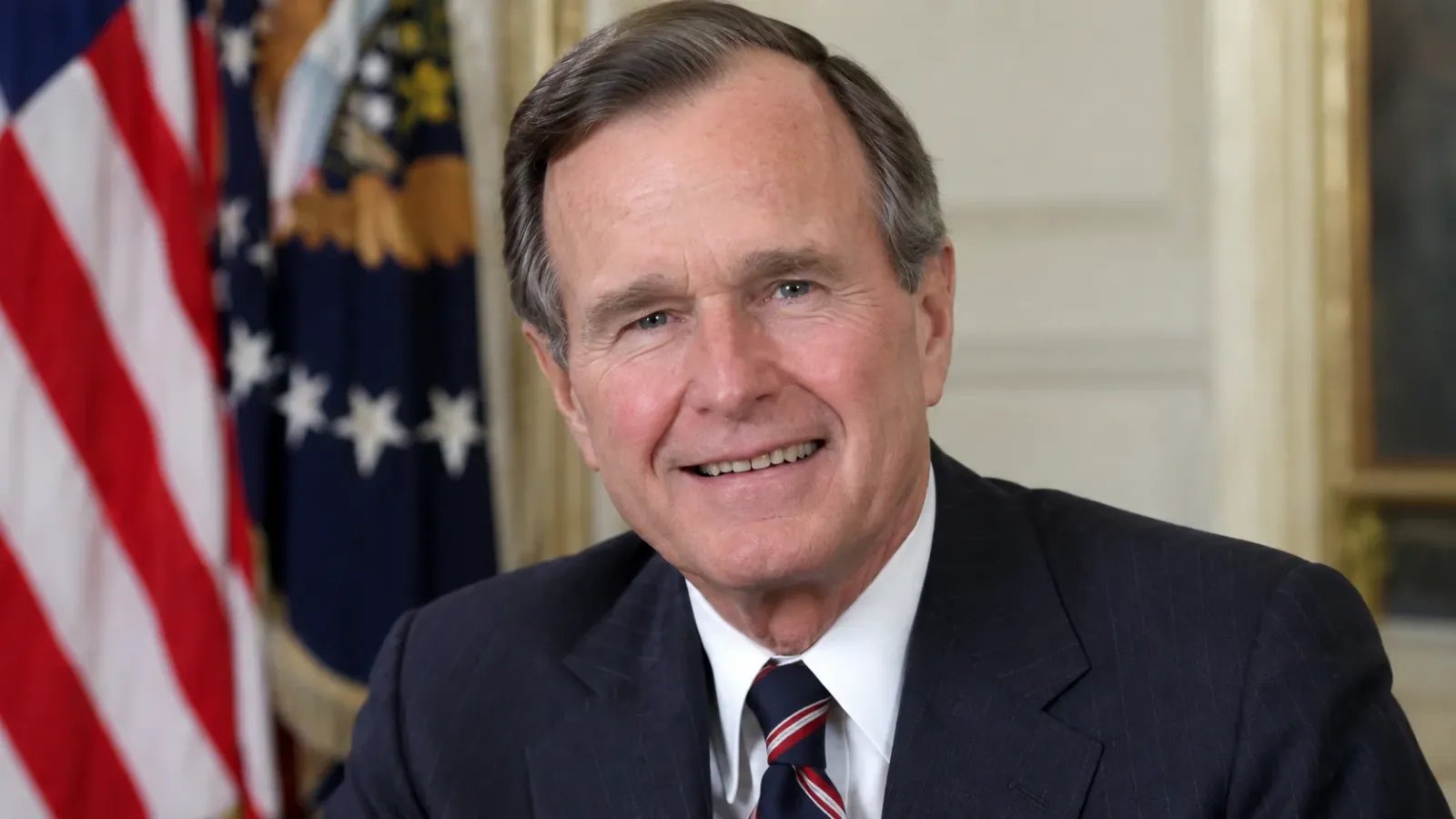
George H. W. Bush was a master diplomat who quietly navigated the Cold War's end. Far from a mere establishment aristocrat, his life featured death-defying combat, covert CIA maneuvers, and brilliant global strategy. Discover the surprising, complex truths behind this highly misunderstood American president.
1. He was one of the youngest naval aviators in United States history and narrowly escaped cannibalism during World War II.
After enlisting on his eighteenth birthday, Bush became a commissioned naval aviator at just eighteen years and 355 days old. While flying a bombing mission over the Pacific island of Chichi Jima in 1944, his aircraft was shot down by anti-aircraft fire. Bush managed to bail out over the ocean and was rescued by a submarine, but eight of his fellow captured airmen were tortured, executed, and subsequently eaten by Japanese officers. This horrifying incident, which remained classified for decades, profoundly shaped his understanding of the brutal realities of war and fueled his later commitment to careful, calculated diplomacy over reckless military aggression.
2. Before entering politics, he was an exceptional collegiate baseball player who met Babe Ruth during the legend's final public appearance.
While attending Yale University after World War II, Bush was the captain of the varsity baseball team and played in the first two College World Series in 1947 and 1948. A slick-fielding first baseman, he possessed excellent defensive skills, though he openly admitted his batting average was less than stellar. In 1948, as team captain, he had the distinct honor of receiving a manuscript of Babe Ruth's autobiography from the Bambino himself during a ceremony at Yale Field. This interaction took place just months before Ruth passed away, intertwining the future leader of the free world with an iconic piece of American sports history.
3. He pioneered offshore oil drilling by helping to launch an innovative company that developed the first platform to operate entirely over water.
Rather than relying solely on his prominent family's wealth, Bush moved to West Texas to strike out on his own in the booming petroleum industry. In 1953, he co-founded Zapata Petroleum Corporation, which eventually spun off into Zapata Off-Shore Company under his direct leadership. His firm took massive financial and engineering risks by purchasing the Scorpion, a massive, three-legged mobile drilling rig that revolutionized how oil was extracted from the ocean floor. This bold entrepreneurial venture not only made him a self-made millionaire by the age of forty but also gave him vital experience in international business and maritime law.
4. As Director of Central Intelligence, he is widely credited with rescuing the CIA from the brink of institutional collapse following the Watergate scandal.
When President Gerald Ford appointed Bush to lead the CIA in 1976, the agency was suffering from abysmal morale and intense public scrutiny due to the explosive Church Committee investigations into illegal domestic spying and assassination plots. Despite initially resisting the role because he feared it would kill his political career, Bush embraced the challenge and implemented sweeping reforms to increase transparency and restore congressional trust. He famously walked the halls of the Langley headquarters to personally encourage analysts and operatives, successfully revitalizing the agency's devastated culture. Today, the CIA headquarters compound is named the George Bush Center for Intelligence in recognition of his transformative, albeit brief, tenure.
5. During his time as the United States Ambassador to the United Nations, he defied diplomatic norms by navigating New York City on a bicycle.
Appointed by Richard Nixon in 1971, Bush arrived at the United Nations with a unique approach to international diplomacy that emphasized personal relationships over formal protocol. While most ambassadors traveled through Manhattan in heavily armored, chauffeured limousines, Bush frequently opted to ride a motorized bicycle to the UN headquarters to bypass gridlock traffic. This eccentric habit charmed many of his international counterparts and helped him cultivate a remarkably approachable, down-to-earth image among foreign dignitaries. His informal style allowed him to build a vast network of global contacts that would later prove invaluable when assembling the massive international coalition for the Gulf War.
6. He served as the de facto ambassador to China before the United States had even officially recognized the communist government.
In 1974, Bush was appointed as the Chief of the US Liaison Office in Beijing, a highly sensitive position given that formal diplomatic relations between the two superpowers did not yet exist. Instead of retreating into the insulated expat community, he and his wife Barbara immersed themselves in Chinese culture, famously riding bicycles through the streets of Beijing and mingling with ordinary citizens. He meticulously analyzed the power dynamics following Mao Zedong's declining health, providing Washington with unparalleled intelligence on the secretive Chinese political apparatus. This early, immersive experience gave him a nuanced understanding of Sino-American relations that heavily influenced his cautious response to the Tiananmen Square protests in 1989.
 US Presidents
Discover the eccentricities, secret talents, and surprising hidden lives of America's most influential presidents, from frontier wrestlers to covert strategists.
See All Facts
US Presidents
Discover the eccentricities, secret talents, and surprising hidden lives of America's most influential presidents, from frontier wrestlers to covert strategists.
See All Facts
7. He signed the Americans with Disabilities Act into law, executing one of the most comprehensive civil rights achievements in global history.
Often overshadowed by his foreign policy triumphs, Bush's domestic legacy includes pushing for and signing the monumental Americans with Disabilities Act in 1990. Bipartisan support was not guaranteed, and powerful business lobbies vehemently opposed the legislation due to the high costs associated with mandating accessibility modifications. Bush, motivated by his personal experiences and the disability of his son Neil who suffered from severe dyslexia, aggressively lobbied conservative holdouts to ensure the bill's passage. This landmark legislation fundamentally reshaped American infrastructure and employment law, setting a global standard for accessibility and the protection of disabled individuals.
8. He established the world's first large-scale emissions trading system to combat acid rain through the Clean Air Act Amendments of 1990.
Contrary to the modern perception of conservative environmental policy, Bush championed aggressive, market-based solutions to ecological crises during his presidency. He spearheaded the 1990 amendments to the Clean Air Act, which specifically targeted the devastating environmental impacts of acid rain, urban smog, and toxic chemical emissions. The crown jewel of this legislation was a revolutionary cap-and-trade system for sulfur dioxide emissions, which incentivized corporations to reduce pollution without heavy-handed government micromanagement. This innovative policy was spectacularly successful, reducing acid rain levels much faster and cheaper than projected and serving as a blueprint for future global climate initiatives.
9. He was the vital, quiet architect of German reunification, actively pushing against the vehement objections of both British and French leaders.
When the Berlin Wall fell in 1989, European leaders like Britain's Margaret Thatcher and France's Francois Mitterrand were terrified that a unified Germany would resurrect the aggressive nationalism of the world wars. Bush flatly rejected their hesitation, calculating that integrating a unified Germany into NATO was essential for long-term European stability and the definitive end of the Cold War. He engaged in masterful, behind-the-scenes statecraft, simultaneously reassuring Soviet leader Mikhail Gorbachev while outmaneuvering his reluctant European allies. Historians now widely agree that without Bush's steadfast support for Chancellor Helmut Kohl, the peaceful and rapid reunification of Germany would likely have been derailed.
10. He consciously chose not to invade Iraq and depose Saddam Hussein during the Gulf War to prevent a catastrophic destabilization of the Middle East.
Following the swift and overwhelming military victory of Operation Desert Storm in 1991, Bush faced immense public and political pressure to march American troops straight into Baghdad. He deliberately refused, recognizing that exceeding the United Nations mandate to simply liberate Kuwait would fracture his carefully constructed international coalition. Furthermore, his foreign policy team accurately predicted that destroying the Iraqi government would create a dangerous power vacuum, likely sparking a bloody sectarian civil war. This display of immense strategic restraint demonstrated his profound understanding of geopolitical limits, a stark contrast to the subsequent invasion launched by his son over a decade later.
11. He celebrated major milestones in his later years by jumping out of airplanes, completing his final parachute jump at the age of ninety.
Despite the trauma of being shot down during World War II, Bush maintained a lifelong fascination with aviation and a daring sense of adventure well into his old age. He marked his 75th, 80th, 85th, and 90th birthdays by skydiving, demonstrating a remarkable physical and mental vitality. For his final jump in 2014, he performed a tandem leap with a retired member of the Army's Golden Knights parachute team near his family home in Kennebunkport, Maine. This extreme birthday tradition served as a poignant, full-circle reclamation of the terrifying moment he was forced to bail out of his burning torpedo bomber over the Pacific.
12. He famously used his presidential authority to ban broccoli from Air Force One, sparking a humorous national debate about vegetable consumption.
In one of the more lighthearted controversies of his administration, Bush publicly declared his absolute disdain for broccoli, stating that his mother forced him to eat it as a child and he would no longer tolerate it as President of the United States. He officially banned the cruciferous vegetable from the menus of Air Force One and the White House, much to the amusement of the press and the dismay of agricultural lobbyists. In response, angry broccoli farmers shipped ten tons of the vegetable to the White House, which the First Lady graciously donated to local food banks. This quirky dietary decree humanized the often formal president, showcasing a stubborn but relatable idiosyncrasy.
13. Despite a bitter electoral defeat, he forged a remarkably close, surrogate father-son relationship with his political rival Bill Clinton.
The 1992 presidential election between Bush and Clinton was incredibly contentious, yet the two men eventually developed one of the most unlikely and touching friendships in American political history. Their bond was solidified in 2005 when President George W. Bush asked them to jointly lead fundraising efforts for the victims of the devastating Indian Ocean tsunami and Hurricane Katrina. As they traveled the globe together, their mutual respect blossomed into a deep affection, with Clinton often visiting Bush in Maine and referring to him as a father figure. This post-presidential partnership became a shining example of bipartisan grace and statesmanship, proving that shared humanity could transcend fierce political divisions.
14. He secretly laid the structural foundation for the North American Free Trade Agreement, though his successor ultimately signed it into law.
While Bill Clinton is traditionally associated with the passage of NAFTA, the monumental trade pact was entirely negotiated and finalized during the Bush administration. Bush recognized that creating a unified economic bloc with Canada and Mexico was essential for North America to remain globally competitive against emerging European and Asian markets. He initiated the complex, multi-year negotiations, overcoming fierce domestic protectionist sentiments and finalizing the treaty's core framework just before leaving office in 1993. This foundational economic architecture transformed international commerce, underscoring Bush's visionary commitment to globalization and free trade, even when it cost him political capital at home.
15. He established the modern tradition of outgoing presidents leaving a handwritten, welcoming letter for their successors on the Resolute Desk.
On the morning of Bill Clinton's inauguration in 1993, Bush took a moment to write a gracious, deeply personal note to the man who had just ended his political career. In the letter, he offered his unequivocal support, famously writing that your success now is our country's success, and that he was rooting hard for him. This act of remarkable humility and institutional respect resonated deeply with Clinton and set a powerful precedent for the peaceful transfer of power. Since that day, every departing president has followed Bush's example, leaving a private letter of encouragement for the incoming commander-in-chief, cementing a tradition that honors the dignity of the office above partisan victory.
Sources & References
This AI-assisted post was rigorously curated and fact-checked for accuracy by:
 Martin Roháček
How fun was this article? 🤔
Tap a star to rate it
🧠 Quiz: How closely were you paying attention?
10 questions — all answers are in the article above!
Enjoyed these facts? There's more! 💌
Fresh fun facts in your inbox. No spam, ever.