The Larger-Than-Life Bambino: 15 Fascinating Facts About Babe Ruth
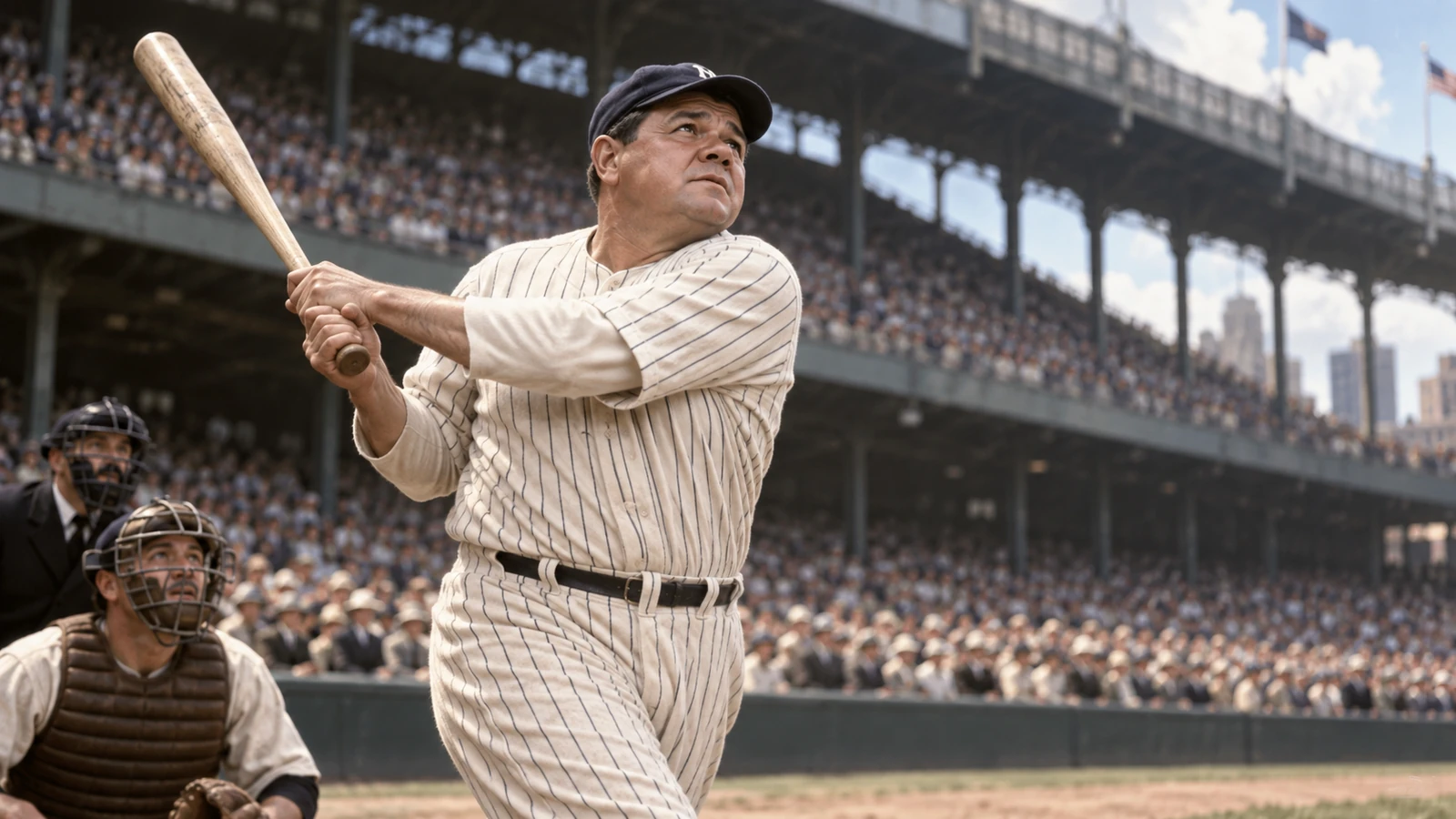
George Herman 'Babe' Ruth Jr. was far more than just baseball's first true superstar; he was an indelible cultural icon whose larger-than-life persona reshaped American sports forever. From his early days as a dominant left-handed pitcher for the Boston Red Sox to his legendary home run-slugging reign with the New York Yankees, Ruth captivated millions with his immense talent and colorful off-field antics. Behind the mythic stature lay surprising stories of wet cabbage under his cap, battlefield taunts during World War II, and staggering legal battles over candy bars. Dive into fifteen fascinating facts that reveal the eccentric, generous, and powerhouse reality of the Sultan of Swat.
1. Cool Cabbage Under the Cap
Playing baseball during sweltering East Coast summers in heavy wool uniforms was notoriously hot, but Babe Ruth had an unusual solution. He kept a wet cabbage leaf on ice in a cooler inside the dugout and placed it directly on his head underneath his ball cap. Every two innings, he would pause to swap out the wilted vegetable for a fresh, chilled leaf. Teammates found the ritual hilarious, yet Ruth swore it kept his head cool and his mind sharp during grueling doubleheaders. This eccentric habit became one of the most enduring pieces of personal lore in baseball history.
2. A Dominant Left-Handed Pitching Career
Long before he transformed into the most fearsome power hitter in baseball, Babe Ruth was a dominant left-handed pitcher for the Boston Red Sox. In 1916, he led the American League with a phenomenal 1.75 ERA and pitched nine shutout innings during a 14-inning World Series victory. He set a major league record by throwing 29 and two-thirds consecutive scoreless innings across the 1916 and 1918 World Series, a record that stood for over forty years until Whitey Ford broke it in 1961. Ruth was so effective on the mound that modern baseball historians estimate he could have entered the Hall of Fame purely as a pitcher. His transition to a full-time outfielder only occurred because his home run hitting was too valuable to bench on non-pitching days.
3. Arrested for Speeding in Manhattan
On June 8, 1921, police pulled over Babe Ruth for speeding down Riverside Drive in Manhattan at the breakneck pace of 26 miles per hour. The speed limit at the time was 15 miles per hour, and the arresting officer showed no leniency to the superstar, immediately escorting him to jail. Ruth was sentenced to spend the afternoon in a holding cell, missing the start of his scheduled game against the Cleveland Indians. Upon his release at 4:00 PM, he quickly slipped his Yankees uniform on underneath his street clothes inside his car and sped off to the ballpark. He arrived in the middle of the game, changed into his spikes, and took the field to wild cheers from the crowd.
4. The Baby Ruth Candy Bar Lawsuit
In 1921, the Curtiss Candy Company launched the "Baby Ruth" candy bar, which quickly became an enormous commercial success across the United States. Babe Ruth naturally attempted to claim royalties and eventually licensed his own authorized "Ruth's Home Run Bar," prompting a fierce legal battle over trademark infringement. The Curtiss Candy Company defended itself in court by claiming the treat was actually named after Ruth Cleveland, the deceased daughter of former President Grover Cleveland. Critics pointed out that President Cleveland had left office 24 years earlier and his daughter had died in 1904, making the defense a clever legal maneuver to avoid paying the slugger. The court surprisingly ruled in favor of the candy company, denying the baseball legend a lucrative cut of the candy profits.
5. Number 3 and the Origins of Jersey Numbers
When the New York Yankees became the first Major League team to make player uniform numbers permanent in 1929, the digits were assigned based on the team's regular batting order. Because Babe Ruth batted third in the lineup behind Earl Combs and Mark Koenig, he was given the number 3 on the back of his iconic pinstriped jersey. Prior to this innovation, baseball jerseys bore no numbers at all, making Ruth one of the first athletes in history identified by a single digit. The number 3 became so deeply tied to his legacy that the Yankees formally retired it during an emotional ceremony in 1948. Today, no New York Yankee will ever wear the number 3 again.
6. Pushing a Piano into a Frozen Pond
According to popular New England folklore, Babe Ruth once pushed a heavy upright piano onto the ice of a frozen pond near his farm in Sudbury, Massachusetts. During a winter party in 1918 while playing for the Red Sox, Ruth allegedly wanted to move the instrument onto the ice to provide musical entertainment for his guests while they went ice skating. As the heavy piano slid onto the thin ice, it plunged through into the murky waters of Willis Pond, where it sank to the bottom. Several attempts were made in later decades by local historians and divers using sonar to locate the submerged piano, but it was never successfully recovered. The tale remains one of the most charmingly bizarre mysteries of the Bambino's off-field escapades.
7. Enlisting in the New York National Guard
In May 1924, Babe Ruth traded his baseball bat for a military salute by officially enlisting in the New York Army National Guard during a high-profile public ceremony in Times Square. Joined by his Yankees manager Miller Huggins, Ruth signed his enlistment papers for the 104th Field Artillery Regiment to encourage young men to serve their country. Colonel Edward McLeer administered the oath of enlistment in front of thousands of onlookers and news photographers. Though his military duties were largely promotional and designed to boost recruitment numbers, Private Ruth took the commitment seriously and attended required drills when his playing schedule allowed. The publicity campaign was a massive success, drawing nationwide attention to the armed forces.
8. WWII Japanese Battlefield Insult
During World War II, Babe Ruth's legendary name echoed across the battlefields of the South Pacific in a surprising form of psychological warfare. Ruth had toured Japan in 1934 with a team of American All-Stars, inspiring immense baseball mania and becoming an idol to millions of Japanese fans. However, when war broke out between the nations, Japanese soldiers used his status to taunt fighting American Marines during intense night battles in the jungle. Imperial troops would reportedly shout insults across the lines, including the famous battle cry, "To hell with Babe Ruth!" American troops found the absurd insult amusing, later reporting that discrediting the Bambino was intended as the ultimate strike against American cultural pride.
9. The Famous "Called Shot" in the 1932 World Series
One of the most famous stories in sports history occurred during Game 3 of the 1932 World Series between the New York Yankees and the Chicago Cubs at Wrigley Field. Sitting in a hostile stadium with fans and opposing players heckling him relentlessly, Ruth stepped into the batter's box against pitcher Charlie Root in the fifth inning. After taking two strikes, Ruth pointed his finger toward the center-field bleachers, seemingly predicting exactly where he intended to hit the next pitch. On the very next ball thrown, he swung and launched a towering home run directly into those center-field seats. Whether the gesture was a genuine home run call or merely a gesture toward the Cubs dugout remains hotly debated, but the legend of the "Called Shot" lives on.
10. Upbringing at St. Mary's Industrial School
Growing up in a rough neighborhood near the docks of Baltimore, young George Herman Ruth Jr. was largely unsupervised and frequently got into trouble. By age seven, he was chewing tobacco, drinking alcohol, and skipping school, leading his overwhelmed parents to sign custody over to St. Mary's Industrial School for Boys. The reformatory and orphanage was run by Xaverian Brothers, who provided the disciplined environment the young boy desperately needed. It was at St. Mary's that Ruth met Brother Matthias Boutlier, an influential mentor who taught him how to read, write, tailor clothes, and pitch a baseball. Ruth credited Brother Matthias with saving his life and teaching him the fundamentals of the sport that made him a superstar.
11. The Sale to the Yankees and the Curse of the Bambino
In December 1919, Boston Red Sox owner Harry Frazee made the disastrous decision to sell Babe Ruth to the New York Yankees for $100,000 in cash plus a massive loan. Legend has long maintained that Frazee sold his superstar outfielder to fund his theatrical production of the Broadway musical No, No, Nanette. While theatrical finances certainly played a role, Frazee was also facing immense personal debt and found Ruth's escalating salary demands difficult to manage. The trade fundamentally shifted the balance of power in professional baseball, launching the Yankees dynasty while leaving Boston in a competitive wasteland. The transaction gave birth to the legendary "Curse of the Bambino," a championship drought that haunted the Red Sox for 86 years until they finally won the World Series in 2004.
12. Gargantuan Appetite and The Bellyache Heard 'Round the World
Babe Ruth was as famous for his gargantuan appetite as he was for hitting home runs, routinely devouring enormous quantities of food and alcohol. Prior to games, he was known to eat dozens of hot dogs and chug whole pitchers of ice water or beer without second thought. In April 1925, during spring training, Ruth collapsed with severe stomach pains that required immediate emergency surgery in New York. The press dramatically dubbed the incident "The Bellyache Heard 'Round the World," fueling sensational rumors ranging from a hot dog overdose to severe indigestion. In reality, doctors treated him for an intestinal abscess and exhaustion brought on by years of extreme overindulgence.
13. Swinging a Staggeringly Heavy Hickory Bat
Early in his career, Babe Ruth swung a bat that was drastically heavier than anything used by modern professional baseball players. While contemporary major leaguers typically favor light bats weighing between 31 and 33 ounces to maximize swing speed, Ruth swung a massive piece of solid hickory weighing up to 54 ounces. He believed that the sheer mass of a heavier wooden club would generate far more kinetic power upon impact with the ball. As he grew older, he gradually reduced his bat weight to around 36 to 40 ounces, but his ability to control such a heavy instrument remains a testament to his extraordinary physical strength.
14. Hospital Visits and the Promise to Johnny Sylvester
Throughout his legendary career, Babe Ruth spent countless hours visiting children in hospitals across the country, often without any press or photographers present. His most famous act of kindness involved an 11-year-old boy named Johnny Sylvester, who was bedridden with a serious infection in 1926. Ruth sent the young boy autographed baseballs and promised to hit a home run specifically for him in Game 4 of the World Series against the St. Louis Cardinals. Demonstrating his legendary flair for the dramatic, Ruth went out and hit three home runs in that single game, bringing immense joy to the ailing child. Sylvester's health miraculously improved following the gesture, establishing one of baseball's most heartwarming real-life legends.
15. Lying in State at Yankee Stadium
Following his tragic death from throat cancer on August 16, 1948, Babe Ruth received a public farewell worthy of a national hero. His casket was placed near home plate inside Yankee Stadium, allowing fans from across the country to pay their final respects. Over the course of two days, an estimated 100,000 heartbroken fans lined up around the block in the Bronx to file past his open casket. It marked one of only two times in history that a private citizen lay in state inside the iconic venue known worldwide as "The House That Ruth Built." The overwhelming public outpouring demonstrated the profound cultural impact of the man who redefined American sports.
Sources & References
This AI-assisted post was rigorously curated and fact-checked for accuracy by:
 Martin Roháček
How fun was this article? 🤔
Tap a star to rate it
🧠 Quiz: How closely were you paying attention?
10 questions — all answers are in the article above!
Enjoyed these facts? There's more! 💌
Fresh fun facts in your inbox. No spam, ever.