The Comeback Kid: 15 Fascinating Facts About Bill Clinton
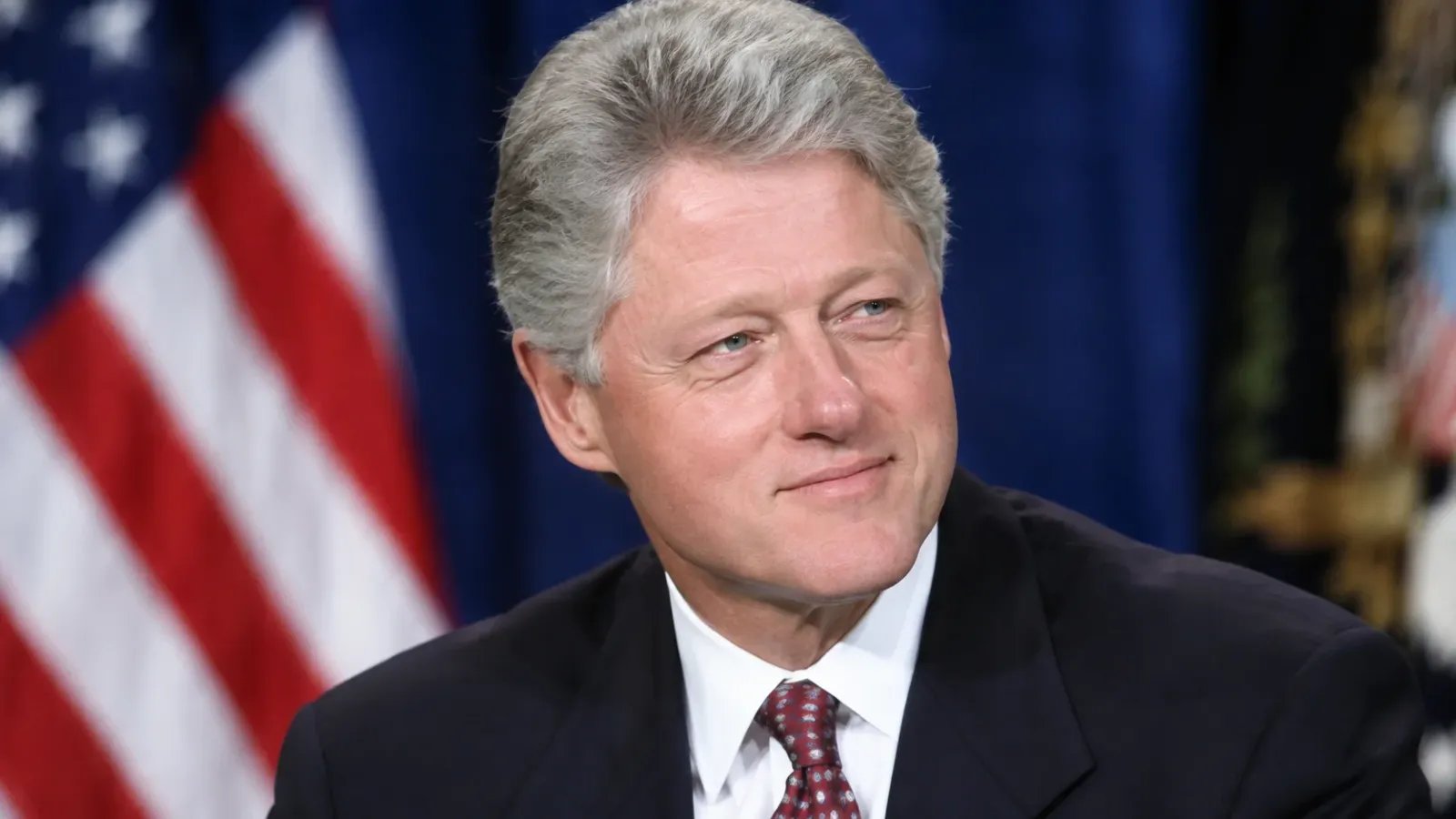
Often reduced to his late-90s scandals, Bill Clinton’s legacy is far more complex than late-night jokes suggest. He wasn't just a charismatic politician; he was a brilliant Rhodes Scholar, an exceptional saxophonist who almost chose music, and a strategist who navigated the post-Cold War era. Discover the surprising, myth-busting realities of America’s 42nd president.
1. He was born William Jefferson Blythe III, not Bill Clinton.
Bill Clinton was actually born William Jefferson Blythe III and did not legally adopt his stepfather's surname until he was a teenager. Three months before his birth in 1946, his biological father, a traveling heavy equipment salesman, died tragically in an automobile accident. His mother, Virginia Dell Cassidy, later married automobile dealer Roger Clinton Sr., who helped raise the boy. Although young Bill began using the surname Clinton in elementary school to match his brother and stepfather, he did not formally change it at the courthouse until he was fifteen years old. This legal shift served as a gesture of family unity, despite the deeply troubled and alcoholic nature of his stepfather's household.
2. He shook hands with President John F. Kennedy just months before the assassination.
As a high school student in 1963, Clinton traveled to Washington, D.C., as a delegate for Boys Nation, a prestigious civic leadership program. During this pivotal trip, the young delegate from Arkansas earned the opportunity to visit the White House and shake hands with President John F. Kennedy in the Rose Garden. The brief, fateful interaction was captured in a now-famous photograph that Clinton later used extensively during his own political campaigns. Historians and biographers often point to this specific moment as the catalyst that cemented his ambition to pursue a career in public service. Tragically, Kennedy would be assassinated just four months after this historic handshake.
3. He won a Grammy Award for spoken word albums not once, but twice.
Long after leaving the Oval Office, the former president showcased his remarkable oratorical skills by winning two Grammy Awards in the Best Spoken Word Album category. His first win came in 2004 for narrating the classic children's musical composition Peter and the Wolf alongside Mikhail Gorbachev and Sophia Loren. He secured his second gramophone trophy in 2005 for the audiobook adaptation of his massive, best-selling autobiography My Life. These victories place him in an exclusive club of U.S. presidents, including Barack Obama and Jimmy Carter, who have been recognized by the Recording Academy. The awards highlight how effectively Clinton leveraged his famous Arkansas drawl and storytelling prowess in the post-presidential phase of his career.
4. He is the only U.S. president who was a Rhodes Scholar.
Despite widespread assumptions about Ivy League exclusivity among modern presidents, Clinton remains the only commander-in-chief to have studied at Oxford University as a Rhodes Scholar. He earned this highly competitive scholarship in 1968 after completing his undergraduate degree at Georgetown University. While at University College, Oxford, he studied philosophy, politics, and economics, though he never formally completed a degree there. Instead of graduating, he immersed himself in student activism, protested the Vietnam War, and expanded his vast network of international political contacts. He ultimately left the prestigious British institution to attend Yale Law School, where his political ambitions rapidly accelerated.
5. He seriously considered becoming a professional jazz saxophonist before choosing politics.
Music was not merely a hobby for a young Bill Clinton, as he was a highly accomplished tenor saxophone player who seriously contemplated a career in jazz. During his youth in Arkansas, he practiced his instrument rigorously for several hours every day, eventually earning first chair in the state's band section. He won numerous accolades at music camps and considered attending a conservatory rather than pursuing a traditional academic route. However, he ultimately realized that while he was incredibly talented, he did not possess the transcendent genius of his idol John Coltrane, prompting him to pivot toward public service. He famously resurrected his musical talents on national television during the 1992 campaign, playing Heartbreak Hotel on the Arsenio Hall Show to court younger voters.
6. He memorized the entire periodic table of elements in high school just to show off.
Beyond his political charisma, Clinton possessed a notoriously formidable intellect and a highly competitive academic streak. During his high school years, he reportedly memorized the entire periodic table of elements simply because a teacher challenged the class to do so. This feat was not driven by a deep passion for chemistry, but rather by his relentless desire to prove his intellectual superiority and achieve top marks. Biographers frequently cite this anecdote to illustrate his sponge-like memory and his capacity to absorb massive amounts of complex information quickly. This same cognitive endurance later allowed him to deliver incredibly detailed, hours-long policy addresses without relying heavily on notes.
 US Presidents
Discover the eccentricities, secret talents, and surprising hidden lives of America's most influential presidents, from frontier wrestlers to covert strategists.
See All Facts
US Presidents
Discover the eccentricities, secret talents, and surprising hidden lives of America's most influential presidents, from frontier wrestlers to covert strategists.
See All Facts
7. He lost his first reelection bid for Governor of Arkansas before staging a legendary comeback.
Contrary to the myth of his invincible political trajectory, Clinton was actually voted out of office after serving just one term as Governor of Arkansas. Elected as the youngest governor in the country in 1978, his ambitious reform agenda and a highly controversial increase in vehicle registration fees quickly alienated his rural base. In 1980, he was stunningly defeated by Republican challenger Frank White, a loss that deeply humiliated him and temporarily derailed his career. Instead of abandoning politics, he spent the next two years apologizing to voters, recalibrating his centrist approach, and relentlessly campaigning across the state. He successfully reclaimed the governorship in 1982, cementing his reputation as the Comeback Kid a decade before the media officially gave him that moniker.
8. The Secret Service gave him the official codename Eagle.
Every modern president is assigned a unique codename by the Secret Service, and Bill Clinton was designated as Eagle during his tenure. The tradition requires that the codenames for the president's family members begin with the same letter, leading to specific thematic choices. First Lady Hillary Clinton was famously dubbed Evergreen, a name she retained throughout her own subsequent political campaigns and tenure as Secretary of State. Their daughter, Chelsea, was given the codename Energy, fitting for a young teenager navigating life in the intense spotlight of the executive mansion. The designation of Eagle reflected the traditional, patriotic imagery often associated with the highest office in the land, contrasting with his relatively informal political persona.
9. He appointed the first female Secretary of State in American history.
While his administration is often remembered for economic prosperity, Clinton also made a groundbreaking move for gender equality in diplomacy by appointing Madeleine Albright. In 1997, during his second term, the Senate unanimously confirmed Albright as the 64th Secretary of State, making her the highest-ranking woman in the history of the U.S. government at that time. This historic appointment shattered a major glass ceiling in Washington and fundamentally changed the face of American foreign policy. Albright became a central architect of the administration's approach to the Balkans, NATO expansion, and the stabilization of post-Cold War Europe. Her elevation paved the way for future female diplomats, establishing a new precedent for representation in the executive branch.
10. He did not send a single email during his entire eight-year presidency.
Despite presiding over the explosive birth of the modern commercial internet and the dot-com boom, Clinton was famously averse to utilizing the technology himself. Throughout his two terms in the White House from 1993 to 2001, he reportedly sent only two digital messages, and one was essentially a test. The single official email he sent was a message to the aging astronaut John Glenn, who was orbiting Earth on the Space Shuttle Discovery in 1998. He preferred traditional paper memos, heavily annotated margins, and face-to-face meetings to manage the immense bureaucracy of the executive branch. This digital abstinence seems astonishing today, especially given that his administration aggressively promoted the expansion of global internet access.
11. He is a two-time recipient of Time Magazine's Person of the Year award.
Recognition of Clinton’s immense global influence resulted in him being named Time Magazine's Person of the Year on two separate occasions. He first received the prestigious title in 1992, shortly after defeating incumbent George H.W. Bush to reclaim the White House for the Democratic Party. The magazine honored him a second time in 1998, sharing the cover with Special Counsel Kenneth Starr amidst the unprecedented drama of his impeachment proceedings. This dual recognition perfectly encapsulates the dramatic duality of his political life, which was characterized by both soaring electoral victories and severe constitutional crises. Only a handful of historical figures have been granted this title multiple times, underscoring his outsized impact on the 1990s.
12. He brokered the Good Friday Agreement, bringing an end to decades of violence in Northern Ireland.
One of Clinton’s most enduring and significant foreign policy achievements was his crucial role in ending the bloody conflict known as The Troubles in Northern Ireland. Breaking with the traditional diplomatic protocols of previous administrations, he actively engaged with controversial figures like Gerry Adams, leader of Sinn Féin. In 1998, he dispatched former Senate Majority Leader George Mitchell as a special envoy to mediate exhaustive, high-stakes negotiations between unionists and nationalists. His persistent personal phone calls and political pressure during the final hours of the talks directly prevented the fragile coalition from collapsing. The resulting Good Friday Agreement brought peace to a deeply fractured region, earning him lasting reverence in both Ireland and the United Kingdom.
13. His administration achieved the first federal budget surplus in nearly thirty years.
A widespread misconception about the modern American economy is that federal deficits are an inescapable, permanent reality. However, Clinton's fiscal policies, combined with the booming technology sector of the late 1990s, resulted in a balanced budget and eventual surplus. In 1998, the federal government reported its first surplus since 1969, a trend that continued through the remainder of his presidency. He achieved this through a combination of tax increases on higher-income earners, stringent spending reductions, and a historically strong stock market that generated massive capital gains revenues. By the time he left office in 2001, the government was operating with a record 236 billion dollar surplus, a financial milestone that has not been repeated since.
14. He established the largest protected environmental areas of any president since Theodore Roosevelt.
While primarily known for his centrist economic policies, Clinton utilized the Antiquities Act of 1906 more aggressively than almost any predecessor to protect natural landscapes. During his final years in office, he bypassed a hostile Congress to designate vast tracts of land as national monuments by executive order. He protected millions of acres across the American West, including the spectacular Grand Staircase-Escalante in Utah, drawing intense fury from local extraction industries. By the time he left the Oval Office, he had protected more land and ocean territory in the contiguous United States than any chief executive since Theodore Roosevelt. This aggressive conservation legacy preserved immense swaths of biodiversity and ancient cultural sites from commercial development.
15. He famously survived an assassination attempt in the Philippines in 1996.
While visiting Manila for the Asia-Pacific Economic Cooperation summit, Clinton narrowly avoided a devastating assassination plot orchestrated by al-Qaeda. As his motorcade prepared to depart for a meeting, Secret Service intelligence intercepted a frantic radio transmission referencing a bridge and a wedding, common terrorist code for explosives. Agents abruptly diverted the presidential convoy down an alternate route just minutes before they would have crossed a heavily rigged bridge. Subsequent investigations revealed that the explosive devices had been planted by operatives working under the direction of Osama bin Laden. This harrowing incident remained classified and largely unknown to the public for years, highlighting the escalating global terror threat during his administration.
Sources & References
This AI-assisted post was rigorously curated and fact-checked for accuracy by:
 Martin Roháček
How fun was this article? 🤔
Tap a star to rate it
🧠 Quiz: How closely were you paying attention?
10 questions — all answers are in the article above!
Enjoyed these facts? There's more! 💌
Fresh fun facts in your inbox. No spam, ever.