15 Surprising Facts About Arkansas
Arkansas has a field where visitors can keep the diamonds they find, a river saved by a campaign led by a baby-delivering doctor, and a giant salamander that breathes through wrinkled skin. Its stories also connect flour advertising with the blues, a New Deal farming colony with Johnny Cash, and a tin shed with high-fidelity sound.
1. You can find a real diamond in a state park—and keep it
At Crater of Diamonds near Murfreesboro, visitors search a plowed field above an eroded volcanic deposit, and the rocks and minerals they find belong to them. The site has yielded spectacular stones: the 40.23-carat Uncle Sam was discovered there in 1924, decades before it became a state park. Another find, the Strawn-Wagner diamond, became a 1.09-carat colorless gem with an exceptional flawless grading after cutting. This is a genuine geological treasure hunt rather than a field seeded with souvenirs.
2. Hot Springs' water took thousands of years to reach the bathhouses
Much of the thermal water emerging at Hot Springs began its journey as precipitation more than 4,000 years ago. It moved into fractures in the Ouachita Mountains, warmed deep underground and returned toward the surface along faults. No shallow magma chamber is needed: the normal increase of temperature with depth supplies the heat. Behind the historic bathhouses lies a remarkably slow underground circulation system, rather than a Yellowstone-style volcanic furnace.
3. Baseball players once trained in Arkansas by taking baths and climbing hills
In 1886, A. G. Spalding brought the Chicago White Stockings—the club that became the Cubs—to Hot Springs for preseason preparation. Warm weather helped, but the resort's baths were also part of the plan: Spalding believed they would improve the players' condition after the winter. Mountain walks accompanied baseball practice. Other clubs followed, and Negro League stars also trained in the city. Arkansas's spa culture helped shape spring training long before Florida and Arizona became its best-known homes.
4. A doctor who delivered babies helped save the Buffalo River from dams
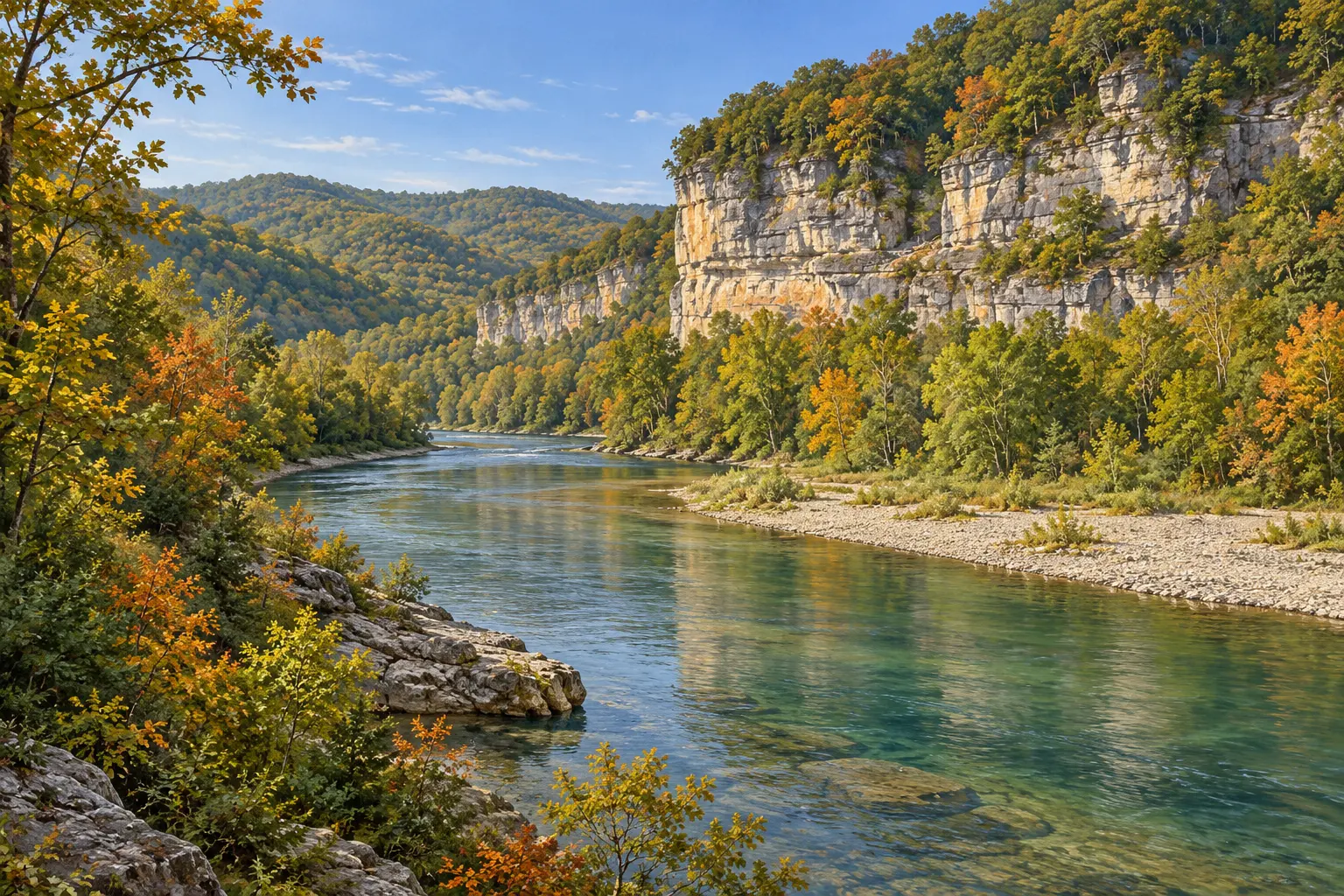
Bentonville obstetrician Neil Compton spent his time away from medicine hiking and paddling in the Ozarks. When proposed hydroelectric dams threatened the Buffalo River, he and fellow conservationists organized the Ozark Society and campaigned for protection. In 1972, Congress established America's first national river. About 135 miles of the Buffalo lie within the protected unit, preserving a free-flowing river between tall bluffs. The landscape survives partly because an enthusiastic local paddler became a determined political organizer.
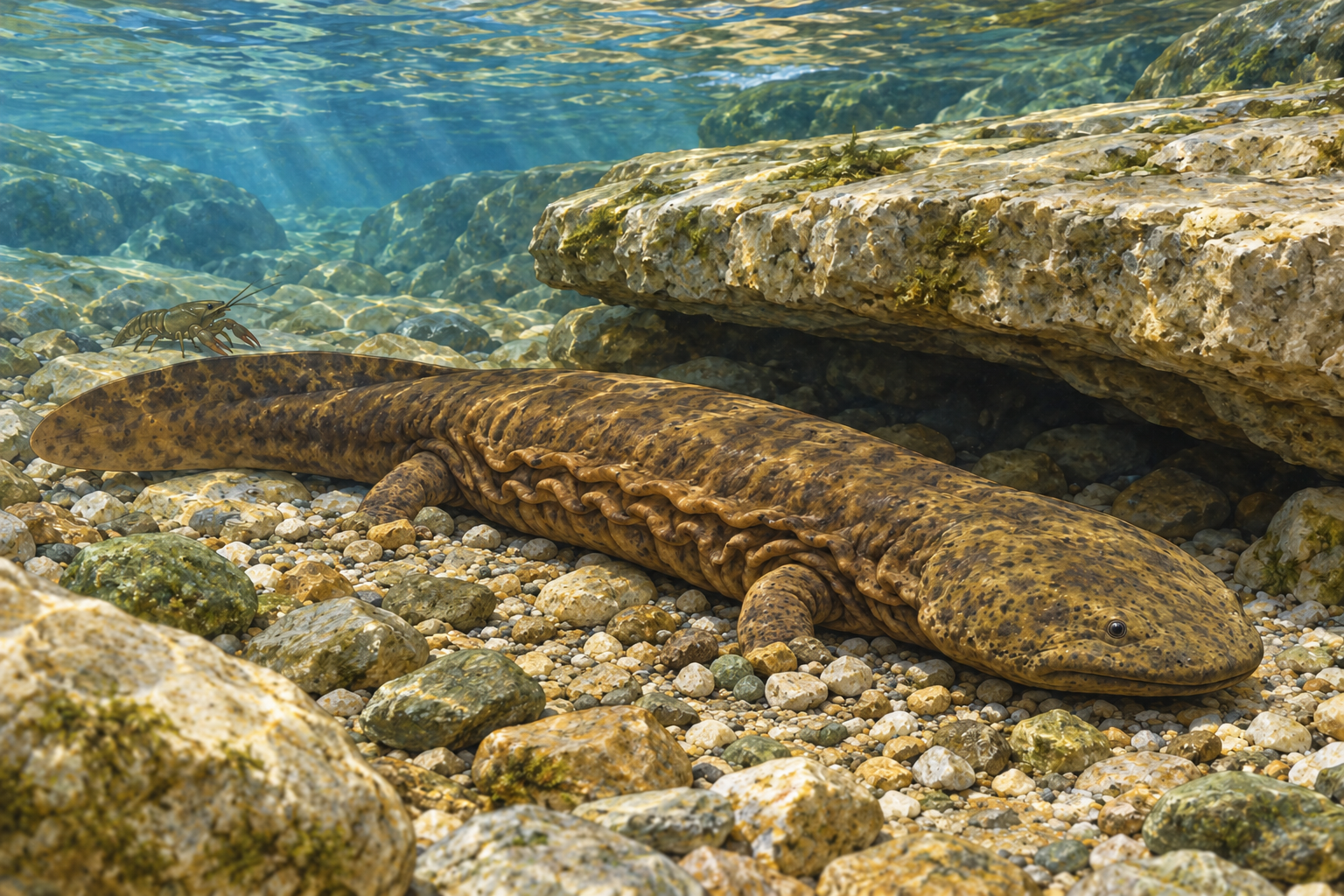
5. An Ozark giant breathes through the wrinkles in its skin
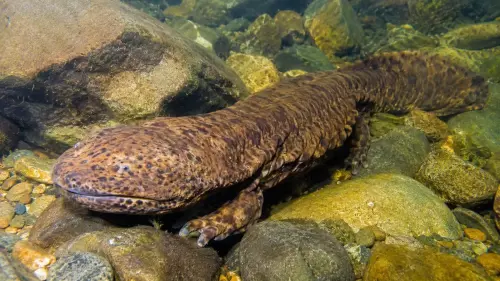
The Ozark hellbender is a large aquatic salamander found in northern Arkansas and southern Missouri. Its flattened body slips beneath stream rocks, while loose folds along its flanks increase the surface available for absorbing oxygen through the skin. Adults can approach two feet in length and spend much of the day hidden before emerging to hunt crayfish. The alarming name belongs to a shy amphibian whose dependence on cool, oxygen-rich water makes a healthy stream essential to its survival.
6. A flour advertisement became a landmark of blues history
King Biscuit Time began on Helena station KFFA on November 21, 1941, with Sonny Boy Williamson and Robert Lockwood Jr. playing a short lunchtime show. Its sponsor sold King Biscuit Flour; the audience heard blues and the company sold groceries. The success even put Williamson's likeness on cornmeal packaging. A 1965 studio recording later entered the National Recording Registry, preserving the sound of a program that helped carry Delta blues into homes across the region.
 You might also like
The Man in Black: 15 Fascinating Facts About Johnny Cash
7. An Arkansas composer's lost manuscripts turned up in a house renovation
Florence Price grew up in Little Rock and made history in 1933 when the Chicago Symphony Orchestra premiered her First Symphony: a major U.S. orchestra was performing a symphony by a Black woman. Yet much of her music later slipped from view. Manuscripts discovered during work on a house in Illinois in 2009 helped revive interest, and newly recovered materials joined the Price collections at the University of Arkansas. Her legacy survived both institutional neglect and the hazards of an abandoned building.
8. Johnny Cash grew up in a federal farming experiment
In 1935, Ray and Carrie Cash moved their family to Dyess, a New Deal agricultural resettlement colony in northeastern Arkansas. Their young son J. R., later known as Johnny Cash, grew up among families trying to establish farms through a federal relief project. He stayed until finishing high school in 1950. Songs including “Pickin' Time” and “Five Feet High and Rising” drew on that world. The childhood home behind the famous voice belonged to an ambitious experiment in rural recovery.
9. A speaker from a Hope tin shed made the room part of the instrument
Paul W. Klipsch began selling Klipschorn loudspeakers from a tin shed in Hope in 1946. The design's folded bass horn used a room corner to complete its acoustic function: walls became part of the system that reproduced low notes. An installation manual even explained how to build false corners if a suitable room corner was unavailable. The idea transformed ordinary architecture into audio engineering and helped build an influential high-fidelity business from a very small Arkansas workshop.
10. A glass chapel was designed around what two people could carry
E. Fay Jones wanted Thorncrown Chapel near Eureka Springs to sit gently within its woodland setting. He limited the pieces carried through the forest to sizes two workers could manage, assembling larger structural elements on site. The resulting chapel rises 48 feet and contains 425 windows. Its light-filled design drew inspiration from Paris's Sainte-Chapelle, translated into what Jones called Ozark Gothic. A building that appears to dissolve into the trees began with a very practical construction rule.
11. America's first elected woman senator refused to be a temporary substitute
Hattie Caraway entered the Senate by appointment after her husband's death, then won an Arkansas special election in January 1932, becoming the first woman elected to the chamber. Party leaders expected a brief tenure; she instead sought a full term. Louisiana senator Huey Long joined her on a colorful campaign tour, and she won that November. Caraway later secured reelection in 1938 without Long, serving until 1945. She turned a supposedly transitional appointment into a sustained political career.
12. Little Rock's school crisis included an entire year of closed high schools
The photographs of soldiers escorting the Little Rock Nine in 1957 are famous; the following school year is less widely remembered. Governor Orval Faubus closed all four of Little Rock's public high schools in 1958 to resist desegregation. Thousands of Black and white students had to find alternatives, and some went without schooling. Photographs show students watching televised lessons during the Lost Year. The schools reopened in August 1959, revealing how far officials had gone to block equal access to education.
13. Legislators formally settled how to pronounce Arkansas
The spelling invites comparison with Kansas, but Arkansas's final s is silent. In 1881, the General Assembly adopted a resolution declaring the preferred pronunciation and discouraging the version that sounded the final letter. The text described a name passed from Indigenous people through French usage and called for three syllables. The state government's own history recalls disagreement even between Arkansas's U.S. senators. A question that still puzzles visitors once received a formal legislative answer.
14. Arkansas's famous sharpening stone also preserves evidence of ancient quarrying
Novaculite, a dense rock made largely of microscopic quartz, supplied Indigenous toolmakers long before it became a commercial sharpening stone. The Arkansas Archeological Survey has documented more than 120 novaculite quarry sites, with pits, trenches, hammerstones and debris left by past work. Archaeologists study the spread of novaculite artifacts to investigate movement and exchange between communities. The same rock later sharpened knives, surgical instruments and carving tools, linking ancient quarry landscapes to familiar workshop equipment.
15. Biologists helped swans learn that Arkansas was a place to spend winter
Restoring trumpeter swans to northern breeding areas did not automatically restore their old migration traditions. In a reverse-migration project, Arkansas and Iowa wildlife agencies released 49 young swans in Arkansas between 2008 and 2010, hoping they would remember the wintering grounds and later return with families. Marked birds subsequently appeared with unmarked mates and young. The project added to a returning winter population already attracting attention around Magness Lake: conservation involved recovering a learned journey as well as increasing bird numbers.
How did these facts land?
Know someone who'd love these facts? Share them 👇