The Resonant Voice: 15 Fascinating Facts About Morgan Freeman
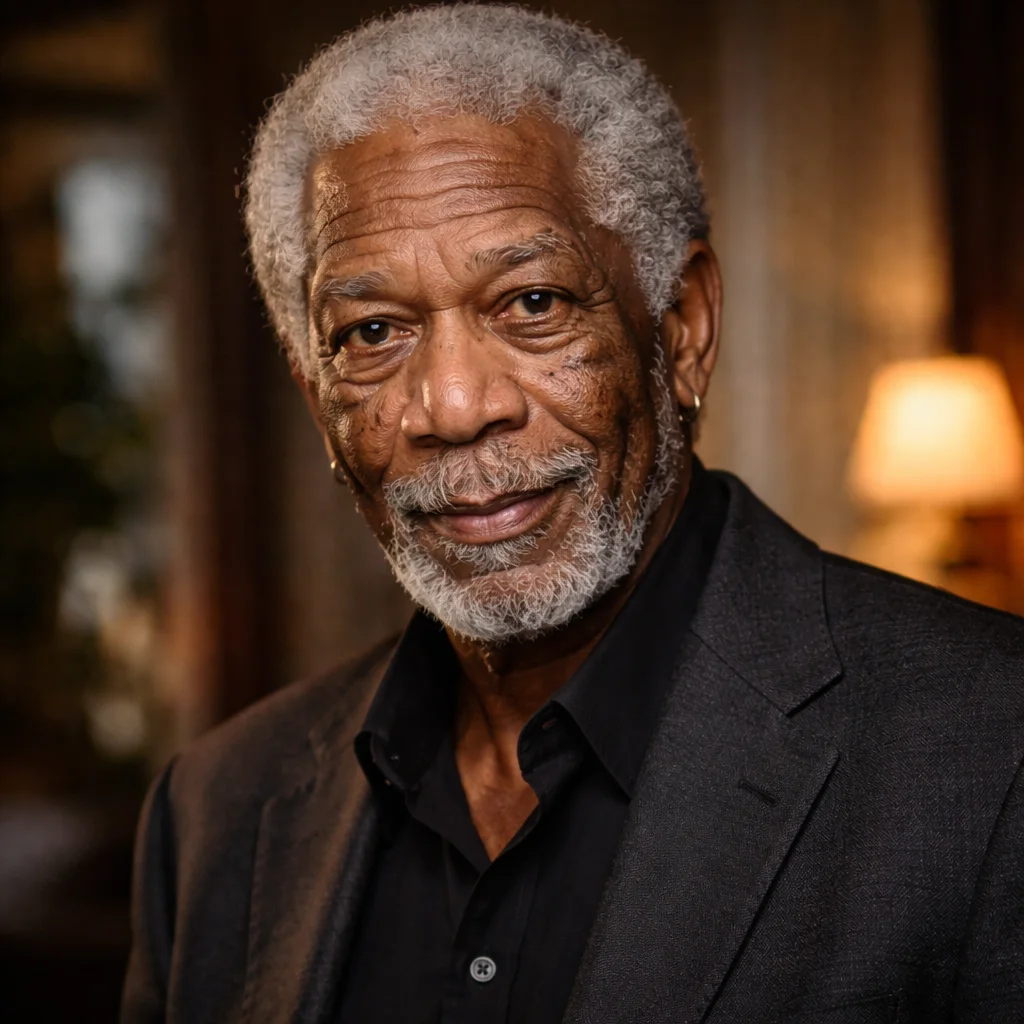
Morgan Freeman is widely regarded as one of cinema's greatest actors and most iconic voiceover narrators, but his journey to stardom was anything but typical. From a childhood prank that accidentally ignited his passion for acting to earning his big Hollywood break at the age of 50, his life story is full of surprising turns. Beyond the silver screen, he is an avid pilot, a dedicated bee conservationist, and a blues club owner in Mississippi. Discover 15 remarkable facts about the life, career, and extraordinary habits of this Hollywood legend.
1. A School Punishment Launched His Acting Career
Morgan Freeman's path to acting began not with passion, but with a disciplinary action in junior high school. After pulling a chair out from under a girl he had a crush on, his teacher forced him to participate in the school drama competition as punishment. To everyone's surprise, the young teenager excelled in the play and won state-level recognition for his performance. The unexpected victory opened his eyes to the world of performing arts and ignited a lifelong passion for acting. What started as an embarrassing disciplinary sentence ultimately set the course for one of Hollywood's most legendary careers.
2. He Was Grounded During His Air Force Enlistment
Driven by a childhood dream of flying combat aircraft, Freeman turned down a college drama scholarship to enlist in the United States Air Force in 1955. However, his dreams of soaring through the skies as a fighter pilot were quickly dashed when the military assigned him as a ground-based radar technician and mechanic. When he finally got the opportunity to sit in the cockpit of a jet trainer, he realized that flying for combat was not what he truly wanted. Recognizing that his true passion lay on the stage rather than in military aviation, he received an honorable discharge in 1959 to pursue acting full-time.
3. He Earned His Pilot's License at Age 65
Although he walked away from military aviation in his twenties, Freeman never abandoned his passion for flight. At the age of 65, long after achieving worldwide fame as an actor, he earned his private pilot's license to finally fulfill his personal dream. He did not stop at basic propeller aircraft; Freeman went on to purchase multiple private jets, including a Cessna Citation 501 and a SyberVision SJ30. He actively flew his own aircraft across the country for years, proving that major personal milestones can be achieved at any stage of life.
4. He Performed as a Professional Dancer at the 1964 World's Fair
Before finding major success on screen or stage, Freeman worked a variety of odd jobs in New York City and Los Angeles, including a stint as a professional dancer. During the 1964 World's Fair in New York City, he was hired to perform as part of a musical dance troupe. He also took formal dance lessons and auditioned for theatrical dance roles to refine his stage presence and physical control. This rigorous movement training provided him with the poised demeanor and effortless grace that would later define his iconic screen presence.
5. Children Knew Him as "Easy Reader" in the 1970s
During the 1970s, long before he became a dramatic Hollywood superstar, Freeman was a familiar face to millions of children as a core cast member on PBS's The Electric Company. He played several characters on the show, most notably "Easy Reader," a suave, cool character who loved reading books and helped young viewers learn phonics. Acting alongside icons like Rita Moreno and Bill Cosby, Freeman brought incredible warmth and charm to educational television. Though he eventually grew tired of the repetitive role, the show made him a recognizable television presence for an entire generation.
6. His Mainstream Hollywood Breakthrough Came at Age 50
While many actors find stardom in their twenties or thirties, Morgan Freeman spent decades working steadily in theater and small television roles without achieving mainstream film fame. His cinematic breakthrough did not arrive until 1987, when he was 50 years old, for his terrifying performance as a volatile pimp in Street Smart. His chilling portrayal earned him his first Academy Award nomination for Best Supporting Actor and instantly reshaped his reputation in Hollywood. Film directors suddenly recognized his incredible dramatic depth, leading to star turns in Driving Miss Daisy and Glory shortly thereafter.
7. Red Was Originally Written as a White Irishman
In Stephen King's original novella Rita Hayworth and Shawshank Redemption, the character of Ellis Boyd "Red" Redding was an older, red-haired Irishman. When director Frank Darabont adapted the story for the 1994 film, he prioritized casting an actor who could embody authority, warmth, and gravitas over physical resemblance to the original book character. Freeman's iconic performance made the role unforgettable, and the film hilariously acknowledged the source material when Red is asked why he is called Red and replies, "Maybe it's 'cause I'm Irish." Today, it is nearly impossible for audiences to imagine anyone else in the iconic role.
8. He Converted His Mississippi Ranch Into a Bee Sanctuary
In response to the alarming global decline of honeybee populations, Freeman converted his 124-acre ranch in Charleston, Mississippi, into a massive bee sanctuary in 2014. He imported 26 hives from Arkansas to establish the sanctuary and planted bee-friendly flora across the property, including clover, lavender, and magnolia trees. Rather than harvesting the honey, Freeman feeds the bees sugar water and allows them to thrive undisturbed as a wild colony. He famously does not wear a protective suit when visiting or feeding them, claiming that his peaceful intent prevents them from stinging him.
9. He Co-Owns a Famous Blues Club in the Mississippi Delta
Deeply rooted in the musical culture of the Mississippi Delta where he spent much of his youth, Freeman co-founded the Ground Zero Blues Club in Clarksdale, Mississippi, in 2001. The venue was established to preserve, celebrate, and showcase the authentic heritage of Delta blues music for future generations. Located near the legendary crossroads of Highways 61 and 49, the club regularly features local blues legends alongside international touring acts. Freeman can often be spotted relaxing at the club, engaging with fans and supporting the local arts community.
10. A Severe 2008 Car Crash Forces Him to Wear a Compression Glove
Attentive fans often notice that Freeman wears a single compression glove on his left hand during public appearances and film shoots. This is the result of a severe car crash in August 2008, when his vehicle flipped multiple times on a Mississippi highway. The accident caused severe nerve damage that left his left hand paralyzed and prone to painful swelling. The compression glove helps regulate blood flow and mitigate the chronic pain associated with nerve damage in the affected limb.
11. He Won His Only Academy Award for Million Dollar Baby
Despite earning multiple Oscar nominations for leading roles in cinematic classics like Driving Miss Daisy, The Shawshank Redemption, and Invictus, Freeman won his sole Academy Award in the Best Supporting Actor category. He received the statue at the 77th Academy Awards in 2005 for his performance as Eddie "Scrap-Iron" Dupris in Clint Eastwood's Million Dollar Baby. Playing a former boxer who works as a gym caretaker, Freeman delivered a subtle, deeply moving performance that anchored the film's emotional core. The win capped off decades of critical acclaim and artistic excellence.
12. He Has Played the Role of God in Two Separate Movies
Morgan Freeman achieved the rare distinction of playing God in two mainstream comedy films: Bruce Almighty (2003) and its sequel Evan Almighty (2007). Dressed in immaculate white suits, his serene presence and soothing vocal tone offered a dignified yet humorous portrayal of the Almighty. Director Tom Shadyac insisted on casting Freeman because he believed the actor naturally radiated wisdom, benevolence, and effortless authority. His performance was so memorable that his distinct depiction of God remains a recurring reference in pop culture.
13. He Narrated the Oscar-Winning Documentary March of the Penguins
Freeman's deep, melodious voice has made him one of the most sought-after voiceover artists in cinematic history. One of his most celebrated narration projects was the 2005 American release of the French nature documentary March of the Penguins. His voice lent immense dignity, suspense, and emotional weight to the harrowing journey of emperor penguins surviving harsh Antarctic winters. The documentary became a massive box-office phenomenon and won the Academy Award for Best Documentary Feature, with critics praising Freeman's narration as essential to its success.
14. Nelson Mandela Personally Chose Freeman to Portray Him
When former South African President Nelson Mandela was asked who should portray him in a film adaptation of his life, he explicitly named Morgan Freeman. The two men had formed a deep personal friendship years before the 2009 film Invictus went into production. To prepare for the role of the anti-apartheid leader, Freeman spent extensive time studying Mandela's accent, speech rhythms, and physical gestures. His compelling performance earned him an Academy Award nomination for Best Actor and praise from Mandela's family for capturing his true spirit.
15. He Wears Gold Earrings Due to an Old Sailor Tradition
Morgan Freeman is rarely seen without small gold hoop earrings, a fashion choice rooted in a centuries-old maritime tradition. As a young man, he learned that sailors wore gold earrings so that if they died in a foreign land or washed ashore, the value of the precious metal would pay for a proper burial and coffin. Freeman embraced this superstitious custom early in his career and has worn them ever since as both a practical insurance policy and a subtle nod to nautical folklore.
Sources & References
This AI-assisted post was rigorously curated and fact-checked for accuracy by:
 Martin Roháček
How fun was this article? 🤔
Tap a star to rate it
🧠 Quiz: How closely were you paying attention?
10 questions — all answers are in the article above!
Enjoyed these facts? There's more! 💌
Fresh fun facts in your inbox. No spam, ever.