1. His Birth Name Was Not Nelson
Mandela was born on July 18, 1918, in the small village of Mvezo. His given Xhosa name was Rolihlahla, which literally translates to “pulling the branch of a tree,” but colloquially means “troublemaker.” He was not given the English name “Nelson” until his first day of primary school, when a teacher assigned him a Western name in accordance with the British colonial customs of the time.
2. He Was a Member of African Royalty
Mandela was born into the Thembu royal family, which ruled the Transkei region of South Africa. His father, Gadla Henry Mphakanyiswa, was a local chief and counselor to the monarch. When Mandela’s father died, the young boy was informally adopted by the acting Thembu regent, Chief Jongintaba Dalindyebo, grooming him for high-status leadership within the tribe.
3. He Fled an Arranged Marriage
Despite his royal upbringing, Mandela rebelled against traditional tribal expectations. When he was in his early twenties, his guardian, the acting regent, arranged marriages for Mandela and his cousin Justice. Outraged that his life was being dictated for him, Mandela ran away to the bustling city of Johannesburg to forge his own path, permanently altering his destiny.
4. He Opened South Africa’s First Black Law Firm
After settling in Johannesburg and becoming deeply involved in the anti-apartheid movement, Mandela formally studied law. In 1952, alongside his close friend and fellow activist Oliver Tambo, he opened “Mandela and Tambo.” It was the very first Black-owned legal practice in South Africa, providing affordable or free legal counsel to Black citizens brutalized by apartheid laws.
5. He Was a Passionate Heavyweight Boxer
Before the struggle consumed his life, Mandela was an avid amateur boxer and long-distance runner. He famously noted that he did not enjoy the violence of boxing, but rather the strict discipline, the strategy, and the fact that inside the boxing ring, the harsh racial divisions of South African society temporarily vanished.
6. He Was Known as the “Black Pimpernel”
After the apartheid government banned the African National Congress (ANC) in 1960, Mandela was forced to go underground to organize resistance. He became a master of disguise, frequently dressing as a chauffeur, a chef, or a garden boy to evade the police. The South African press dubbed him the “Black Pimpernel,” referencing the elusive fictional hero The Scarlet Pimpernel.
7. He Originally Advocated for Non-Violence
In the early days of his activism, Mandela heavily championed non-violent protests, heavily influenced by the civil disobedience tactics of Mahatma Gandhi. However, following the 1960 Sharpeville Massacre—where police opened fire on peaceful Black protesters, killing 69 people—Mandela reluctantly concluded that non-violent resistance alone would not overthrow the heavily armed apartheid state, leading him to co-found the ANC’s militant wing, Umkhonto we Sizwe.
8. He Spent 27 Years in Prison
In 1962, Mandela was arrested and later sentenced to life in prison during the infamous Rivonia Trial for conspiring to overthrow the state. He spent the next 27 years behind bars. The first 18 of those years were spent on Robben Island, a harsh prison off the coast of Cape Town, where he was forced to do hard labor in a lime quarry.
9. He Refused Multiple Offers of Freedom
The apartheid government repeatedly offered to release Mandela from prison on the condition that he publicly renounce violence or agree to legitimize the government’s segregated “Bantustan” policies. Mandela staunchly refused every offer, famously stating, “What freedom am I being offered while the organization of the people remains banned? Only free men can negotiate.”
10. He Secretly Wrote His Memoir in Prison
While incarcerated on Robben Island, Mandela secretly wrote the manuscript for his eventual autobiography, Long Walk to Freedom. To avoid detection by prison guards, he and his fellow inmates transcribed the pages in tiny handwriting, hid them in empty plastic containers, and buried them in the prison garden.
11. He Voted for the First Time at Age 75
On April 27, 1994, South Africa held its first-ever fully democratic, multiracial elections. On that day, Nelson Mandela—at the age of 75—cast a ballot for the very first time in his life. The ANC won a sweeping victory, and Mandela was inaugurated as the country’s first Black president shortly thereafter.
12. He Masterfully Used Rugby to Unite the Nation
Recognizing that white South Africans were terrified of majority rule, President Mandela used the 1995 Rugby World Cup (hosted in South Africa) to foster national unity. The national team, the Springboks, had long been a hated symbol of white supremacy. By publicly donning the Springbok jersey and encouraging Black South Africans to support the team, Mandela orchestrated a profound moment of racial reconciliation when the team won the tournament.
13. He Served Only One Term as President
In stark contrast to many revolutionary leaders who cling to power indefinitely after toppling a regime, Mandela made the deliberate choice to step down after a single five-year term. He believed strongly in democratic transition and wanted to set a precedent for peaceful, constitutional transfers of power in post-apartheid South Africa.
14. He Was on the U.S. Terror Watch List Until 2008
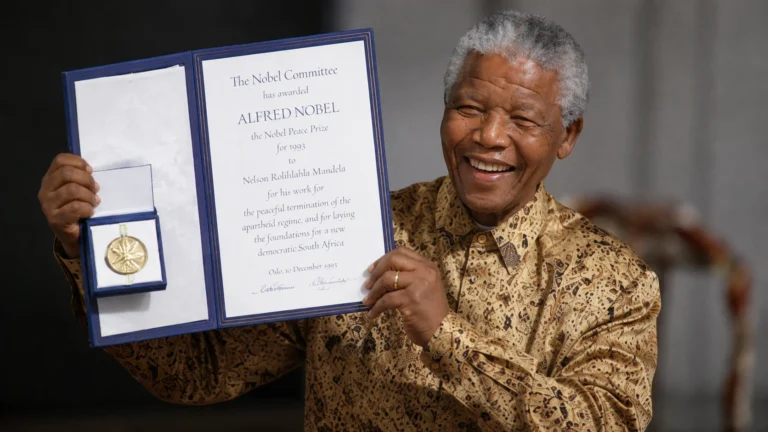
Because of his leadership in the ANC’s armed struggle during the Cold War era, the United States government placed Mandela and other ANC members on its terrorism watch list. Astonishingly, he remained on this list throughout his entire presidency and long after winning the Nobel Peace Prize. He was not officially removed from the U.S. terror watch list until 2008, when he was nearly 90 years old.
15. He Has an International Day Dedicated to Him
In 2009, the United Nations officially declared July 18th (Mandela’s birthday) as Nelson Mandela International Day. Rather than being a public holiday, it is designed as a global call to action. People around the world are encouraged to dedicate 67 minutes of their time to community service—one minute for every year Mandela devoted to public service and the struggle for human rights.