1. Born in a Coastal Fortress
Vasco da Gama was born around 1460 in Sines, a small coastal town in southwestern Portugal. His father, Estêvão da Gama, was a minor nobleman who served as the commander of the local fortress. Growing up by the sea, the young Vasco likely received an education focused heavily on mathematics and navigation. This early environment provided him with the necessary skills to later command large fleets on uncharted ocean routes.
2. He Proved Himself by Seizing Ships
Before he became an explorer, da Gama proved his loyalty and skill to the Portuguese crown through military action. In 1492, King John II of Portugal sent him to the southern coast to seize French merchant ships. This was a retaliation against the French government for disrupting Portuguese shipping in peacetime. Da Gama performed this mission quickly and effectively, earning a strong reputation that eventually led to his appointment as a fleet commander.
3. The Search for a New Spice Route
During the 15th century, European nations were desperate to get their hands on valuable spices from the East, such as pepper and cinnamon. However, the existing land routes were strictly controlled by Venetian and Muslim merchants who charged very high prices. The Portuguese monarchy wanted to find a direct sea route to India by sailing around the continent of Africa. Finding this route would allow Portugal to bypass the middlemen and establish a highly profitable trading monopoly.
4. He Commanded a Fleet of Four Ships
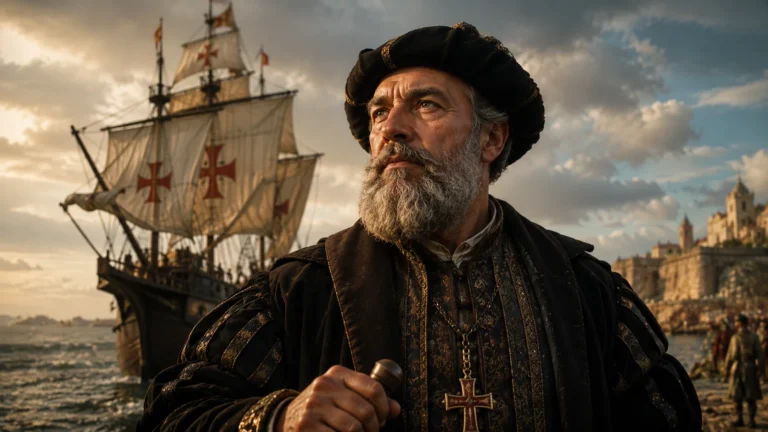
When da Gama finally set sail from Lisbon on July 8, 1497, he commanded a small but well-equipped fleet of four vessels. The main ships were two medium-sized sailing vessels named the São Gabriel and the São Rafael. They were accompanied by a smaller caravel named the Berrio and a heavy storeship carrying necessary supplies. While the ships were relatively small by modern standards, they were built sturdy enough to withstand the rough waters of the open ocean.
5. Spending Months Without Seeing Land
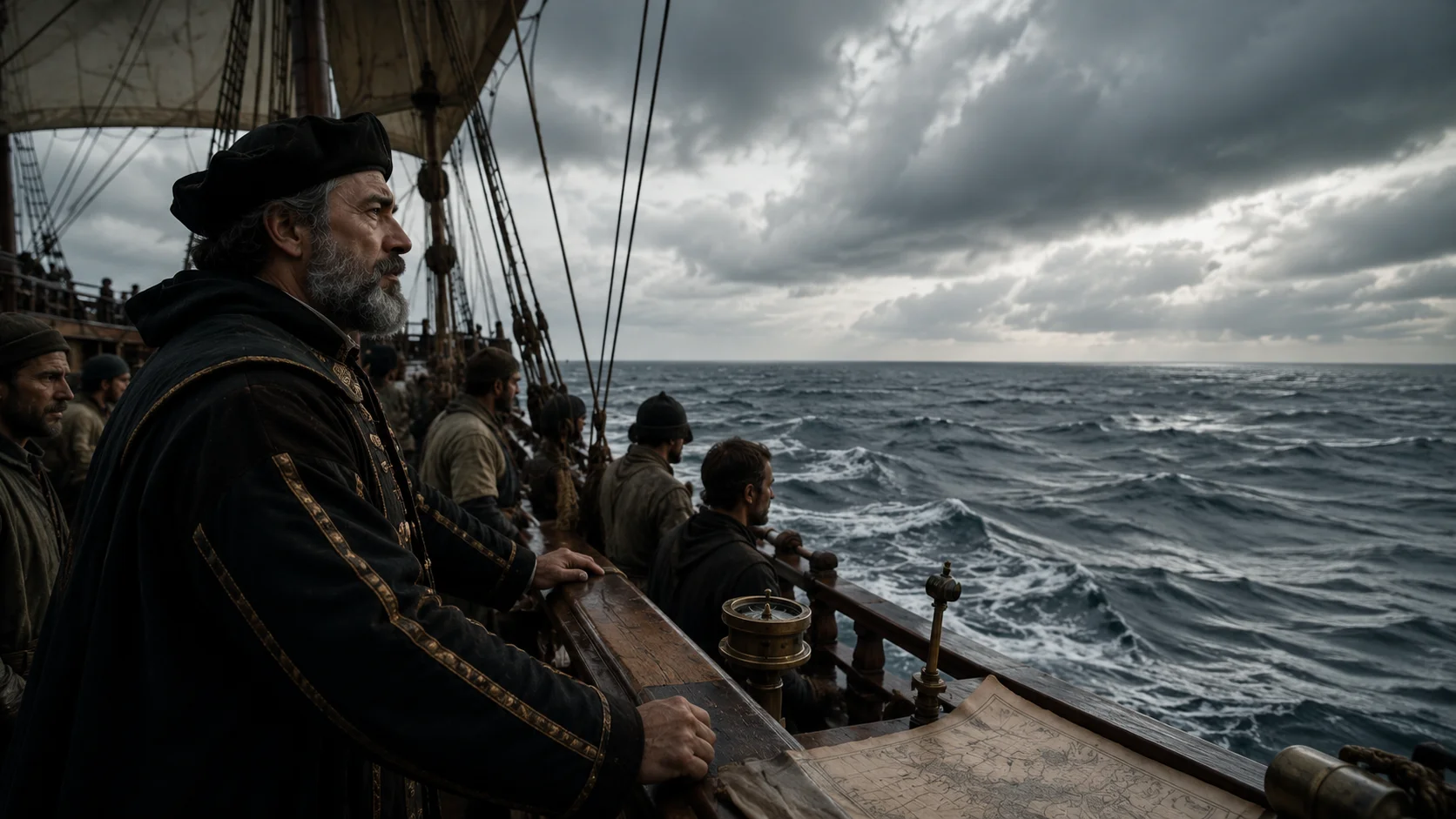
To catch the most favorable winds and avoid the strong currents of the Gulf of Guinea, da Gama made a very bold navigational decision. He steered his fleet far out into the open waters of the South Atlantic Ocean in a massive detour. Because of this strategic choice, his crew sailed for more than 90 days without ever seeing a coastline. At the time, this was the longest recorded voyage any European fleet had ever made out of sight of land.
6. The Heavy Toll of Scurvy
The long weeks spent at sea without access to fresh fruits or vegetables had a devastating effect on the sailors. Many of da Gama’s crew members developed scurvy, a severe illness caused by a lack of vitamin C. The disease caused extreme weakness and swollen gums, slowing down the expedition’s progress. By the time the fleet finally returned to Portugal years later, the disease and other hardships had claimed the lives of more than half the original crew.
7. He Relied on Local Navigators
While da Gama is often credited with finding the way to India on his own, he heavily relied on the knowledge of local experts. When his fleet reached the eastern coast of Africa, they were completely unfamiliar with the weather patterns of the Indian Ocean. Da Gama hired local navigators in Malindi (modern-day Kenya) to help guide his ships across the sea. These skilled pilots understood the seasonal monsoon winds, allowing the Portuguese fleet to reach India in just under a month.
8. He Left Stone Markers Along the Way
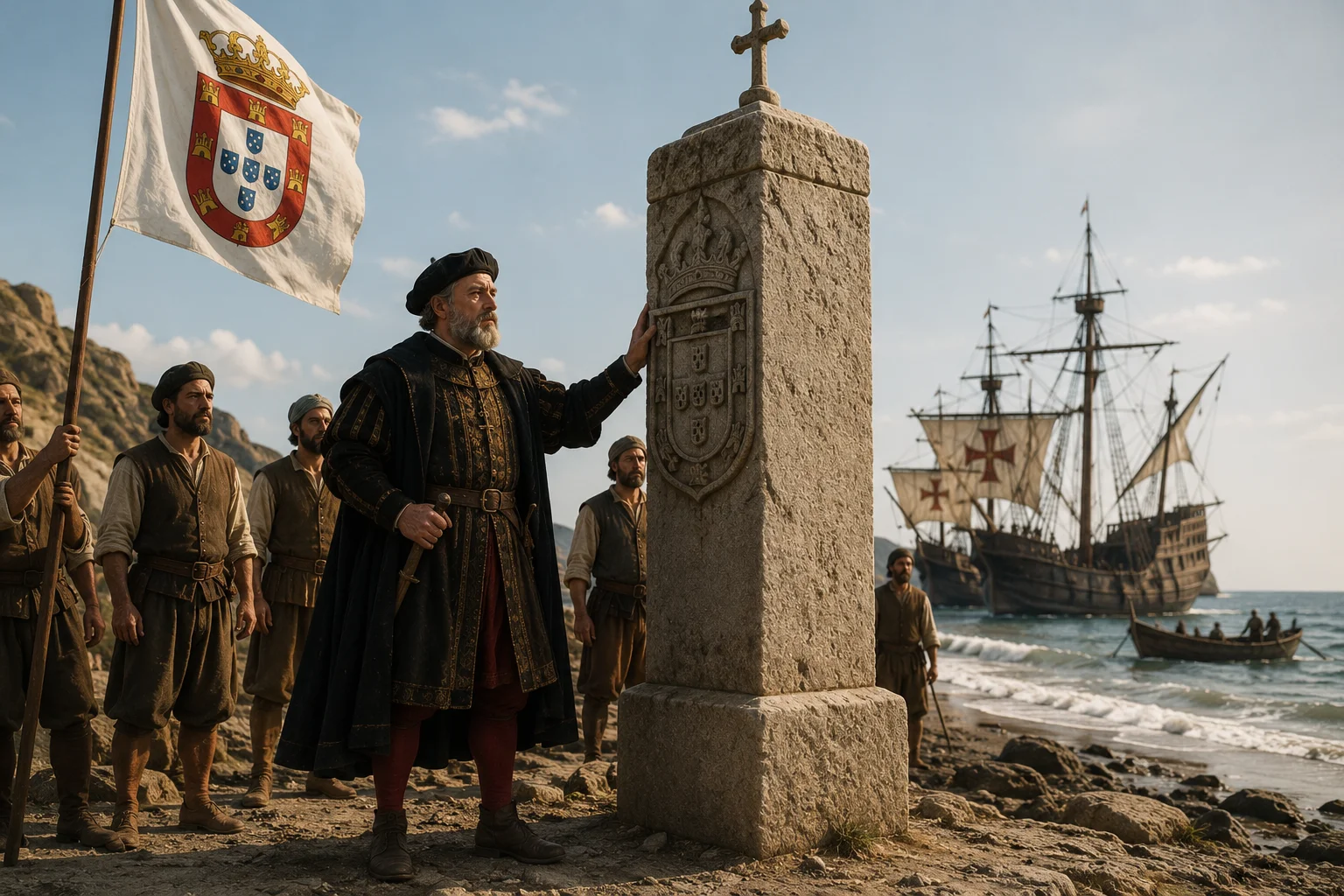
Whenever da Gama’s fleet reached a significant new location, he made sure to leave physical proof of his arrival. The crew carried large stone pillars, known as padrões, which were carved with the Portuguese royal coat of arms. Da Gama erected these heavy stone markers in several places, including locations in modern-day South Africa, Mozambique, and India. These pillars served as formal declarations of Portuguese presence and land claims along the newly charted sea route.
9. The Gifts He Brought Were Insulting
When da Gama finally reached the wealthy trading port of Calicut in India in May 1498, he tried to establish a trade agreement with the local ruler. However, the European goods he brought were completely unsuited for the wealthy Indian market. He offered cheap items like striped cloth, washbasins, and strings of coral, which were normally used for trading in West Africa. The local merchants and the ruler were unimpressed and even insulted by the low quality of the gifts.
10. The First Voyage Ended in Tension
Because of the poor quality of his trade goods and the suspicion of local Muslim merchants, da Gama failed to sign a formal commercial treaty in Calicut. Tensions rose, and the Portuguese explorer ended up taking a few local hostages to ensure his ships could leave safely. Despite the diplomatic failure, he managed to acquire enough samples of valuable spices and precious stones to prove the route was successful. His return to Lisbon in 1499 was celebrated as a massive historic achievement.
11. A Much More Violent Second Trip
King Manuel of Portugal sent da Gama back to India in 1502, but this time he was equipped for war. Da Gama commanded a heavily armed fleet of 20 ships with orders to enforce Portuguese dominance over the Indian Ocean trade. During this voyage, he used brutal and violent tactics, including bombarding coastal cities and attacking unarmed merchant ships. His aggressive actions effectively secured Portugal’s commercial power in the region but left a dark legacy of cruelty.
12. He Was Appointed Viceroy of India
After completing his second voyage, da Gama spent two decades in Portugal serving as a respected advisor to the king. In 1524, a new king, John III, decided that the Portuguese colonial government in India had become too corrupt and poorly managed. He appointed the aging da Gama as the Viceroy of India and sent him back to Asia to restore order. Da Gama’s strict reputation made him the perfect candidate to discipline the local officials.

13. He Died Shortly After Arriving
Da Gama’s time as the Viceroy of India was unfortunately very brief. He arrived in the city of Goa in September 1524 and immediately began cracking down on administrative abuses. However, the long ocean journey and the demanding work soon took a toll on his health. He fell severely ill, likely from malaria or severe fatigue, and died in the city of Cochin just three months later on Christmas Eve in 1524.
14. His Body Was Moved Multiple Times
After his death, Vasco da Gama was initially buried at a Catholic church in Cochin, India. His remains stayed there for over a decade before they were carefully dug up and transported back to his home country of Portugal. In 1880, his tomb was moved one final time to the grand Jerónimos Monastery in Lisbon. Today, his ornate tomb rests near the remains of other prominent Portuguese historical figures, drawing thousands of visitors each year.
15. Europe’s Longest Bridge Bears His Name
Vasco da Gama’s impact on global history is still highly visible in modern Portugal. To commemorate the 500th anniversary of his arrival in India, the city of Lisbon inaugurated a massive engineering project in 1998. They opened the Vasco da Gama Bridge, which stretches across the Tagus River estuary. Measuring over 10 miles long, it was the longest bridge in Europe at the time it was built, standing as a prominent monument to his expansive voyages.