The Pelican State: 15 Fascinating Facts About Louisiana
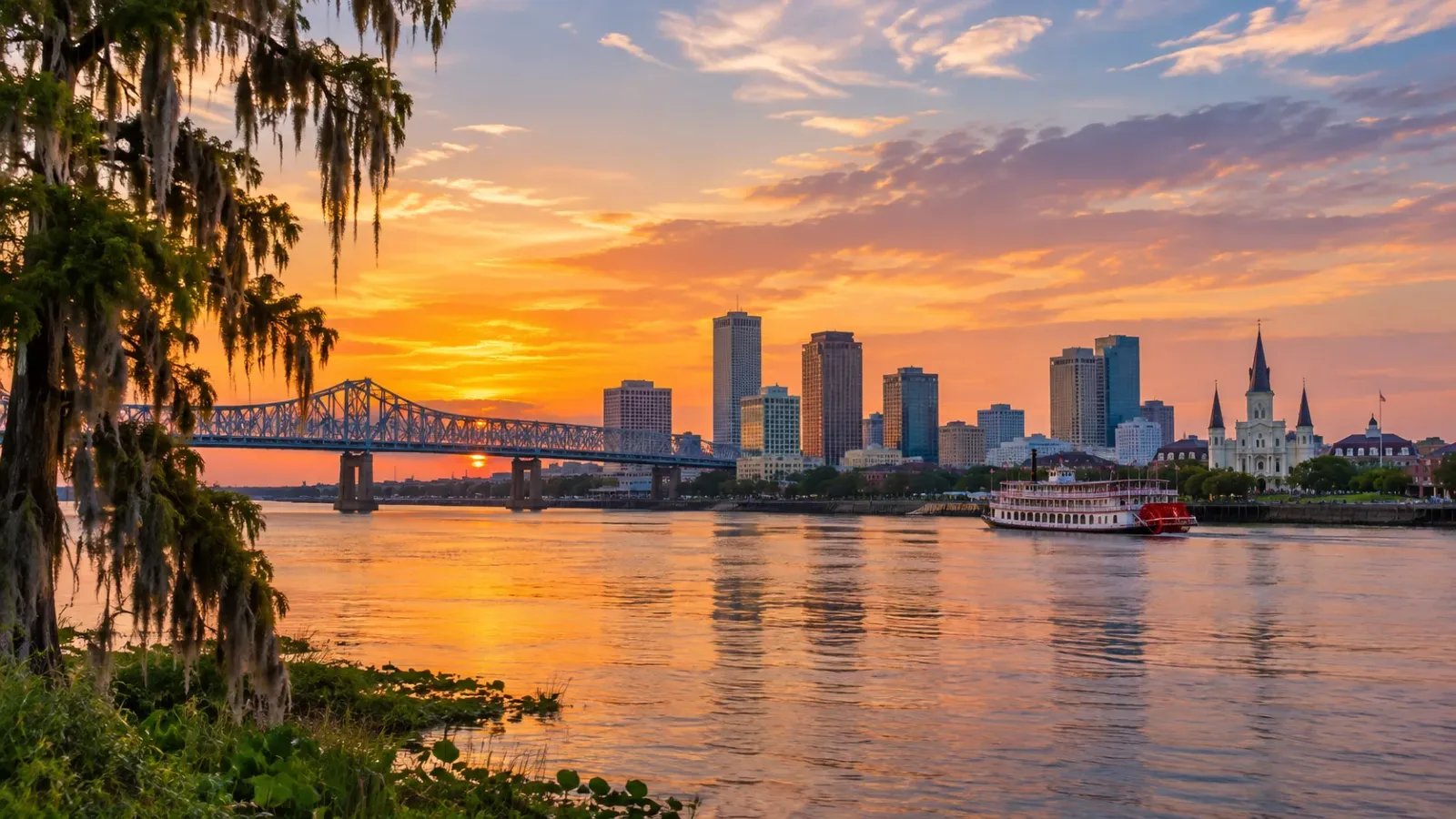
Forget the myth that Louisiana is just endless swamps and Mardi Gras parades. This vibrant state boasts a remarkably diverse geography and a history shaped by myriad cultures, far beyond its famous French roots. From rare geological formations and unique legal systems to bizarre biological anomalies, prepare to discover the fascinating truths hidden within the Pelican State.
1. Louisiana is the only U.S. state with a legal system based on civil law rather than English common law.
While people often assume the state strictly uses the Napoleonic Code, the truth is more nuanced. Louisiana's legal framework actually derives from both French and Spanish colonial civil law traditions, which prioritize comprehensive written codes over judicial precedents. This means that unlike the rest of the country where judges actively shape the law through their rulings, Louisiana judges primarily interpret and apply the statutes exactly as written by the legislature. This unique system affects everything from property rights to inheritance, maintaining a distinctly European flavor in the state's modern jurisprudence.
2. The highest points in southern Louisiana are actually massive underground pillars of solid salt.
Contrary to the belief that the coastal region is entirely flat, the landscape is punctuated by geological anomalies known as salt domes. These immense formations were created over millions of years as highly pressurized salt from an ancient evaporated sea pushed upward through dense layers of sediment. The tops of these domes form prominent hills rising above the marshland, such as Avery Island, the famous birthplace of Tabasco sauce. Beyond their topographical oddity, these domes contain incredibly pure salt deposits and are often flanked by rich reservoirs of oil and natural gas, driving the state's economy for over a century.
3. Deep in the Louisiana swamps lives an isolated community that still speaks an archaic dialect of 18th-century Spanish.
When people think of Louisiana's linguistic heritage, they almost exclusively picture French-speaking Cajuns and Creoles. However, St. Bernard Parish is home to the Isleños, descendants of colonists from the Canary Islands who were settled there by the Spanish crown between 1778 and 1783. Because they lived in profound geographic isolation surrounded by treacherous wetlands, their language and culture remained largely insulated from the outside world. Today, the elder members of this community still speak a rare Canarian Spanish dialect filled with colonial-era vocabulary, preserving a linguistic time capsule in the American South.
4. The swamps of Louisiana harbor a naturally occurring population of extremely rare, blue-eyed white alligators.
These ghostly reptiles are not albinos, which have pink eyes and a complete lack of pigment, but rather leucistic alligators. Leucism is a genetic condition that causes a partial loss of pigmentation, resulting in bright white skin and stunning, piercing blue eyes. In the wild, this mutation is normally a death sentence, as the lack of natural camouflage makes young hatchlings easy targets for predators like birds and larger alligators. In 1987, a remarkable clutch of eighteen leucistic males was discovered deep in the Louisiana wetlands, and their descendants are now carefully protected and studied in wildlife centers worldwide.
5. A colossal ancient indigenous city in northeastern Louisiana features earthen mounds built thousands of years before the Mayan pyramids.
Long before European contact, the site known as Poverty Point was a bustling commercial and cultural hub for a highly advanced hunter-gatherer society. Constructed between 1700 and 1100 BCE, the settlement consists of massive concentric earthen ridges and towering ceremonial mounds that required moving millions of cubic feet of soil by hand. It shatters the anthropological myth that only agricultural societies could build large-scale monumental architecture, as the Poverty Point people thrived purely on foraging and fishing. Today, it stands as a UNESCO World Heritage site, proving the extraordinary engineering prowess of ancient North Americans.
6. The mighty Mississippi River has occasionally flowed backward through Louisiana due to the overwhelming power of hurricanes.
The prevailing assumption is that a major river's flow is an unstoppable force of nature, relentlessly pushing toward the sea. However, extreme weather events have temporarily reversed the flow of the Mississippi River within Louisiana's borders. During Hurricane Katrina in 2005 and Hurricane Isaac in 2012, immense storm surges from the Gulf of Mexico pushed massive volumes of water upstream against the river's current. River gauges near New Orleans recorded the water flowing backward for hours, demonstrating the terrifying and awe-inspiring hydraulic power of a major tropical cyclone.
7. Louisiana is home to the longest continuous bridge over water in the entire world.
Stretching an astonishing 23.8 miles across Lake Pontchartrain, the Causeway is a marvel of modern civil engineering. Completed in the mid-20th century, it consists of two parallel spans supported by over 9,000 concrete pilings driven deep into the lakebed. The bridge is so long that for an eight-mile stretch in the middle, motorists completely lose sight of land, creating the illusion of driving directly across a boundless ocean. It remains a vital artery connecting the northern suburbs to New Orleans, engineered to withstand the punishing winds and waters of severe Gulf Coast weather.
8. The state flag depicts a mother pelican tearing her own breast to feed her young, an image rooted in medieval folklore rather than actual biology.
The brown pelican is Louisiana's state bird, but its depiction on the flag and state seal features three drops of blood on the mother's chest. This imagery is based on the ancient Christian myth of the pelican in her piety, which falsely claimed that a mother pelican would pierce her own flesh to provide blood for her starving chicks during a famine. In reality, pelicans regurgitate partially digested fish to feed their offspring, and the blood myth likely stemmed from the way they press their bills against their chests to empty their throat pouches. The state legislature officially mandated the inclusion of the three blood drops on the flag in 2006 to honor this historical symbol of self-sacrifice.
9. Louisiana loses an area of coastal land roughly the size of a football field every hundred minutes.
The state's famous boot-shaped silhouette on maps is severely outdated, as rapid coastal erosion is fundamentally altering Louisiana's geography. This catastrophic land loss is primarily driven by human intervention, specifically the leveeing of the Mississippi River, which prevents the natural flooding needed to deposit fresh, land-building sediment into the delta. Compounded by rising sea levels and the dredging of thousands of miles of canals for the oil and gas industry, saltwater easily intrudes and kills off the root systems holding the fragile marshland together. Scientists and engineers are now undertaking some of the most ambitious and expensive coastal restoration projects in human history to slow this alarming disappearance.
10. The first documented opera performance in North America took place in New Orleans, establishing the city's early cultural dominance.
While northeastern cities like New York and Boston often dominate the narrative of early American high culture, New Orleans was a theatrical powerhouse long before them. In the late 1700s, the city's wealthy French and Spanish elites cultivated a deep appreciation for classical European arts, leading to regular, lavish operatic productions. The Theatre de la Rue Saint Pierre, which opened in 1792, became the center of this musical revolution, hosting full-scale operas that astounded visitors. This deep-rooted operatic tradition eventually influenced the brass bands and diverse musical innovations that would later birth jazz in the very same streets.
11. The Mississippi River reaches its deepest point in the United States directly off the banks of New Orleans.
Most people assume the widest parts of a river must also be the deepest, but fluvial dynamics dictate otherwise. As the Mississippi makes a sharp crescent-shaped turn past the historic French Quarter in New Orleans, the immense volume of water is forced to the outer edge of the bend. This powerful, concentrated flow scours the riverbed, gouging out a trench that reaches depths of nearly 200 feet. This natural deep-water channel is precisely what allowed New Orleans to become a massive inland port, easily accommodating ocean-going vessels hundreds of miles from the Gulf of Mexico.
12. Louisiana is the only state in the country divided into parishes rather than counties.
This unique administrative structure dates back to the era of French and Spanish colonial rule, deeply intertwined with the Roman Catholic Church. Under these colonial administrations, the territory was divided into distinct geographic areas governed by local church parishes, which handled both religious and civil administrative duties. When Louisiana finally achieved statehood in 1812, the original territorial legislature officially retained this familiar terminology. Today, while a parish functions exactly like a county in terms of local governance and law enforcement, the name serves as a daily reminder of the state's enduring colonial legacy.
13. A highly prized, powerfully pungent tobacco known as Perique can only be successfully grown in a single, small patch of Louisiana soil.
Perique is often called the truffle of tobaccos, renowned worldwide for its intense, spicy flavor and fruity aroma. It is exclusively cultivated in St. James Parish, roughly 50 miles west of New Orleans, where the specific microclimate and rare, dark soil called Magnolia silt loam provide the perfect growing conditions. Attempts to plant the exact same seeds anywhere else in the world have consistently failed to produce the crop's signature characteristics. Furthermore, the tobacco achieves its distinct profile through a unique, labor-intensive fermentation process inside whiskey barrels under immense pressure, a technique originally learned from the indigenous Choctaw and Chickasaw tribes.
14. The highest natural elevation in Louisiana is a mere 535 feet above sea level, making it the third-lowest high point in the United States.
Driskill Mountain, located in the northern region of the state, holds the title of Louisiana's tallest geographic feature, though the word mountain is a generous exaggeration. In reality, it is a modest, tree-covered hill formed from ancient paleogene sediment that managed to resist millions of years of erosion. It stands taller only than the highest points in Florida and Delaware, completely debunking the idea that the northern part of the state features rugged, mountainous terrain. Today, hikers can easily summit the peak via a short, gentle trail, making it a popular and highly accessible destination for high-pointing enthusiasts.
15. The town of Breaux Bridge was officially designated the Crawfish Capital of the World, yet crawfish were once considered poverty food and widely shunned.
Today, massive springtime crawfish boils are synonymous with Louisiana culture, drawing tourists from around the globe and driving a multi-million-dollar aquaculture industry. However, before the mid-20th century, these small crustaceans were largely ignored by the urban elite and upper classes, viewed as a desperate food source for impoverished swamp dwellers. The cultural shift occurred in the 1920s and 1930s as Cajun cuisine began migrating into local restaurants, and chefs discovered innovative ways to season and present the abundant local resource. In 1959, the Louisiana legislature officially recognized Breaux Bridge's pioneering role in this culinary revolution, forever elevating the humble mudbug to a celebrated global delicacy.
Sources & References
This AI-assisted post was rigorously curated and fact-checked for accuracy by:
 Martin Roháček
How fun was this article? 🤔
Tap a star to rate it
🧠 Quiz: How closely were you paying attention?
10 questions — all answers are in the article above!
Enjoyed these facts? There's more! 💌
Fresh fun facts in your inbox. No spam, ever.