The Vibrant Nation: 15 Fascinating Facts About Mexico
Mexico is a land of staggering diversity, deep historical roots, and extraordinary natural phenomena that go far beyond its famous coastal beaches. From ancient Mesoamerican metropolises that rivaled the great cities of antiquity to modern inventions that transformed global broadcast technology, the nation's heritage is rich and surprising. Millions of migrating butterflies, sunken lakes beneath bustling modern streets, and vibrant culinary traditions all form part of Mexico's unique identity. Here are 15 fascinating facts that reveal the true depth of this incredible country.
1. Cuexcomate Is Considered the World's Smallest Volcano
In the city of Puebla lies Cuexcomate, widely recognized as the world's smallest volcano. Standing a modest 13 meters (43 feet) tall with a crater diameter of roughly 23 meters, it is technically an inactive geyser cone formed during an eruption of Popocatépetl in 1064. Visitors can descend a spiral staircase directly into its hollow interior, where a natural subterranean spring flows at the bottom. Local legends once rumored that the crater was used to discard bad luck or store food reserves for the local community. Today, it remains one of Mexico's most unusual geological tourist attractions.
2. Mexico City Is Sinking Into an Ancient Lakebed
Mexico City is sinking into the ground at an alarming rate of up to 50 centimeters (20 inches) per year in certain districts. This geological challenge stems from its history: Tenochtitlan, the Aztec capital, was constructed on an island in the middle of shallow Lake Texcoco. After Spanish colonizers drained the surrounding lake system, the modern expanding metropolis began over-extracting groundwater from subterranean aquifers beneath the soft clay soil. This massive water extraction causes the ground underneath historic cathedrals and modern skyscrapers to compact unevenly, forcing city engineers to constantly repair cracked foundations and stabilizing tilting historic landmarks.
3. A Mexican Engineer Invented Early Color Television
In 1940, a 23-year-old Mexican engineer named Guillermo González Camarena patented an early color television transmission system. Known as the Chromoscopic Adapter for Television Equipment, his invention utilized a rotating color-wheel system to capture and transmit vivid color images. González Camarena made his first official color broadcast from his laboratory in Mexico City, setting a major milestone in global broadcast history. He later developed a simplified system used by NASA in 1979 to transmit crisp color imagery from the Voyager space probes. Today, he is celebrated across Latin America as a brilliant pioneer of modern visual technology.
4. Mexico Officially Recognizes 68 Indigenous Languages
While Spanish is spoken by the vast majority of the population, Mexico is officially a multilingual nation that recognizes 68 indigenous language families. Under the General Law of Linguistic Rights of the Indigenous Peoples, these native tongues—alongside Spanish—are recognized as official national languages. Millions of citizens speak indigenous languages such as Nahuatl, Maya, Zapotec, and Mixtec as their primary mother tongue. Many of these languages boast dozens of distinct regional dialects, reflecting thousands of years of rich cultural development across Mesoamerica. Government initiatives continuously work to preserve these ancient linguistic traditions within public schools and civic administration.
5. Teotihuacan Was One of the Pre-Columbian World's Largest Cities
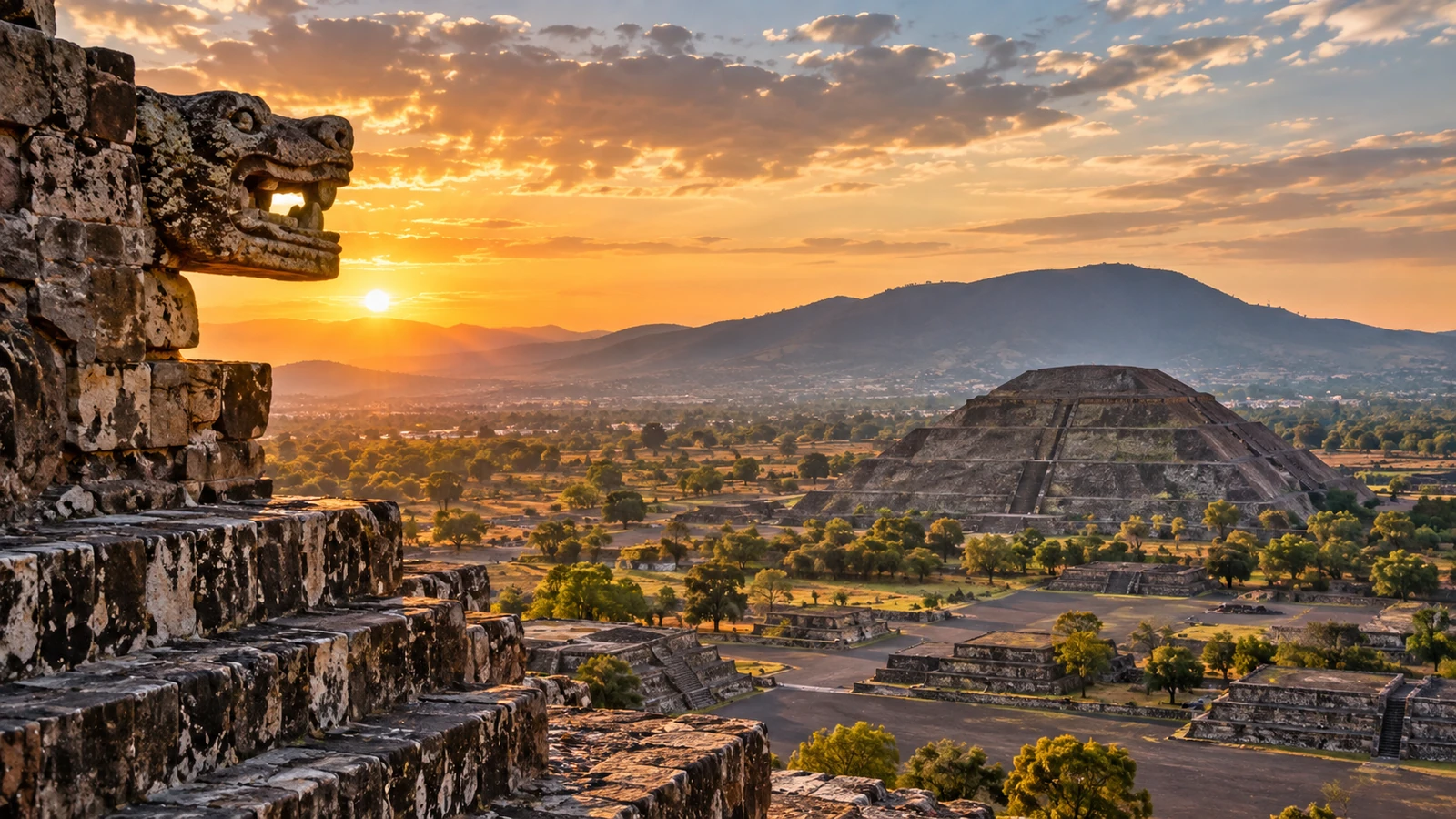
Long before the rise of the Aztec Empire, the ancient metropolis of Teotihuacan flourished in the Valley of Mexico. At its peak around 400 CE, this majestic urban center covered over 20 square kilometers and housed an estimated population of at least 125,000 residents. Famous for its sweeping Avenue of the Dead, the colossal Pyramid of the Sun, and the Pyramid of the Moon, it stood as one of the largest cities on Earth at the time. Interestingly, the identity of its original builders remains a mystery, as the site was already abandoned when the Aztecs discovered it centuries later. The Aztecs gave the city its modern name, which translates to "the place where gods were created."
6. Mexican Cuisine Is a UNESCO Intangible Cultural Heritage
In 2010, traditional Mexican cuisine became one of the first culinary traditions in the world to be inscribed on UNESCO's Representative List of the Intangible Cultural Heritage of Humanity. UNESCO recognized that Mexican food is not merely a collection of delicious recipes, but an ancient, comprehensive cultural model involving sustainable farming, ritual practices, and age-old culinary techniques. Core staples like corn, beans, squash, and chili peppers have been cultivated together for thousands of years using agricultural innovations like the chinampa raised-bed farming system. Complex dishes like mole and traditional nixtamalization processes showcase the remarkable depth of this ancient gastronomic art.
7. Chocolate Was First Cultivated by Mesoamerican Cultures
The global love affair with chocolate began in ancient Mexico, where the Olmec civilization first domesticated the cacao plant over 3,000 years ago. Later Mesoamerican cultures, including the Maya and the Aztecs, elevated cacao to a divine status, utilizing cacao beans as both daily currency and sacred offerings. They consumed chocolate not as a solid sweet candy, but as a bitter, frothed beverage spiced with chili peppers, vanilla, and native flowers. When Spanish conquistador Hernán Cortés encountered the Aztec emperor Moctezuma II, he recorded that the ruler drank dozens of golden cups of cacao daily. The Spanish brought cacao back to Europe, where sugar was added, transforming it into the modern sweet treat enjoyed worldwide today.
8. Millions of Monarch Butterflies Undertake an Epic Migration to Mexico
Every autumn, millions of eastern monarch butterflies embark on an incredible journey spanning up to 3,000 miles (4,800 kilometers) from Canada and the United States to central Mexico. They converge in the high-altitude oyamel fir forests of Michoacán and the State of Mexico to spend the cold winter months suspended in dense, shimmering clusters from tree branches. This extraordinary migratory event is considered one of the most remarkable natural phenomena on Earth. The monarch sanctuary, protected within a UNESCO World Heritage site, provides the exact microclimate necessary for the butterflies' survival before they begin their northbound return flight in early spring. Local traditions historically linked their annual arrival with the returning spirits of departed ancestors.
9. The Copper Canyon Is Four Times Larger Than the Grand Canyon
Located in the northwestern state of Chihuahua, the Copper Canyon—or Barranca del Cobre—is a massive network of six distinct, interconnected canyons. Combined, this magnificent natural wonder is four times larger and significantly deeper in several places than Arizona's famous Grand Canyon. The canyon walls feature a distinctive greenish-copper hue, giving the region its evocative Spanish name. The surrounding wilderness is home to the indigenous Rarámuri people, who are world-renowned for their astonishing long-distance running capabilities through the rugged, mountainous terrain. Travelers can experience the dramatic topography aboard the famous ChePe train, which traverses dozens of bridges and tunnels along the canyon's edge.
10. The Star Piñata Originated as a Religious Teaching Tool
Although many associate the piñata strictly with modern birthday parties, its historical roots in Mexico carry deep symbolic meaning. When 16th-century Spanish Augustinian missionaries arrived in Mesoamerica, they adapted local indigenous rituals and European customs into visual allegories to teach Catholic doctrine. The classic star-shaped piñata featured seven points, which symbolized the Seven Deadly Sins, while its bright paper wrapper represented earthly temptation. Blindfolded participants wielded a wooden stick symbolizing unyielding faith to strike and shatter the piñata, destroying evil forces to release a shower of fruit and sweets representing divine grace. Over time, this evangelical tool evolved into a beloved centerpiece of traditional holiday celebrations.
11. Day of the Dead Blends Ancient Mesoamerican and Catholic Traditions
Celebrated annually on November 1st and 2nd, Día de los Muertos (Day of the Dead) is a vibrant holiday dedicated to honoring deceased loved ones. Far from a somber or spooky occasion, it is a joyful family reunion where households construct elaborate altars called ofrendas adorned with bright orange marigolds, ornate sugar skulls, and favorite foods of the departed. The tradition seamlessly blends pre-Columbian Aztec rituals dedicated to Mictecacihuatl, the goddess of the underworld, with Catholic All Saints' and All Souls' Days. Families gather in local cemeteries to clean graves, share stories, play live music, and guide the spirits of their ancestors back home for a brief, magical visit.
12. Aztec Cartographers Mapped Landscapes Using Complex Pictographs
Before European contact, Aztec scribes and cartographers created remarkably accurate geographic maps using detailed systems of pictographs, symbols, and ideograms rather than alphabetic writing. These intricate manuscripts, known as codices, recorded natural landscape features, property boundaries, trade routes, and regional historical events. Using vivid natural dyes painted onto deerskin or handmade bark paper called amatl, Aztec artists mapped waterways, mountain passes, and tax obligations of neighboring provinces. Footprints painted along lines indicated major roads, while stylized mountain symbols designated specific settlements or kingdoms. These cartographic codices provided an invaluable administrative record that even early colonial courts relied upon to settle territorial land disputes.
13. The Maya Developed One of History's Most Accurate Calendars
The ancient Maya developed one of the most complex and accurate calendar systems in human history, demonstrating remarkable mathematical and astronomical expertise. Rather than relying on a single tracking calendar, they synchronized three distinct systems: the 260-day Tzolkin sacred cycle, the 365-day Haab' solar cycle, and the linear Long Count calendar used for tracking deep historical eras. By interlocking the 260-day and 365-day cycles, the Maya created a grand 52-year epoch known as the Calendar Round. Their astronomers calculated planetary movements, solar eclipses, and lunar phases with astonishing precision without modern telescopes, using these calculations to dictate agricultural schedules and royal ceremonies.
14. Lucha Libre Wrestling Is a Cultural Institution with Mythic Masks
Lucha Libre, or Mexican professional wrestling, is a beloved cultural institution famed for its high-flying acrobatic maneuvers, rapid sequence maneuvers, and iconic colorful masks. Emerging as a popular spectator sport in the early 20th century, Lucha Libre transformed its luchadores into real-life folk heroes who starred in comic books and feature films. The iconic leather or vinyl masks carry deep cultural significance, representing mythic superhero personae, animal spirits, or noble warriors. Unmasking an opponent during a specialized Lucha de Apuestas wager match is considered the ultimate disgrace for a wrestler, making the mask a sacred symbol of personal identity.
15. Mexico Has a Rich Baseball Heritage Dating Back to 1925
While soccer is widely considered Mexico's most popular contemporary sport, baseball holds a long, storied heritage across the nation. Founded in 1925, the Liga Mexicana de Béisbol (Mexican Baseball League) is the oldest active professional sports league in Mexico and holds Triple-A status within professional baseball organization. During the 1940s, the Mexican League famously challenged Major League Baseball by recruiting top American talent, including legendary stars from the Negro Leagues who faced racial barriers in the United States. Today, baseball enjoys massive fan bases across northern and coastal Mexican states, consistently producing world-class athletes who shine on international stages.
Sources & References
This AI-assisted post was rigorously curated and fact-checked for accuracy by:
 Martin Roháček
How fun was this article? 🤔
Tap a star to rate it
🧠 Quiz: How closely were you paying attention?
10 questions — all answers are in the article above!
Enjoyed these facts? There's more! 💌
Fresh fun facts in your inbox. No spam, ever.