The Enigmatic Crescent City: 15 Fascinating Facts About New Orleans
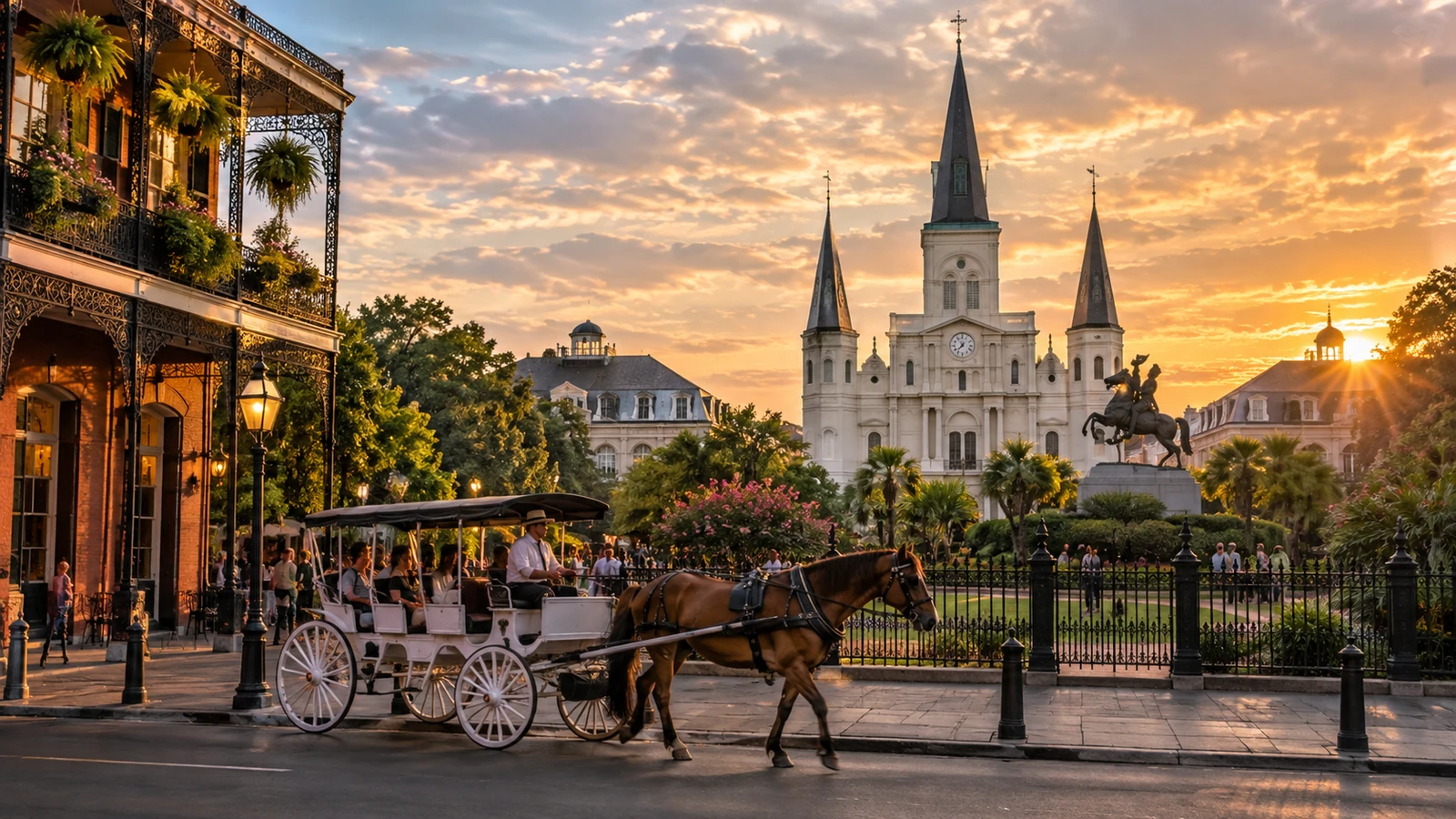
Nestled along the sweeping curves of the lower Mississippi River, New Orleans is a city unlike any other in the United States. Famous worldwide for its vibrant jazz music, Creole cuisine, and opulent Mardi Gras celebrations, the Crescent City holds a treasure trove of hidden history beneath its festive surface. From pirate heroes and secret underworld syndicate origins to uniquely adapted burial customs, the story of New Orleans is as rich as a bowl of gumbo. Delve into the surprising truths and quirky tales that make this historic southern metropolis truly one of a kind.
1. Open Containers Are Legal via the Iconic "Go-Cup"
New Orleans is legendary for its open-container culture, making it one of the few places in the United States where pedestrians can legally stroll down the street with an alcoholic drink in hand. City ordinances permit drinking in public as long as the beverage is served in a plastic container rather than glass or metal. Known locally as the "go-cup," this phenomenon allows patrons to seamlessly transition between venues in nightlife hubs like Bourbon Street and Frenchmen Street. Bars throughout the French Quarter even keep stacks of plastic cups near their exits specifically for patrons heading back onto the sidewalk. While public drunkenness remains illegal, the go-cup policy reinforces the city’s uniquely relaxed and festive atmosphere.
2. Modern Dental Floss Was Invented in the City
In a striking twist of irony for a city world-renowned for sugary beignets and pralines, New Orleans is the birthplace of modern dental floss. In 1815, a local dentist named Levi Spear Parmly began recommending that his patients clean between their teeth using a thin silk thread. Parmly considered this habit the most vital part of oral hygiene, publishing his ideas in an 1819 guide titled A Practical Guide to the Management of the Teeth. Though humans had used various materials to pick at teeth for centuries, Parmly was the first to design and promote silk thread specifically for flossing. His pioneering work in the Crescent City laid the groundwork for modern preventative dentistry.
3. Above-Ground Tombs Created the "Cities of the Dead"
Because New Orleans was constructed on swampy terrain sitting below sea level, early settlers quickly realized that traditional underground burials were impractical. High water tables meant that caskets buried in the soggy soil frequently floated back to the surface after heavy rains. To solve this macabre problem, residents began constructing elaborate above-ground stone and brick tombs. Over centuries, these burial grounds evolved into organized, miniature urban landscapes known as "Cities of the Dead," complete with cobblestone pathways and ornate family crypts. Today, historic sites like St. Louis Cemetery No. 1 showcase striking marble architecture that protects generations of New Orleans families.
4. Mardi Gras Actually Originated in Mobile, Alabama
While New Orleans is synonymous with lavish Mardi Gras celebrations, the festival's American origins actually belong to Mobile, Alabama. French-Canadian explorers Pierre Le Moyne d'Iberville and Jean-Baptiste Le Moyne de Bienville established the first North American Mardi Gras observance in 1703 at Twenty-Seven Mile Bluff near Mobile. New Orleans was not founded until 1718, though its residents quickly adopted and adapted the festive French Catholic carnival traditions. By the 19th century, New Orleans elevated the holiday into a world-famous spectacle by introducing secret-society "krewes," organized night parades, and elaborate themed floats. Though Mobile holds the historic claim as the original site, New Orleans perfected the grand celebration recognized globally today.
5. Voodoo Queen Marie Laveau Still Draws Devoted Followers
One of the most famous figures in New Orleans folklore is Marie Laveau, a 19th-century free woman of color who reigned as the undisputed Voodoo Queen of the city. Blending West African spiritual practices with Roman Catholicism, Laveau gained immense influence as a herbalist, healer, and spiritual advisor to citizens across all social classes. After her death in 1881, she was interred in St. Louis Cemetery No. 1, which rapidly became a place of pilgrimage. For decades, visitors marked three "X"s on her whitewashed tomb while whispering wishes, believing her spirit would grant their requests. Today, tour groups continue to visit her grave to pay homage to her enduring legacy in Louisiana folklore.
6. New Orleans Hosted America's First Opera Performance
Long before it became the universally acknowledged birthplace of jazz, New Orleans established itself as the opera capital of North America. The city hosted the first documented opera performance in the United States in 1796, featuring a production of Sylvain by French composer Ernest Grétry. Wealthy Creole society embraced high European art forms, leading to the construction of grand venues such as the Théâtre d'Orléans and the famous French Opera House. Throughout the 19th century, operatic troupes premiered major French and Italian works in New Orleans before they were ever performed in New York City. This rich classical tradition helped forge the city's cosmopolitan cultural identity.
 American Cities and Landmarks
From sinking mega-cities and secret subterranean vaults to monumental feats of engineering that tamed the desert, discover the hidden histories and bizarre quirks behind America's most iconic landmarks and urban centers.
See All Facts
American Cities and Landmarks
From sinking mega-cities and secret subterranean vaults to monumental feats of engineering that tamed the desert, discover the hidden histories and bizarre quirks behind America's most iconic landmarks and urban centers.
See All Facts
7. Modern Poker Was Born on the Mississippi Riverboats
The origin of modern poker can be traced directly to early 19th-century New Orleans, where French settlers played a bluffing card game known as poque. As trade expanded along the Mississippi River, English-speaking riverboat gamblers adapted the game, anglicizing its name to "poker." The game originally utilized a 20-card deck distributed among four players before expanding to the 52-card deck used worldwide today. Riverboats departing from the Port of New Orleans carried the popular card game northward, spreading it across the American frontier. Consequently, the bluffing mechanics honed in local saloons laid the groundwork for America’s quintessential gambling pastime.
8. It Is Home to the World's Oldest Continuously Operating Streetcar Line
The historic St. Charles Avenue streetcar line in New Orleans holds the official title of the world's oldest continuously operating street railway line. Opening in 1835 as the New Orleans and Carrollton Rail Road, the line initially relied on steam locomotives and mule-drawn carriages before transitioning to electric streetcars in the 1890s. Today, the iconic green streetcars still trundle along a 13-mile loop past magnificent antebellum mansions and oak canopy avenues. The system retains its historical vintage feel, featuring mahogany seats, brass trimmings, and hand-operated controls. Riding the St. Charles line remains both a vital public transit method for locals and a living historic experience for visitors.
9. The Superdome Holds a Major Engineering World Record
Dominating the city's skyline, the Caesar Superdome (originally known as the Louisiana Superdome) remains the largest fixed-dome structure in the world. Opened in 1975, the colossal stadium features a steel frame spanning an incredible eight acres without any internal supporting pillars. Beyond hosting multiple Super Bowls, Final Fours, and iconic musical concerts, the Superdome stands as a powerful symbol of urban resilience. In 2005, the massive structure famously served as a shelter of last resort for thousands of stranded residents during Hurricane Katrina. Following extensive renovations, the dome continues to serve as an architectural marvel and the beloved home of the NFL's New Orleans Saints.
10. "Second Line" Parades Turn Funerals Into Celebrations
In New Orleans, even solemn occasions like funerals are transformed into joyous public celebrations of life through the tradition of the "second line." Originating from 19th-century African American fraternal societies and mutual aid organizations, jazz funerals feature a brass band playing somber dirges on the way to the cemetery. After the burial, the band abruptly switches to upbeat, rhythmic jazz as family and friends march back through the streets. The "first line" consists of the official parade section, including the band and family, while the "second line" comprises the dancing crowd of onlookers who join in along the route. This vibrant tradition reflects the city's unique philosophy of embracing joy amidst grief.
11. The American Mafia Began in New Orleans, Not New York
While popular culture often associates the American Mafia with New York or Chicago, the earliest organized Italian crime syndicate in the United States actually took root in New Orleans. During the late 19th century, thousands of Sicilian immigrants arrived at the port city to work on the docks and in the citrus trade. Rival factions, most notably the Matranga and Provenzano families, established protection rackets and extortion schemes along the riverfront long before Prohibition. The 1890 assassination of New Orleans Police Chief David Hennessy was blamed on local mobsters, leading to one of the largest mass lynchings in American history. This dark chapter marked the first high-profile national emergence of La Cosa Nostra in America.
12. The Sazerac is Recognized as America’s First Official Cocktail
In 2008, the Louisiana Legislature officially declared the Sazerac as the official cocktail of New Orleans, cementing its status as America's oldest cocktail. The drink was originally crafted in the 1830s by Antoine Amédée Peychaud, a Creole apothecary who served an aromatic concoction of cognac and his proprietary bitters in egg-shaped cups called coquetiers. Over time, the recipe evolved to substitute rye whiskey for cognac and incorporated an absinthe rinse along with a twist of lemon peel. Served in dedicated "Sazerac Coffee Houses" throughout the 19th century, this potent beverage remains an enduring staple of classic mixology.
13. Lake Pontchartrain is Actually a Massive Estuary
Despite its historic name, Lake Pontchartrain is not a true freshwater lake, but rather a vast brackish estuary connected directly to the Gulf of Mexico. Spanning 630 square miles and measuring roughly 40 miles wide, it forms the northern boundary of New Orleans. The estuary receives fresh water from local rivers while mixing with salty tide waters flowing through the Rigolets and Chef Menteur passes. Because it is extremely shallow—averaging only 12 to 14 feet deep—the body of water is prone to dramatic storm surges during hurricanes. Crossing over its middle is the Lake Pontchartrain Causeway, which stretches nearly 24 miles and holds the Guinness record for the longest continuous bridge over water.
14. Pirate Jean Lafitte Played a Crucial Role in the Battle of New Orleans
During the War of 1812, the notorious French-born privateer Jean Lafitte and his band of Baratarian smugglers operated a lucrative pirating haven in the bayous south of New Orleans. Despite being declared outlaws by American authorities, Lafitte rejected a lucrative bribe from the British Navy to assist in invading the city. Instead, he offered his men, extensive supply of gunpowder, and heavy artillery to General Andrew Jackson in exchange for pardons. During the decisive Battle of New Orleans in January 1815, Lafitte's skilled gunners provided devastating firepower that secured an astounding American victory over superior British forces, turning the pirate into a local war hero.
15. Local Traffic Laws Prohibit Hands-Free Bicycling
New Orleans maintains a variety of unique historical laws, including a specific ordinance that prohibits cyclists from riding a bicycle without keeping both hands on the handlebars. Under Section 154-1402 of the New Orleans Municipal Code, bicyclists are explicitly forbidden from performing trick riding or carrying any packages that prevent them from maintaining two hands on the steering mechanism at all times. While modern city infrastructure has added miles of dedicated bike lanes across neighborhoods like the Bywater and Mid-City, this safety rule remains officially on the books. It stands as a quirky reminder of early 20th-century traffic regulations enacted as bicycles first flooded urban streets.
Sources & References
This AI-assisted post was rigorously curated and fact-checked for accuracy by:
 Martin Roháček
How fun was this article? 🤔
Tap a star to rate it
🧠 Quiz: How closely were you paying attention?
10 questions — all answers are in the article above!
Enjoyed these facts? There's more! 💌
Fresh fun facts in your inbox. No spam, ever.