The Uncharted Odyssey: 15 Fascinating Facts About the Lewis and Clark Expedition
Forget the myth of two lone explorers wandering an empty wilderness. The Lewis and Clark Expedition was a massive military operation reliant on Indigenous diplomacy, fraught with disease, and driven by geopolitics, not just adventure. Their journey reveals a complex tapestry of survival and unexpected truths.
1. Meriwether Lewis and William Clark were actually not co-captains in the eyes of the United States military.
Despite President Thomas Jefferson's promise that the two men would share equal rank and command, the War Department outright refused to promote Clark to captain. He officially remained a lieutenant throughout the entire journey. To maintain unshakeable authority and morale among the enlisted men, Lewis fiercely concealed this bureaucratic snub from the crew, and the two explorers treated each other as absolute equals in every command decision they made over the course of three years.
2. The modern trail of the expedition can still be traced today by following latrine pits laced with mercury.
To combat severe digestive issues and suspected syphilis, Dr. Benjamin Rush provided the expedition with potent laxative pills containing massive amounts of mercury chloride, colloquially known as Rush's Thunderbolts. Because mercury is a heavy metal that does not degrade easily in the environment, modern archaeologists have successfully identified several of the expedition's undocumented campsites by testing the soil for unique, heavy mercury deposits left behind in their latrine trenches.
3. Sacagawea did not serve as the primary guide for the expedition.
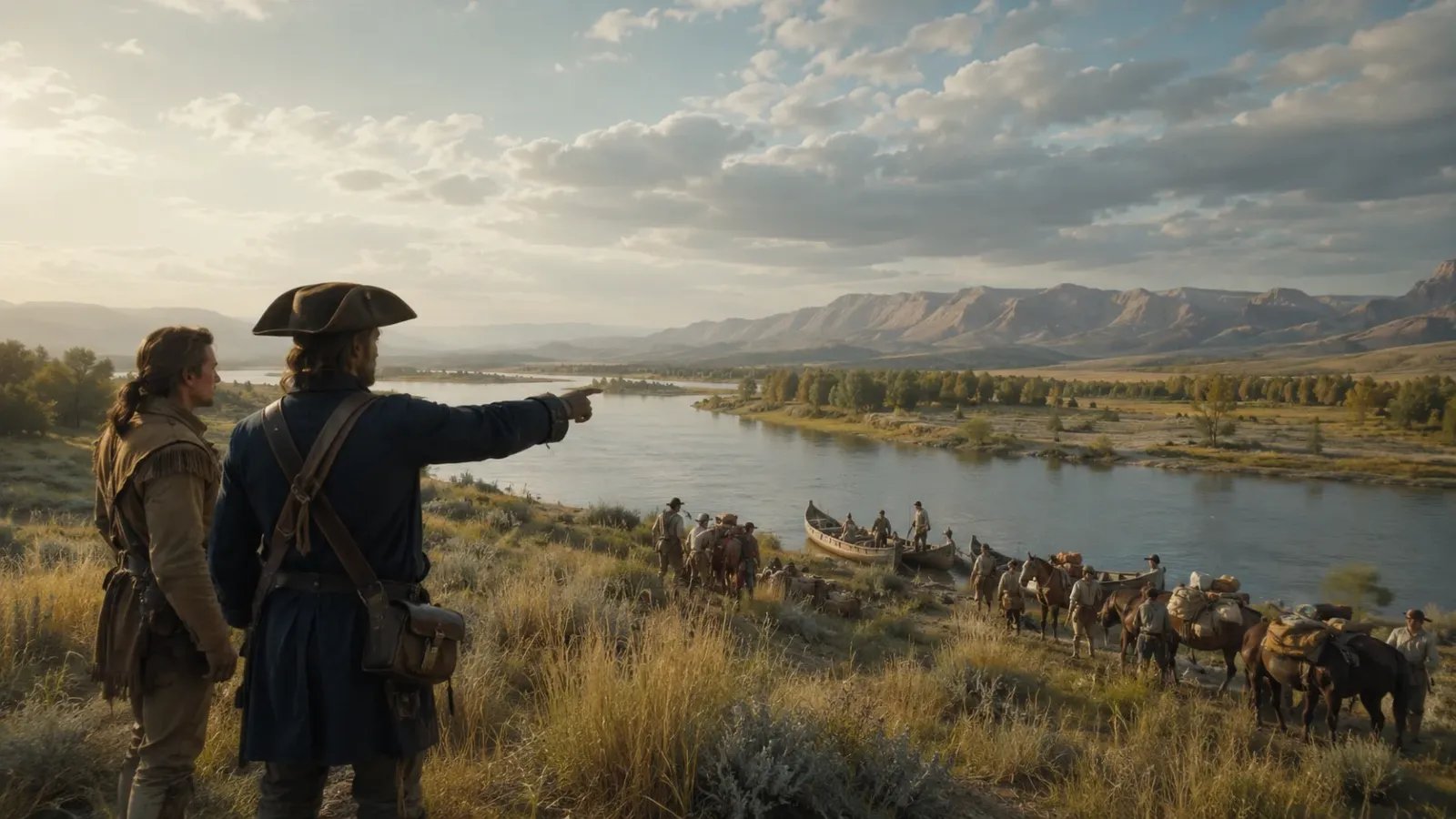
A persistent historical myth paints the young Shoshone woman leading the way through uncharted territory with a pointed finger, but she was primarily brought along as an interpreter and a living symbol of peace. Because Native American war parties rarely traveled with women and infants, her presence instantly signaled to wary tribes that the expedition had non-hostile intentions. While she did recognize a few crucial geographical landmarks in her native Shoshone territory, she was not actively navigating the route.
4. The expedition was outfitted with a state-of-the-art air rifle that could fire up to forty shots without reloading.
Lewis purchased a Girandoni air rifle, a marvel of early pneumatic engineering used primarily by the Austrian military. He used this silent, smokeless weapon heavily in demonstrations for Native American chiefs to awe them with American technological superiority. The rifle relied on a highly pressurized air reservoir built into its iron buttstock, and its ability to fire repeatedly without the use of flint or gunpowder was seen as almost magical to those who witnessed it.
5. The only member of the expedition to die on the journey perished from a ruptured appendix, not an attack or starvation.
Sergeant Charles Floyd died just a few months into the journey in August 1804. He suffered from what historians and medical experts now universally agree was acute appendicitis. Given the primitive state of abdominal surgery in the early nineteenth century, Floyd would have died even if he had been resting comfortably in the most advanced hospital in Philadelphia, making his death a tragic inevitability rather than a failure of the expedition's wilderness survival skills.
6. Lewis and Clark sent a living prairie dog all the way to Thomas Jefferson in Washington.
Encountering the vast prairie dog towns of the Great Plains, the men were absolutely fascinated by these barking rodents, which they initially called barking squirrels. They spent hours pouring buckets of water down a labyrinthine burrow to flush one out, ultimately capturing it alive. The animal was shipped back down the Missouri River, surviving a grueling, months-long journey to the East Coast, where an astonished President Jefferson kept it in the White House before sending it to a natural history museum.
 Explorers and Seafarers
From the freezing waters of the North Atlantic to the bustling spice ports of the Indian Ocean, explorers and seafarers have relentlessly pushed the boundaries of the known world. Discover the complex, dramatic, and often ruthless realities behind history's most famous maritime and overland expeditions.
See All Facts
Explorers and Seafarers
From the freezing waters of the North Atlantic to the bustling spice ports of the Indian Ocean, explorers and seafarers have relentlessly pushed the boundaries of the known world. Discover the complex, dramatic, and often ruthless realities behind history's most famous maritime and overland expeditions.
See All Facts
7. The expedition was technically a heavily armed military unit called the Corps of Discovery.
Pop culture often frames the journey as a rugged scientific camping trip, but it was an official deployment of the United States Army. The core group consisted of enlisted soldiers who were subject to strict military discipline, including official courts-martial and corporal punishment for infractions like falling asleep on guard duty or insubordination. This rigid military structure was absolutely essential for maintaining order during a multi-year deployment in unforgiving, isolated territory.
8. The explorers consumed upwards of nine pounds of meat per man, per day, just to maintain their caloric needs.
The physical demands of rowing heavy wooden keelboats upstream, hauling canoes over massive portages, and surviving freezing temperatures required an extraordinary amount of energy. The men burned thousands of calories a day, requiring their hunters to shoot massive quantities of elk, deer, and bison. When wild game was scarce, particularly during their brutal crossing of the snow-packed Bitterroot Mountains, they were forced to eat their pack horses and even purchased dogs from local tribes to stave off starvation.
9. The Spanish government viewed the expedition as an act of espionage and sent mercenaries to intercept and arrest them.
Spain still claimed vast swathes of the American West and correctly suspected that Jefferson's expedition was a scouting mission for future territorial expansion. General James Wilkinson, a high-ranking American military officer who was secretly a paid spy for Spain, tipped off the Spanish authorities. In response, Spain dispatched at least four separate armed posses from New Mexico to hunt down Lewis and Clark, but the interceptors never managed to cross paths with the explorers in the vast wilderness.
10. The expedition members voted on where to build their winter camp in 1805, marking a historical first for democratic participation.
Upon finally reaching the Pacific Ocean, harsh winter weather forced the group to build a fort to survive the season. Lewis and Clark held a formal vote to decide on the location of Fort Clatsop, allowing every member of the party to cast a ballot. Notably, this included York, an enslaved African American man, and Sacagawea, an Indigenous woman, making it a remarkably rare instance of minorities and women participating in a democratic decision in early American history.
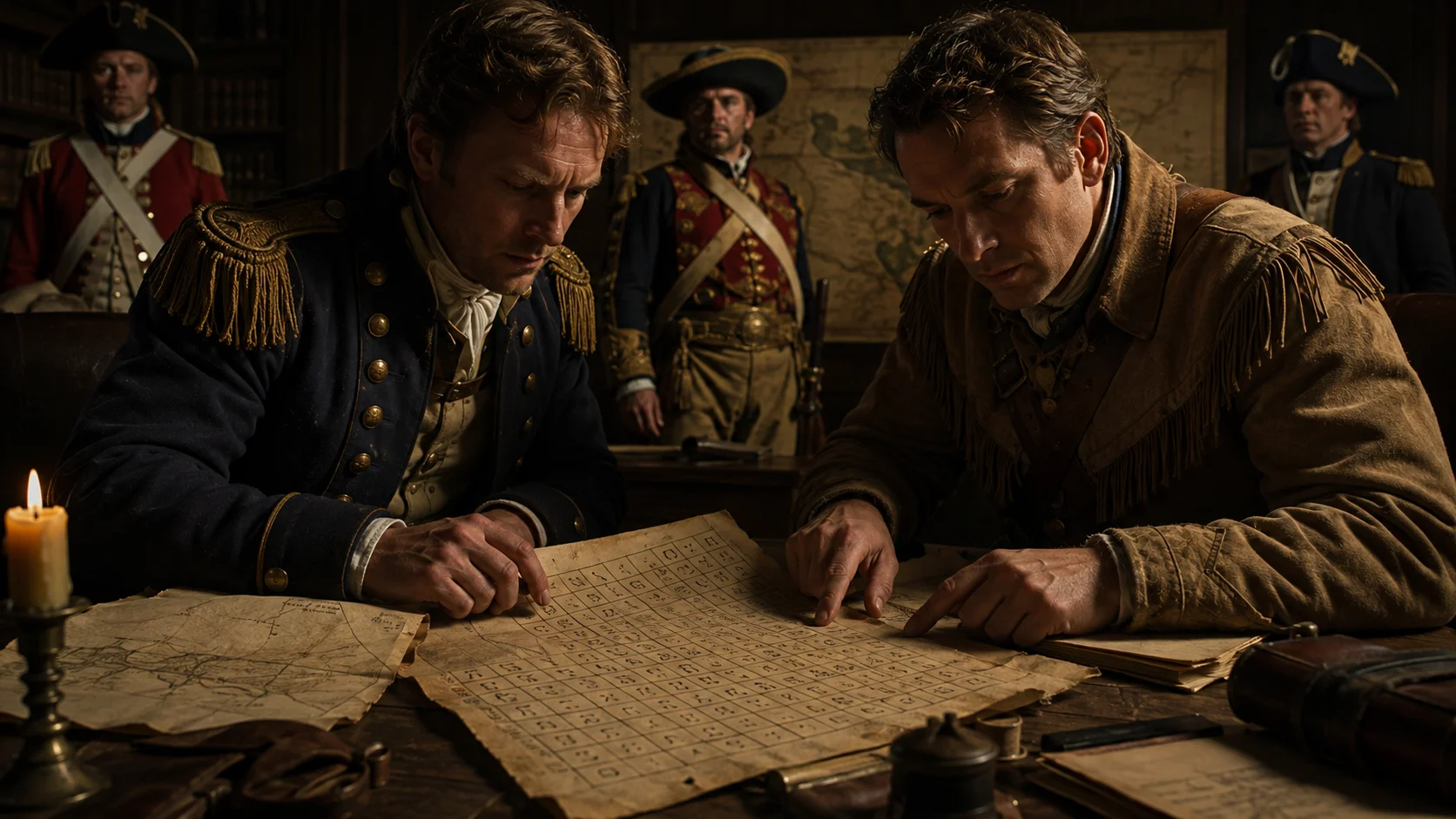
11. Thomas Jefferson gave Lewis a secret cipher to encrypt messages in case they fell into the hands of foreign agents.
The geopolitical stakes of the expedition were incredibly high, with British, Spanish, and French interests all converging on the North American continent. Jefferson provided Lewis with a complex keyword-based encryption method to protect vital strategic information regarding troop movements, native alliances, or territorial vulnerabilities. Although Lewis never ultimately needed to use the cipher, its inclusion highlights the covert, intelligence-gathering nature of the mission.
12. The expedition almost ended in disaster over a stolen rifle during their return trip.
While relations with Native tribes were often peaceful, a fatal skirmish occurred with members of the Blackfeet Nation in July 1806. A group of Blackfeet warriors attempted to steal American rifles and horses in the early hours of the morning. In the ensuing chaos, Lewis and his men killed two Blackfeet men, making them the only Native Americans to die by violence at the hands of the expedition. The explorers were forced to flee on horseback, riding relentlessly for a day and a night to escape retaliation.
13. The party produced the first accurate maps of the Rocky Mountains, fundamentally altering global geography.
Prior to the expedition, the prevailing geographical theory held that the Rocky Mountains were a single, narrow ridge easily crossed in a day or two, much like the Appalachians. Lewis and Clark's grueling crossing of the Bitterroot Range shattered this illusion, proving that the continent was divided by a massive, complex cordillera spanning hundreds of miles. Clark's meticulous cartography provided the world with the first realistic understanding of the sheer scale of the North American landmass.
14. Meriwether Lewis suffered from severe depression and tragically took his own life just three years after returning.
Despite returning as a national hero and being appointed Governor of the Louisiana Territory, Lewis struggled profoundly with mental illness, alcoholism, and intense bureaucratic pressures. He found it exceedingly difficult to adapt to civilian life and administrative duties after the adrenaline and clear purpose of the frontier. In 1809, while traveling to Washington to resolve financial disputes regarding his expedition expenses, he died by suicide at an inn in Tennessee, a dark epilogue to his historic triumph.
15. The expedition technically failed in its primary objective of finding the Northwest Passage.
Thomas Jefferson's greatest hope for the mission was the discovery of an all-water route connecting the Missouri River to the Pacific Ocean, which would have revolutionized global trade with Asia. Lewis and Clark's exploration conclusively proved that no such contiguous water route existed. While they failed to find the Northwest Passage, their secondary achievements in botany, zoology, ethnography, and strategic territorial claiming ultimately overshadowed this initial commercial failure, cementing their legacy in history.
Sources & References
This AI-assisted post was rigorously curated and fact-checked for accuracy by:
 Martin Roháček
How fun was this article? 🤔
Tap a star to rate it
🧠 Quiz: How closely were you paying attention?
10 questions — all answers are in the article above!
Enjoyed these facts? There's more! 💌
Fresh fun facts in your inbox. No spam, ever.