The Imperial Crossroads: 15 Fascinating Facts About Vienna
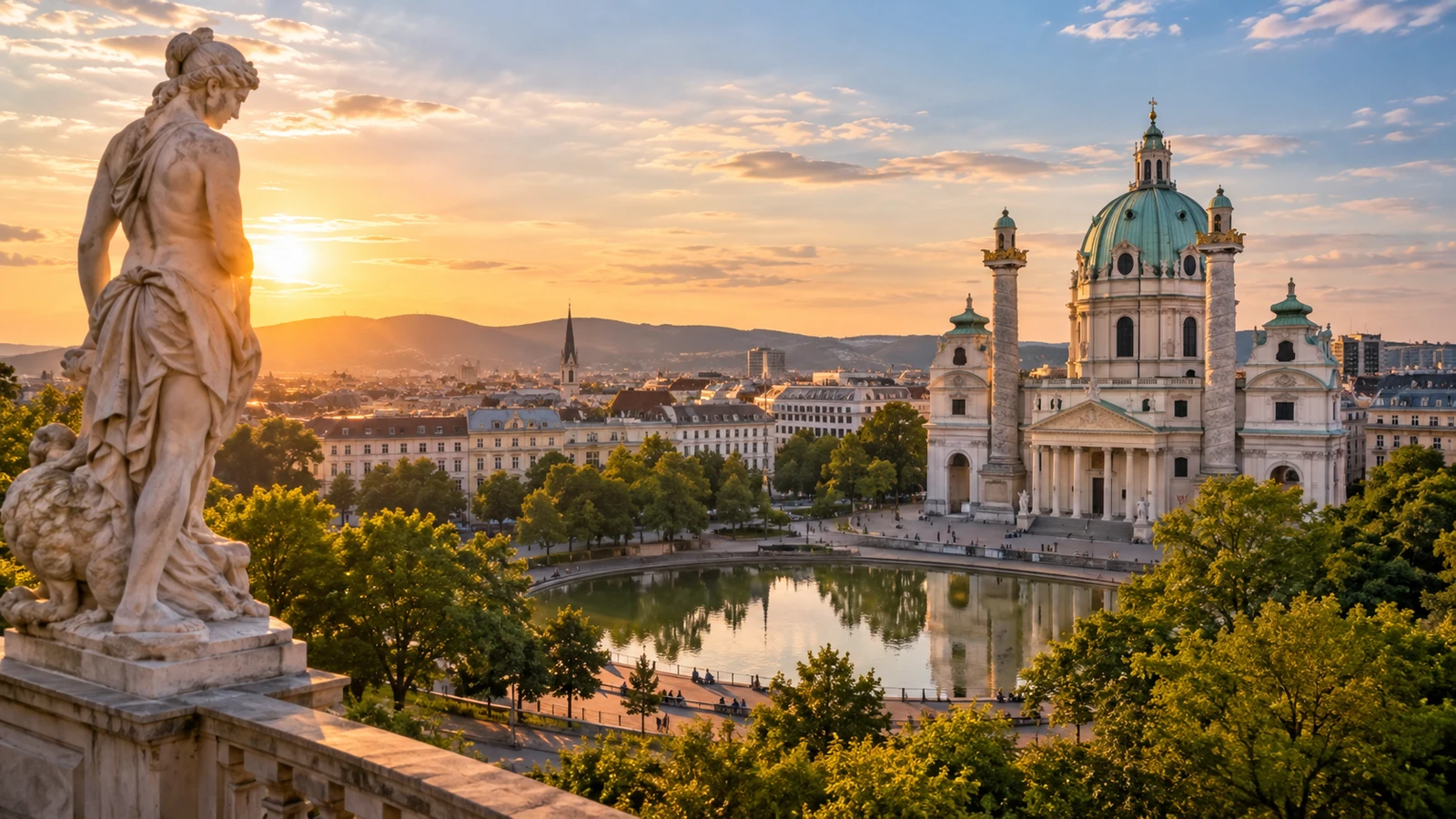
Vienna is far more than a picturesque backdrop of imperial palaces and classical waltzes. Beneath its refined facade lies a world of espionage hubs, secret subterranean networks, and surprisingly wild urban wildlife. From alpine spring tap water to the true origins of the croissant, Austria's capital holds centuries of astonishing history. Explore fifteen captivating facts that reveal the hidden side of this legendary European capital.
1. Vienna Has Long Been Considered the Spy Capital of the World
For decades, international intelligence agencies have treated Vienna as a premier global hub for espionage. Thanks to Austria's strict Cold War neutrality laws and its unique legal code—which historically only penalized spying if it explicitly targeted the Austrian state—foreign agents have operated here with relative freedom. The city's strategic position at the crossroads of Western and Eastern Europe further cemented its status during the 20th century. Today, major global organizations like the United Nations, OPEC, and the IAEA call Vienna home, providing perfect cover for diplomat-spies. Experts estimate that thousands of intelligence operatives continue to work within the city's borders.
2. The Croissant Originated in Vienna, Not Paris
While the croissant is universally associated with French pastry shops, its true historical ancestor was born in Vienna. Known as the Kipferl, this crescent-shaped roll dates back to at least the 13th century in Austria. Popular legend claims Viennese bakers created the modern crescent shape in 1683 after hearing Ottoman troops tunneling beneath the city walls during the Siege of Vienna. Alerting the garrison saved the city, and the victory was celebrated with pastries shaped like the Ottoman crescent moon. Austrian-born Marie Antoinette later introduced the pastry to Paris, where French bakers eventually adapted it using puffed pastry dough.
3. The Snow Globe Was Invented in Vienna by Accident
In 1900, a Viennese surgical instrument manufacturer named Erwin Perzy accidentally created the world’s first snow globe. Perzy was attempting to boost the illumination of the newly invented electric lightbulb for operating rooms. He placed a glass globe filled with water and ground glass in front of a lamp, hoping to magnify the light. When the particles drifted slowly to the bottom like falling snow, he realized he had made something visually magical instead of a practical light amplifier. Perzy added a tiny pewter model of a church, patented his invention, and launched a thriving family business that still operates today.
4. A Massive Network of Secret Tunnels and Sewers Lies Beneath the Streets
Deep beneath Vienna's elegant imperial boulevards lies an intricate network of subterranean cellars, catacombs, and historic sewers. For centuries, these underground passages served diverse purposes, from aging local wines to offering secret escape routes during foreign invasions. During World War II, residents used the interconnected basements as makeshift bomb shelters to survive air raids. The city's massive Victorian-era sewer network achieved international fame through the iconic 1949 film noir classic The Third Man. Today, adventurous tourists can take guided underground tours to explore this hidden subterranean world.
5. Vienna Has Its Own Unique German Dialect Called Wienerisch
While High German is the official written language, locals speak a distinct and colorful dialect known as Wienerisch. Characterized by a noticeably softer, more melodic cadence, the dialect features unique vocabulary heavily influenced by historical trade, the Austro-Hungarian Empire, and Yiddish. Its linguistic nuances include a famous cultural trait called Wiener Grant, a charmingly morbid and cynical humor native to the city's residents. Standard German speakers often find Wienerisch difficult to comprehend without prior exposure. Despite modern homogenization, the dialect remains a fiercely guarded symbol of Viennese cultural identity.
6. Vienna Home to the World’s Oldest Continuously Operating Zoo
Tiergarten Schönbrunn, located on the lush grounds of the Schönbrunn Palace, holds the title of the world's oldest continuously operating zoo. Established in 1752 by Holy Roman Emperor Francis I as an imperial menagerie, it initially opened only to the royal family and invited guests. By 1779, the general public was granted access free of charge, transforming royal entertainment into a civic institution. Today, the zoo seamlessly blends beautifully preserved Baroque architecture with modern, humane animal enclosures. It has repeatedly been voted Europe's best zoo and leads global conservation efforts for endangered species.
7. You Can Rent Formal Ball Gowns at Local Business Establishments
Vienna’s social calendar revolves around its legendary ball season, hosting more than 450 formal galas every winter. To accommodate the massive demand for black-tie attire, the city developed a thriving rental ecosystem where formalwear is remarkably accessible. Visitors and locals alike can rent high-end tuxedoes and elaborate ball gowns through specialized shops and dry-cleaning establishments. The tradition demands strict adherence to historic dress codes, requiring floor-length gowns for women and tailcoats or tuxedos for men. From the prestigious Vienna Opera Ball to trade-specific galas, dressing like royalty is a seasonal requirement for tens of thousands of attendees.
8. The Central Cemetery Created a Special Neighborhood for Musical Geniuses
Vienna’s expansive Central Cemetery, or Zentralfriedhof, features a dedicated section known as the honor graves for master composers. To bolster the cemetery's prestige after its 1874 opening, city officials exhumed and relocated the remains of musical giants like Ludwig van Beethoven and Franz Schubert to this central location. A grand monument dedicated to Wolfgang Amadeus Mozart stands among them, even though his actual physical remains lie in an unmarked mass grave at St. Marx Cemetery. Today, visitors can stroll along manicured paths to pay respect to Brahms, Strauss, and other musical icons side by side. It remains one of the largest burial grounds in Europe, housing over two million graves.
9. The Prater's Giant Ferris Wheel Barely Survived Post-War Demolition
The Wiener Riesenrad, the iconic giant Ferris wheel in the Prater amusement park, came shockingly close to permanent destruction. Constructed in 1897 to celebrate Emperor Franz Joseph’s Golden Jubilee, it survived as a beloved landmark until Allied bombing and fire severely damaged it near the end of World War II. After the war, local authorities lacked the municipal funds required to rebuild the scorched iron structure and slated it for complete demolition. A private investor stepped in at the last moment, financing a restoration that saw only 15 of its original 30 cabins reinstalled to lighten the load. Today, it stands as one of the world’s oldest operating Ferris wheels.
10. Vienna Produces More Wine Within Its City Limits Than Any Other Capital
Vienna holds the distinction of producing more wine within its official municipal boundaries than any other national capital in the world. Approximately 700 hectares of vineyards carpet the surrounding rolling hills, producing over two million liters of wine annually. The city is especially famous for Wiener Gemischter Satz, a protected traditional wine made by field-blending at least three different white grape varieties planted together. Locals and tourists gather to drink fresh vintages at traditional wine taverns called Heurigen tucked into the suburban hillsides. These cozy taverns are legally permitted to serve only their own self-produced wines alongside simple homemade food.
11. Spanish Riding School Stallions Are Born Dark and Turn White Over Time
The world-famous Lipizzaner stallions of Vienna’s Spanish Riding School are renowned for their brilliant white coats, but they aren't born that way. Foals are actually born with dark coats—ranging from dark bay and brown to coal black—and slowly change color over six to ten years. A genetic mutation causes their hair to gradually turn light gray and eventually bright white as they reach full maturity. The riding school, situated in the historic Hofburg Palace, has practiced classical dressage for over 450 years. Only a tiny fraction of dark stallions never turn white, and tradition considers keeping one dark stallion in the stable a good luck charm.
12. Viennese Coffee Culture Is Recognized by UNESCO as Intangible Heritage
In 2011, UNESCO officially added Viennese coffeehouse culture to its Intangible Cultural Heritage list. Unlike modern fast-paced coffee chains, traditional Viennese cafés encourage patrons to treat the space as an extended living room. Ordering a single cup of coffee grants you the right to sit at a marble table for hours on end to read newspapers, play chess, or write. Waiters traditionally serve every coffee on a small silver tray accompanied by a glass of cold water topped with an inverted spoon. This unhurried social atmosphere has nurtured generations of writers, philosophers, and artists.
13. Freud Pioneered Psychoanalysis at Berggasse 19 in Vienna
Vienna served as the birthplace of modern psychoanalysis, primarily due to the groundbreaking work of Dr. Sigmund Freud. Freud moved to the city as a child and lived at Berggasse 19 for nearly 50 years, where he developed his transformative theories on dreams, the subconscious mind, and talk therapy. His home and consulting room saw the creation of seminal works like The Interpretation of Dreams before he was forced to flee Nazi persecution in 1938. Today, Berggasse 19 functions as the Sigmund Freud Museum, preserving his original waiting room and extensive collection of antiquities. Visitors from around the globe come to walk the hallways where modern psychology was defined.
14. City Tap Water Flows Directly from Mountain Springs in the Alps
Residents and tourists in Vienna enjoy some of the highest-quality tap water of any major city in the world, sourced directly from the Alps. The city's pristine drinking water travels through massive high-pressure pipelines known as the Hochquellenleitungen, constructed in 1873 and 1910. Water flows entirely by gravity from mountain springs in the Schneeberg and Rax regions over 60 miles (100 km) away, requiring no electrical pumps. The spring water arrives in urban taps cool, pure, and rich in natural minerals without chemical treatment. In fact, Vienna was the first municipality in the world to place its drinking water supply under constitutional protection.
15. A Colony of Wild European Hamsters Lives in the Central Cemetery
One of Vienna's most charming and surprising wildlife populations is a thriving colony of wild European hamsters. These wild rodents have established a surprising stronghold within the lush flowerbeds and grassy lawns of the Central Cemetery. Unlike tiny pet hamsters, European hamsters can grow up to a foot long and are famously territorial and feisty when approached. They feed on grave flowers, fallen seeds, and even the candle wax from oil lamps left at gravestones. Photographers and nature lovers regularly visit the cemetery grounds to spot these colorful, critically endangered animals in their unusual urban sanctuary.
Sources & References
This AI-assisted post was rigorously curated and fact-checked for accuracy by:
 Martin Roháček
How fun was this article? 🤔
Tap a star to rate it
🧠 Quiz: How closely were you paying attention?
10 questions — all answers are in the article above!
Enjoyed these facts? There's more! 💌
Fresh fun facts in your inbox. No spam, ever.