The Resilient Survivor: 15 Fascinating Facts About Cockroaches
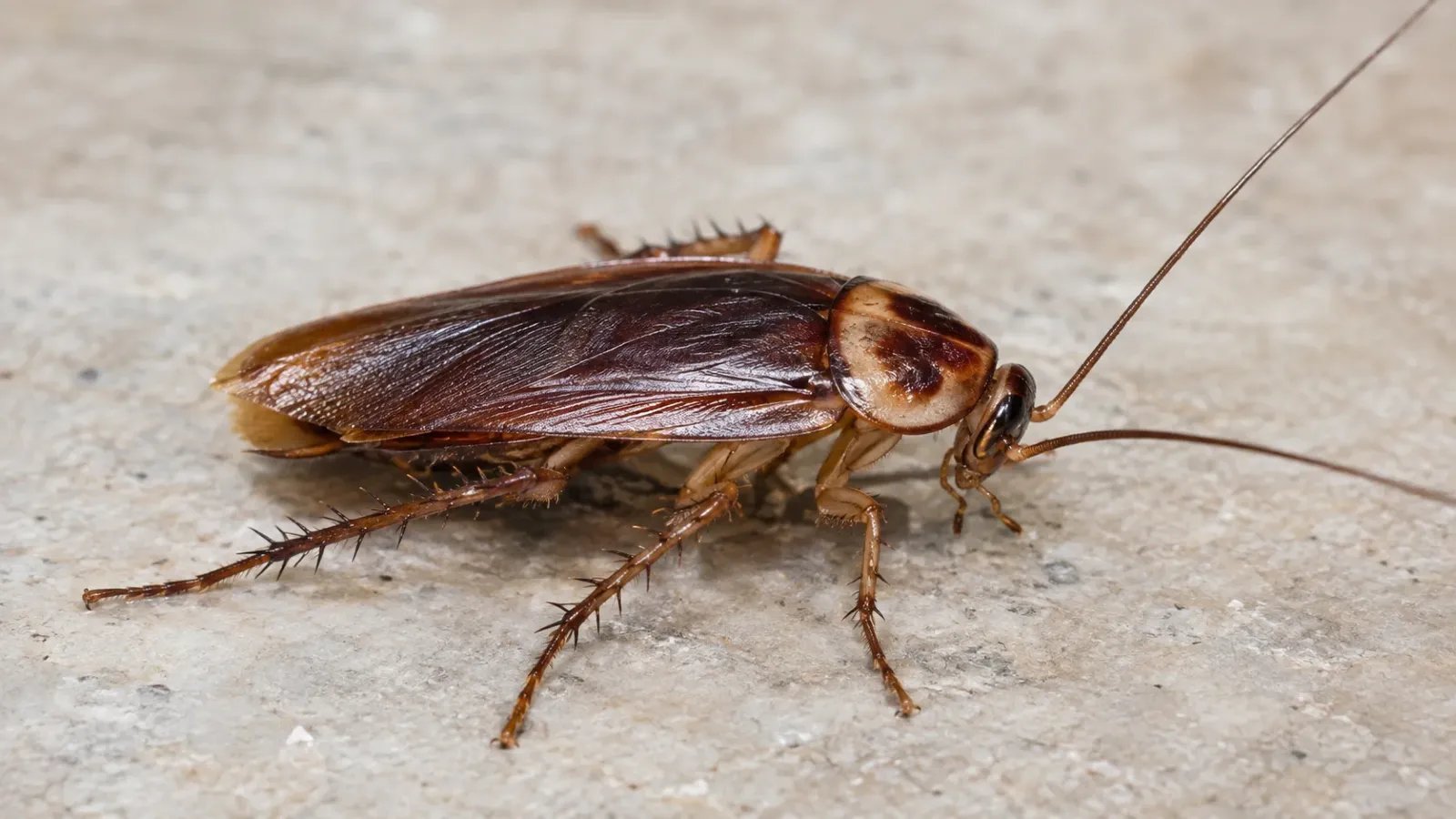
Despised as filthy pests, cockroaches are actually meticulous groomers, and their fame as nuclear survivors is a total myth. These ancient insects possess complex social structures, unique personalities, and astonishing biological quirks. Prepare to abandon your preconceptions as we explore the hidden intelligence and evolutionary marvels of a deeply misunderstood creature.
1. Cockroaches would not actually survive a global nuclear apocalypse.
Despite the pervasive urban legend, cockroaches are quite vulnerable to radiation compared to other insects. While they can withstand about ten times the radiation of a human, a blast equivalent to the Hiroshima bomb or a direct nuclear fallout would easily kill them. Other insects, like the Habrobracon wasp or even the common fruit fly, possess significantly higher radiation resistance, effectively debunking the myth that roaches would inherit a radioactive Earth.
2. A cockroach can live for over a week without its head.
Unlike humans, cockroaches do not rely on their brains to breathe; they respire through small holes called spiracles located along the sides of their bodies. Furthermore, their open circulatory system operates on low blood pressure, meaning decapitation does not lead to rapid bleeding out. The only reason a headless cockroach eventually dies is from dehydration, as it lacks a mouth to consume water.
3. Cockroaches are actually fastidious groomers that find the touch of humans disgusting.
While commonly associated with grime, cockroaches spend an enormous amount of time cleaning themselves, much like cats. When a human touches a cockroach, the oils and sweat from our skin interfere with the insect's delicate antennae, which are vital for smelling food and finding mates. Consequently, a roach will often flee and immediately begin a rigorous grooming routine to strip the human residue from its body.
4. The vast majority of cockroach species are entirely harmless to humans and never enter homes.
Out of the approximately 4,600 known species of cockroaches worldwide, fewer than 30 are considered pests. The rest inhabit forests, caves, and leaf litter, playing crucial ecological roles as decomposers that break down decaying organic matter. These wild roaches release nitrogen into the soil, acting as natural fertilizer that supports the growth of forests and local ecosystems.
5. Cockroaches possess distinct personalities and exhibit individualized behavior within a group.
Scientific studies have revealed that individual cockroaches display measurable differences in boldness and sociability. When placed in a new environment, some roaches will immediately venture out to explore and forage, acting as brave pioneers, while others remain securely hidden in the dark, acting as cautious followers. This diversity in personality traits helps the colony as a whole survive, balancing the discovery of new resources with the safety of the group.
6. Cockroaches can hold their breath for up to forty minutes to prevent water loss.
To regulate their internal moisture, cockroaches can deliberately shut their spiracles, the breathing tubes located along their abdomens. This biological trick was historically thought to be an adaptation for surviving underwater, but modern entomologists recognize it as an evolutionary strategy to conserve water in arid environments. This remarkable respiratory control is a key reason they can survive in incredibly dry conditions.
7. Female cockroaches can reproduce for years after a single mating session by storing sperm.
A female cockroach has a specialized internal organ called a spermatheca, which allows her to store sperm from a single male for an extended period. She can use this reserve to continuously fertilize her eggs, producing multiple egg cases, known as oothecae, over the course of her lifetime without ever needing to mate again. Some species can even reproduce asexually through a process called parthenogenesis if no males are present.
8. Cockroaches have been roaming the Earth since before the dinosaurs existed.
Fossil evidence indicates that primitive roach-like insects date back to the Carboniferous period, roughly 320 million years ago. This means they survived the Permian-Triassic extinction event, the deadliest mass extinction in Earth's history, long before the first dinosaurs evolved. Their fundamental body plan has remained largely unchanged over millions of years, proving it to be one of the most successful evolutionary designs in the animal kingdom.
9. The milk produced by the Pacific beetle cockroach is one of the most nutritious substances on the planet.
Unlike most insects that lay eggs, the Diploptera punctata gives birth to live young and nourishes its growing embryos with a nutrient-rich liquid secreted in its brood sac. Scientists discovered that this cockroach milk forms into protein crystals in the babies' stomachs, containing three times the energy of an equivalent mass of dairy cow milk. These crystals are a complete food, packed with essential amino acids, fats, and sugars.
10. Cockroaches rely on symbiotic bacteria in their bodies to synthesize vital nutrients they cannot get from their diet.
Deep within the fat bodies of cockroaches live specialized bacteria called Blattabacterium. This symbiotic relationship is millions of years old; the bacteria process the roach's nitrogen waste into usable amino acids, effectively acting as an internal recycling plant. Without these microscopic companions, cockroaches would be unable to survive on the nutrient-poor diets of cardboard, glue, and dead skin that they often consume in urban environments.
11. The American cockroach has an incredibly expansive genome that gives it superhuman detoxification abilities.
When scientists mapped the DNA of the American cockroach, they found it possessed one of the largest insect genomes ever sequenced, second only to the locust. A massive portion of this genetic code is dedicated to producing enzymes that break down toxins, allowing the insect to safely consume poisonous or decaying matter. This genetic bulk also includes an expanded set of genes for a highly advanced immune system that fights off the infectious bacteria found in filthy environments.
12. Cockroaches possess an internal biological GPS system that navigates using Earth's magnetic field.
Similar to migratory birds, certain species of cockroaches are capable of magnetoreception. They use specialized proteins in their bodies to detect the direction of magnetic fields, allowing them to orient themselves and navigate in pitch-black environments. When researchers placed roaches in artificial magnetic fields, they observed the insects changing their resting directions, proving they possess a sophisticated, built-in compass.
13. Termites are actually highly evolved, social cockroaches.
For decades, termites were classified in their own distinct order of insects, but modern genetic sequencing forced a massive taxonomic reorganization. It turns out that termites branched off from a wood-eating cockroach ancestor roughly 150 million years ago. Today, scientists officially classify termites as a specialized, eusocial family within the cockroach order, Blattodea, effectively making them roaches that learned to build complex societies.
14. A cockroach can run at speeds equivalent to a human sprinting at over two hundred miles per hour.
Relative to their body size, cockroaches are among the fastest terrestrial animals on the planet. An American cockroach has been recorded moving at fifty body lengths per second, which is about three miles per hour in absolute terms. To achieve this incredible speed without tumbling, they use an alternating tripod gait, keeping three legs on the ground at all times to maintain perfect stability while darting away from predators.
15. Cockroaches use democratic decision-making to choose their nesting sites.
When a colony of cockroaches outgrows its current home, scout roaches seek out new shelters and report back. The insects do not have a leader; instead, they use a quorum-sensing mechanism where scouts continually visit prospective sites. Once a critical threshold of roaches gathers at a specific new shelter, the sheer density of peers signals a collective agreement, and the rest of the colony moves en masse to the newly chosen home.
Sources & References
This AI-assisted post was rigorously curated and fact-checked for accuracy by:
 Martin Roháček
How fun was this article? 🤔
Tap a star to rate it
🧠 Quiz: How closely were you paying attention?
10 questions — all answers are in the article above!
Enjoyed these facts? There's more! 💌
Fresh fun facts in your inbox. No spam, ever.