The Formidable Architects: 15 Fascinating Facts About Wasps
While wasps are often feared for their potent stings and territorial behavior, these remarkable insects are far more complex than simple summer pests. From inventing true paper and driving wine fermentation to performing precise neurosurgery on prey, wasps play vital roles in ecosystems worldwide. Most species are actually solitary, docile, and essential for controlling agricultural pests. Discover the surprising biology, astounding intelligence, and ecological importance of these misunderstood insects.
1. Smooth Stingers Allow Multiple Attacks
Unlike honeybees, whose barbed stingers get ripped from their bodies upon stinging mammals, most stinging wasps possess smooth stingers. This anatomical difference allows a single female wasp to sting a target repeatedly without suffering fatal internal injuries. Because the weapon slides easily out of skin, the wasp remains unharmed and capable of continuing its defense or attack. Furthermore, the stinger doubles as an ovipositor in primitive sawflies and solitary species, though aculeate wasps evolved it primarily for defense and prey subdual. This evolutionary adaptation makes encounters with aggressive social species particularly dangerous for humans.
2. The Vast Majority Are Solitary Hunters
While yellowjackets and hornets give the insect family a reputation for terrifying swarms, over eighty-five percent of all wasp species are completely solitary. These independent insects do not live in colonies, build massive paper nests, or serve a central queen. Instead, solitary females build modest individual burrows or mud cells where they store paralyzed prey for a single offspring. Because they have no massive colony to defend, solitary wasps are remarkably docile and almost never sting humans unless directly crushed or handled. This quiet majority plays a vital role in ecosystems without ever crossing paths with human fear.
3. Fig Wasps Are Completely Digested by the Fruit They Pollinate
The intricate relationship between fig trees and microscopic fig wasps represents one of nature's most extraordinary mutualisms. A female fig wasp must squeeze through a tiny opening in an unripe fig to lay her eggs, often losing her wings and antennae in the process. Once inside, she pollinates the hidden flowers but is trapped forever and dies within the fruit. The fig tree then produces a specialized enzyme called ficin, which completely breaks down and digests the wasp's body into protein. Consequently, when humans eat ripe figs, they are not crunching on insect parts, as the tiny wasp has been fully absorbed by the plant.
4. Paper Wasps Can Recognize Individual Faces
Paper wasps, specifically the species Polistes fuscatus, possess the remarkable ability to recognize individual faces of their colony members. Unlike many insects that rely strictly on chemical cues, these wasps visually scan the unique yellow, black, and brown facial markings of their nestmates. Scientists discovered that this facial recognition capability evolved to maintain peaceful dominance hierarchies within cooperative nests. When researchers modified or masked these facial patterns, the wasps became aggressive toward their modified companions. Remarkably, their visual processing mechanisms parallel the specialized facial recognition neural pathways found in mammals.
5. Wasps Invented True Paper Millions of Years Before Humans
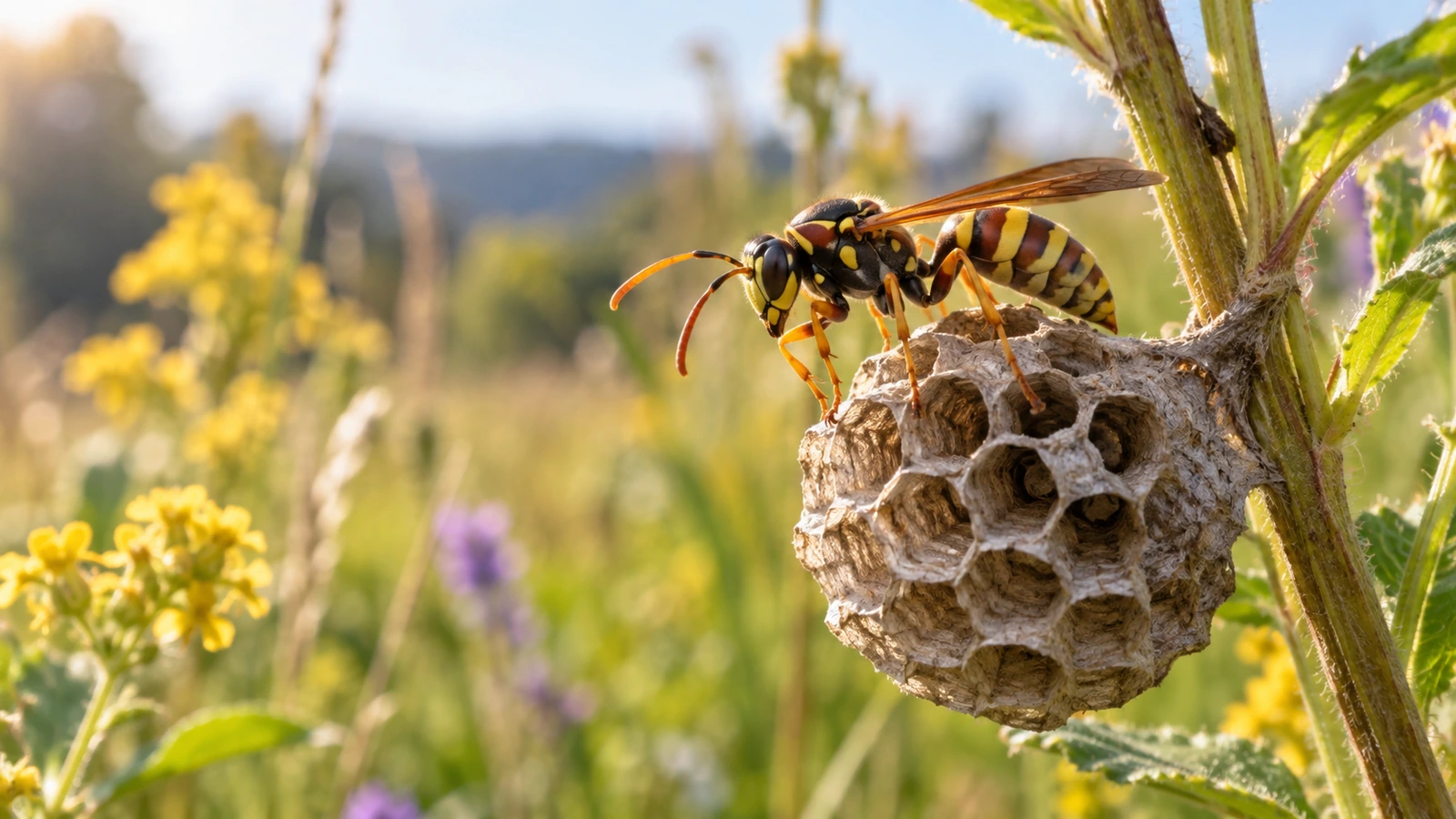
Long before ancient Egyptians crafted papyrus, paper wasps had already mastered the art of papermaking. To construct their elaborate nests, female wasps strip tiny wood fibers from dead trees, plant stems, and wooden structures using their powerful mandibles. They thoroughly chew these fibers, blending them with salivary enzymes to break down tough plant lignin into a malleable pulp. As the moist pulp is carefully spread into thin layers, it quickly dries into a tough, water-resistant paper material. These lightweight yet sturdy structural marvels provide thermal insulation and shelter for developing brood across generations.
6. The Emerald Jewel Wasp Zombifies Cockroaches with Mind-Controlling Venom
The emerald jewel wasp executes a chillingly precise form of neurosurgery to convert living cockroaches into obedient zombies. The female wasp first delivers a sting to the roach's thoracic ganglion to temporarily paralyze its front legs. She then drives her stinger directly into the roach's brain, targeting specific neural circuits that control the walking reflex. This precise chemical cocktail turns off the victim's motivation to run away without actually paralyzing its legs. The wasp can then comfortably lead the compliant roach by its antennae straight into a burrow, where she lays an egg on its abdomen to serve as a fresh, living food source for her larva.
 Insects and Invertebrates
Discover the bizarre biology and complex societies of the world's most misunderstood invertebrates. From subterranean fungus farmers to insects with microscopic solar panels, explore the hidden marvels of the creeping, crawling, and flying creatures that sustain global ecosystems.
See All Facts
Insects and Invertebrates
Discover the bizarre biology and complex societies of the world's most misunderstood invertebrates. From subterranean fungus farmers to insects with microscopic solar panels, explore the hidden marvels of the creeping, crawling, and flying creatures that sustain global ecosystems.
See All Facts
7. Winter Wipes Out Entire Colonies Except for the Queen
For temperate social wasp species, winter brings absolute devastation to the colony. As temperatures drop and autumn food sources vanish, the entire workforce of adult workers, males, and the founding queen die off completely. Only newly mated, young queens survive by producing natural antifreeze compounds and seeking shelter in dark, protected crevices such as hollow trees or insulated walls. Throughout the winter, these solitary queens remain in a dormant state of diapause, surviving solely on stored body fat. When spring warmth returns, each surviving queen must build a new nest from scratch and single-handedly rear her first generation of workers.
8. Crushing a Wasp Triggers an Enraged Chemical Rescue Signal
Swatting or crushing a social wasp near its nest is one of the most dangerous mistakes a human can make. When a wasp senses danger or suffers physical damage, it releases a potent chemical signal known as an alarm pheromone. This airborne chemical scent immediately alerts nearby nestmates, triggering an aggressive defensive reaction from the entire colony. The scent marks the perceived threat, guiding dozens or hundreds of agitated wasps directly to the source of the disturbance. Consequently, killing a single wasp often results in a coordinated, relentless swarm attack rather than eliminating the threat.
9. Male Wasps Are Completely Defenseless Against Stinging
Despite their menacing appearance, male wasps are completely incapable of delivering a sting. The anatomical stinger found in female wasps is actually a heavily modified ovipositor, an organ originally designed for laying eggs. Over millions of years of evolution, this egg-laying tube transformed into a sharp venom-injection apparatus for defense and hunting. Because male insects lack female reproductive anatomy entirely, they do not possess a stinger or venom glands of any kind. While a threatened male may aggressively bluff by lunging or buzzing loudly, it cannot physically harm a human.
10. The Tarantula Hawk Delivers One of Nature's Most Excruciating Stings
The tarantula hawk wasp, a massive solitary hunter in the genus Pepsis, inflicts one of the most intensely painful stings in the animal kingdom. Rated at the absolute maximum score of four on the Schmidt Sting Pain Index, the sting is described by victims as immediate, blinding, and fiercely electric. Entomologist Justin Schmidt famously advised that the only sensible response to being stung is to lie down and scream, preventing self-injury while in agony. Fortunately, the venom is not biologically toxic to humans and causes almost no tissue damage or lasting medical harm. The excruciating pain lasts for only about three to five minutes before subsiding completely.
11. Wasps Play a Crucial Role in the Fermentation of Wine
Wasps play a critical and surprising role in the global production of wine by preserving essential wild yeasts. During the harsh winter months, adult wasps harbor colonies of the yeast Saccharomyces cerevisiae inside their digestive tracts. When spring and summer arrive, the wasps feed on ripening grapes, transferring these active yeast strains directly onto the skin of the fruit. This natural inoculation allows wild fermentation to begin when grapes are crushed during traditional winemaking processes. Without wasps acting as living repositories and vectors for yeast, natural wine fermentation in vineyards would be significantly compromised.
12. Adult Wasps Cannot Digest Solid Food and Rely on Larval Secretions
Despite their fierce reputation as carnivorous predators, adult wasps are unable to digest solid protein due to a narrow waist constriction in their anatomy. Adult wasps capture spiders, caterpillars, and flies exclusively to feed their growing larvae back at the nest. In return for delivering meat, the larvae produce a sugary, nutrient-rich liquid droplet from their salivary glands that the adults eagerly consume. This mutually beneficial exchange of nourishment between adults and larvae is known as trophallaxis. Without their larvae to process meat into liquid energy, adult wasps must rely entirely on flower nectar, fruit juices, and honeydew to survive.
13. Parasitic Queen Wasps Seize Control of Foreign Nest Operations
Certain species of wasps have abandoned nest building altogether in favor of an insidious lifestyle known as social parasitism. A parasitic queen, such as the cuckoo wasp or specialized paper wasp species, will stealthily infiltrate an established colony of a related host species. She often uses chemical camouflage to mimic the host colony's distinct scent, allowing her to slip past guard wasps undetected. Once inside, the invading queen locates and executes the resident queen before taking total command of the nest. She then forces the resident worker wasps to raise her own parasitic offspring, exploiting the host workforce until her brood matures.
14. Wasps Boast Stunning Colors Beyond Yellow and Black
While popular culture depicts wasps strictly in bands of bright yellow and black, the group exhibits some of the most spectacular coloration in the insect world. Cuckoo wasps in the family Chrysididae display shimmering metallic armor in hues of iridescent emerald green, sapphire blue, and vibrant ruby. These brilliant metallic colors are produced by complex microscopic structural patterns in their exoskeleton that refract ambient light. Other species boast deep crimson, stark white, or lustrous gold patterns across their bodies. This striking visual diversity serves multiple purposes, from warning potential predators of toxic stings to camouflaging solitary hunters in dense foliage.
15. Wasps Are Essential Apex Predators for Global Agriculture
Far from being mere summertime pests, wasps serve as crucial apex predators that protect the global human food supply. Social and solitary wasps consume millions of tons of agricultural pests every year, including destructive caterpillars, aphids, beetles, and flies. Farmers around the world increasingly rely on biological pest control by encouraging native wasp populations, drastically reducing the need for chemical pesticides. In natural ecosystems, wasps maintain ecological balance by preventing herbivorous insect populations from overwhelming plant life. Without the relentless hunting efforts of wasps, agricultural yields would suffer devastating losses to uncontrolled pest infestations.
Sources & References
This AI-assisted post was rigorously curated and fact-checked for accuracy by:
 Martin Roháček
How fun was this article? 🤔
Tap a star to rate it
🧠 Quiz: How closely were you paying attention?
10 questions — all answers are in the article above!
Enjoyed these facts? There's more! 💌
Fresh fun facts in your inbox. No spam, ever.