The Quiet Rebel: 15 Fascinating Facts About Rosa Parks
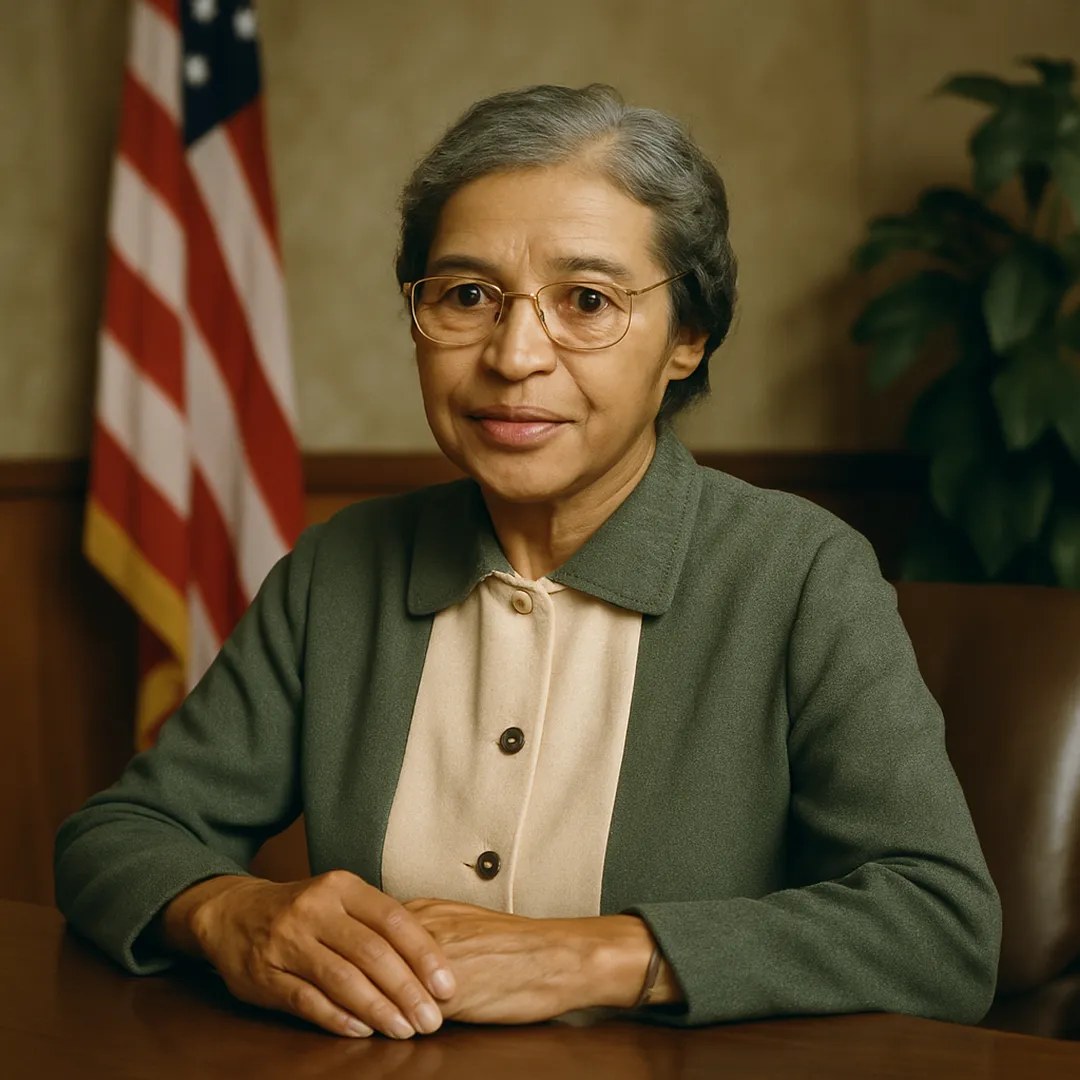
On December 1, 1955, Rosa Parks made history by refusing to surrender her seat on a segregated Montgomery bus, igniting a pivotal moment in the American Civil Rights Movement. While popular myth often reduces her to a tired seamstress who acted on impulse, the truth reveals a lifelong activist who was strategic, deeply courageous, and politically experienced. From her early investigations of racial violence to her decades of advocacy in Detroit, Parks dedicated her whole life to challenging systemic injustice. Here are 15 fascinating facts that uncover the real story behind the mother of the civil rights movement.
1. Long Before 1955, She Was a Seasoned Civil Rights Activist
Rosa Parks is often remembered as a quiet seamstress who randomly decided to make a stand, but she had actually been heavily involved in civil rights work for over a decade. In 1943, she joined the Montgomery branch of the NAACP and was immediately elected secretary because she was the only woman present. Alongside NAACP chapter president E.D. Nixon, she spent years investigating acts of racial violence, voter suppression, and discrimination across Alabama. In 1944, she spearheaded the investigation into the horrific gang rape of Recy Taylor, a Black woman in Abbeville, Alabama, forming a coalition that garnered national attention. Her deep engagement with systemic injustice laid the crucial groundwork for her action on the bus.
2. She Debunked the Myth That She Was Simply Too Tired
Popular history long claimed that Parks refused to yield her seat simply because her feet were tired after a long day of work. Parks directly refuted this misconception in her 1992 autobiography, writing, 'No, the only tired I was, was tired of giving in.' At age 42, she was in good physical health and not extraordinarily exhausted compared to any other workday. Instead, her refusal was a deliberate ethical choice driven by a moral breaking point after decades of humiliation under Jim Crow laws. While three other Black passengers complied with the driver's demand to move, Parks refused to budge, choosing dignity over submission.
3. Other Brave Women Refused to Yield Before Rosa Parks
While Parks became the international face of the bus protest, several other Black women in Montgomery resisted bus segregation prior to her arrest. In March 1955, nine months before Parks's arrest, 15-year-old high school student Claudette Colvin refused to give up her seat to a white woman and was dragged off the bus in handcuffs. Activists initially considered using Colvin's arrest as the test case to challenge segregation laws in court. However, civil rights leaders worried about her age and volatile arrest, fearing conservative media would vilify her. Ultimately, Browder v. Gayle—the landmark federal lawsuit that actually overturned bus segregation in Alabama—featured Colvin, Aurelia Browder, Mary Louise Smith, and Susie McDonald as plaintiffs, rather than Parks.
4. Her Activism Was Sparked by Her Husband Raymond Parks
Rosa McCauley married Raymond Parks, a self-educated Montgomery barber, in 1932 when she was 19 years old. Raymond was already deeply committed to civil rights and belonged to the National Association for the Advancement of Colored People. At the time, he was actively involved in raising funds for the legal defense of the Scottsboro Boys, nine Black teenagers falsely accused of rape in Alabama. Because supporting the Scottsboro Boys was extremely dangerous, meetings were held in secret, and Raymond often kept a gun nearby for protection. Rosa later acknowledged that Raymond was the first activist she had ever met who did not accept white supremacy as an unchangeable reality.
5. She Received Activism Training at the Highlander Folk School
Just a few months before her historic refusal on the bus, Parks attended an intensive workshop on racial equality and social change. In July 1955, she spent two weeks at the Highlander Folk School in Monteagle, Tennessee, an activist retreat center that trained community organizers. The school brought together Black and white activists to discuss civil disobedience, school desegregation, and voter registration in an integrated setting. Parks later described the experience as transformative, noting it was one of the few places where she felt treated as an equal citizen regardless of her race. When she remained seated in December, she drew strength from the communal solidarity and skills she developed at Highlander.
6. She Had a History of Confrontations with the Same Bus Driver
The bus driver who called the police on Rosa Parks on December 1, 1955, was a man named James F. Blake. Unbelievably, Parks had experienced a hostile encounter with Blake twelve years earlier in 1943. On a rainy day in November 1943, Parks entered the front door of Blake's bus to pay her fare, after which Blake ordered her to exit and re-enter through the back door as dictated by local Jim Crow etiquette. When Parks stepped off the bus to walk to the rear door, Blake drove off and left her standing in the rain. Following that incident, Parks made a conscious effort to avoid riding Blake's bus whenever possible.
7. The Montgomery Bus Boycott Lasted an Astonishing 381 Days
When local leaders organized a one-day boycott of Montgomery's bus system on December 5, 1955—the day of Parks's trial—they did not anticipate its massive duration. The response was so overwhelmingly unified that leaders established the Montgomery Improvement Association, electing a young Martin Luther King Jr. as president, to prolong the protest. Black residents, who made up over 70 percent of the transit system's ridership, organized intricate carpools, hired Black-owned taxis, and walked miles to work each day. The boycott severely damaged the financial stability of the public bus system and local downtown businesses. It lasted for 381 consecutive days until December 20, 1956, when federal courts ordered the desegregation of Alabama buses.
8. The Backlash Forced Her Family to Relocate to Detroit
Despite becoming a national symbol of courage, Parks paid a heavy personal and financial price for her defiance. In the aftermath of the arrest and boycott, both Rosa and her husband lost their jobs; Rosa was fired from her job as a department store seamstress, and Raymond was forced out of his barber shop position. The couple received constant death threats, harassing phone calls, and suspicious packages at their home. Unable to find employment or feel safe in Montgomery, the Parks family relocated in 1957 to Detroit, Michigan. Although Detroit was dubbed the 'Northern City of Hope,' Parks quickly discovered that racial discrimination in housing and employment was also rampant in the North.
9. She Worked for Congressman John Conyers for Over Two Decades
After settling in Detroit, Parks continued her relentless pursuit of racial justice and urban reform. In 1965, African American Democratic Congressman John Conyers hired Parks to work as an administrative assistant in his Detroit office. Her duties included answering phones, handling constituent casework, and assisting low-income residents with housing and employment discrimination claims. She remained on Conyers's staff for 23 years until her retirement in 1988, serving as a vital link between the community and federal lawmakers. Conyers frequently noted that having Parks in his office gave his staff immense moral authority and a constant reminder of the struggle for human rights.
10. She Co-Founded an Institute to Educate Youth
In 1987, alongside her close friend Elaine Eason Steele, Parks co-founded the Rosa and Raymond Parks Institute for Self-Development. The non-profit organization was established in memory of her late husband, who passed away in 1977, and aimed to empower inner-city youth through education and leadership programs. One of the institute's flagship initiatives was the 'Pathways to Freedom' program, which took teenagers on nationwide bus tours tracing the routes of the Underground Railroad and key Civil Rights Movement milestones. Participants learned history firsthand from elders who lived through the era while discovering strategies for contemporary civic engagement. Parks dedicated much of her later life to mentoring these young people.
11. She Was the First Woman to Lie in Honor at the U.S. Capitol
When Rosa Parks passed away on October 24, 2005, at the age of 92, her death was mourned across the nation and around the world. In recognition of her pivotal role in American history, her casket was brought to Washington, D.C., where she became the first woman and second African American person to lie in honor in the U.S. Capitol Rotunda. Over 50,000 citizens waited in long lines outside the Capitol to pay their final respects to the civil rights pioneer. Normally reserved for U.S. presidents and military leaders, this rare honor underscored the profound impact of her peaceful resistance. Her funeral services drew tens of thousands of mourners and prominent world leaders.
12. She Was Awarded the Nation's Highest Civilian Honors
Throughout her lifetime, Parks received countless honors, but two stand out as the highest civilian recognitions bestowed by the United States government. In 1996, President Bill Clinton presented her with the Presidential Medal of Freedom, praising her quiet strength and monumental contribution to American democracy. Three years later, in 1999, she received the Congressional Gold Medal, which bears the inscription 'Mother of the Modern-Day Civil Rights Movement.' Upon presenting the award, Congress recognized her as an enduring emblem of freedom and human dignity. These awards cemented her status as one of the most influential Americans of the twentieth century.
13. She Wrote Autobiographical Works to Correct Historical Misconceptions
Determined to ensure that history remembered the civil rights struggle accurately, Parks authored several books later in her life. In 1992, she published her full-length autobiography titled Rosa Parks: My Story, written alongside children's author Jim Haskins. The book aimed to debunk persistent myths about her life, detailing her lifelong activism, the complex social dynamics of Montgomery, and the realities of life under Jim Crow laws. She followed this up in 1996 with Quiet Strength, a memoir reflecting on her deep faith, personal reflections, and moral philosophy. Parks felt it was vital for young readers to understand that freedom requires constant effort.
14. She Once Sued the Hip-Hop Group OutKast
In 1999, Parks found herself in an unexpected legal battle with the acclaimed hip-hop duo OutKast. The group had released a hit single titled 'Rosa Parks,' which featured the hook 'Everybody move to the back of the bus.' Parks filed a federal lawsuit alleging that the group had improperly used her name without permission and that the song's explicit lyrics infringed upon her publicity rights. While lower courts initially dismissed the suit on First Amendment grounds, an appellate court allowed key claims to proceed. The lawsuit was officially settled out of court in April 2005, with the record label agreeing to co-produce educational programs about Parks's life.
15. Her Grandfather Taught Her Resistance from an Early Age
Rosa Parks's passion for dignity and justice was forged during her childhood in Tuskegee and Pine Level, Alabama. Raised by her mother and maternal grandparents, Parks grew up in an environment where racial violence was a constant threat, particularly during the post-World War I rise of the Ku Klux Klan. Her grandfather, Sylvester Edwards, was a former enslaved person who vehemently refused to accept white intimidation. When KKK night riders terrorized Black neighborhoods, Edwards would sit on the front porch through the night with a loaded shotgun, ready to defend his home and family. Watching her grandfather stand guard taught young Rosa that self-respect and courage were non-negotiable values.
Sources & References
This AI-assisted post was rigorously curated and fact-checked for accuracy by:
 Martin Roháček
How fun was this article? 🤔
Tap a star to rate it
🧠 Quiz: How closely were you paying attention?
10 questions — all answers are in the article above!
Enjoyed these facts? There's more! 💌
Fresh fun facts in your inbox. No spam, ever.