The Psychedelic Pioneers: 15 Fascinating Facts About the Grateful Dead
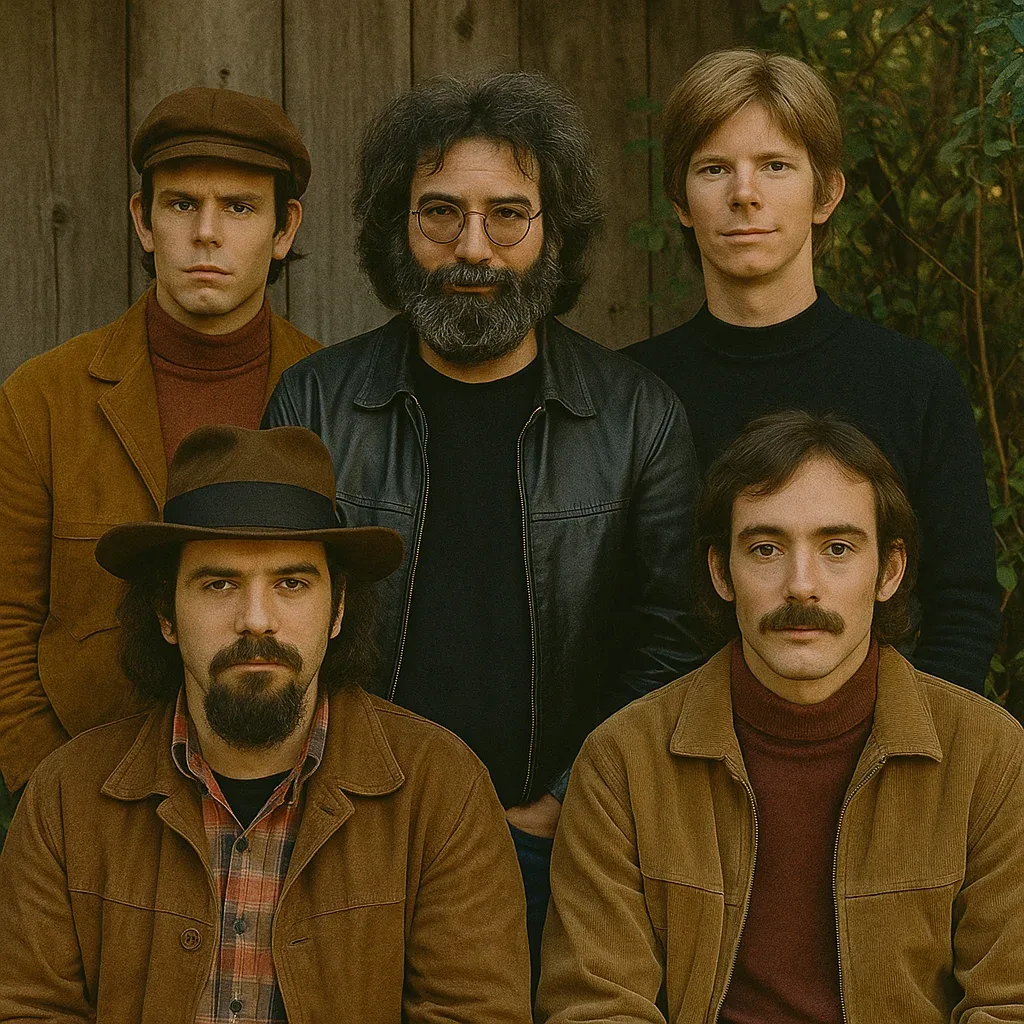
Formed in the Bay Area counterculture cauldron of 1965, the Grateful Dead transformed American live music by blending rock, bluegrass, jazz, and extended modal improvisation. Led by charismatic guitarist Jerry Garcia, the band built a fiercely loyal community of Deadheads through unpredictable live sets and an unorthodox open-door policy toward fan bootlegging. From pioneering audio innovations like the massive Wall of Sound to performing beneath the shadows of Egyptian pyramids, their thirty-year journey redefined what a touring group could accomplish. Discover fifteen surprising truths about the legendary group that turned concertgoing into a lifelong communal ethos.
1. They Chose Their Name by Opening a Dictionary at Random
Before adopting their legendary moniker, the group performed around San Francisco under the name The Warlocks. In late 1965, while browsing a copy of the Funk & Wagnalls New Practical Standard Dictionary at guitarist Jerry Garcia's house, they discovered that another band had already released a record as The Warlocks. Garcia opened the dictionary completely at random and his eyes fell upon the phrase Grateful Dead. The term referenced an ancient folklore motif about a traveler who pays for the burial of a deceased stranger and is later rewarded by the dead person's spirit. Though several members initially disliked the eerie sound of the name, it ultimately stuck and became central to their iconic identity.
2. Sound Engineer Owsley Stanley Was Also America's Premier LSD Chemist
The band's early financial backer and sound engineer, Owsley "Bear" Stanley, was an eccentric genius who fundamentally shaped the band's sonic development. However, Stanley was equally famous outside the music industry as the primary illicit manufacturer of high-purity LSD in the 1960s. He produced millions of doses of the psychedelic compound, directly fueling the counterculture revolution in California. Stanley treated concert sound reinforcing as an art form, designing revolutionary equipment while simultaneously serving as the group's resident audio wizard. His dual passions forever linked the Grateful Dead with the psychedelic movement of San Francisco's Summer of Love era.
3. Their Massive "Wall of Sound" Sound System Weighed Over 75 Tons
In 1974, the Grateful Dead debuted the "Wall of Sound," an unprecedented public address system engineered by Owsley Stanley to eliminate stage distortion. The staggering apparatus consisted of 604 individual speakers powered by over 26,000 watts of audio power. Standing over thirty feet tall and forty feet wide, the rig served as both the front-of-house system and the stage monitors simultaneously. It required two separate custom scaffolding frameworks and three distinct semi-truck crews to transport and build across tour dates. Though it provided crystal-clear audio fidelity, the massive expense and physical burden forced the band to retire the system after less than a year on the road.
4. Jerry Garcia's Signature Guitar Technique Was Shaped by a Childhood Accident
Lead guitarist Jerry Garcia was world-renowned for his fluid, highly intricate, and unmistakable soloing style. Few casual listeners realize that his unique fingerpicking approach was influenced by a tragic accident during his early childhood. At just four years old, Garcia lost roughly two-thirds of his right middle finger while helping his brother chop wood at a family campsite. Rather than letting the disability hinder him, Garcia adapted his hand positioning and picking mechanics to master the instrument. His missing digit became a famous trademark, often featured in handprints and artwork drawn by fans across the globe.
5. They Pioneered Fan-Friendly Taping Sections at Concerts
While most major recording acts spent decades actively prosecuting fans who snuck recording devices into venues, the Grateful Dead embraced bootleggers. Recognizing that audio tapes served as organic, grassroots marketing, the band actively permitted audience members to record their live shows. By October 1984, the sheer volume of recording equipment forced the band to establish an official "Taping Section" directly behind the soundboard. Fans holding special taping tickets could set up complex microphone stands and plug directly into line feeds, fostering an unprecedented archive of live performances. This open-source philosophy directly pre-dated modern internet file-sharing culture by several decades.
6. The Famous "Dancing Bears" Are Actually Marching Bears
One of the most recognizable symbols associated with the group is a multi-colored row of smiling, stylized bears that appear on merchandise worldwide. Designed by artist Bob Thomas, the illustration first appeared on the back cover of the 1973 album History of the Grateful Dead, Volume One (Bear's Choice). While fans almost universally refer to them as the "Dancing Bears," artist Bob Thomas and audio engineer Owsley Stanley insisted the animals were actually marching. The bear motif was chosen as a tribute to Stanley, whose childhood nickname was "Bear." Despite the artist's original intent, the image remains deeply immortalized as a dancing mascot within popular culture.
7. They Played Three Historic Shows at the Pyramids of Giza
In September 1978, the group accomplished one of the most audacious concert logistical feats in rock history by performing in Egypt. Across three nights, they played outdoors in front of the Great Sphinx and the Great Pyramid of Giza. Sound engineers set up a temporary recording truck inside a nearby tomb, utilizing the ancient stone structures for unique natural echo effects. The final performance coincided with a total lunar eclipse, creating an unforgettable atmosphere for the local attendees and traveling fans. The historic recordings were later officially compiled and released in 2008 as a live album and concert video.
8. Their Only Top 10 Hit Came 22 Years Into Their Career
Despite being one of the highest-grossing live concert attractions in North America for decades, the group enjoyed almost no commercial radio success for most of their existence. That changed dramatically in 1987 with the release of their twelfth studio album, In the Dark. The lead single, "Touch of Grey," featured an infectious pop-rock hook and a catchy chorus emphasizing survival and resilience. Backed by a heavily played MTV music video featuring marionette skeletons performing on stage, the song climbed to number nine on the Billboard Hot 100 chart. It remains the band's sole Top 10 hit single across thirty years of active recording.
9. A Famous 1977 Cornell University Show Is Preserved in the Library of Congress
On May 8, 1977, the Grateful Dead delivered a performance at Barton Hall on the campus of Cornell University that became legendary among collectors. Distributed widely on high-quality cassette tapes, the show was celebrated for its pristine audio mix, tight vocal harmonies, and exceptional musical improvisations. In 2011, the National Recording Registry of the Library of Congress selected the concert tape for permanent preservation. The Library cited the recording as a culturally, historically, and aesthetically significant artifact of American sound history. Bootleg tapes of the show were so universally praised that urban legends once claimed the concert was a government psychological experiment that never actually occurred.
10. The Band Served as the House Act for Ken Kesey's Acid Tests
In late 1965 and early 1966, author Ken Kesey and his group of counterculture pranksters organized a series of uninhibited multimedia parties across California known as the Acid Tests. Attendees paid admission to drink LSD-laced punch, experience experimental light shows, and immerse themselves in chaotic art installations. The Grateful Dead served as the unofficial house band for these wild gatherings, using the unstructured atmosphere to experiment with musical forms. Playing under the influence of psychedelics for hours on end stripped away conventional songwriting habits, giving birth to their signature free-form improvisational style.
11. They Ran Their Own Direct-to-Fan Mail-Order Ticketing Service
Long before the internet revolutionized live event sales, the group bypassed mainstream ticket outlets by building their own in-house distribution network. Formed in 1983, Grateful Dead Ticket Sales (GDTS) reserved half of the venue tickets for every show specifically for fan mail orders. Deadheads were instructed to send postal money orders inside self-addressed stamped envelopes to a specific post office box in California. Fans routinely decorated these envelopes with elaborate, hand-drawn artwork in hopes of pleasing the ticketing office staff. This direct connection allowed dedicated followers to secure prime concert seats at face value while avoiding commercial scalping surcharges.
12. "Workingman's Dead" Shifted Their Sound from Psychedelia to Americana
By 1970, the band was drowning in high studio costs from extended, experimental recording sessions that yielded low record sales. Influenced heavily by the tight vocal harmonies of Crosby, Stills, Nash & Young and the acoustic roots movement, they completely pivoted their artistic direction. The resulting album, Workingman's Dead, stripped away complex studio effects in favor of acoustic guitars, banjo, bluegrass rhythms, and tight folk storytelling. Released the same year as its spiritual companion American Beauty, the record redefined the band's sound and helped invent the modern Americana musical genre.
13. Ben & Jerry's Famous "Cherry Garcia" Flavor Was Born from a Fan Suggestion
In 1986, two Deadheads in Maine submitted an anonymous suggestion to the ice cream company Ben & Jerry's, proposing a flavor tribute to Jerry Garcia. The company's founders loved the idea and developed a recipe combining cherry ice cream, cherries, and dark chocolate flakes. Launched in early 1987, "Cherry Garcia" quickly became one of the brand's top-selling ice cream flavors of all time. Garcia himself reportedly praised the flavor, joking that as long as they kept making it taste that good, they could keep using his name.
14. They Performed Over 2,300 Shows Without Repeating a Single Setlist
Across three decades of continuous touring from 1965 to 1995, the Grateful Dead played over 2,300 documented concerts worldwide. A central element of their appeal was that no two shows were ever remotely identical. The band deliberately operated without a setlist prior to taking the stage, choosing songs spontaneously based on stage feel, crowd energy, and band mood. Over their career, they maintained a rotating repertoire of over 500 original songs and traditional covers. This commitment to total freshness meant devoted fans could attend dozens of consecutive shows without ever hearing the same set sequence twice.
15. Jerry Garcia's Death Marked the End of the Original Band Era
On August 9, 1995, Jerry Garcia passed away from a heart attack at a rehabilitation clinic in California at the age of 53. His death devastated the global community of Deadheads and prompted official statements of tribute from cultural leaders, including President Bill Clinton. Four months later, in December 1995, the surviving members announced that they were formally retiring the name Grateful Dead. While individual members subsequently toured in various offshoot configurations such as Dead & Company, The Other Ones, and Further, the original thirty-year musical brotherhood officially concluded with Garcia's passing.
Sources & References
This AI-assisted post was rigorously curated and fact-checked for accuracy by:
 Martin Roháček
How fun was this article? 🤔
Tap a star to rate it
🧠 Quiz: How closely were you paying attention?
10 questions — all answers are in the article above!
Enjoyed these facts? There's more! 💌
Fresh fun facts in your inbox. No spam, ever.