The Misunderstood Conflict: 15 Interesting Facts About the Vietnam War
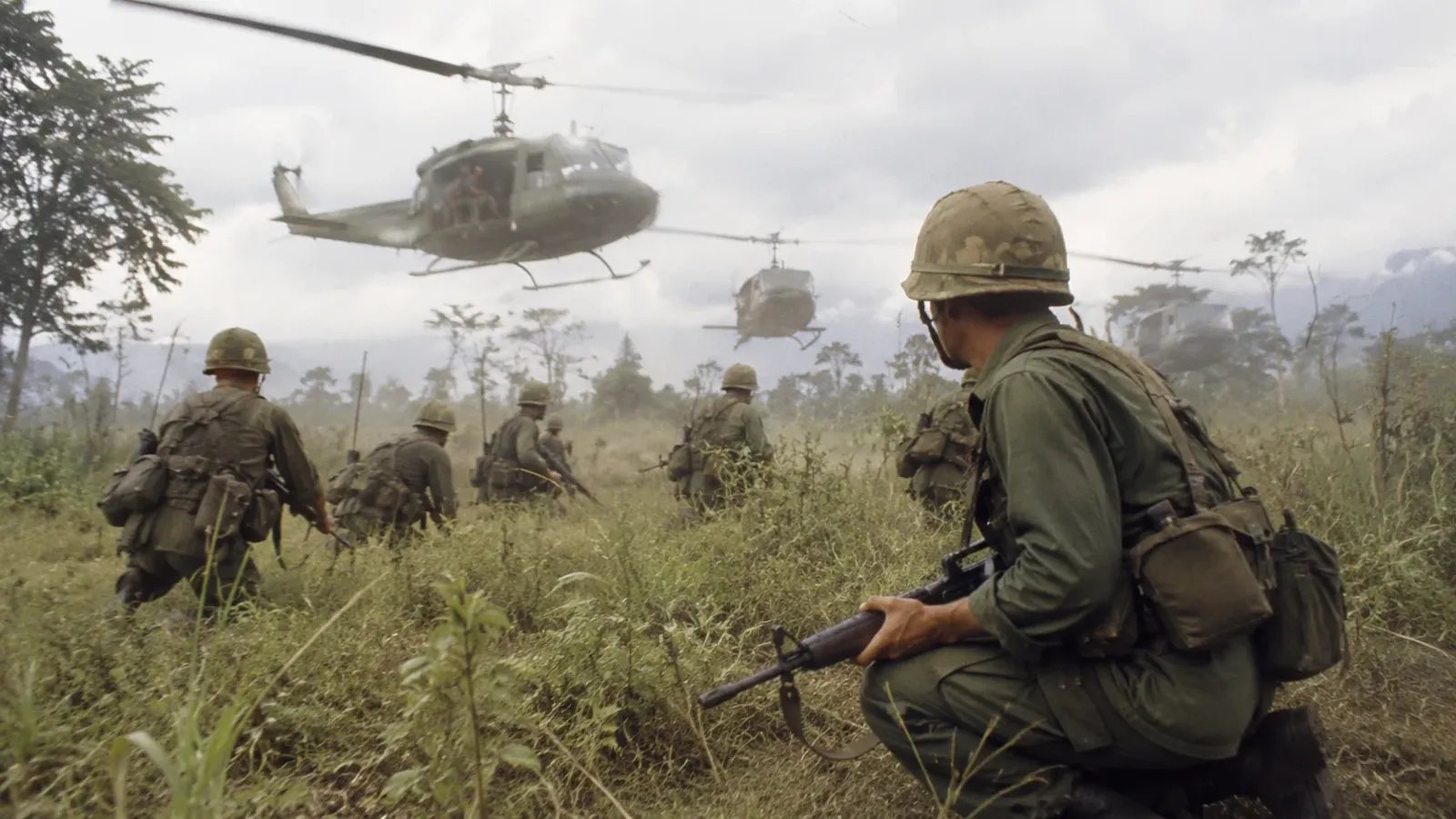
Often viewed as a simple jungle clash, the Vietnam War was far more complex. Contrary to myth, it wasn't just an American struggle against communism. It spanned decades, involved unexpected global allies, and featured bizarre psychological warfare. Discover the hidden history, covert operations, and surprising truths behind this defining conflict.
1. The Vietnam War actually began as a French colonial conflict, not an American anti-communist crusade.
After World War II, France attempted to reassert control over its Indochina colonies. The Viet Minh, led by Ho Chi Minh, fought a successful guerrilla war against the French, culminating in the disastrous French defeat at Dien Bien Phu in 1954. The United States only became deeply involved to prevent a communist takeover after the French withdrawal, inheriting a complex post-colonial struggle rather than starting a new war from scratch.
2. The United States never officially declared war on North Vietnam.
Despite the massive deployment of troops and years of intense combat, the U.S. Congress never issued a formal declaration of war. Instead, military involvement was authorized by the Gulf of Tonkin Resolution in 1964, which granted President Lyndon B. Johnson the power to use conventional military force in Southeast Asia without a formal declaration, a legal maneuver that fundamentally changed American presidential war powers.
3. South Korea sent the largest number of allied troops to support the United States and South Vietnam.
While Australia and New Zealand's contributions are well-known, South Korea was actually the primary allied force, deploying over 300,000 soldiers throughout the conflict. Motivated by their own fierce anti-communist stance and significant financial incentives from the U.S. government, South Korean forces gained a fearsome reputation for their brutal effectiveness and strict discipline in combat operations.
4. The American military weaponized weather during a covert operation known as Project Popeye.
In an effort to disrupt the Ho Chi Minh Trail, the U.S. military conducted highly classified cloud-seeding missions from 1967 to 1972. By dropping silver iodide into storm clouds over Laos and Vietnam, they artificially extended the monsoon season to wash out enemy supply roads. This astonishing use of meteorological warfare was later banned by an international United Nations treaty in 1977.
5. More bombs were dropped on neighboring Laos than were dropped on Germany and Japan combined during World War II.
In a secret war to sever North Vietnamese supply lines, the United States conducted massive aerial bombardments over neutral Laos. Between 1964 and 1973, American forces dropped over two million tons of ordnance on the small country, making Laos the most heavily bombed nation per capita in history. Decades later, unexploded cluster munitions still pose a lethal threat to Laotian civilians.
6. The Viet Cong utilized incredibly intricate underground tunnel systems that included hospitals and theaters.
The Cu Chi tunnels were not mere hiding holes, but vast, multi-level subterranean cities stretching for tens of thousands of miles. They contained living quarters, kitchens, weapons factories, and fully functioning medical wards. This underground infrastructure allowed guerrilla fighters to survive intense American carpet-bombing, launch surprise attacks, and completely bypass superior conventional military forces above ground.
 Wars and Conflicts of the 20th Century
Explore the hidden realities of 20th-century warfare and geopolitical conflicts. From world-altering military campaigns and covert intelligence operations to the eccentricities of ruthless dictators, uncover the surprising truths behind the events that shaped the modern world.
See All Facts
Wars and Conflicts of the 20th Century
Explore the hidden realities of 20th-century warfare and geopolitical conflicts. From world-altering military campaigns and covert intelligence operations to the eccentricities of ruthless dictators, uncover the surprising truths behind the events that shaped the modern world.
See All Facts
7. American forces used eerie audio recordings of supposed ghosts to terrify enemy soldiers in the jungle.
During Operation Wandering Soul, the U.S. military capitalized on Vietnamese cultural beliefs that the unburied dead are condemned to wander the earth in agony. Psychological warfare units broadcasted chilling tapes dubbed Ghost Tape Number 10, featuring wailing voices and eerie sound effects, via helicopter loudspeakers at night. The goal was to frighten Viet Cong soldiers into abandoning their posts, though it often simply drew heavy enemy fire.
8. The iconic M16 rifle was initially so prone to jamming that many American soldiers preferred to use captured enemy weapons.
When first issued, the M16 was marketed as self-cleaning, leading the military to distribute it without proper cleaning kits. Combined with a change in the type of gunpowder used in the ammunition, the weapon frequently jammed in the harsh, muddy conditions of the Vietnamese jungle. This devastating flaw cost American lives and led some desperate infantrymen to discard their standard-issue rifles in favor of the highly reliable Soviet-made AK-47s used by the Viet Cong.
9. The Gulf of Tonkin incident that sparked full-scale American involvement was based on heavily distorted intelligence.
The escalation of the war hinged on reports that North Vietnamese patrol boats had twice attacked the USS Maddox in August 1964. Declassified documents later revealed that while a skirmish did occur on August 2, the supposed second attack on August 4 never actually happened. Faulty radar readings and anxious sonar operators reported phantom torpedoes, leading the Johnson administration to escalate a war based on a ghostly naval engagement.
10. Two-thirds of the American men who served in the Vietnam War were volunteers, not draftees.
A persistent pop-culture myth paints the American force in Vietnam as a reluctant army of conscripts dragged into service against their will. In reality, approximately 70 percent of those who died and a significant majority of those who served had voluntarily enlisted. This contrasts sharply with World War II, where drafting accounted for roughly two-thirds of the American military personnel.
11. The North Vietnamese Army utilized elephants to transport heavy weaponry and supplies through dense terrain.
Mechanized transport was often useless in the deep mud and thick foliage of the Ho Chi Minh Trail, forcing the North Vietnamese to rely on traditional methods of moving massive cargo. Asian elephants were conscripted as beasts of burden to carry ammunition, dismantled artillery pieces, and rations. The U.S. military actually recognized this threat, classifying the elephants as enemy logistics and authorizing targeted air strikes against them.
12. An estimated ten thousand American women served in Vietnam during the conflict, primarily in medical roles.
Though they were officially barred from combat, thousands of women volunteered to serve in the war zone as nurses, physical therapists, and intelligence officers. These women faced grueling conditions, treating horrific combat injuries and operating under the constant threat of mortar fire. Despite their immense sacrifices, it took decades for their contributions to be formally recognized with the dedication of the Vietnam Women's Memorial in 1993.
13. The American military sprayed millions of gallons of toxic herbicides to destroy enemy cover and crops.
Operation Ranch Hand was a massive defoliation program designed to strip away the dense jungle canopy hiding Viet Cong movements and to destroy the agricultural base supporting them. The most infamous of these chemicals, Agent Orange, was contaminated with highly toxic dioxin. The environmental and human toll was catastrophic, leading to severe birth defects, cancers, and ecological devastation that continues to haunt Vietnam and American veterans today.
14. A significant portion of the Vietnam War was actually fought in the air over North Vietnam.
While popular media focuses heavily on infantry battles in the southern jungles, a massive, technologically advanced air war waged in the skies above the North. Operations like Rolling Thunder saw American pilots facing off against some of the most sophisticated anti-aircraft networks ever constructed, heavily supplied by the Soviet Union. This air campaign fundamentally revolutionized modern dogfighting, radar jamming, and missile evasion tactics.
15. The fall of Saigon in 1975 featured the largest helicopter evacuation in recorded history.
As North Vietnamese forces closed in on the southern capital, Operation Frequent Wind was launched to rescue endangered Americans and South Vietnamese allies. Over two frantic days, a continuous stream of military helicopters shuttled over seven thousand people from rooftops to offshore Navy vessels. The operation was so massive and desperate that sailors were forced to push multi-million-dollar helicopters into the ocean to make deck space for incoming flights.
Sources & References
This AI-assisted post was rigorously curated and fact-checked for accuracy by:
 Martin Roháček
How fun was this article? 🤔
Tap a star to rate it
🧠 Quiz: How closely were you paying attention?
10 questions — all answers are in the article above!
Enjoyed these facts? There's more! 💌
Fresh fun facts in your inbox. No spam, ever.