The Streamlined Mariners: 15 Fascinating Facts About Seals
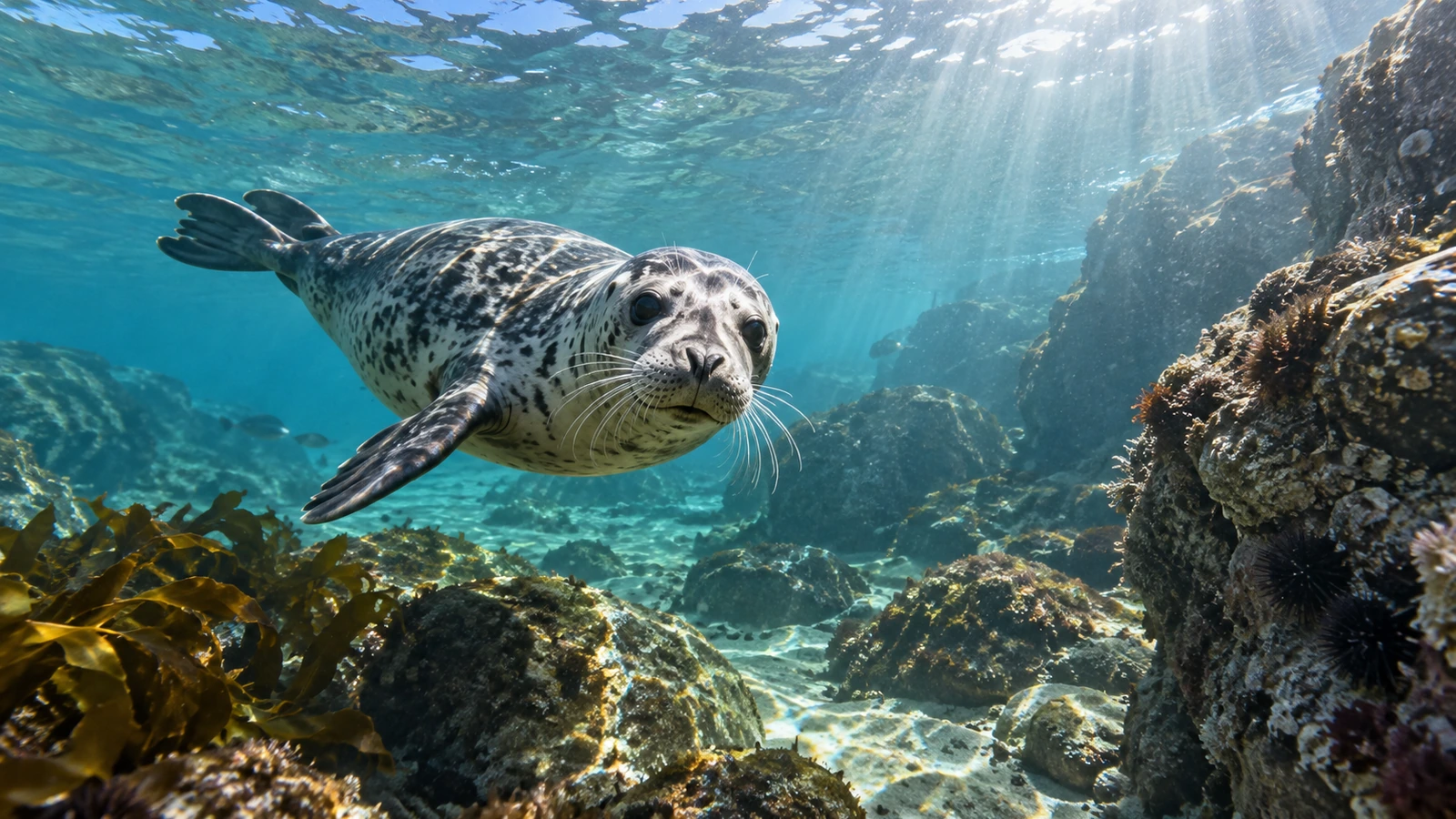
From deep-diving giants that can stay submerged for two hours to landlocked species living in ancient Siberian lakes, seals are among the world's most versatile marine mammals. These sleek ocean predators possess incredible adaptations, including milk as rich as rocket fuel, acoustic tricks that sound like sci-fi laser beams, and whiskers sensitive enough to sense a swimming fish in total darkness. Whether wiggling across polar ice or descending thousands of feet into the ocean abyss, true seals have mastered survival in Earth's harshest environments. Discover fifteen astonishing truths about these extraordinary aquatic creatures and how they thrive across the globe.
1. Ear Flaps and Belly Crawls Reveal the Seal Lineage
The easiest way to distinguish a true seal from a sea lion is by looking closely at their head and mobility. True seals belong to the family Phocidae and lack external ear flaps, possessing only tiny auditory openings on the sides of their head. Additionally, while sea lions can rotate their hind flippers forward to walk on land, true seals must wiggle forward on their bellies like massive caterpillars. Their streamlined bodies are far better adapted for rapid underwater swimming than for terrestrial locomotion. This evolutionary tradeoff makes true seals extraordinarily graceful in the ocean, even if they appear clumsy on shore.
2. Seals Sleep With Half Their Brain Underwater
To rest safely without drowning, seals engage in a remarkable process known as unihemispheric slow-wave sleep. While underwater, a seal can shut down one half of its brain at a time while keeping the other half alert enough to watch for predators and signal the body to surface for breath. This adaptation allows them to take underwater naps while drifting gently below the waves or resting at the surface. Only when they haul out onto land or ice can seals shut down both brain hemispheres simultaneously for deep, restorative sleep. It is an evolutionary survival trick that ensures continuous breathing even while floating in open oceans.
3. Sensitive Whiskers Can Track Prey in Total Darkness
A seal's whiskers, or vibrissae, are among the most sensitive sensory organs in the marine mammal world. Each individual hair follicle contains hundreds of nerve endings that can detect subtle hydrodynamic turbulence left by swimming prey up to 600 feet away. Scientists have discovered that these undulating, specialized whiskers can differentiate between fish species based purely on the shape of their aquatic wake. Remarkably, this system is so efficient that completely blind seals are regularly found in the wild in excellent health, hunting successfully without relying on sight. They literally read the movement of the water to locate their next meal in pitch-black depths.
4. One Species Lives Entirely in Landlocked Freshwater
While most seals inhabit coastal or oceanic environments, the Baikal seal lives exclusively in the freshwater of Lake Baikal in Siberia. Located thousands of miles from the nearest ocean, Lake Baikal has housed this unique population for roughly two million years. Scientists believe their ancient ancestors traveled up prehistoric river systems during the ice ages before becoming landlocked. Today, the Baikal seal is the only exclusively freshwater seal species on Earth, having adapted completely to lake ecosystems. They use their strong claws to maintain breathing holes through thick ice during the freezing Siberian winter.
5. Extreme Heart Rate Control Prevents Diving Hypoxia
When preparing for a deep dive, a seal triggers a profound physiological reaction known as the mammalian dive response. Their heart rate drastically plunges from a resting speed of around 100 beats per minute down to as few as four to ten beats per minute. Blood flow is selectively restricted, pumping vital oxygen almost exclusively to the heart and central nervous system while bypassing non-essential organs. This intense dive bradycardia reduces oxygen consumption to an absolute minimum during prolonged submersion. By mastering this involuntary cardiac control, seals can explore dark ocean depths without running out of air.
6. Seal Milk Packs the Energy of Liquid Rocket Fuel
Mother seals produce some of the richest and highest-fat milk in the entire animal kingdom. While cow milk contains roughly four percent fat, seal milk can consist of up to 50 to 60 percent fat, resembling thick cream or paste. This extreme caloric density allows seal pups to gain massive amounts of weight in an astonishingly short time frame. Hooded seal pups, for instance, nurse for only four days but gain several pounds of blubber each day before their mothers abandon them. This ultra-fatty diet is essential for building the thermal insulation required to survive arctic waters independently.
 Marine and Freshwater Animals
See All Facts
Marine and Freshwater Animals
See All Facts
7. Male Hooded Seals Inflate Pink Nasal Balloons
Male hooded seals possess one of the most unusual courtship and threat displays in nature. They feature an elastic nasal cavity that can expand into a dark grey hood over their forehead when excited. More strikingly, they can inflate a bright red, balloon-like nasal membrane out of one nostril, which resembles a pink rubber sphere. By bouncing and shaking this vibrant bubble while producing loud vocalizations, males signal dominance to rivals and attract potential mates during the breeding season. It is a visually bizarre sexual display that leaves a memorable impression on anyone who witnesses it.
8. Leopard Seals Hunt Warm-Blooded Apex Prey
While the vast majority of seal species feed primarily on fish, squid, and krill, the Antarctic leopard seal is a formidable top predator. Possessing massive, reptile-like jaws lined with sharp canine teeth, leopard seals regularly hunt warm-blooded animals, including penguins and other seal species. They are known for lurking beneath ice shelves, ambushing prey with incredible explosive speed before dragging it into open water. In addition to apex hunting, their intricate tricuspid molars allow them to filter tiny krill from the water when larger prey is scarce. This dual feeding strategy makes them one of the most versatile hunters in polar ecosystems.
9. Weddell Seals Sound Like Sci-Fi Spaceships Underwater
The acoustics of Weddell seals beneath the Antarctic sea ice sound less like wild animals and more like futuristic sound effects from a science fiction movie. Their complex vocal repertoire includes sweeping trills, high-pitched chirps, chugs, and descending pulses that echo through underwater ice channels. These alien-sounding vocalizations can carry for miles through the water, allowing seals to establish underwater territories and communicate during dark polar winters. Researchers have recorded dozens of distinct call types used for territorial defense, courtship, and navigation beneath the frozen surface. The eerie resonance of these soundscapes remains one of the most captivating phenomena in bioacoustics.
10. Seals Store Oxygen in Muscle Tissue Instead of Lungs
Human divers rely on large volumes of air inhaled into their lungs, but deep-diving seals take the exact opposite approach. Before making a deep dive, a seal actually exhales to empty its lungs, reducing the risk of nitrogen narcosis and the bends. Instead, seals store vast quantities of oxygen inside their blood and muscle tissues, which contain extraordinarily high concentrations of hemoglobin and myoglobin. Their blood volume per body mass is nearly double that of humans, packed with oxygen-carrying red cells. This biochemical adaptation allows them to remain submerged for extended periods without relying on pulmonary air pockets.
11. Mothers Identify Newborns by Unique Vocal Signatures
In densely packed breeding colonies containing thousands of screaming animals, a mother seal must reliably identify her own pup. Within minutes of giving birth, the mother and pup bond through vocalizations and scent, memorizing each other's distinct acoustic call. When returning from foraging trips at sea, a mother emits her call, listening for her pup's specific response amidst a deafening chorus of neighbors. If an orphaned or alien pup attempts to steal milk from the wrong female, the mother will aggressively reject and bite the intruder. This strict vocal recognition ensures that precious energy and rich milk are invested solely in her biological offspring.
12. Southern Elephant Seals are Deep-Diving Breath Champions
Southern elephant seals hold the title for the deepest and longest dives ever recorded among pinnipeds. These colossal marine mammals can hold their breath for over two hours while diving to depths exceeding 5,000 feet beneath the surface. To survive the immense crushing pressures of the abyss, their lungs and ribs are designed to collapse safely without causing tissue damage. They spend up to 90 percent of their time at sea submerged, performing back-to-back deep dives with only brief resting intervals at the surface. Their unbelievable physiological endurance allows them to exploit food sources in oceanic trenches untouched by other surface predators.
13. Counter-Current Heat Exchange Keeps Flippers Warm
Navigating sub-zero ocean waters without freezing requires an exceptional circulatory adaptation known as counter-current heat exchange. In a seal's flippers and outer extremities, warm arterial blood flowing outward from the core travels immediately adjacent to cold venous blood returning from the skin. Heat transfers directly from the warm arteries to the cold veins before the blood reaches the body's exterior, conserving vital core warmth. Conversely, when seals overheat during intense exertion on land, they can dilate peripheral blood vessels to dump excess body heat into the environment. This biological heat exchanger maintains optimal body temperature across extreme climate shifts.
14. Gastroliths in Seal Stomachs Serve Dual Purposes
It is surprisingly common for scientists to find smooth stones, known as gastroliths, inside the stomachs of various seal species. These ingested rocks can account for several pounds of weight within the digestive system of an adult seal. One primary function of gastroliths is mechanical digestion, as the stones roll together to crush thick shells of crustaceans and tough fish bones. Additionally, marine biologists hypothesize that these heavy stomach stones serve as internal ballast, assisting the seal with buoyancy control while diving or resting deep in the water column. The stones are eventually regurgitated or passed once worn smooth.
15. Flipper Slapping Acts as a Loud Aquatic Territory Display
Instead of relying purely on vocal threats, harbor seals and other phocids use physical percussion to communicate across aquatic spaces. During the competitive mating season, dominant males often slap their broad flippers forcefully against the surface of the water, producing sharp sound waves that echo across the bay. This loud aquatic slapping signals physical strength, condition, and territorial boundaries to nearby male rivals without engaging in bloody combat. Females also evaluate these rhythmic visual and acoustic displays when selecting suitable mates along crowded coastlines. It is an efficient, non-lethal way to assert dominance and maintain order within marine seal communities.
Sources & References
This AI-assisted post was rigorously curated and fact-checked for accuracy by:
 Martin Roháček
How fun was this article? 🤔
Tap a star to rate it
🧠 Quiz: How closely were you paying attention?
10 questions — all answers are in the article above!
Enjoyed these facts? There's more! 💌
Fresh fun facts in your inbox. No spam, ever.