1. The Name Translates to Pig-Deer
When early explorers and indigenous tribes first encountered this highly bizarre animal, they were completely confused by its physical anatomy. It possessed the barrel-shaped body and snout of a pig, but incredibly long, delicate legs and massive facial antlers like a stag. Because of this deeply confusing combination, they named the animal the babirusa, which literally translates to pig-deer in the native Malay language.
2. Tusks That Pierce Their Own Snouts
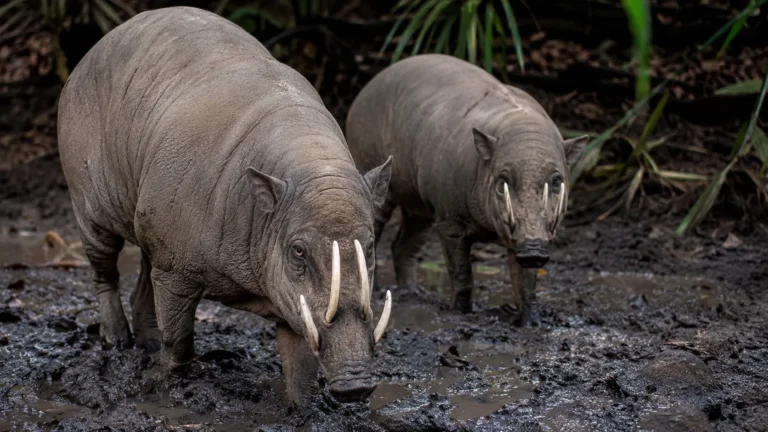
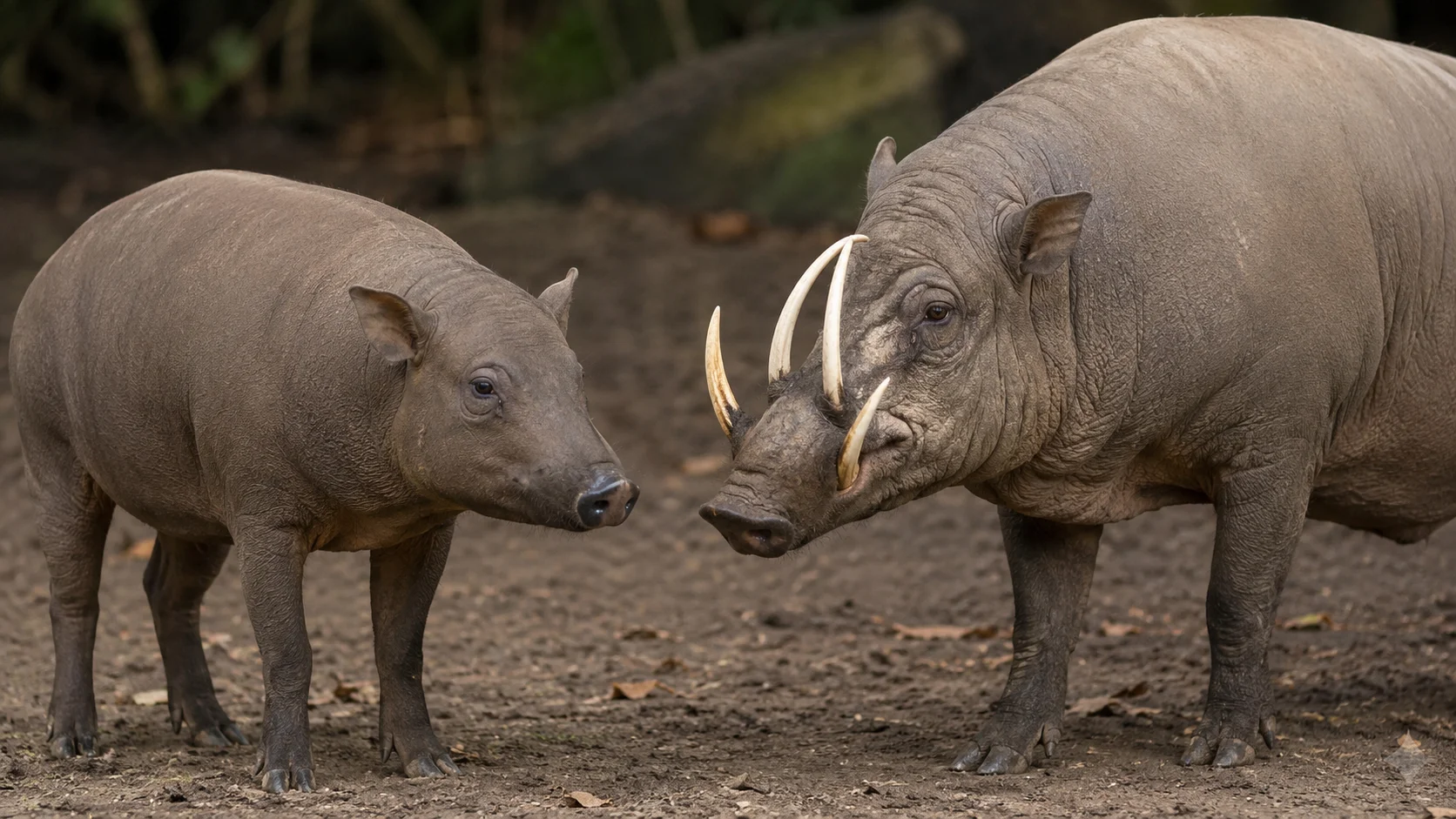
The absolute most defining and terrifying biological feature of the male babirusa is its dental structure. Unlike normal wild boars whose tusks grow out of the sides of their mouths, the upper canine teeth of the babirusa completely reverse direction. They physically rotate and grow completely straight up, brutally piercing directly through the flesh and skin of their upper snout, ultimately curving backward toward the animals own eyes.
3. The Fatal Flaw of Continuous Growth
The incredible upper tusks of the male babirusa never actually stop growing throughout their entire lifetime. This presents a massive, highly dangerous biological design flaw. If the male does not actively and continuously grind his tusks down by aggressively rubbing them against rocks or hard tree trunks, the tusks will simply keep curving backward until they physically pierce the animals own skull, resulting in a completely fatal brain injury.
4. Females Completely Lack the Facial Daggers
The terrifying, highly complex facial weaponry of the babirusa is a perfect example of extreme sexual dimorphism. The female babirusa looks absolutely nothing like her male counterpart. Females possess entirely normal, highly standard snouts and completely lack the bizarre upper tusks, making them look significantly more like a completely normal, hairless domestic pig.
5. They Do Not Root in the Mud
A universally recognized behavior of all swine species across the globe is their highly aggressive tendency to use their heavy snouts like a plow to dig up roots and tubers from the hard dirt. The babirusa completely ignores this behavior. They completely lack the massive, heavy rostral bone inside their snouts that gives regular pigs their digging power. Instead of digging, they forage entirely above ground for fallen fruits and nuts.
6. A Highly Unique Digestive System
Because they cannot physically dig for heavily buried roots, their diet is highly unique for a swine species, consisting largely of tough, highly fibrous jungle leaves and toxic fruits. To safely process this highly complex vegetation, their stomachs have evolved into a highly specialized, two-chambered system. This digestive tract functions much more like the highly efficient stomach of a grazing sheep than the standard stomach of a typical pig.
7. Exceptionally Small Litters
A standard female wild boar is an absolute reproductive machine, frequently giving birth to massive litters of up to a dozen squealing piglets at a single time. The female babirusa is a massive biological exception to this rule. She possesses only two teats on her entire body and almost universally gives birth to an incredibly tiny litter consisting of just one or two highly fragile piglets per year.
8. Piglets Are Born Without Stripes
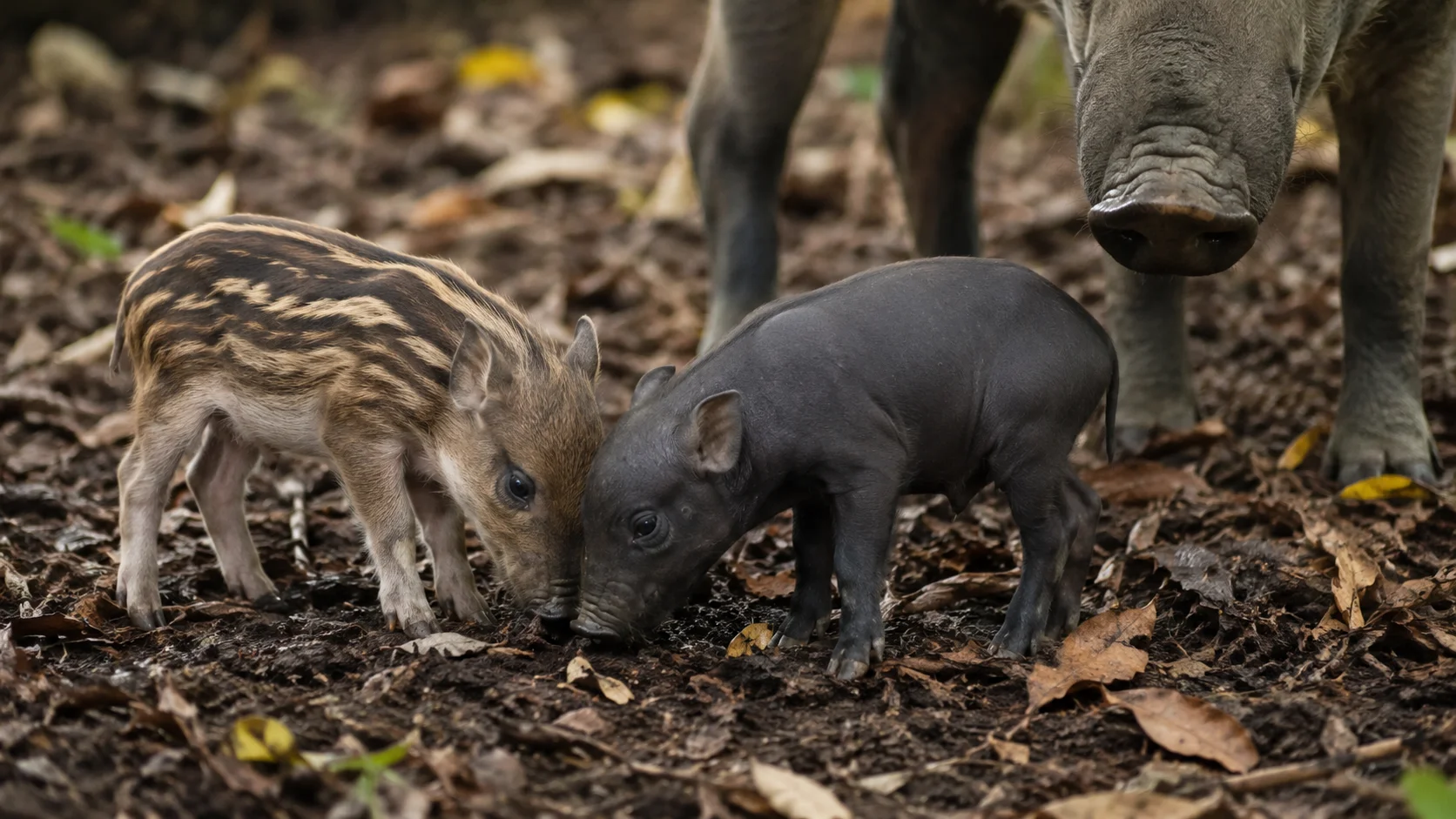
If you have ever seen a newborn wild boar or feral pig, you instantly recognize their highly iconic, watermelon-striped coats, which serve as brilliant natural camouflage in the dappled forest shadows. Babirusa piglets completely lack this highly standard biological feature. When they are born, their skin is completely solid in color, entirely devoid of any protective stripes or chaotic spots.
9. They Are Phenomenal Swimmers
Babirusas naturally inhabit deeply flooded tropical rainforests, dense mangrove swamps, and massive river basins. Because their environment is completely dominated by water, they have evolved into incredibly powerful, highly confident swimmers. They will frequently submerge their heavy bodies and easily swim across wide, fast-moving rivers, and have even been heavily documented swimming completely across open ocean channels to reach tiny neighboring islands.
10. The Massive Tusks Are Actually Quite Fragile
Looking at the terrifying, dagger-like tusks of a massive male, it is incredibly easy to assume they are utilized for brutal, highly lethal physical combat. In biological reality, the upper tusks are completely hollow, highly brittle, and incredibly easy to snap off. Males actively avoid using them as physical weapons, instead relying entirely on their massive size and strange shape as highly visual intimidation displays to completely terrify rivals and successfully attract mates.
11. Endemic to a Few Isolated Islands
You will not find a wild babirusa randomly wandering the jungles of mainland Asia or Africa. They are entirely endemic to a highly restricted, completely isolated geographic zone. They only exist in the wild on the central Indonesian island of Sulawesi, along with a few tiny, immediately neighboring islands like Togian, Sula, and Buru, making them incredibly vulnerable to massive habitat destruction.
12. They Inspired Demonic Art
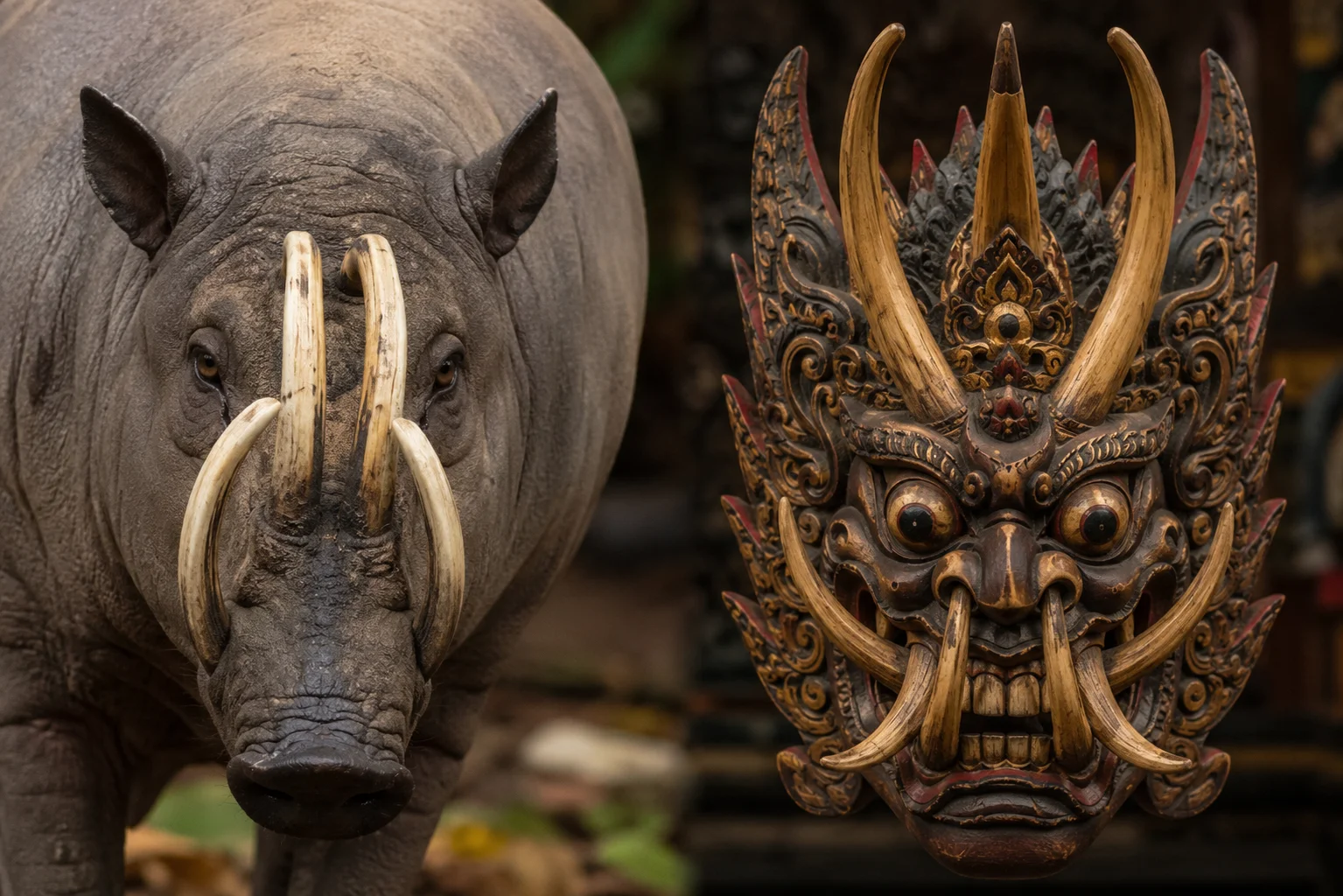
The completely bizarre, deeply terrifying facial structure of the massive adult male babirusa heavily inspired the rich, historical culture of the local indigenous tribes. For centuries, native artisans carved highly elaborate, deeply intimidating wooden demon masks, known as Rakshasa, heavily basing the terrifying upward-curving horns of the masks directly on the bizarre anatomy of the babirusa skull.
13. They Stand Upright on Their Hind Legs
To successfully survive in a highly competitive rainforest completely filled with other massive foraging mammals, the babirusa has developed a highly specialized feeding tactic. When highly nutritious, sweet fruits are hanging just out of reach on low tree branches, the babirusa will physically rear up and stand completely upright on its massive hind legs. They will then actively use their front hooves to pull the branches down exactly like a foraging goat.
14. A Completely Hairless Appearance
While they technically possess sparse, highly scattered bristles covering their bodies, the hair is so incredibly thin, short, and highly transparent that it is essentially invisible from a distance. This gives the massive babirusa the striking appearance of a completely bald, highly wrinkled creature. Their thick, greyish-brown skin completely shows through, perfectly blending in with the dark mud and shadows of the dense jungle undergrowth.
15. They Have a Highly Complex Vocal Vocabulary
Despite living highly reclusive lives deep in the isolated jungle, babirusas are incredibly noisy and highly communicative animals. They utilize a massive, incredibly complex acoustic vocabulary to constantly keep in touch with their small family herds in the thick, dark foliage. They constantly emit a highly distinct series of deep grunts, high-pitched squeals, and loud, repetitive jaw-clicking sounds to perfectly coordinate their movements and actively warn each other of approaching predators.