A Supreme Court Seat Declined: 15 Facts About John Quincy Adams
John Quincy Adams turned down a seat on the Supreme Court, swore his presidential oath on a law book and filled the White House grounds with hundreds of saplings. His diary also records a boating expedition that ended with the president scrambling ashore half dressed. Behind the formal portraits was a restless swimmer, gardener and argumentative champion of science.
1. At seven, he watched the Battle of Bunker Hill
In June 1775, Abigail Adams took her seven-year-old son up Penn's Hill in Massachusetts to watch the fighting across the water. He remembered the fires in Charlestown, the cannon fire and his mother's tears over Joseph Warren's death. The Revolution was a childhood memory long before it became a subject in his diplomatic papers.
2. A diplomatic mission needed a fourteen-year-old interpreter
When Francis Dana traveled to Russia in 1781, he took young Adams as his secretary and interpreter. French was used in European diplomacy, and the teenager could speak it while Dana could not. Adams's language skills thus earned him a government assignment at an age when most future presidents were still in school.
3. The Senate confirmed him for the Supreme Court—and he declined
James Madison nominated Adams to the Supreme Court on February 21, 1811. The Senate confirmed him the following day, but Adams declined the position. He never became a justice. His extraordinary career could therefore have taken a completely different turn more than a decade before his election as president.
4. He took the presidential oath on a law book
Adams broke with a familiar inauguration custom in 1825: the book beneath his hand was a law book rather than a Bible. The Constitution prescribes the oath but does not require any particular book. His choice was unusual, even in a ceremony whose best-known traditions were still taking shape.
5. His diary grew to more than 15,000 pages
Adams began a diary at twelve and continued into the final days of his life. The surviving record fills 51 manuscript volumes and more than 15,000 pages. Alongside diplomacy and elections, he recorded plants, exercise, visitors and personal doubts—leaving historians an unusually intimate view behind a president's public face.
6. A leaky boat sent the president swimming for shore
On June 13, 1825, Adams and his attendant Antoine attempted a river crossing in a boat that filled with water. Adams swam ashore wearing his shirt, trousers and hat; Antoine later retrieved clothing and arranged a carriage. The president's own diary records their undignified, half-dressed return home. He had been in office for barely three months.
 You might also like
15 Fascinating Facts About Theodore Roosevelt
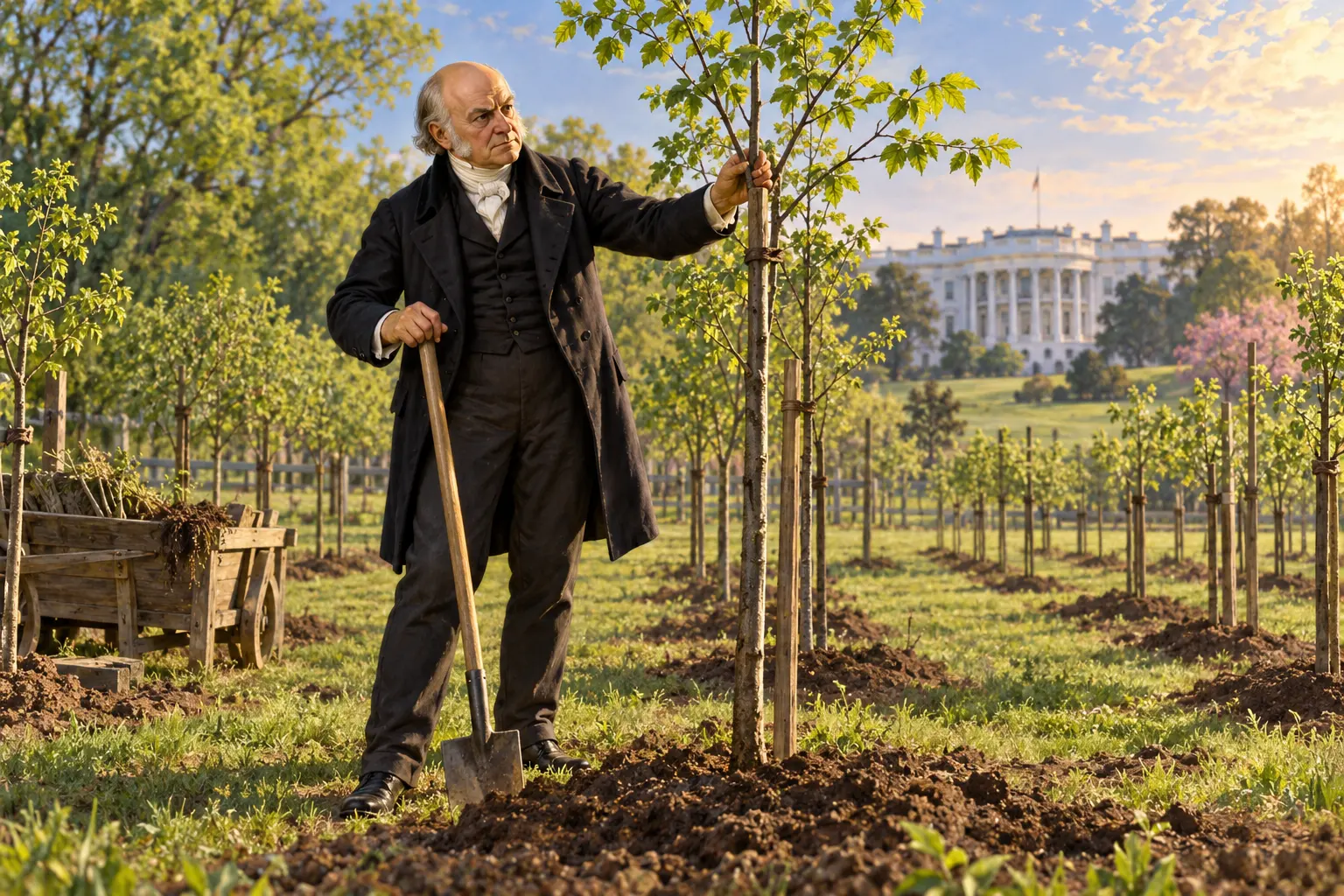
7. He cultivated more than 700 saplings at the White House
Adams established a tree nursery on the grounds and raised more than 700 saplings during his presidency. An American elm he planted in 1826 survived until 1991. A preserved section later became a visitor-center exhibit: a tangible remnant of the president who kept asking his gardener to identify every plant he encountered.
8. His billiard table became campaign ammunition
Adams installed a secondhand billiard table in the White House in 1825 and enjoyed playing in the evenings. Opponents turned the furniture into an accusation of presidential extravagance and gambling. A pastime he treated as exercise and amusement became a political liability in the bitter campaign against Andrew Jackson.
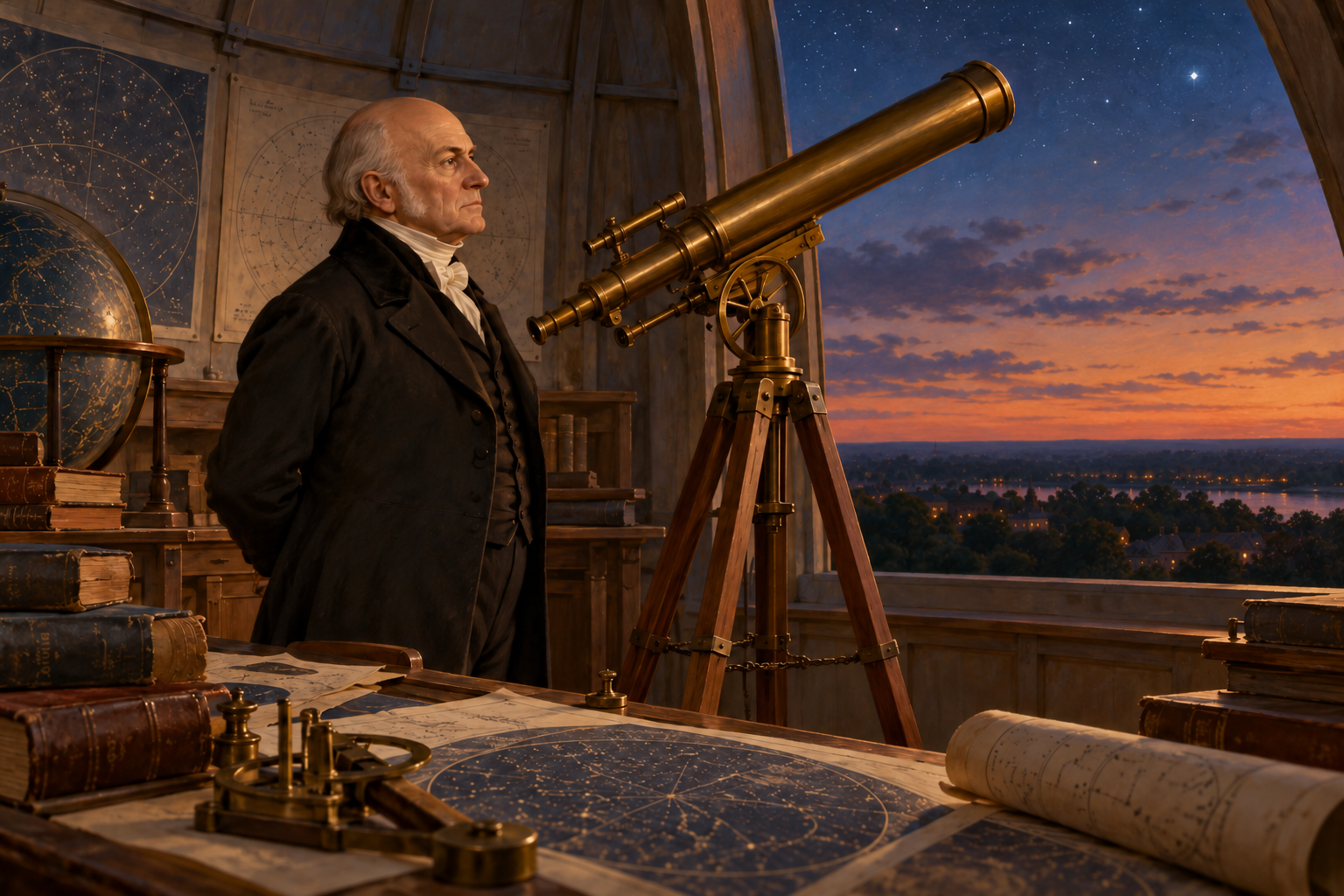
9. His preferred Smithsonian would have centered on an observatory
When Congress debated how to use James Smithson's bequest, Adams wanted a national astronomical observatory. He proposed turning the gift into an instrument for original scientific investigation. The institution ultimately took a different shape, but his plan reveals a striking alternative to the Smithsonian most visitors know through its museums.
 US Presidents
Discover the eccentricities, secret talents, and surprising hidden lives of America's most influential presidents, from frontier wrestlers to covert strategists.
See All Facts
10. Even a ceremonial shovel refused to cooperate
At the C&O Canal groundbreaking on July 4, 1828, Adams struggled to dig the first spadeful of earth. The rocky ground defeated three attempts, according to the National Park Service's account. The embarrassing start proved an apt preview of a project later beset by difficult terrain, labor shortages and financial trouble.
11. One of the earliest presidential photographs caught him in retirement
In 1843, long after leaving the presidency, Adams sat for photographer Philip Haas. Haas made three daguerreotypes during the session, one of which Adams gave to Congressman Horace Everett. The portrait stayed with Everett's descendants before entering the National Portrait Gallery—an early photographic likeness of a man born before American independence.
12. Winning a House seat pleased him more than winning the presidency
After his presidential defeat, Adams won election to the House of Representatives in 1830. His diary says the result gave him greater personal satisfaction than his election as president. Relatives worried that the move diminished his standing; he regarded serving his neighbors as honorable. He remains the only former president subsequently to serve in the House.
13. The Amistad survivors thanked him with a Bible
In 1841, Adams joined the legal effort defending Africans who had resisted illegal captivity aboard the Amistad. He argued for their freedom before the Supreme Court. Before returning to Africa, the survivors presented him with a Bible and a letter of thanks—a personal object connecting the famous courtroom battle to the people whose liberty was at stake.
14. His antislavery reputation hides an uncomfortable household history
Adams never personally owned enslaved people, yet research by the White House Historical Association identifies enslaved people associated with relatives in his household. His diary names Holzey, an enslaved young man belonging to his nephew, in 1828. The evidence complicates the comforting picture of an entirely slavery-free presidential household and sits uneasily beside Adams's later antislavery work.
15. An attempt to silence him gave him another platform
Adams repeatedly challenged the House rules that blocked antislavery petitions. In 1842, opponents tried to censure him after he presented a petition seeking disunion. He used the proceedings to attack slavery instead. The House eventually tabled the censure motion, and in 1844 he helped secure repeal of the gag rule itself.
How did these facts land?
Know someone who'd love these facts? Share them 👇