The Roaring Game: 15 Fascinating Facts About Curling
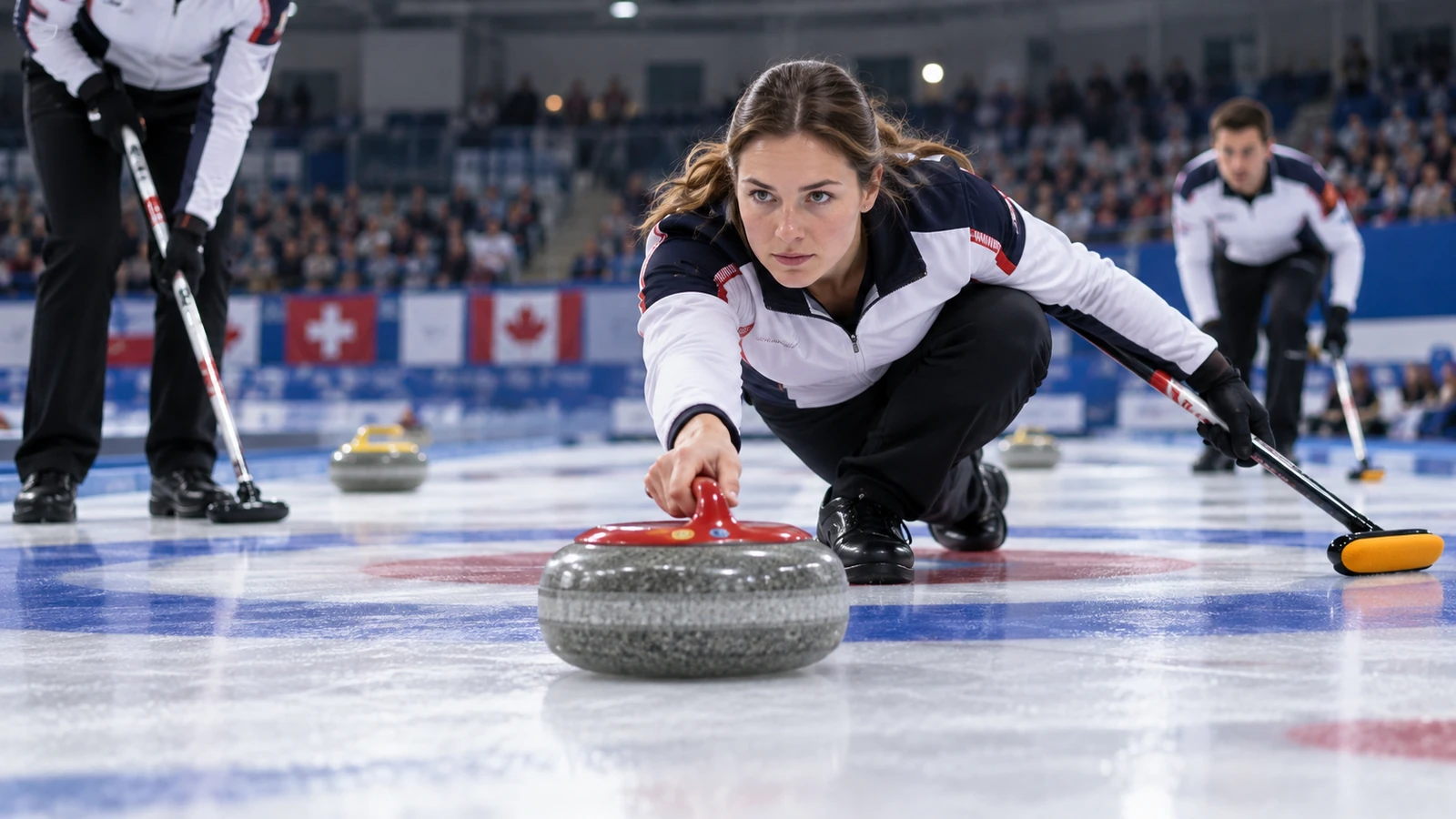
Curling is far more than a winter pastime where players vigorously scrub the ice with brooms. Originating on frozen Scottish lochs in the sixteenth century, this Olympic sport blends intricate physics, intense strategic planning, and centuries-old traditions of sportsmanship. From high-tech carbon fiber equipment to granite crafted from a tiny Scottish island, every aspect of the game relies on precise science and etiquette. Discover the fascinating mechanics, rich history, and surprising rituals that make curling one of the most compelling sports on ice.
1. Most Olympic Curling Stones Come From a Single Scottish Island
Nearly all granite curling stones used in elite competition, including the Winter Olympics, originate from Ailsa Craig, an uninhabited island off the coast of Scotland. The island contains a uniquely dense type of micro-granite known as Common Green and Blue Hone, which resists water absorption better than almost any other rock on Earth. Because water cannot easily seep into the stone, it prevents freezing moisture from cracking the granite during matches on cold ice. A secondary source of high-grade curling granite is the Trefor quarry in North Wales, but Ailsa Craig remains the legendary heart of stone production. Craftsmanship is so specialized that a single pair of competition-ready stones can cost thousands of dollars.
2. The Sport Earned the Nickname "The Roaring Game" From Sound, Not Shouting
Long before modern indoor rinks existed, curling matches took place on frozen Scottish lochs where the heavy stones slid across natural ice. As the heavy granite moved over the rough, frozen water, it generated a distinct low-frequency rumbling sound that echoed across the lake. This deep vibration was so loud and recognizable that participants began calling the sport "The Roaring Game." Although players frequently shout strategic commands to one another across the ice today, the original roar referred strictly to the auditory signature of the stone traveling along the sheet. The signature acoustic roar can still be heard on pebbled ice sheets in contemporary arenas.
3. Sweeping Rapidly Melts Ice to Create a Lubricating Water Layer
To outsiders, sweeping the ice with synthetic brooms might look like simple cleaning, but it relies on fundamental thermal dynamics. When sweepers scrub the ice surface violently in front of a moving stone, friction generates localized frictional heat. This brief heat spike melts the microscopic tops of ice bumps, creating a thin film of liquid water that acts as a surface lubricant. As a result, the curling stone experiences less friction, allowing it to travel several meters farther and maintain a straighter path than it would on untouched ice. Teammates must constantly assess stone velocity and read the ice to decide precisely when and how hard to sweep.
4. Curling Ice Is Intentionally Sprayed to Be Bumpy, Not Smooth
Unlike the glassy, completely smooth surface prepared for figure skating or ice hockey, a curling sheet features a textured surface. Ice technicians walk down the sheet spraying tiny droplets of heated water, a process known as "pebbling." As these droplets instantly freeze upon contact, they form thousands of tiny uniform bumps across the ice playing field. Without this pebbled texture, the broad, flat bottom of the granite stone would create severe suction against a completely smooth ice sheet, coming to a sudden halt. The pebble reduces the stone's contact area, allowing it to glide smoothly while enabling the characteristic "curl" or curved trajectory as it rotates.
5. The "Broomstacking" Tradition Requires Winners to Buy Losers a Drink
Curling maintains an unusual emphasis on sportsmanship that is formally woven into its competitive culture. A famous tradition known as "broomstacking" dictates that after a match ends, both teams gather off the ice to socialize over food and beverages. By custom, the winning team buys the losing team the first round of drinks, after which the losers typically reciprocate for the second round. The name originates from historic games on Scottish lochs, where players literally stacked their wooden brooms around a fire to warm up and share a drink together. Even at high-stakes national and international championships, athletes prioritize camaraderie and mutual respect once the final stone is thrown.
6. Players Wear Asymmetrical Shoes with One Slider and One Gripper
Curling shoes are engineered specifically for moving on slippery ice, featuring two entirely different soles on the left and right foot. The shoe on the player's non-dominant foot has a slick sole made of Teflon or stainless steel, called the "slider," which allows them to glide smoothly while delivering the stone. Conversely, the shoe on the dominant foot features a soft, textured rubber sole called the "gripper," providing traction to push off the starting blocks, known as the hacks. When walking around the sheet between shots, curlers often slip a temporary rubber cover over their slider to prevent accidental slipping. This asymmetrical footwear allows curlers to seamlessly transition between lunging glides and steady walking.
7. The Oldest Known Curling Stone Dates Back to 1511
Archaeological findings confirm that curling is one of the world's oldest organized team sports, with roots stretching back to medieval Scotland. The oldest surviving curling stone, known as the Stirling Stone, bears the carved date of 1511 alongside the name of its owner. Discovered when a pond at Stirling Castle was drained in the nineteenth century, this historic artifact is significantly smaller and more primitive than modern stones. Early stones were simply flat river rocks chosen for their natural shape, lacking handles and uniform dimensions. Today, the Stirling Stone is preserved as a national treasure inside the Stirling Smith Art Gallery and Museum.
8. Olympic Medals for the 1924 Games Were Awarded Retroactively in 2006
Curling was included in the inaugural 1924 Winter Olympic Games in Chamonix, France, where Great Britain won the tournament. However, for decades, the International Olympic Committee officially classified the 1924 curling event as a mere demonstration sport rather than an official medal competition. It was not until 2006, after extensive research by a Scottish newspaper verified the original 1924 regulations, that the IOC officially recognized curling as a full medal sport at those initial games. Consequently, gold medals were retroactively awarded to the descendants of the original 1924 British squad, eighty-two years after the matches were played.
9. A Single Curling Stone Weighs Nearly 44 Pounds
Delivering a curling stone requires remarkable body control and finesse, especially considering the substantial weight of the stone itself. Standard competition stones weigh between 38 and 44 pounds (17.2 to 19.9 kilograms), including the handle and central bolt assembly. The stone features a concave bottom, meaning only a narrow ring of granite—roughly five inches in diameter—actually makes contact with the pebbled ice. Despite this heavy mass, elite players can deliver the stone with millimeter precision across a 150-foot ice sheet. Controlling both the speed and the handle rotation requires a delicate balance of strength, timing, and core stability.
10. Curling Is Self-Policing and Players Call Their Own Fouls
Unlike most team sports governed by whistle-blowing referees, curling places supreme value on honor and self-policing. If a player accidentally touches a moving stone with their broom, clothing, or body—an infraction known as "burning" a stone—they are expected to immediately call the violation on themselves. Official umpires do monitor high-level tournaments, but their primary job is keeping time and measuring close stones rather than policing infractions. Intentional cheating or disputing an opponent's honest call is considered extremely unsportsmanlike and contrary to the spirit of the sport. This deep tradition of integrity ensures matches are conducted with extraordinary mutual respect.
11. Holding the "Hammer" Is the Ultimate Strategic Advantage
Tactical dominance in curling revolves around possessing the "hammer," which is the privilege of throwing the absolute last stone in an end. The team with the hammer holds a massive advantage because they can clear opponent stones or slide into scoring position without the other team having a chance to respond. If the team with the hammer scores points, they surrender the hammer to the opposing team for the following end. Consequently, skips will often deliberately execute a "blank end"—scoring zero points—to retain the hammer advantage for the next round. Managing hammer control throughout a ten-end game is central to high-level strategic planning.
12. Equipment Has Evolved from Corn Brooms to Carbon Fiber
The equipment used in curling has undergone a dramatic technological evolution over the past century. Historically, players swept the ice using traditional corn brooms made of dried straw, which made a loud slapping noise against the ice surface. In modern play, these rustic tools have been replaced by ultra-lightweight carbon fiber and fiberglass handles equipped with specialized synthetic fabric heads. Modern brooms maximize friction while minimizing physical exertion, allowing sweepers to alter a stone's path far more effectively than early curlers ever could. Synthetic brooms are so efficient that international governing bodies have had to strictly regulate fabric materials to preserve competitive balance.
13. Scoring an "Eight-Ender" Is Rarer Than a Golf Hole-in-One
The maximum possible score a team can achieve in a single end of curling is eight points, achieved by positioning all eight of their stones closer to the center of the target area, or "house," than any of the opponent's stones. Known as an "eight-ender," this accomplishment is statistically extraordinary and even rarer than a hole-in-one in golf. To achieve it, a team must execute near-perfect shotmaking while their opponents make repeated strategic errors or miss shots completely. Major curling organizations celebrate eight-enders with special recognition programs and commemorative pins. Most competitive curlers spend their entire careers without ever taking part in an eight-ender end.
14. The Captain Called the "Skip" Controls Strategy from the Target Area
Every curling team of four is led by a captain known as the "skip," who dictates overall strategy and shot selection throughout the match. While the first three players deliver their stones and sweep for teammates, the skip stands at the far end of the sheet inside the house to hold the target broom and direct play. The skip analyzes ice conditions, calls the weight and path for each shot, and yells instructions to the sweepers about whether to scrub or hold off. Because the skip also delivers the team's final two stones under intense pressure, the role requires exceptional strategic intellect, leadership, and emotional composure under strain.
15. Curling Athletes Can Compete at the World Level Into Their Fifties
While many modern sports demand explosive athletic speed that favors younger competitors, curling prioritizes experience, tactical judgment, and consistent touch. Because physical endurance can be maintained alongside refined technique, world-class curlers often enjoy extraordinarily long competitive careers. It is common for elite curlers to represent their countries at World Championships and the Winter Olympics well into their late thirties, forties, or fifties. For example, veteran athletes have achieved major international victories decades after making their professional debuts. This unique longevity allows veterans to refine their strategic mastery over decades of ice competition.
Sources & References
This AI-assisted post was rigorously curated and fact-checked for accuracy by:
 Martin Roháček
How fun was this article? 🤔
Tap a star to rate it
🧠 Quiz: How closely were you paying attention?
10 questions — all answers are in the article above!
Enjoyed these facts? There's more! 💌
Fresh fun facts in your inbox. No spam, ever.