The Land of the Rising Sun: 15 Fascinating Facts About Japan
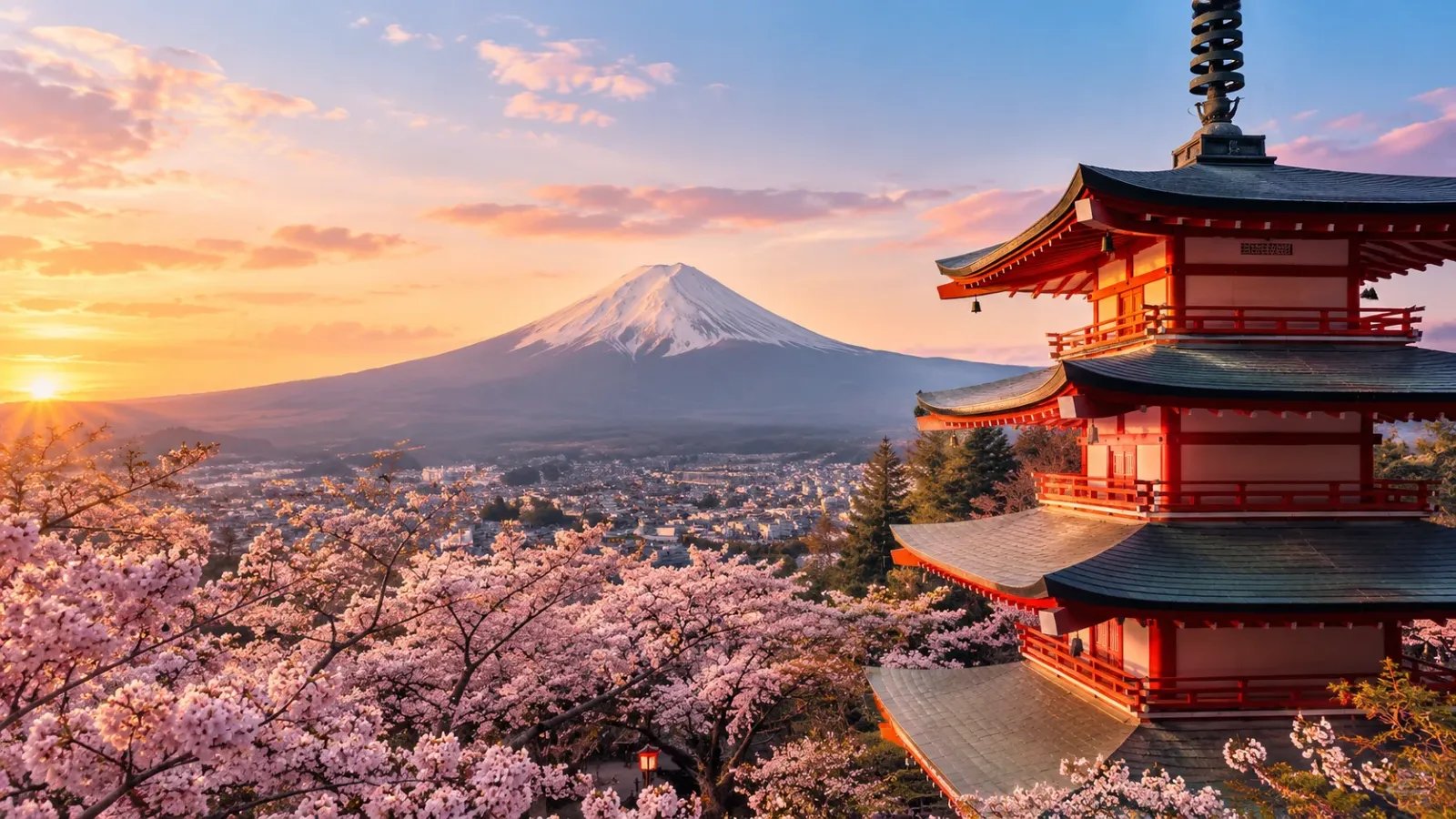
Japan blends ancient temples and castles with bullet trains, neon cities, and vending machines on nearly every corner. Record numbers of visitors, almost 37 million in 2024, come to experience its food, nature, and traditions. Discover 15 fascinating facts about the island nation.
1. Japan welcomed almost 37 million international visitors in 2024.
According to the Japan National Tourism Organization, Japan received around 36.9 million international visitors in 2024, a record. A weak yen, cuisine, safe cities, and a mix of tradition and modern culture are among the reasons for the boom. Tokyo, Kyoto, and Osaka are the most popular destinations.
2. Japan is made up of more than 14,000 islands.
A 2023 survey counted 14,125 islands in the Japanese archipelago. Most people live on the four main islands: Honshu, Hokkaido, Kyushu, and Shikoku. The country stretches from the cold north of Hokkaido to the subtropical islands of Okinawa.
3. Mount Fuji is a sacred mountain and a UNESCO site.
At 3,776 meters, Mount Fuji is Japan's highest mountain, a nearly perfect volcanic cone. It was inscribed on the UNESCO World Heritage List in 2013 as a sacred place and a source of artistic inspiration. The official climbing season runs only in summer, roughly July to early September.
4. The Shinkansen began running in 1964.
The first bullet train line opened on 1 October 1964, between Tokyo and Osaka, just days before the Tokyo Olympics. Since then it has carried billions of passengers. The service is famous for its punctuality, with average delays measured in less than a minute, and has had no passenger deaths from collisions or derailments.
5. Vending machines are everywhere.
Japan has millions of vending machines, selling hot and cold drinks, snacks, and even a variety of other products. They are found on city streets, in remote mountain areas, and at train stations. Many machines serve hot canned coffee in winter and cold drinks in summer.
6. Kyoto was the imperial capital for over a thousand years.
Kyoto, founded in 794 as Heian-kyō, was the home of the emperor until 1868. The city has about 1,600 Buddhist temples and 400 Shinto shrines, many of which are listed as UNESCO World Heritage Sites. Geisha districts such as Gion preserve traditional arts.
7. Greater Tokyo is the most populous metropolitan area in the world.
According to UN estimates, the Tokyo metropolitan area has around 37 million inhabitants. Despite its size, it is known for efficient trains, cleanliness, and low crime. Neighborhoods range from the crowded crossing at Shibuya to quiet shrines, such as Meiji Jingu, in the middle of the city.
8. A Japanese hotel has been operating since 705.
Nishiyama Onsen Keiunkan, a hot spring inn in Yamanashi Prefecture, was founded in 705, and the Guinness World Records recognizes it as the world's oldest hotel. It has been run by the same family for more than 50 generations. Staying at a traditional ryokan inn is a popular experience for travelers.
9. Nigiri sushi developed in Edo.
Sushi began as a way of preserving fish in fermented rice, a method found in Southeast Asia. The hand-pressed nigiri style, with fresh fish on a small ball of rice, developed in Edo, today's Tokyo, in the early 19th century, and chef Hanaya Yohei is often credited with popularizing it. It was originally fast street food.
10. Traditional Japanese cuisine is on the UNESCO list.
In 2013 UNESCO recognized washoku, the traditional dietary culture of the Japanese, as intangible cultural heritage. It emphasizes seasonal ingredients, balance, and presentation, and includes rice, miso soup, pickles, and fish. A traditional multi-course meal is called kaiseki.
11. Himeji Castle has stood for centuries.
Himeji Castle, nicknamed the White Heron, has a keep from the early 17th century. It was the first Japanese site on the UNESCO World Heritage List in 1993. It survived wars, earthquakes, and the bombing of World War II and is considered one of the best-preserved original castles in Japan.
12. Deer roam freely in Nara.
Around 1,200 or more sika deer wander around Nara Park, near the great temple of Todai-ji. They are considered messengers of the gods in the Shinto tradition, and they are protected. Visitors can buy special crackers to feed them, and some deer have learned to bow in return.
13. Japan has many earthquakes.
Japan lies on the Pacific Ring of Fire, where several tectonic plates meet. It experiences well over a thousand felt tremors in a typical year, and the country is a world leader in earthquake-resistant building and early warning systems.
14. Sapporo hosts a famous snow festival.
The Sapporo Snow Festival in Hokkaido began in 1950 when local high school students built six snow statues in a park. Today it features giant snow and ice sculptures and attracts around two million visitors each February.
15. Fushimi Inari has thousands of torii gates.
The Fushimi Inari shrine in Kyoto, dedicated to Inari, the god of rice, is famous for its paths lined with thousands of vermilion torii gates, donated by businesses and individuals. The trail winds up Mount Inari and takes a couple of hours to complete.
Sources & References
This AI-assisted post was rigorously curated and fact-checked for accuracy by:
 Martin Roháček
How fun was this article? 🤔
Tap a star to rate it
🧠 Quiz: How closely were you paying attention?
10 questions — all answers are in the article above!
Enjoyed these facts? There's more! 💌
Fresh fun facts in your inbox. No spam, ever.