
The Imperial Sanctuary: 15 Fascinating Facts About Kyoto
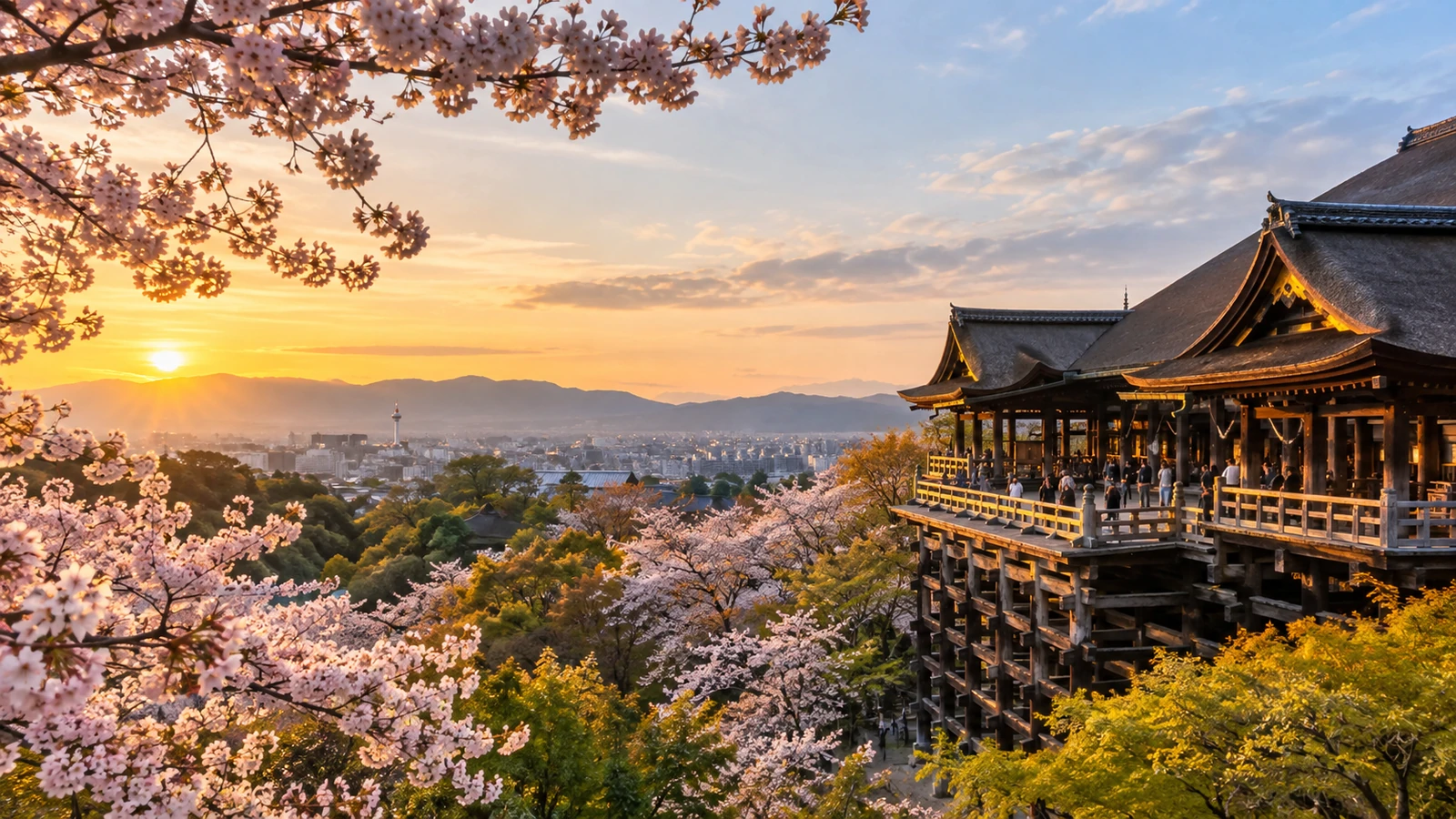
For over a thousand years, Kyoto served as the shimmering cultural and imperial heart of Japan, shaping the nation's spiritual traditions, architectural style, and artistic achievements. From golden temples suspended over tranquil ponds to hidden shrines tucked into bamboo groves, this historic metropolis seamlessly weaves ancient mystery with modern flair. Discover the fascinating story of how Kyoto survived war, inspired video game giants, and preserved world-famous cultural treasures.
1. Kyoto Was Japan's Capital for Over a Millennium
For more than a thousand years, from 794 until the Meiji Restoration in 1868, Kyoto reigned as the official capital of Japan and the seat of the imperial court. Originally founded under the name Heian-kyō, which translates to "Capital of Peace and Tranquility," the city was chosen to distance the royal court from influential Buddhist sects in Nara. Throughout this vast era, Kyoto served as the undisputed heart of Japanese politics, art, literature, and religious life. When Emperor Meiji relocated the court to Tokyo in 1868, Kyoto retained its spiritual prestige, earning the enduring nickname of Japan's cultural capital. Today, the city stands as a living museum of East Asia's royal heritage.
2. The City Was Modeled After an Ancient Chinese Metropolis
When urban planners laid out Kyoto in the late 8th century, they modeled its street plan directly on Chang'an, the capital of China's Tang Dynasty. The city was constructed on a strict rectangular grid pattern oriented precisely along cardinal directions, guided by traditional Chinese geomancy and feng shui principles. Mountains to the north, east, and west were believed to protect the city from evil spirits, while local rivers provided vital energy flow. This ancient grid layout survives remarkably intact today in central Kyoto, making navigation relatively simple compared to Tokyo's winding streets. It remains one of the world's finest surviving examples of classical East Asian urban planning.
3. Saved from Atomic Bombing by Cultural Appreciation
During World War II, Kyoto was initially placed at the very top of the United States target list for the atomic bomb due to its large population and strategic significance. However, US Secretary of War Henry L. Stimson personally intervened to remove Kyoto from the targeting list in mid-1945. Stimson had visited Kyoto during his honeymoon decades earlier and deeply appreciated its immense cultural, historical, and architectural importance. Thanks to his decision, the city was spared both atomic destruction and the heavy conventional firebombing that flattened Tokyo and Osaka. As a result, Kyoto preserves an incredible wealth of pre-war wooden architecture.
4. Home to Seventeen UNESCO World Heritage Sites
Kyoto contains an extraordinary density of cultural monuments, featuring 17 distinct locations grouped together as the Historic Monuments of Ancient Kyoto UNESCO World Heritage Site. This vast collection includes 13 Buddhist temples, three Shinto shrines, and the formidable Nijo Castle. Together, these sites represent over ten centuries of Japanese architectural evolution, garden design, and religious tradition. Millions of visitors travel to these sanctuaries each year to experience authentic feudal craftsmanship firsthand. From sweeping wooden halls to meticulously landscaped rock gardens, Kyoto holds an unmatched concentration of historical treasures.
5. Fushimi Inari Features Over 10,000 Vermilion Gates
Dedicated to the Shinto god of rice, agriculture, and business success, Fushimi Inari Taisha is one of Japan's most iconic and ancient shrines. Founded in 711 AD, the sprawling shrine complex extends up the forested slopes of Mount Inari. Its most famous feature is the Senbon Torii, a network of densely packed trails framed by over 10,000 bright vermilion torii gates. Each gate has been donated by a business or individual seeking good fortune, with the donor's name inscribed in dark calligraphy on the back. Stone fox statues, acting as divine messengers, guard the scenic winding pathways throughout the mountain.
6. The Golden Pavilion Is Coated in Pure Gold Leaf
Kinkaku-ji, officially known as Rokuon-ji, is a Zen Buddhist temple famous for its upper floors entirely covered in thin sheets of pure gold leaf. Originally built in 1397 as a retirement villa for Shogun Ashikaga Yoshimitsu, the structure was later converted into a temple following his death. The glittering structure overlooks a mirror-like pond, reflecting the shimmering facade and surrounding pine trees. Tragically, the original structure was burned down in 1950 by a novice monk, an event that inspired Yukio Mishima's famous novel The Temple of the Golden Pavilion. The current building was meticulously reconstructed in 1955 to match the original design.
 Asian Cities
From hyper-futuristic megacities boasting heated subway seats to ancient imperial capitals hiding subterranean water palaces, Asia's greatest metropolises are defined by astonishing contrasts. Discover the hidden quirks and rich histories of these hubs.
See All Facts
Asian Cities
From hyper-futuristic megacities boasting heated subway seats to ancient imperial capitals hiding subterranean water palaces, Asia's greatest metropolises are defined by astonishing contrasts. Discover the hidden quirks and rich histories of these hubs.
See All Facts
7. Kiyomizu-dera Was Constructed Entirely Without Nails
Perched on the slopes of Mount Otowa, Kiyomizu-dera is an ancient temple founded in 778, predating Kyoto's status as the national capital. The main hall is renowned for its expansive wooden veranda built high above the hillside without using a single metal nail. Utilizing an intricate traditional Japanese joinery technique called kigumi, massive zelkova tree beams were fitted together to support the heavy wooden structure. The popular expression "to jump off the stage at Kiyomizu" serves as the Japanese equivalent to taking a bold leap of faith. Today, the wooden terrace offers dramatic panoramic views across the city skyline.
8. The Birthplace of Geisha Culture and High Japanese Arts
Kyoto was the fertile breeding ground for many of Japan's most celebrated traditional arts, including the tea ceremony, flower arrangement, and classical theater. The city also gave birth to the world of geisha, locally referred to as geiko, along with their apprentice counterparts known as maiko. The historical district of Gion became the central hub for these highly skilled artists, who undergo years of rigorous training in music, dance, and etiquette. Even today, Kyoto remains the premier center for traditional Japanese entertainment, where preserved wooden tea houses line narrow lantern-lit cobblestone streets.
9. The Ōnin War Nearly Erased the City in the 15th Century
Despite its enduring beauty today, Kyoto endured severe destruction during the Ōnin War, a brutal decade-long civil conflict that raged from 1467 to 1477. The war erupted over a dispute regarding shogun succession and pitted rival samurai factions against one another directly in the capital's streets. Massive fires swept through the timber-built city, reducing ancient temples, grand aristocratic mansions, and vast residential quarters to ash. The conflict marked the beginning of the Sengoku period, an era of widespread civil war across Japan that lasted over a century. It took decades of rebuilding for Kyoto to recover its former splendor.
10. Arashiyama's Bamboo Grove Has a Protected Soundscape
Located on the western outskirts of Kyoto, the Arashiyama Bamboo Grove is one of the world's most breathtaking natural landscapes. Towering green stalks of bamboo rise high into the air, filtering the daylight into an ethereal emerald glow. The gentle rustling sound of the bamboo stalks swaying in the wind is so distinctive that Japan's Ministry of the Environment included it on its official list of protected soundscapes. Visitors walking along the shaded paths experience an otherworldly tranquility that has inspired Japanese poets and painters for over a millennium. Adjacent to the grove lies Tenryu-ji Temple, featuring a preserved 14th-century landscape garden.
11. Nintendo Was Founded in Kyoto as a Playing Card Maker
While Kyoto is synonymous with ancient traditions, it is also the birthplace of global video game giant Nintendo. Founded in 1889 by Fusajiro Yamauchi, the company originally produced handmade Japanese playing cards called hanafuda from a modest wooden building in central Kyoto. Over the decades, Nintendo evolved into an electronic toy producer before becoming a pioneer in the gaming industry with iconic franchises like Mario and Zelda. Unlike many Japanese tech corporations that relocated to Tokyo, Nintendo remains proudly headquartered in Kyoto. The original 1930s headquarters building was recently restored and converted into a luxury hotel.
12. The Kyoto Imperial Palace Stretches Across 220 Acres
The Kyoto Imperial Palace served as the official residence of Japan's Imperial Family until the emperor relocated to Tokyo in 1868. Situated within the sprawling Kyoto Gyoen National Garden, the palace grounds cover approximately 220 acres in the heart of the city. While the original palace structures suffered numerous fires over the centuries, the current buildings were faithfully reconstructed in 1855 using classic imperial architecture. The compound features elegant halls, sprawling gravel courtyards, and tranquil landscaped gardens where coronations were once held. Today, the public can stroll through the historic grounds to experience imperial history.
13. Kyoto University Is a Renowned Academic Powerhouse
Founded in 1897 as Japan's second imperial university, Kyoto University is widely regarded as one of the premier academic institutions in Asia. Renowned for its atmosphere of academic freedom and scientific research, the university has produced 11 Nobel Prize laureates, more than any other university in Asia. Its historical campus features landmark red-brick architecture, including the iconic Clock Tower built in 1925. The university has played a pivotal role in modern Japanese intellectual history, nurturing prominent philosophers, scientists, and state leaders. Its prestigious presence helps Kyoto balance ancient heritage with modern innovation.
14. Master Craftsmen Have Perfected Silk and Pottery for Centuries
Kyoto has served as Japan's premier center for fine traditional craftsmanship for well over a thousand years. The city's Nishijin district is world-famous for Nishijin-ori, an intricate silk weaving technique historically used to produce exquisite kimono garments for royalty and high-ranking samurai. Similarly, hand-painted silk dyeing and local ceramics are celebrated worldwide for their refined aesthetic and technical perfection. Local artisans also produce traditional handmade paper known as washi, lacquerware, and bamboo crafts using techniques handed down through generations. These traditional craft workshops continue to flourish alongside modern fashion houses.
15. Kyoto's Mountain Basin Creates Extreme Seasonal Climate Shifts
Kyoto sits inside a natural geographical bowl surrounded by mountains on three sides, which heavily influences its unique local climate. Known locally as a basin climate, this topography traps humidity in summer and locks in chilling winds during the winter. Summer days in Kyoto can feel intensely hot and humid, while winters bring crisp mornings that occasionally dust the city's ancient wooden pagodas in fresh snow. This dramatic seasonal shift has deeply influenced Kyoto's cultural calendar, regional cuisine, and home architecture. Seasonal changes are celebrated through flower festivals, seasonal tea ceremonies, and local seasonal delicacies throughout the year.
Sources & References
This AI-assisted post was rigorously curated and fact-checked for accuracy by:
 Martin Roháček
How fun was this article? 🤔
Tap a star to rate it
🧠 Quiz: How closely were you paying attention?
10 questions — all answers are in the article above!
Enjoyed these facts? There's more! 💌
Fresh fun facts in your inbox. No spam, ever.