The Neon Metropolis: 15 Fascinating Facts About Tokyo
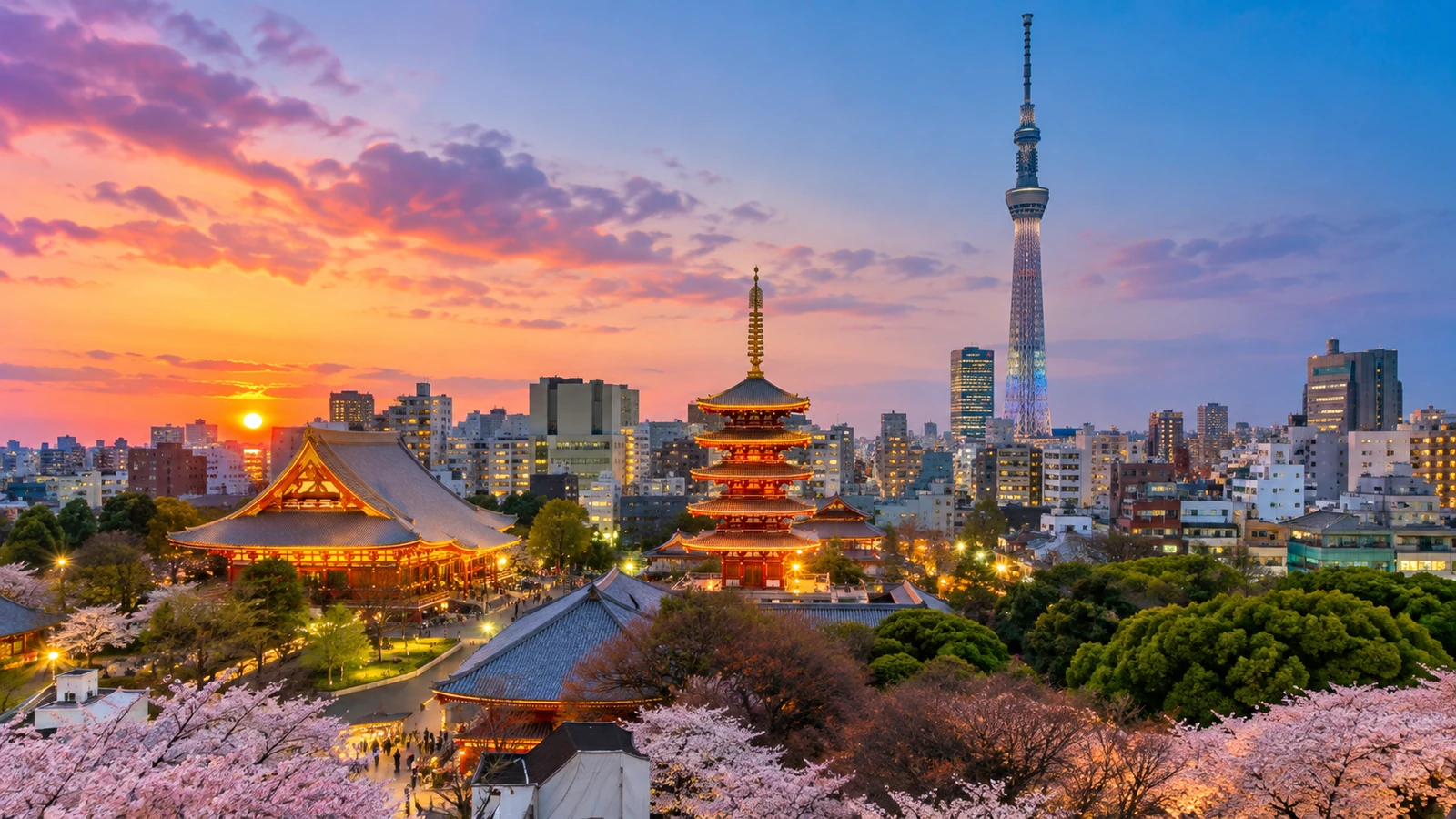
From a modest 15th-century fishing village called Edo to the world's most populous metropolitan area, Tokyo is a city where hyper-modern technology coexists seamlessly with ancient traditions. It is a place where crows steal wire coat hangers to build industrial nests, traffic lights display a legally compliant shade of blue, and citizens routinely turn in tens of millions of dollars in lost cash to neighborhood police boxes. Whether you are fascinated by world-record culinary scenes or ultra-efficient transit systems, Japan's buzzing capital never fails to surprise. Here are 15 unbelievable facts about the legendary city of Tokyo.
1. Professional Pushers Pack Rush Hour Trains
During morning peak hours in Tokyo, railway stations employ specialized workers known as oshiya, or train pushers. Wearing crisp uniforms and white cotton gloves, these staff members literally shove passengers into packed train cars so the automatic doors can close safely. The practice began in the 1960s at Shinjuku Station to manage overwhelming commuter surges and keep trains running on precise second-by-second schedules. While modern subway line expansions have somewhat reduced the need for physical pushing, oshiya still operate during heavy congestion. Their presence ensures that Tokyo's rail networks maintain their reputation as the world's most punctual public transportation system.
2. Tokyo Outshines Paris in Michelin Stars
While Paris is internationally famed as the capital of fine dining, Tokyo holds the crown for the highest number of Michelin stars on Earth. The city routinely boasts over 200 starred establishments, comfortably outpacing every European rival. Tokyo's culinary scene ranges from ultra-exclusive sushi counters with just six seats to tiny ramen shops tucked inside subterranean subway stations. Master chefs in Tokyo often spend decades perfecting a single dish, leading to unparalleled quality control across every budget level. Consequently, food critics worldwide widely consider Tokyo to be the premier dining capital of the world.
3. Imperial Palace Grounds Were Once Worth More Than California
During the height of Japan's asset price bubble in the late 1980s, Tokyo real estate reached unprecedented, staggering valuations. Land in the city center became so inflated that the 2.9-square-kilometer grounds of the Imperial Palace were estimated to be worth more than all the real estate in the entire state of California. At that peak moment, a single square meter of land in the prime Ginza shopping district could cost over $300,000. Investors floated absurd financial theories to justify these astronomical valuations before the market collapsed in 1991. Today, the episode remains one of the most famous real estate bubbles in global economic history.
4. Vending Machines Sell Everything on Every Corner
Tokyo is home to one of the highest densities of automated vending machines anywhere in the world, averaging roughly one machine for every 23 residents. These machines are not limited to standard sodas; they dispense ice-cold green tea, piping hot canned coffee, hot soup, bananas, fresh flowers, and even umbrellas during sudden downpours. Because street crime in Tokyo is extremely low, these high-tech machines remain functional and undamaged overnight on public sidewalks. They rely on smart heat-pump technology to warm or chill items using minimal electricity. For Tokyoites on the go, these machines serve as round-the-clock mini convenience stores.
5. Shinjuku Station is the Busiest Transport Hub on Earth
Handling over 3.6 million passengers every single day, Shinjuku Station holds the official Guinness World Record as the busiest transportation hub on the planet. The colossal station complex features more than 200 exits, dozens of interconnected underground shopping malls, and multiple major railway lines. To put its massive crowd volume into perspective, more people pass through Shinjuku Station in a single day than the entire population of Chicago or Madrid. Navigating the sprawling multi-level complex can easily confuse even seasoned locals, earning it a reputation as an urban labyrinth. Despite the incomprehensible passenger volume, trains depart with microscopic, second-level accuracy.
6. Go Lights on Traffic Signals are Legally Blue
Visitors to Tokyo often notice that traffic signals use a distinct blue-green light instead of standard green for "go." This quirk stems from old Japanese linguistic history, as the ancient language originally used the single word ao to describe both blue and green hues. When traffic lights were first installed in Japan in 1930, official documentation referred to the go light as ao, leading signal designers to use the bluest allowed shade of green. International traffic treaties later mandated green lights, but Japan compromised by using a unique cyan shade that legally counts as blue. Today, drivers in Tokyo still navigate the city under distinctly teal and blue stoplights.
 Asian Cities
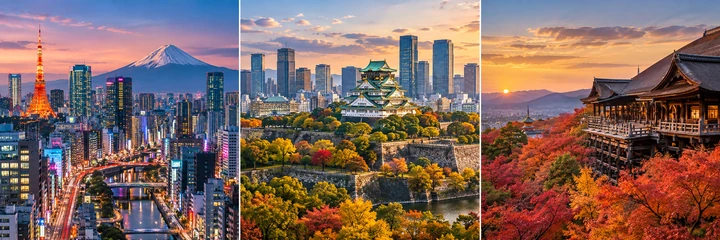
From hyper-futuristic megacities boasting heated subway seats to ancient imperial capitals hiding subterranean water palaces, Asia's greatest metropolises are defined by astonishing contrasts. Discover the hidden quirks and rich histories of these hubs.
See All Facts
Asian Cities
From hyper-futuristic megacities boasting heated subway seats to ancient imperial capitals hiding subterranean water palaces, Asia's greatest metropolises are defined by astonishing contrasts. Discover the hidden quirks and rich histories of these hubs.
See All Facts
7. Millions of Dollars in Lost Cash are Returned Annually
Tokyo possesses a legendary culture of honesty supported by an extraordinarily efficient lost-and-found infrastructure centered around neighborhood police boxes called koban. Every year, Tokyo citizens hand over nearly $30 million in cash found in lost wallets, bags, or dropped on streets. Under Japanese law, lost items are logged into a central database, giving owners a remarkably high chance of recovering lost property. Remarkably, nearly three-quarters of all cash turned in is successfully reunited with its rightful owner. If unclaimed after three months, the finder is legally allowed to keep the money as a reward for their integrity.
8. Tokyo Tower is Taller Than the Eiffel Tower
Built in 1958 as a symbol of post-war rebirth and telecommunications broadcasting, Tokyo Tower was explicitly modeled after the Eiffel Tower in Paris. However, Japanese engineers crafted their version to stand 332.9 meters (1,092 feet) tall, making it 13 meters taller than the original French landmark. Despite being taller, Tokyo Tower utilized advanced steelworking techniques that made it significantly lighter than its European predecessor. To comply with international aviation safety regulations, the lattice tower is painted in striking alternating bands of international orange and white. It remains one of the city's most recognizable architectural icons, offering dramatic views across the urban skyline.
9. Clever Crows Steal Wire Hangers to Build Nests
Urban wildlife in Tokyo has adapted to city life in bizarre ways, particularly the large Jungle Crows that inhabit the metropolis. Due to a shortage of natural twigs in dense urban neighborhoods, these highly intelligent birds frequently steal metal coat hangers from residential apartment balconies. The crows assemble elaborate, sturdy nests out of these stolen wire hangers on top of utility poles and electrical transformers. Unfortunately, these metal structures frequently cause short circuits and major electrical blackouts across city neighborhoods. As a result, Tokyo power companies employ dedicated inspection teams solely to hunt down and safely remove wire nests from power lines.
10. Shibuya Crossing Handles Thousands of Pedestrians at Once
Located outside Shibuya Station, the famous Shibuya Scramble Crossing is widely regarded as the busiest pedestrian intersection in the world. When the traffic lights turn red simultaneously in all directions, as many as 3,000 people flood into the street at a single turn. Despite the overwhelming sea of humanity rushing across from ten different lanes, people navigate past each other with smooth, practiced coordination without colliding. Surrounding skyscrapers flash towering digital advertisements and neon signs, creating an iconic cyberpunk atmosphere. It has become an essential symbol of modern Tokyo, featured in dozens of international films and television shows.
11. Kit Kats Come in Hundreds of Unique Regional Flavors
In Tokyo and across Japan, Nestlé's Kit Kat is not just a chocolate bar—it is a cultural phenomenon with over 300 unique varieties created over the years. The treat's name sounds strikingly similar to the Japanese phrase kitto katsu, which translates to "you will surely win," making it a popular good-luck gift for students taking exams. Tokyo confectioners offer regional specialty flavors including green tea matcha, wasabi, sake, purple sweet potato, and even baked custard. Premium Kit Kat chocolateries throughout the city sell handcrafted versions featuring high-end ingredients and elaborate gift packaging. Travelers frequently clear shelf space to purchase these unique flavors as popular souvenir gifts.
12. Tokyo Was Once a Modest Fishing Village Called Edo
Before becoming a sprawling global megacity, Tokyo was a quiet, marshy fishing village called Edo. Everything changed in 1603 when the warlord Tokugawa Ieyasu established his military dictatorship, the Shogunate, in Edo, making it the de facto political center of Japan. The city grew rapidly, becoming one of the most populated urban centers in the world by the 18th century, even while Kyoto remained the official imperial capital. In 1868, during the Meiji Restoration, the imperial court moved to Edo, and the city was officially renamed Tokyo, meaning "Eastern Capital." Today, historic districts like Asakusa still offer glimpses of Edo-period architecture and heritage.
13. Blue LED Lights on Platforms Help Prevent Suicides
To tackle public safety and emotional wellbeing along train lines, Tokyo transit operators installed blue LED lights at the ends of platform areas. Psychological research suggested that deep blue lighting produces a calming, meditative effect on distressed individuals contemplating jumping in front of approaching trains. Studies analyzing station data over a decade found that installing these blue lights led to an incredible 84 percent drop in suicide attempts at targeted platform ends. The innovative, non-intrusive intervention was so successful that major subway systems around the world have since adopted similar blue lighting strategies in their own stations.
14. Capsule Hotels Were Invented for Stranded Commuters
Tokyo popularized the world's first capsule hotels, designed to offer ultra-compact, affordable overnight accommodation for busy urban workers. Measuring roughly two meters long by one meter wide, these modular fiberglass sleeping pods provide basic amenities like air conditioning, power outlets, and small privacy screens. They originally catered to Japanese businessmen, known as salarymen, who missed the last midnight train home after working late or drinking with colleagues. Today, modern capsule hotel chains in Tokyo have evolved to offer sleek, futuristic designs with high-tech amenities, drawing budget travelers from around the globe seeking a unique sleeping experience.
15. Summer Haunted Houses Are Built to Beat the Heat
During the sweltering, humid summer months of July and August, Tokyo experiences a massive surge in temporary walk-through haunted houses, known as obaketashiki. This unique seasonal tradition stems from an old Japanese belief that feeling genuine terror produces a spine-tingling sensation that cools down the body temperature. Amusement parks, department stores, and entertainment districts hire professional actors and elaborate special effects artists to create terrifying haunted attractions. Tokyoites flock to these spooky houses as a fun, psychological method to beat the oppressive heat without relying on air conditioning. It remains one of the city's most distinctive summer cultural practices.
Sources & References
This AI-assisted post was rigorously curated and fact-checked for accuracy by:
 Martin Roháček
How fun was this article? 🤔
Tap a star to rate it
🧠 Quiz: How closely were you paying attention?
10 questions — all answers are in the article above!
Enjoyed these facts? There's more! 💌
Fresh fun facts in your inbox. No spam, ever.