The Vibrant Merchant Capital: 15 Fascinating Facts About Osaka
Known as Japan's street food capital and traditional merchant hub, Osaka boasts a colorful personality distinct from any other metropolis in the country. From skyscrapers pierced by elevated expressways to ancient burial mounds larger than Egyptian pyramids, the city blends urban quirkiness with ancient heritage. Osaka's food-loving culture and warm dialect make it one of Asia's most captivating destinations. Here are 15 fascinating facts about this unforgettable Japanese city.
1. A Highway Passes Directly Through an Office Skyscraper
In Osaka's Fukushima ward, the Hanshin Expressway literally runs straight through the fifth, sixth, and seventh floors of the Gate Tower Building. Constructed in 1992, this architectural anomaly arose when the land owner and the highway corporation refused to compromise on building rights. Engineers solved the standoff by designing a concrete bridge structure that passes through the building without making physical contact with it. The elevator in the building bypasses the expressway floors entirely, taking passengers straight from the fourth to the eighth floor. Thanks to special soundproofing materials and structural separation, workers inside the tower experience no noise or structural vibration from passing traffic.
2. Osaka Castle Is a Modern Concrete Reconstruction with Elevators
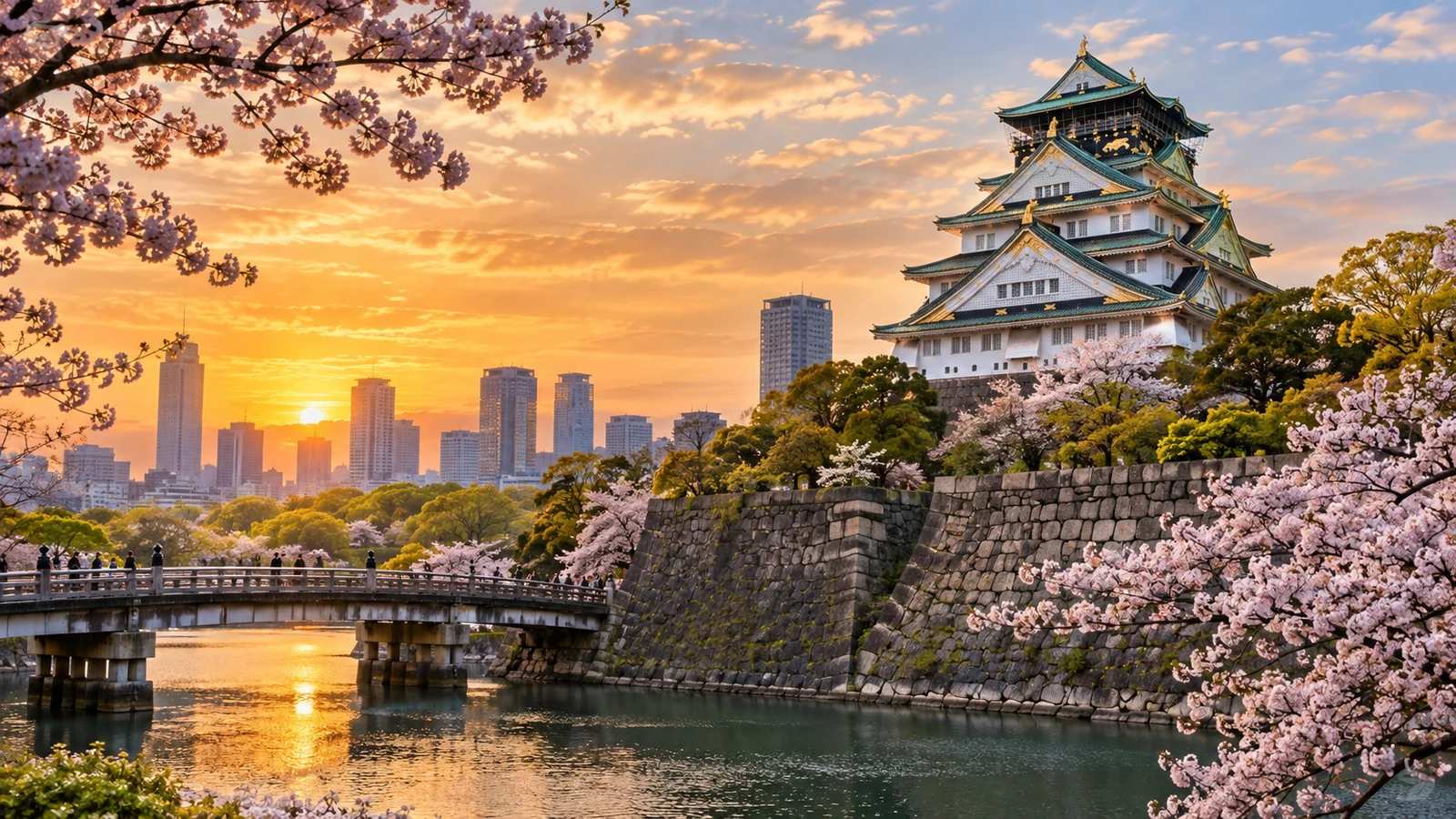
While the majestic exterior of Osaka Castle resembles a sprawling 16th-century feudal fortress, its main keep is actually a reinforced concrete reproduction completed in 1931. Originally built by warlord Toyotomi Hideyoshi in 1583, the historic citadel was destroyed and rebuilt multiple times due to sieges and lightning strikes. The modern structure houses a state-of-the-art museum, fully equipped with air conditioning, interactive multimedia displays, and functional passenger elevators inside its historic exterior walls. Despite surviving Allied air raids during World War II, the concrete tower offers sweeping modern views of the city skyline rather than preserved feudal rooms. Visitors are often shocked to step inside what appears to be an ancient fortress only to find modern carpeted floors and glass display cases.
3. Osakans Stand on the Opposite Side of Escalators Compared to Tokyo
Throughout most of Japan, including Tokyo, commuters strictly stand on the left side of escalators and leave the right side open for walking. In Osaka and the surrounding Kansai region, locals do the exact opposite by standing on the right and walking on the left. This regional divide is widely believed to have originated during the 1970 World Exposition held in Osaka, where event organizers adopted European escalator etiquette to accommodate international guests. Hankyu Railway also made public announcements encouraging commuters to keep the left lane clear for hurried passengers around the same era. Today, this subtle habit serves as an immediate indicator that a traveler has crossed the cultural border into Kansai.
4. The City Contains a Tomb Larger in Base Area Than the Great Pyramid
Located in Sakai, just south of central Osaka, the Nintoku-tenno-ryo Kofun is a massive keyhole-shaped burial mound that covers a larger footprint than the Great Pyramid of Giza. Constructed in the 5th century AD for Emperor Nintoku, the tomb measures approximately 486 meters in length and is surrounded by three outer moats. Because the sacred site is managed by Japan's Imperial Household Agency, access to the central mound is strictly forbidden to the public and research is heavily restricted. Over the centuries, dense vegetation has grown over the tomb, transforming it into an elevated green forest that looks like a natural hill. Its iconic keyhole contour can only be fully appreciated from observation decks in nearby skyscrapers or from the air.
5. Instant Ramen Was Invented in an Osaka Backyard Shed
In 1958, Taiwanese-Japanese entrepreneur Momofuku Ando invented the world's first instant noodles inside a small wooden shed behind his house in Ikeda, Osaka. After months of trial and error, Ando perfected flash-frying noodles in palm oil, creating Chicken Ramen to combat food shortages in post-war Japan. The convenience food revolutionized global dining, leading to the creation of Cup Noodles in 1971 and transforming global pantry habits forever. Today, the CupNoodles Museum in Ikeda allows visitors to tour a replica of Ando's humble backyard workshop and design their own customized noodle cups. Ando's innovation proved so successful that instant noodles were eventually adapted for consumption by astronauts in zero gravity space missions.
6. The Iconic Glico Man Sign Has Stood in Dotonbori Since 1935
The famous neon sign of an athlete crossing a red finish line with raised arms has illuminated Osaka's Dotonbori canal district for nearly a century. First installed in 1935 to promote Ezaki Glico's caramel candies—which were marketed as energy-boosting treats containing glycogen—the sign has evolved through six distinct iterations. Over the decades, the backdrop has been altered to celebrate major sporting events, including the World Cup and local baseball victories. In 2014, the landmark underwent a high-tech overhaul, replacing neon glass tubes with over 140,000 high-definition LED lights capable of displaying dynamic animated backgrounds. Today, imitating the runner's triumph pose on the Ebisu Bridge remains an essential ritual for millions of visiting tourists each year.
 Asian Cities
From hyper-futuristic megacities boasting heated subway seats to ancient imperial capitals hiding subterranean water palaces, Asia's greatest metropolises are defined by astonishing contrasts. Discover the hidden quirks and rich histories of these hubs.
See All Facts
Asian Cities
From hyper-futuristic megacities boasting heated subway seats to ancient imperial capitals hiding subterranean water palaces, Asia's greatest metropolises are defined by astonishing contrasts. Discover the hidden quirks and rich histories of these hubs.
See All Facts
7. The Local Philosophy of 'Kuidaore' Encourages Dining to Financial Ruin
Osaka is famous across Japan for the concept of kuidaore, a proverb that translates roughly to "eating oneself into financial ruin" or "dining until you drop." This ethos reflects a historic cultural contrast with Kyoto, where citizens were traditionally said to spend all their money on fine clothes (kimodaore). As a historical merchant hub, Osaka developed an unquenchable passion for accessible, high-quality street food and casual dining. Local specialties like takoyaki (octopus balls) and okonomiyaki (savory cabbage pancakes) were created to cater to discerning local palates on any budget. The phrase isn't seen as a warning, but rather as a badge of honor celebrating the city's obsession with epicurean pleasures.
8. A Mechanical Drumming Clown Mascot Has Guarded Dotonbori for Decades
One of Osaka's most beloved pop-culture icons is Kuidaore Taro, a mechanical drum-playing clown puppet wearing red-and-white striped clothing and round spectacles. Originally installed in 1950 outside the famous Cui-daore restaurant in Dotonbori, the animatronic puppet entertained passersby with rhythmic drumming and realistic head movements. When the landmark restaurant closed its doors in 2008 after nearly six decades of operation, thousands of emotional fans gathered to bid the mascot farewell. However, public outcry was so overwhelming that Taro was saved from retirement and moved to a nearby entertainment complex in Dotonbori. Today, he remains an active brand ambassador, starring in commercials, souvenir designs, and photo ops with fans from around the world.
9. Shitennoji Is Japan's Oldest State-Established Buddhist Temple
Founded in 593 AD by Prince Shotoku, Shitennoji Temple in Osaka holds the distinction of being Japan's very first officially commissioned Buddhist temple complex. Predating the famous temples of Kyoto and Nara, the site was built to introduce Buddhism into Japanese society and promote state welfare. Although fires, typhoons, and warfare destroyed the wooden buildings numerous times across its 1,400-year history, locals meticulously rebuilt each structure according to the original 6th-century Asuka-period design layout. The complex features an impressive five-story pagoda, a main golden hall, and peaceful gardens that offer a quiet sanctuary in the middle of a bustling metropolis. The temple complex continues to host bustling monthly flea markets that attract bargain hunters from across the region.
10. The Distinct Osaka Dialect Is the Unofficial Language of Japanese Comedy
The native regional dialect, known as Osaka-ben, differs significantly from standard Japanese in both tone, vocabulary, and sentence cadence. Characterized by melodic pitch shifts, dropped grammatical particles, and expressive endings like ya instead of da, the dialect carries a reputation for warmth and directness. Because Osaka developed as a vibrant commercial trade center, its speech style naturally prioritized fast-paced banter, humor, and persuasive communication. During the 20th century, the rise of Osaka-based entertainment powerhouses like Yoshimoto Kogyo cemented Osaka-ben as the definitive language of Japanese stand-up comedy (manzai). Today, comedians across the nation adopt Kansai speech patterns to deliver punchlines, as standard Japanese often sounds too formal for comedic timing.
11. Osaka Is the Historic Birthplace of Bunraku Puppet Theater
While Tokyo is famous for Kabuki, Osaka is the true cradle of Bunraku, Japan's traditional wooden puppet theater that emerged in the late 17th century. Unlike western puppetry where operators remain hidden, Bunraku features three master puppeteers dressed in black who operate a single, highly articulate figure in full view of the audience. The principal master controls the head and right arm, while two assistants manipulate the left arm and legs in precise, synchronized harmony. Accompanied by a narrative singer (tayu) and a three-stringed shamisen player, the art form produces strikingly emotional performances that rival human theater. Today, the National Bunraku Theatre in Osaka continues to preserve this UNESCO-recognized intangible cultural heritage.
12. Namba Yasaka Shrine Features a Giant Stage Shaped Like a Lion's Head
Tucked away in the residential alleys of the Namba district, Namba Yasaka Shrine is famous for its colossal 12-meter-tall stage shaped like a roaring lion's head. Built in 1974, the stage features gaping jaws, massive teeth, and glowing eyes that give it a dramatic, mythological appearance. According to local spiritual tradition, the open mouth of the lion swallows evil spirits, bad luck, and negative energy, clearing the way for success and good fortune. Students preparing for exams and business owners launching new ventures regularly visit the shrine to pray inside the beast's mouth. The shrine is particularly vibrant during annual festivals, when traditional dance performances and music are staged inside the giant lion mouth.
13. Osaka Pedestrians Consistently Walk Faster Than Anyone Else in Japan
Scientific studies tracking urban pedestrian speeds across Japan consistently reveal that Osakans walk significantly faster than residents in Tokyo and other major cities. Experts attribute this rapid walking pace to the city's deep-rooted history as a pragmatic merchant hub, where time directly equates to money and efficiency. Traffic light countdowns and pedestrian crossings in Osaka were specifically designed with faster signal cycles to accommodate the hurried movement of local foot traffic. Osakans are famously straightforward and impatient, often preferring quick action over formal societal formalities. This energetic tempo gives the city's commercial centers an electric, fast-moving atmosphere distinct from the rest of the country.
14. Winning Baseball Celebrations Led to the Infamous 'Curse of the Colonel'
When the beloved Hanshin Tigers baseball team wins a major championship, fans traditionally celebrate by leaping off Ebisu Bridge into the Dotonbori River. During a euphoric championship victory in 1985, fans carried a plastic statue of Colonel Sanders stolen from a nearby KFC store and hurled it into the canal because the statue resembled star player Randy Bass. Following the incident, the Tigers entered an eighteen-year championship slump that sports fans attributed to the "Curse of the Colonel." Despite divers recovering pieces of the submerged statue from the river mud in 2009, the superstitious urban legend endured for nearly four decades. The curse was finally declared broken when the Hanshin Tigers won the Japan Series championship once again in 2023.
15. Double-Dipping Your Kushikatsu Skewers Is a Strict Culinary Crime
One of Osaka's quintessential street foods is kushikatsu, deep-fried skewers of meat, seafood, and vegetables coated in light panko breadcrumbs. Served hot at casual standing counters, the skewers are dipped into a shared rectangular tin of dark, Worcestershire-based dipping sauce. Because multiple diners share the same sauce container throughout the day, dipping a skewer after taking a bite is strictly prohibited for sanitary reasons. Restaurants display bold warning signs reminding patrons that double-dipping will insult the chef and offend fellow diners. If you need extra sauce after biting into a skewer, etiquette dictates using a crisp piece of raw cabbage provided at the table to scoop sauce onto your food.
Sources & References
This AI-assisted post was rigorously curated and fact-checked for accuracy by:
 Martin Roháček
How fun was this article? 🤔
Tap a star to rate it
🧠 Quiz: How closely were you paying attention?
10 questions — all answers are in the article above!
Enjoyed these facts? There's more! 💌
Fresh fun facts in your inbox. No spam, ever.