
The Unified Empire: 15 Fascinating Facts About China
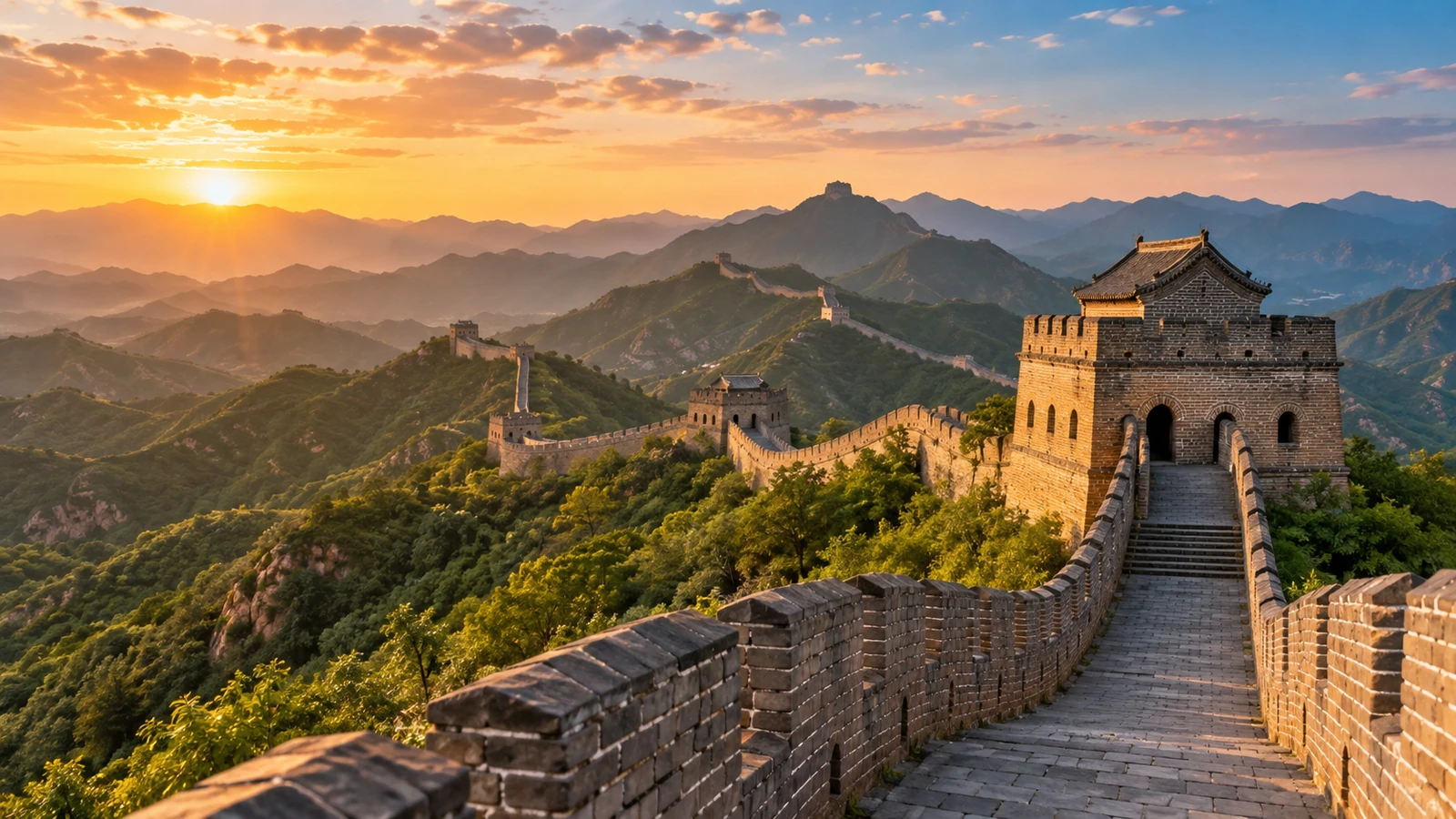
From spanning five time zones while using a single official clock to housing tens of millions of citizens in sustainable underground caves, China is a nation defined by staggering scale and thousands of years of continuous culture. Many culinary staples and modern economic inventions, including ketchup, ice cream, and paper currency, trace their origins directly to ancient Chinese innovators. Today, ancient traditions like filial piety coexist alongside rapid modular skyscraper construction and high-stakes ping-pong diplomacy. Explore fifteen surprising and lesser-known facts about the history, culture, and daily life of the world's most populous ancient civilization.
1. The Entire Nation Runs on a Single Official Time Zone
China geographically spans across five distinct time zones, covering an expanse roughly equal in width to the continental United States. However, since 1949, the government has mandated a single standard time zone—Beijing Time (UTC+8)—to foster national unity and administrative efficiency. This centralization creates dramatic geographical anomalies for people living in the far western regions like Xinjiang. In cities such as Kashgar, the sun may not rise until 10:00 AM during winter months, forcing residents to start their workday in pitch darkness. To compensate, many western locals maintain an informal local time zone two hours behind Beijing, creating a dual-clock routine in daily life.
2. Ketchup Originated as an Ancient Fermented Fish Sauce
While tomato ketchup is widely considered a quintessential Western condiment, its roots stem directly from Southern China. Centuries ago, Fujianese sailors created a pungent, savory sauce made from fermented fish guts and spices called ke-tsiap. British traders encountered the condiment in Maritime Southeast Asia during the late 17th century and brought samples back to Europe. European cooks attempted to replicate the umami flavor using mushrooms, walnuts, and anchovies before American recipes incorporated tomatoes in the early 19th century. Consequently, the word ketchup is a direct phonetic transliteration of this original Chinese term.
3. Table Tennis Is a High-Stakes National Sport
Although table tennis was invented in Victorian England as a parlor game, China transformed ping-pong into a high-stakes national obsession. Encouraged by Chairman Mao Zedong in the 1950s as a tool for national pride and international diplomacy, the sport received massive state funding and rigorous development systems. Elite players are recruited at extremely young ages and train in specialized state-run sports academies for endless hours every day. Today, top table tennis champions in China enjoy immense celebrity status, lucrative endorsement deals, and rock-star public receptions. This relentless national infrastructure has allowed Chinese athletes to dominate international world championships and Olympic games for decades.
4. Tens of Millions of People Reside in Modern Cave Dwellings
Across the arid Loess Plateau in northern China, an estimated 30 million people reside in traditional cave homes known as yaodong. Carved directly into hillside earth or constructed as sunken subterranean courtyards, these dwellings take advantage of the thick, compacted soil for natural insulation. The dense earth keeps the interior comfortably warm during brutal winters and naturally cool throughout hot summers, requiring minimal energy for heating or air conditioning. Far from being crude shelters, modern yaodong frequently feature electricity, running water, solar power, and internet access. Many families have lived in the same cliffside dwellings for generations, celebrating the architectural sustainability of these ancient homes.
5. Geese Are Employed as Guard Animals by Rural Police
In rural law enforcement districts, particularly within Xinjiang province, police stations have deployed domesticated geese to secure facilities instead of traditional guard dogs. Geese possess exceptionally keen vision and sensitive hearing, allowing them to detect unauthorized movement long before humans or canines notice. When startled, these territorial birds react with loud, piercing honks and aggressive physical displays, creating an immediate and inescapable alarm system. Furthermore, unlike dogs, geese cannot easily be distracted or neutralized with poisoned food by potential intruders. Law enforcement officers report that these feathered sentinels have proven surprisingly effective at deterring nighttime break-ins.
6. Soup Is Customarily Consumed at the End of a Meal
In traditional Western dining, soup typically functions as an appetizer to open the stomach before main courses arrive. In contrast, Chinese culinary customs generally dictate that soup should be served at the very end of a formal meal. Traditional Chinese medicine theory suggests that warm broth consumed at the conclusion of dining helps soothe the stomach and aids in digesting heavy foods. The soup serves to cleanse the palate, settle the stomach, and signal the end of the feast. In southern regions like Guangdong, slow-simmered herbal broths are treated with great reverence for their specific health-restoring and balancing properties.
7. China Maintains Ownership of Virtually Every Giant Panda
Every giant panda living in zoos across the globe is legally owned by the Chinese government under a practice known as panda diplomacy. Foreign zoological institutions do not purchase pandas outright; instead, they sign long-term lease agreements that can cost up to one million US dollars per year per pair. Additionally, any cubs born to leased pandas in overseas zoos automatically remain the property of China and must be returned before their fourth birthday. China selectively grants these iconic black-and-white bears to foreign nations as symbolic gestures of goodwill and diplomatic friendship. If diplomatic relations sour, China retains the sovereign right to recall the animals back to their homeland.
8. Paper Currency Was Invented Centuries Before the West Adopted It
Long before Western nations abandoned metal coinage, China invented paper money to streamline long-distance trade. During the Tang Dynasty in the 7th century, wealthy merchants initiated the practice by depositing heavy copper coins with trustworthy agents in exchange for paper credit certificates known as flying money. By the 11th century, during the Song Dynasty, the imperial government formalized the system by issuing Jiaozi, the world's first true government-backed paper currency. Venetian traveler Marco Polo was astonished by this innovation when he visited China in the 13th century, describing how the Emperor could turn simple tree bark into valuable money. European nations did not widespread adopt paper banknotes until several centuries later.
9. China Experienced a Legendary 12-Day Gridlock
In August 2010, drivers on China National Highway 110 experienced what is widely considered one of the worst traffic jams in human history. The massive gridlock stretched for over 60 miles (100 kilometers) and trapped thousands of vehicles for an astonishing 12 days. The bottleneck was caused by a combination of heavy road construction and thousands of heavy-duty trucks transporting coal to Beijing. Drivers were able to move their vehicles less than one mile per day, sleeping in their cars and relying on local villagers who hiked onto the highway to sell instant noodles and water at inflated prices. The event became an international phenomenon, highlighting the immense strain placed on transportation infrastructure during rapid economic growth.
10. Traditional Chinese Brides Wear Red for Good Fortune
While Western brides traditionally wear white bridal gowns to represent purity, Chinese brides traditionally choose vibrant red wedding attire. In Chinese culture, red symbolizes prosperity, happiness, good luck, and vitality, making it the most auspicious color for major life celebrations. Conversely, white is traditionally associated with mourning, funerals, and death, making it culturally unsuitable for a joyous wedding ceremony. Traditional bridal garments, such as the elaborate qipao or two-piece xifu, are often intricately embroidered with golden dragons and phoenixes representing marital harmony. Even as modern brides incorporate Western elements into their weddings, many still wear red for official tea ceremonies and banquets.
11. Adult Children Can Be Legally Sued for Neglecting Their Parents
Filial piety has been a cornerstone of Chinese philosophy for millennia, but China reinforced this cultural virtue through federal legislation. In 2013, the Chinese government enacted the Elderly Rights Law, which legally mandates that adult children must visit and emotionally support their aging parents regularly. Under this law, elderly parents who feel abandoned or neglected by their offspring can file civil lawsuits to compel visits and financial assistance. Courts can mandate specific visitation schedules and impose monetary fines on adult children who consistently ignore their parental obligations. The law aims to protect China's rapidly aging population in an era of swift urbanization and shifting family structures.
12. China Manufactures Over 80 Billion Disposable Chopsticks Yearly
To satisfy nationwide food service demand, Chinese manufacturing plants produce an estimated 80 billion pairs of single-use wooden chopsticks every single year. Supplying this massive output requires harvesting tens of millions of trees annually, mostly birch, poplar, and bamboo, leading to severe environmental concerns regarding deforestation. To offset the ecological toll, the Chinese government introduced a five-percent tax on disposable wooden chopsticks and encouraged restaurants to switch to reusable plastic or metal alternatives. Despite these eco-friendly initiatives, the sheer convenience of disposable utensils keeps demand exceedingly high across food delivery platforms and street food stalls. Environmental activists continue to lobby for stronger restrictions to preserve the country's dwindling forests.
13. Early Precursors to Ice Cream Were Enjoyed by Imperial Emperors
Although modern ice cream was refined in Europe and America, frozen dairy delicacies were enjoyed in China over a thousand years ago. During the Tang Dynasty, royal chefs created a frozen dessert by mixing milk from cows or goats with flour, ice, and aromatic camphor for flavor. Workers collected winter ice in deep subterranean cellars to preserve it for hot summer banquets, allowing emperors to enjoy icy treats long before refrigeration existed. Later, during the Yuan Dynasty, milk was mixed with ice and fruit juices to create soft frozen desserts. Historical accounts suggest that travelers introduced these iced dairy treats to European court cuisine after visiting the Orient.
14. The Number Four Is Avoided Due to Deep-Seated Tetraphobia
In Chinese culture, the number four is considered deeply unlucky because its pronunciation in Mandarin (sì) sounds almost identical to the word for death (sǐ). This widespread fear of the number four, known as tetraphobia, exerts a powerful influence on modern architecture, commerce, and daily life. Many high-rise apartment buildings, hotels, and hospitals omit the fourth, fourteenth, twenty-fourth, and thirty-fourth floors entirely from elevator panels and room numbering. Similarly, phone numbers, vehicle license plates, and street addresses containing the digit four are often discounted or actively avoided by consumers. Conversely, numbers like eight are intensely prized because their pronunciation resembles the word for wealth and prosperity.
15. Construction Crews Can Erect High-Rise Buildings in a Matter of Days
China has revolutionized rapid architectural construction through advanced modular prefabrication techniques. In 2015, a Chinese construction firm named Broad Sustainable Building built "Mini Sky City," a 57-story skyscraper in Changsha, in just 19 operational days. The company pre-manufactured thousands of steel-framed modular units in factories ahead of time, allowing on-site workers to stack three full floors per day like giant building blocks. Despite the incredible speed of assembly, the building features modern energy-efficient insulation, earthquake-resistant structural engineering, and air purification systems. This feat highlighted China's unique ability to rapidly scale infrastructure to meet urbanization demands.
Sources & References
This AI-assisted post was rigorously curated and fact-checked for accuracy by:
 Martin Roháček
How fun was this article? 🤔
Tap a star to rate it
🧠 Quiz: How closely were you paying attention?
10 questions — all answers are in the article above!
Enjoyed these facts? There's more! 💌
Fresh fun facts in your inbox. No spam, ever.